
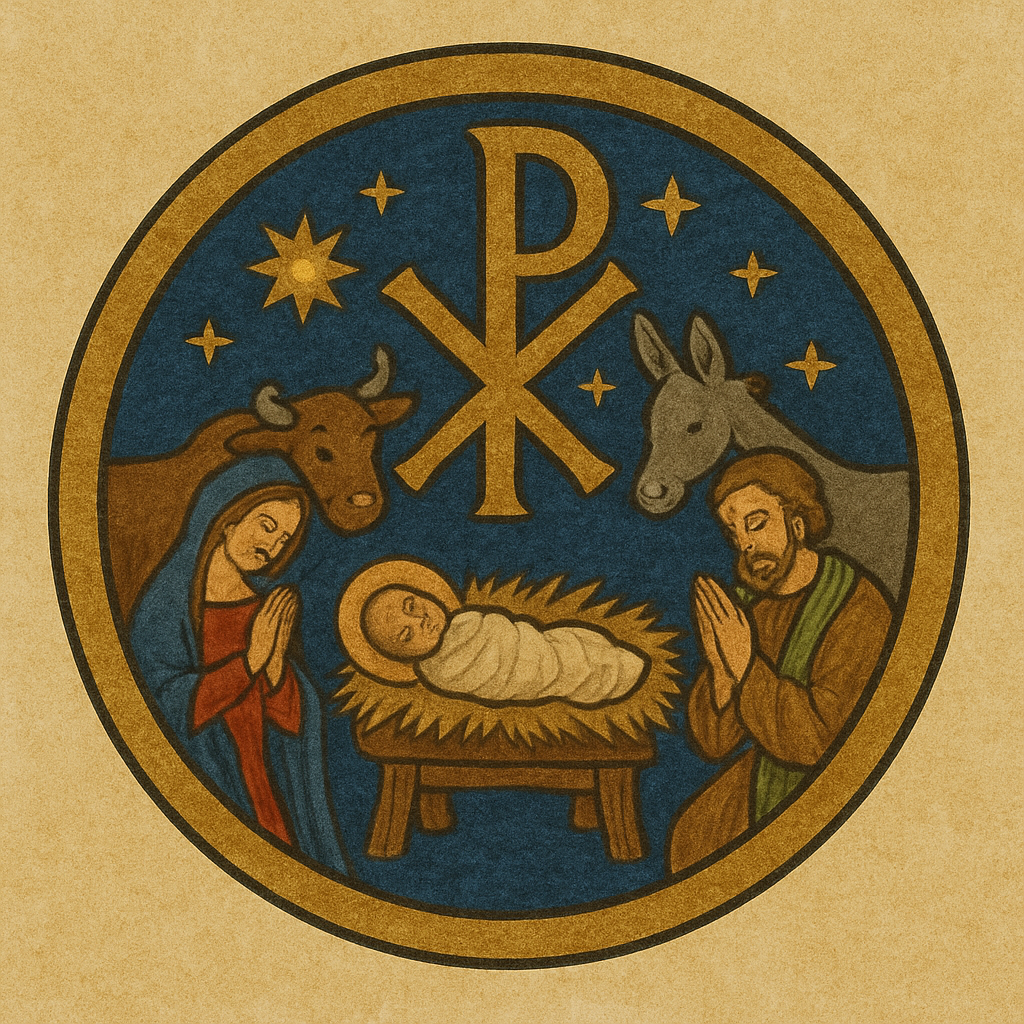
The Nativity — The Word Made Flesh

With the Nativity, the long pilgrimage traced by the Jesse Tree reaches its fulfilment. What was promised in creation, foreshadowed in covenant, sung by prophets, guarded by obedience, and carried along dusty roads is now revealed in flesh and blood. In Bethlehem, God does not merely speak to His people—He comes to dwell among them. “The Word was made flesh, and dwelt among us.”¹
Symbol: Manger
Reading: Luke 2:1–20; John 1:14
Theme: God dwells among us
St Luke situates this moment deliberately within the structures of worldly power. A census is decreed; empires count and command. Yet God’s decisive act takes place beyond the centres of authority, in poverty and obscurity. Mary gives birth and lays her Child in a manger, because there is no room at the inn.² The rejection is quiet, almost unnoticed, yet it reveals the world’s inability to recognise its Lord. The Creator enters His creation as one dependent, vulnerable, and poor.
The Fathers insist that this humility is not accidental but revelatory. St Leo the Great teaches that “He who is true God is born in the complete and perfect nature of a true man,”³ not by surrendering His divinity, but by manifesting divine love in its most radical form. The manger becomes a throne; the stable, a sanctuary. The God who once dwelt in cloud and fire now rests in human arms.
Heaven itself responds. Angels announce peace—not to rulers or philosophers, but to shepherds, men accustomed to vigilance and night. “Glory to God in the highest; and on earth peace to men of good will.”⁴ The first witnesses are those prepared by humility and watchfulness. They come, they see, and they adore. The proper response to the Nativity is not analysis but worship.
In this Child, every thread of the Jesse Tree is gathered and resolved. The Light shines in the darkness. The Root of Jesse stands revealed. The Shepherd King lies among His flock. The Lawgiver submits to infancy. The Judge of the living and the dead comes as one who must be carried. Creation receives its Creator; history receives its meaning.
As we place the manger upon the Jesse Tree, Advent gives way to adoration. The waiting Church kneels. Salvation is no longer anticipated; it is present. God has taken flesh and made His dwelling among us—not in abstraction, but in a Child.
The Word is born. Emmanuel is here.
- John 1:14 (Douay-Rheims).
- Luke 2:7.
- St Leo the Great, Sermon 21 on the Nativity.
- Luke 2:14.
THE JESSE TREE REFLECTIONS


Related Articles


Latest Articles
- Today’s homily: Feast of the Holy RelicsThe Feast of the Holy Relics affirms the dignity of the human body and Christ’s promise of resurrection. Drawing upon Scripture, the early martyrs and England’s Catholic inheritance, this homily considers the communion of saints, our duty towards the departed and the holiness demanded of our own earthly lives.
- Today’s Mass: November 5 Feast of the Holy RelicsSt. Charles Borromeo (1538–1584) reformed the Church through holiness amid the corruption of his age—guiding Trent, renewing Milan, and serving heroically during plague. With Ss. Vitalis and Agricola and in the Octave of All Saints, he calls today’s Church to fidelity, reverence, and courageous sanctity amid confusion and decline.
- Sermon for Holy RelicsThe feast of the Holy Relics recalls the early Christian veneration of martyrs, exemplified by St Polycarp, whose remains were honoured without confusing reverence for saints with worship of Christ. Rooted in belief that matter can convey divine grace through the Incarnation, relic veneration affirms the sanctification of body and creation, while acknowledging that individual relics may be questionable.
- Today’s Mass: November 4 St Charles BorromeoSt. Charles Borromeo (1538–1584) reformed the Church through holiness amid the corruption of his age—guiding Trent, renewing Milan, and serving heroically during plague. With Ss. Vitalis and Agricola and in the Octave of All Saints, he calls today’s Church to fidelity, reverence, and courageous sanctity amid confusion and decline.
- Sermon for St Charles BorromeoThe post commemorates St Charles Borromeo, a nobleman who became a determined reforming bishop after helping advance the Council of Trent. As Archbishop of Milan, he promoted catechesis, reverent worship, clerical renewal and practical care during famine and plague. His example presents radical reform as addressing root causes while preserving and deepening tradition.





Leave a Reply