
THE DEATH OF QUENTIN DERANQUE: VIOLENCE, IDEOLOGY, AND THE COST OF POLARISATION IN FRANCE
On 14 February 2026, Quentin Deranque, a 23-year-old Catholic convert, was officially declared dead after succumbing to catastrophic head injuries sustained during a violent confrontation in Lyon two days earlier.¹ His death has rapidly become a national flashpoint, raising urgent questions about political violence, militant activism, and the deterioration of civil discourse in contemporary France.
The Assault Near Sciences Po
The incident occurred on 12 February near Sciences Po Lyon, where tensions had risen around a political event involving controversial figures. Opposing activist groups gathered in the vicinity. During the confrontation, Quentin was reportedly struck multiple times in the head. He was transported to hospital in critical condition and placed in a coma before dying from traumatic brain injury on 14 February.¹
The Lyon public prosecutor’s office has opened a judicial investigation under the classification of violences ayant entraîné la mort sans intention de la donner (violence resulting in death without intent to kill).² Authorities have confirmed that witness testimony and video evidence are being examined, though no final judicial conclusions have yet been announced.
Affiliations and Competing Narratives
French media report that Quentin had been present alongside members or sympathisers of Collectif Némésis, a right-leaning activist collective.³ Some accounts describe him as assisting informally with security during the protest; family representatives maintain that he was unarmed and not acting as an official steward. The precise sequence of events remains under investigation.
Political reactions have been swift. Interior officials, including Laurent Nuñez, suggested that elements of the “ultra-left” were implicated in the violence, while representatives of activist networks have denied organisational responsibility.² As is often the case in moments of national trauma, competing interpretations have quickly hardened along ideological lines.
National Reaction
President Emmanuel Macron publicly condemned the killing, describing it as an intolerable outbreak of violence and urging calm and restraint while the judicial process proceeds.¹ The appeal underscored the government’s concern that retaliatory unrest could further destabilise an already polarised public climate.
Subsequent days saw heightened tensions across several French cities. Offices linked to political movements were vandalised, and public commentary intensified. The episode has reignited debate over the permissiveness of militant street activism, the state’s management of public order, and the broader culture of ideological confrontation.
Faith and Final Rites
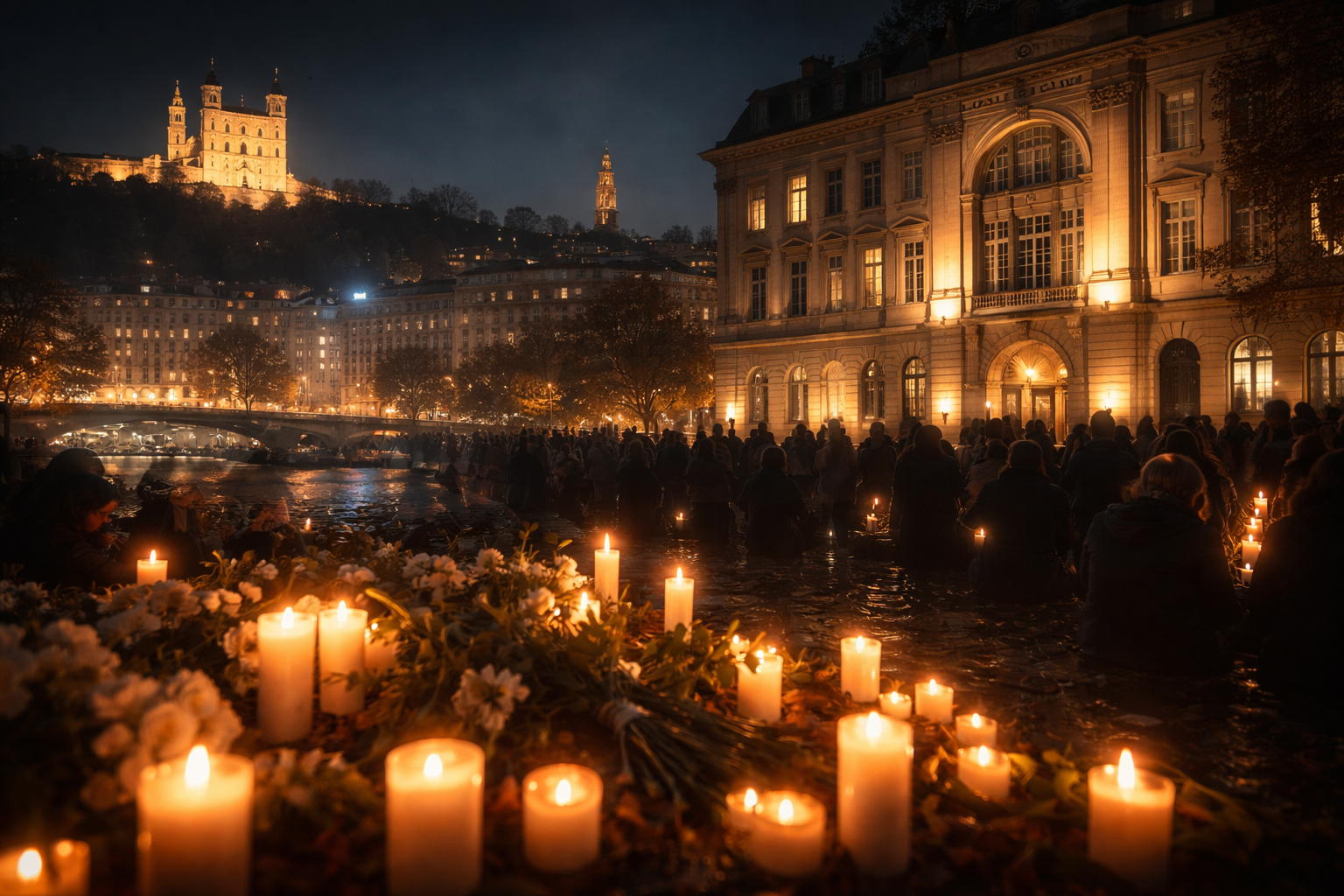
Reports from Catholic sources indicate that Quentin, a convert to the faith, received the Sacraments before his death.⁴ Vigils and prayer gatherings have been held in Lyon and elsewhere for the repose of his soul. For many within French Catholic communities, the tragedy is not merely political but profoundly spiritual — a reminder of the fragility of life amid cultural and ideological strife.
A Broader Crisis of Civil Peace
France has long prided itself on republican ideals of liberty and fraternity. Yet the death of a young man in a street confrontation exposes the precariousness of those ideals when ideological antagonism eclipses restraint. Whatever the final judicial findings may determine, the fact remains: political disagreement in a democratic society cannot be permitted to devolve into lethal violence.
The Apostle’s warning remains relevant: “If one member suffers, all suffer together” (1 Cor 12:26). A civilised order depends upon the rejection of violence as a political instrument. Quentin Deranque’s death stands as a sobering testament to what is lost when that principle fails.
¹ “Macron mourns death of young man violently attacked at MEP event in Lyon,” Euronews, 14 February 2026.
² “Mort de Quentin à Lyon: enquête ouverte pour violences aggravées,” Le Parisien, 15 February 2026.
³ “Mort de Quentin Deranque,” French press coverage summary, February 2026.
⁴ “Young French traditional Catholic activist dies after Lyon clashes,” Catholic Herald, 14 February 2026.
RELATED ARTICLES


Latest ARTICLES
- The Church Does Not Need Our Denial: Truth, scandal and the false defence of ecclesiastical reputationThe text explores the concept of “spiritual denial” within the Catholic Church regarding serious allegations against church leaders. It argues that this denial, often perceived as loyalty, leads to evasion of uncomfortable truths. The piece emphasises that acknowledging these failures does not undermine the Church’s integrity, urging faithful confrontation of wrongdoing while maintaining justice for all involved.
- The Dossier against the Victim: Bergoglio, Grassi and the Counter-Investigation the Church CommissionedAfter Fr Julio César Grassi was convicted of child sexual abuse, the Argentine Episcopal Conference, under Cardinal Bergoglio, commissioned a counter-investigation claiming his innocence, allegedly costing US$300,000. A new book by Grassi’s victim details intimidation faced by him post-conviction, highlighting the disparity in institutional support between the abuser and the victim.
- What takes priority? Leo XIV, Sexual Morality and the Synodal Reordering of Moral EmphasisPope Leo XIV has not rejected Catholic sexual morality, but his remarks hint at a pastoral shift prioritising issues such as justice and equality over sexual ethics. As the Amoris Laetitia synod approaches, concerns arise about whether moral teachings will remain authoritative as pastoral priorities evolve. The Church’s foundational beliefs may risk being undermined in this reordering.
- After the Mistrial: The Lindsay Clancy Spectacle DeepensThe mistrial concerning Lindsay Clancy’s case revealed a split jury regarding her criminal responsibility for the deaths of her three children. Although eleven jurors seemed to lean towards a lack of guilt due to mental illness, the incident highlights the complex interplay between compassion, public perception, and accountability in tragic cases.
- Today’s homily: Feria II of the Fifteenth Sunday Post PentecostSt Paul urges us not to grow weary in doing good: every prayer, sacrifice, act of charity and fidelity is seed sown for eternity. Our task is to persevere in the sowing and trust God for the harvest.



Leave a Reply