

The First Sunday in Lent: Into the Desert with the New Adam
The First Sunday in Lent in the Traditional Roman Rite confronts the faithful with the austere realism of spiritual combat. The Gospel is taken from the Gospel of Matthew (4:1–11), recounting how “Jesus was led by the Spirit into the desert, to be tempted by the devil.”¹ The liturgy does not begin Lent with sentiment but with struggle. Christ does not evade temptation; He enters it deliberately. The Church, in her wisdom, compels us to begin where He began — in fasting, in solitude, in confrontation with the adversary.
The Introit of the day, Invocabit me, places upon the lips of Christ the words of Psalm 90(91): “He shall cry to Me, and I will hear him: I will deliver him, and I will glorify him.”² The same psalm is later quoted by Satan in the second temptation. The liturgical juxtaposition is deliberate. The devil cites Scripture; Christ fulfils it. The Church thereby teaches that divine revelation is not an instrument to be manipulated but a Word to be obeyed. As St Augustine warns, Scripture can be misused when torn from charity and obedience: “The devil quoted Scripture; but the Lord answered him from Scripture.”³ The liturgy thus becomes both catechesis and caution.
The Collect implores that we may “advance in the understanding of the mystery of Christ.”⁴ Lent is therefore mystagogical before it is moral. It draws the faithful more deeply into the mystery of the Incarnate Word. The Epistle from 2 Corinthians 6:1–10 situates the Christian life within apostolic endurance — “in labours, in watchings, in fastings.”⁵ St Paul does not describe a religion of comfort but of perseverance. His catalogue of trials frames Lent as participation in the Cross.
The Fathers interpret the Temptation narrative as the reversal of Eden. St Irenaeus writes that Christ “recapitulated in Himself the ancient formation of man,” undoing Adam’s disobedience through obedience.⁶ Where Adam fell amid abundance, Christ triumphs amid deprivation. Where Adam grasped at divinity, Christ humbles Himself in filial trust. The desert thus becomes the arena of recapitulation. The New Adam stands where the first Adam failed.
St Leo the Great, preaching on this very season, declares: “The Lord permitted Himself to be tempted by the devil, that He might both defend us by His aid and instruct us by His example.”⁷ The temptation is not theatrical but vicarious. Christ enters combat not because He is vulnerable to sin, but because we are. St Gregory the Great observes the progressive nature of the temptations — from bodily appetite to vainglory to idolatrous ambition — noting that the enemy first tempts through what is lawful before drawing the soul toward what is unlawful.⁸ Sin rarely begins with apostasy; it begins with appetite.
St Thomas Aquinas, in the Summa Theologiae, analyses the three temptations as corresponding to the “lust of the flesh, the lust of the eyes, and the pride of life” (1 John 2:16).⁹ The transformation of stones into bread appeals to carnal desire; the casting down from the Temple tempts spiritual presumption; the offer of worldly dominion seeks to enthrone ambition. Aquinas concludes that Christ willed to be tempted “that He might give us an example of resisting temptations.”¹⁰ The desert is therefore paradigmatic Christian formation.
Fasting stands at the centre of this formation. The Roman discipline of Lent — historically one modest meal after sunset and abstinence from flesh meat — was never arbitrary austerity but theological anthropology enacted.¹¹ Pope St Leo insists that “by the discipline of fasting the substance of our flesh is chastened and the strength of our soul is renewed.”¹² The Council of Trent reaffirms fasting as apostolic discipline binding upon the faithful.¹³ Bodily restraint serves spiritual liberty. The desert strips illusion; hunger exposes dependence.
The stational church for this Sunday is the Archbasilica of Saint John Lateran, the cathedral of the Roman Pontiff and inscribed as omnium urbis et orbis ecclesiarum mater et caput — “mother and head of all the churches of the city and of the world.”¹⁴ The symbolism is striking. Lent begins not in isolation but at the Church’s cathedral. Spiritual combat is ecclesial. The faithful undertake the fast under apostolic authority and within the visible unity of the Church. The apse mosaic proclaims Christ Pantocrator — ruler of all. The desert contest is not dualistic; Christ’s sovereignty frames the battle.
The climactic temptation reveals the heart of the matter: worship. “The Lord thy God shalt thou adore, and Him only shalt thou serve.”¹⁵ Idolatry, as St Augustine teaches in De Civitate Dei, consists not merely in external rites but in disordered love — when created goods are treated as ultimate ends.¹⁶ Lent therefore examines allegiance. What commands obedience? Appetite, reputation, power — or God alone?
Pope Pius XII reminds the faithful in Mediator Dei that the sacred liturgy “forms and directs the interior life.”¹⁷ The austerity of violet vestments, the silence of the suppressed Gloria, the absence of the Alleluia — these are not aesthetic accidents but theological pedagogy. The Church trains the soul through sign and symbol. Even the Second Vatican Council affirms that the annual observance of Lent prepares the faithful “for the paschal mystery” through penance and recollection.¹⁸ The continuity of doctrine remains: Lent orients the Church toward Easter through disciplined purification.
The Gospel concludes with quiet authority: “Then the devil left Him; and behold angels came and ministered to Him.”¹⁹ There is no spectacle. Only fidelity. The victory of Christ is accomplished through obedience and steadfastness. Lent summons the faithful not to theatrical piety but to sustained perseverance.
The First Sunday in Lent in the Tridentine Rite thus reveals the architecture of the Christian life. It is desert before resurrection, obedience before glory, worship before dominion. Christ conquers not by spectacle but by submission to the Father’s will. To enter Lent is to enter that same obedience — not to prove our strength, but to participate in His triumph.
- Matthew 4:1 (Douay-Rheims).
- Missale Romanum (1962), Dominica I in Quadragesima, Introit; Psalm 90:15–16.
- St Augustine, Enarrationes in Psalmos, 90.
- Missale Romanum (1962), Collect, Dominica I in Quadragesima.
- 2 Corinthians 6:5 (Douay-Rheims).
- St Irenaeus, Adversus Haereses, III, 18, 1.
- St Leo the Great, Sermon 39 (On Lent I).
- St Gregory the Great, Homiliae in Evangelia, Homily 16.
- St Thomas Aquinas, Summa Theologiae, III, q. 41, a. 4.
- Ibid., III, q. 41, a. 1.
- Dom Prosper Guéranger, The Liturgical Year, Vol. IV: Lent.
- St Leo the Great, Sermon 40 (On Lent II).
- Council of Trent, Session XXIII, De Reformatione, ch. 12.
- Inscription of the Archbasilica of St John Lateran.
- Matthew 4:10 (Douay-Rheims).
- St Augustine, De Civitate Dei, X, 6.
- Pope Pius XII, Mediator Dei (1947), §20–23.
- Second Vatican Council, Sacrosanctum Concilium, §109.
- Matthew 4:11 (Douay-Rheims).
related articles


Latest articles
- Mary Is Co-Redemptrix: Cardinal Burke Reopens Rome’s Marian ControversyCardinal Raymond Leo Burke has declared the Virgin Mary as “Co-Redemptrix” amidst controversy over the Vatican’s restriction on this title. The debate revolves around the appropriateness of certain theological language and whether terminology historically used can still accurately express Marian cooperation in Redemption without compromising Christ’s unique role.
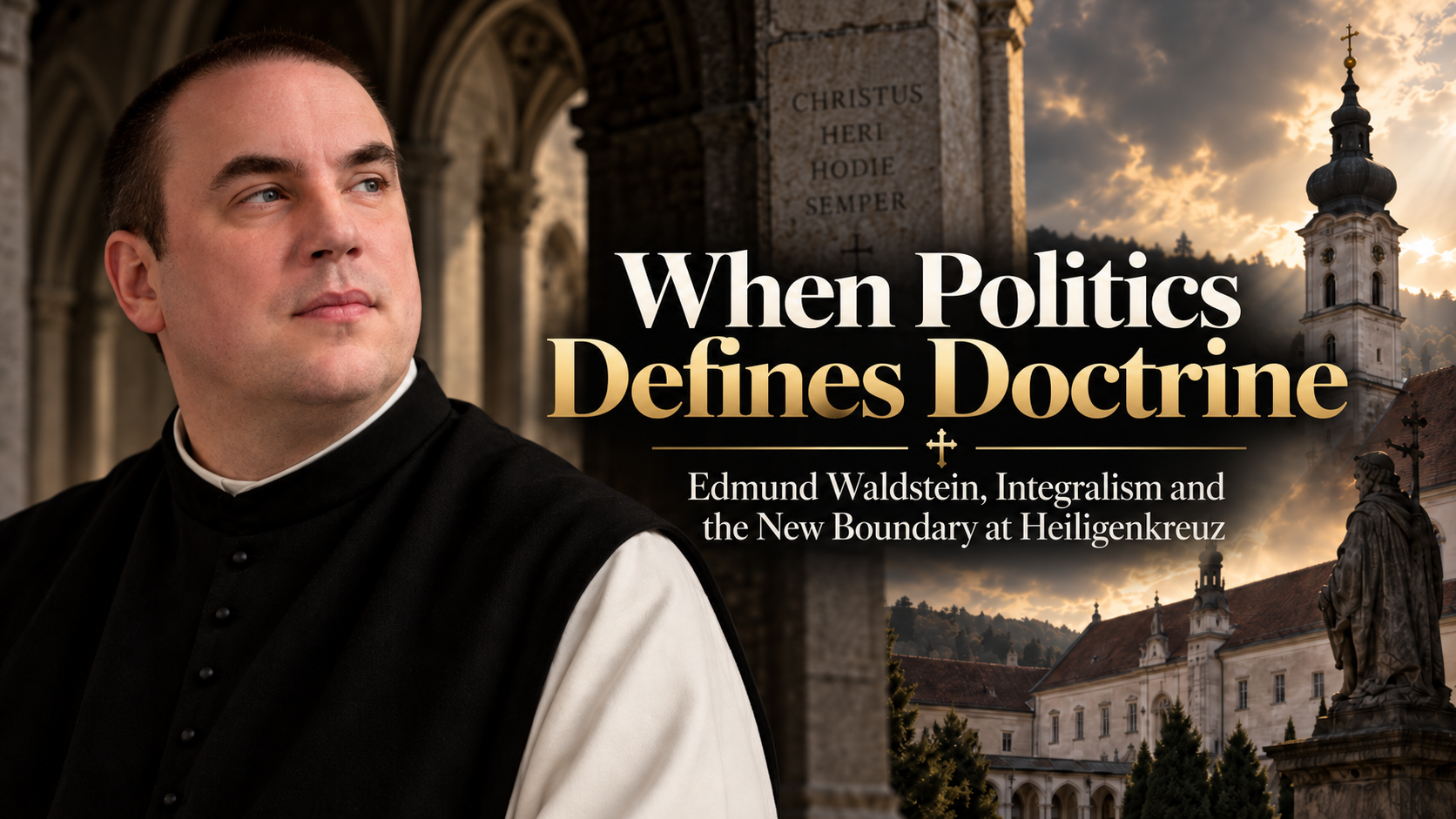
- When Politics Defines Doctrine: Edmund Waldstein, Integralism and the New Boundary at HeiligenkreuzThe ongoing exclusion of Father Edmund Waldstein from teaching at Heiligenkreuz has sparked debate on the limits of acceptable Catholic thought, particularly regarding integralism and its relationship to Church doctrine. Critics argue that Waldstein and similar positions challenge both Catholic teachings and democratic values, raising questions about the intersection of faith and politics.
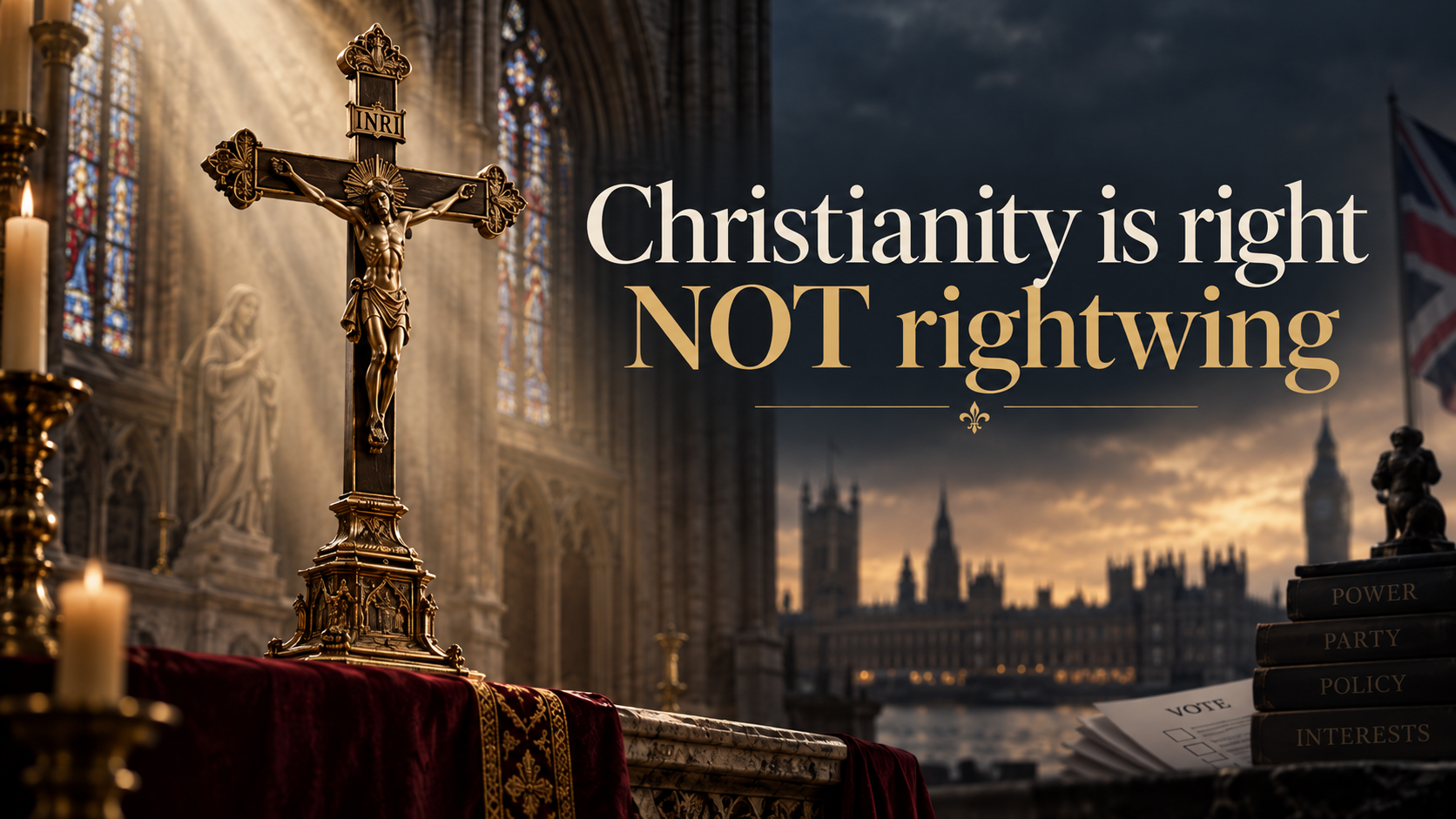
- Christianity Is Right ~ Not Right WingThe article discusses the distinction between Catholic orthodoxy and modern political ideologies, particularly the Right and Christian nationalism. It argues that Catholic beliefs about family, morality, and authority predate contemporary political classifications and should not be conflated with right-wing politics. The ordo amoris framework is presented as a guiding principle for evaluating political alliances while maintaining a focus on the common good and the Social Kingship of Christ.
- Today’s homily: The Nativity of the Blessed Virgin MaryThe Nativity of the Blessed Virgin Mary marks a significant moment in salvation history, representing the dawn of the Incarnation. Mary’s birth, unnoticed by the world, was part of God’s providential plan leading to Christ. This feast invites reflection on humility, obedience, and trust in God’s will, emphasising Mary’s role as the Mother of the Redeemer.
- Today’s Mass: September 08 The Nativity of the Blessed Virgin MaryThe Nativity of the Blessed Virgin Mary celebrates her birth, symbolising a new beginning tied to salvation. Originating in the East, it gained recognition in Rome under Pope Sergius I. Additionally, the feast commemorates Saint Hadrian, a martyr who converted to Christianity, underscoring themes of faith and redemption.



Leave a Reply