

Back to Being Catholic: The Traditional Discipline of Lenten Fast and Abstinence
Lent has never been a mood. It has always been a structure.
The modern Catholic often experiences Lent as an interior initiative: one decides what to “give up,” experiments for forty days, and resumes ordinary life at Easter. Historically, however, Lent was not constructed from private resolutions but received from the Church. Its shape was given. Its demands were known. Its discipline was not improvised but inherited.
To recover the meaning of Lenten fasting, one must see it not as dietary advice, nor as ecclesiastical severity, but as an expression of Catholic anthropology: what the Church believes about the human person, about sin, about grace, and about freedom.
Under the 1917 Codex Iuris Canonici¹ the Church articulated a penitential framework that presupposed seriousness. Abstinence bound from childhood. Fasting bound from maturity. Lent was not an optional ascetical experiment; it was a season in which the entire body of the faithful entered into restraint.
Abstinence meant refraining from flesh meat and from broth derived from it. Fasting meant one full meal and two smaller meals not equal to it, with no eating between meals. Within Lent, this discipline intensified. Ash Wednesday required fasting and complete abstinence. The Fridays and Saturdays of Lent did the same. The remaining weekdays required fasting with partial abstinence. Holy Saturday was observed as a fast until noon under the pre-1955 arrangement, harmonising with the ancient morning celebration of the Easter Vigil². Ember Days throughout the year required fasting and abstinence³. Fridays were penitential unless displaced by certain feasts⁴.
This was not legalism. It was formation.
The Theological Logic of Fasting
The Church’s discipline rests on a sober understanding of human nature. We are not disembodied wills. We are body and soul together. The passions influence the intellect. Appetite affects judgment. What we repeatedly indulge, we gradually serve.
St. Thomas Aquinas, when treating fasting, does not begin with rules but with virtue. He situates fasting under temperance. Temperance does not destroy desire; it governs it. Fasting, he writes, has three ends: to restrain concupiscence, to raise the mind to contemplation, and to make satisfaction for sin⁵.
Each of these ends reveals something essential.
First, fasting restrains concupiscence. After the Fall, appetite is not neutral. It tends to exceed measure. The one who cannot deny himself lawful food will struggle to deny himself unlawful pleasure. Bodily discipline is therefore not suspicion of creation; it is the restoration of order within creation.
Second, fasting raises the mind to contemplation. Anyone who has known both satiety and restraint recognises the difference in mental clarity. The tradition consistently testifies that moderate hunger sharpens attention. The body quieted becomes less insistent. Space opens for prayer.
Third, fasting makes satisfaction for sin. Here the Council of Trent speaks plainly: even after the guilt of sin is forgiven in the sacrament of Penance, temporal punishment remains⁶. Satisfaction is not a denial of mercy but a participation in justice healed by love. Fasting becomes a concrete act of reparation. The Christian does not merely regret sin; he repairs.
The Roman Catechism echoes this logic. It teaches that fasting weakens the impulses of the flesh and strengthens the spirit, disposing the faithful more readily to divine things⁷. The discipline of Lent, therefore, is not punitive. It is medicinal and elevating.
Christ as Measure
Christ fasted forty days and forty nights before He began to preach (Matt 4:1–2). He did not require purification. He entered the desert to reveal the pattern of redemption. If the sinless Son embraced restraint before public ministry, the Church cannot treat discipline as incidental.
When He teaches that certain evils are cast out only by prayer and fasting (Matt 17:20), He binds asceticism to spiritual combat. Fasting is not aesthetic minimalism. It is warfare against disordered desire.
The earliest Christian communities understood this instinctively. The Didache records that Christians fasted on Wednesdays and Fridays⁸. Wednesday recalled betrayal; Friday recalled crucifixion. Penance was woven into time. The Roman retention of Friday as a universal penitential day is not medieval invention but apostolic memory.
The Reduction of Structure
The present universal discipline, articulated in the Code of Canon Law⁹, requires fasting and abstinence on Ash Wednesday and Good Friday and abstinence on Fridays, subject to episcopal norms. The Ember Days and weekday Lenten fasts no longer bind universally. The Church possesses full authority to modify her discipline. What she commands must be obeyed.
Yet the reduction of external structure has consequences. When discipline becomes minimal, formation becomes optional. When penance becomes exceptional, appetite resumes sovereignty by default.
The older framework reveals what earlier generations considered ordinary Catholic maturity. It assumed that the faithful could bear restraint. It presumed that bodily discipline was integral to spiritual life.
Fasting and Freedom
Modern culture frequently equates freedom with the absence of constraint. Christian tradition equates freedom with the right ordering of desire. A man enslaved to appetite is not free; he is predictable.
Aquinas insists that virtue lies in measure. Excessive severity can damage the body and impede charity. He explicitly warns against fasting in a way that renders one incapable of fulfilling one’s duties¹⁰. The Church never sought theatrical austerity. She sought ordered restraint.
The moral tradition also clarifies that culpability requires knowledge and consent. An accidental violation of the fast is not sin. The 1917 Code recognises that serious harm excuses from strict observance¹¹. The Church’s law presumes reason and freedom. It does not cultivate anxiety. It cultivates intention.
But prudence must not become an alibi for comfort. There is a difference between genuine limitation and quiet indulgence.
Developing a Personal Rule in a Time Without One
In a culture that no longer provides an external ascetical rhythm, the Catholic must act more deliberately.
The first principle remains obedience. Whatever personal discipline is adopted must begin with fidelity to the Church’s present law. Voluntary austerity detached from ecclesial obedience quickly becomes self-directed rather than ecclesial.
The second principle is stability. A modest rule faithfully observed forms the soul more effectively than dramatic resolutions abandoned after ten days. The tradition consistently favours constancy over intensity.
For many, restoring Friday abstinence throughout the year provides a necessary anchor. It re-inscribes the Passion into the week. It gives time a penitential contour.
During Lent, one may adopt the traditional structure in measured form: one principal meal, two smaller meals not equal to it, no eating between meals. Where this is not possible, intentional reduction—of quantity, of indulgence, of habitual comforts—can still serve the same end. The question is not how much one can endure, but whether desire is being trained.
Fasting must be offered. Hunger that is merely endured breeds irritation. Hunger consciously offered becomes prayer. A brief inward act—“for love of Thee,” “for reparation,” “for the conversion of…”—transforms physical lack into spiritual participation.
The fast must also extend beyond food. Chrysostom’s counsel remains exacting: let the eyes fast from impurity, the tongue from harshness, the ears from gossip. In an age of constant stimulation, fasting from needless media and reflex distraction may be as necessary as abstaining from meat. Gluttony in the classical sense includes attachment to comfort and excess in all forms.
Finally, fasting must remain inseparable from prayer and almsgiving. Severed from prayer, it becomes stoicism. Severed from charity, it becomes self-absorption. United with both, it becomes purification.
Hunger and Resurrection
Lent exists for Easter. The Alleluia returns only after silence. Joy intensifies when appetite has been schooled in waiting.
The present law binds in conscience. The tradition instructs the heart. To draw from that tradition is not nostalgia; it is maturity. The Church once formed her children through visible restraint. In an age of abundance, the same restraint becomes even more intelligible.
Fasting does not diminish the body. It restores hierarchy within it. It does not constrict freedom. It clarifies it. It does not create gloom. It prepares for joy.
When hunger is accepted in obedience and offered in charity, it becomes something other than deprivation. It becomes participation.
And that is why the Church still begins Lent with ashes.
¹ Codex Iuris Canonici (1917), canons 1250–1254.
² Sacred Congregation of Rites, Maxima Redemptionis (1955).
³ 1917 CIC, can. 1252 §4.
⁴ Ibid., can. 1252 §1.
⁵ Thomas Aquinas, Summa Theologiae, II–II, q.147, a.1.
⁶ Council of Trent, Session XIV, Doctrine on the Sacrament of Penance, ch. 8.
⁷ Roman Catechism (Catechism of the Council of Trent), Part II, On Penance.
⁸ Didache, ch. 8.
⁹ Code of Canon Law, canons 1249–1253.
¹⁰ Aquinas, ST II–II, q.147, a.3.
¹¹ 1917 CIC, can. 1245.
related articles


Latest articles
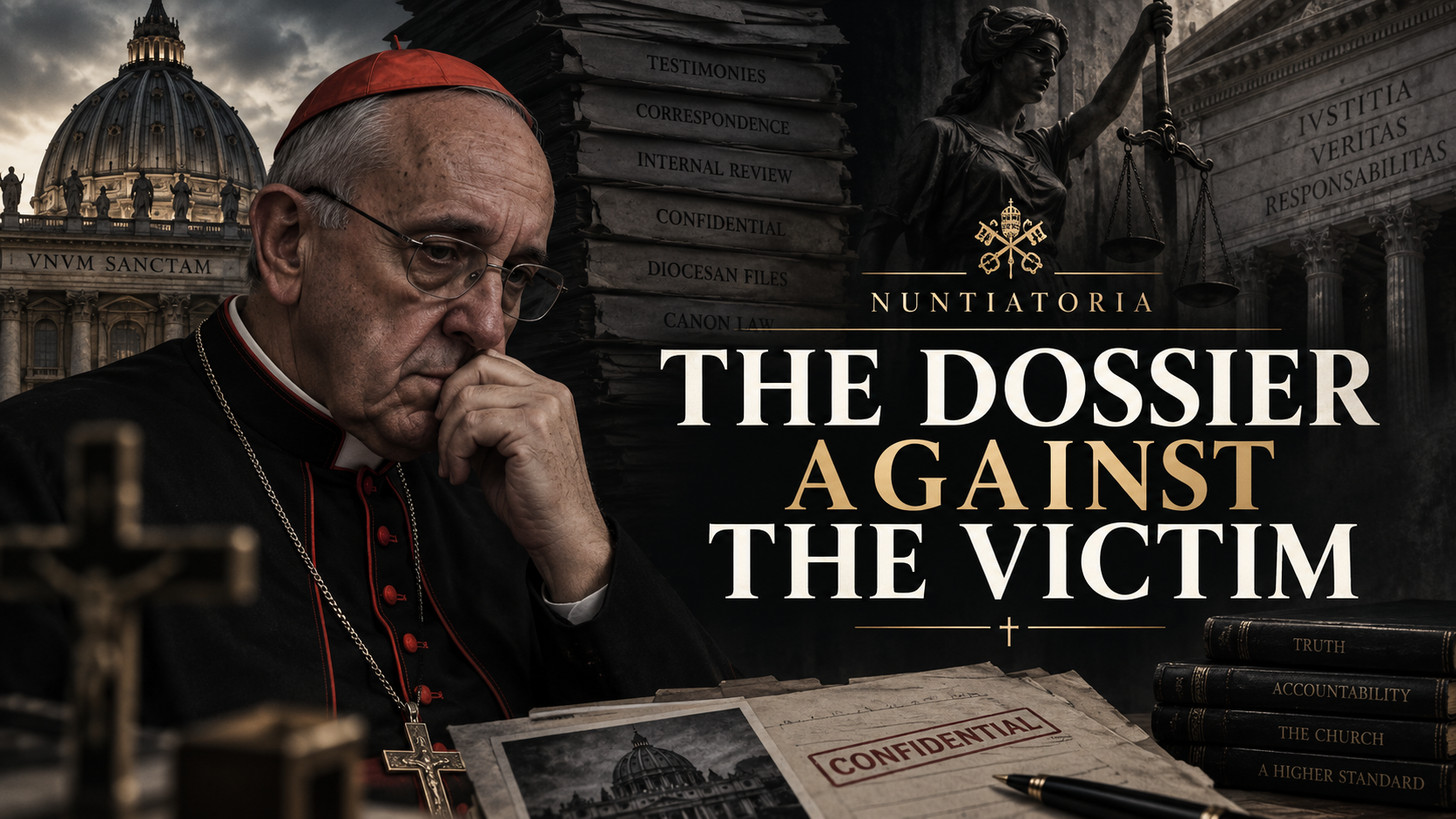
- The Dossier against the Victim: Bergoglio, Grassi and the Counter-Investigation the Church CommissionedAfter Fr Julio César Grassi was convicted of child sexual abuse, the Argentine Episcopal Conference, under Cardinal Bergoglio, commissioned a counter-investigation claiming his innocence, allegedly costing US$300,000. A new book by Grassi’s victim details intimidation faced by him post-conviction, highlighting the disparity in institutional support between the abuser and the victim.
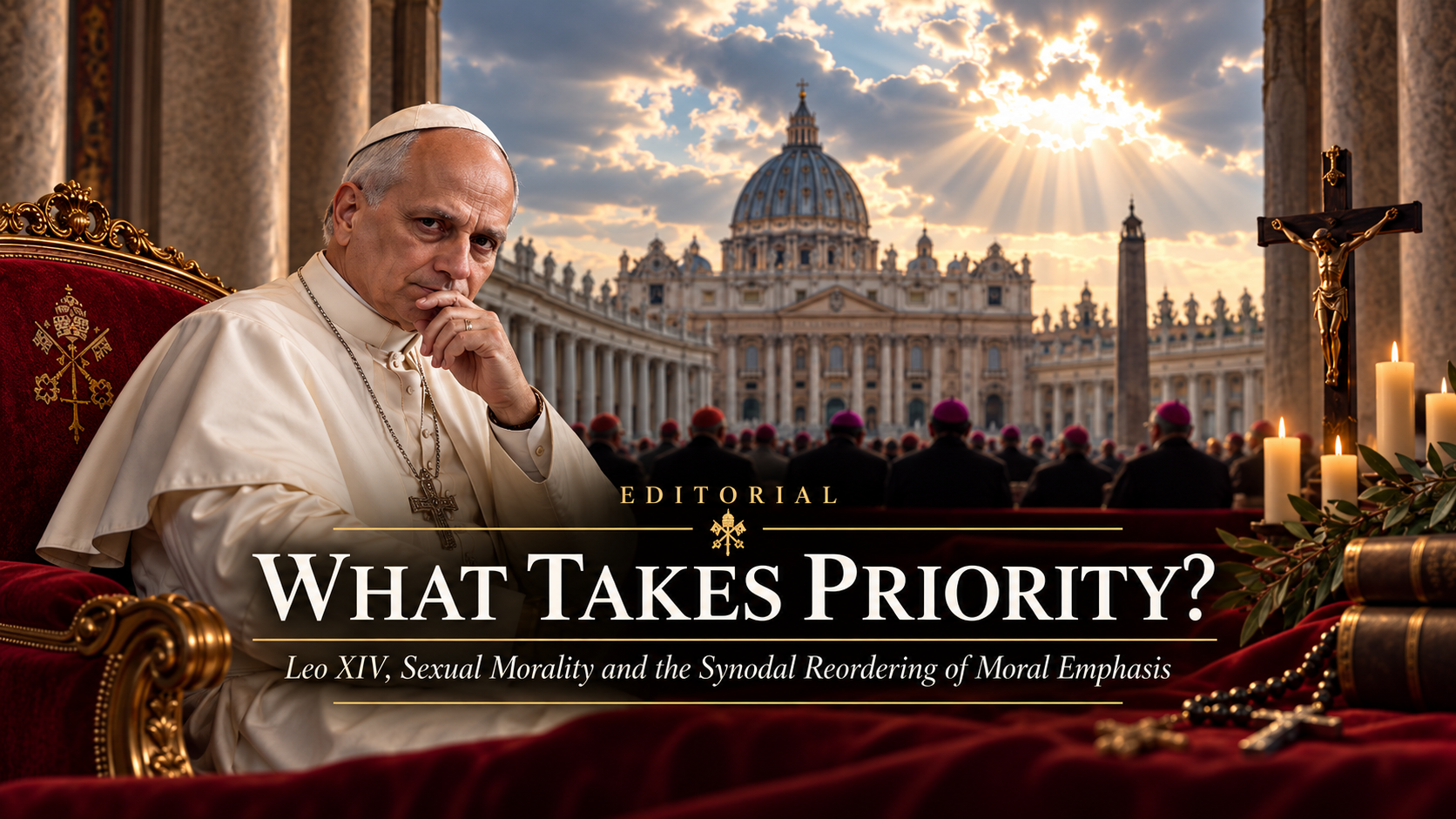
- What takes priority? Leo XIV, Sexual Morality and the Synodal Reordering of Moral EmphasisPope Leo XIV has not rejected Catholic sexual morality, but his remarks hint at a pastoral shift prioritising issues such as justice and equality over sexual ethics. As the Amoris Laetitia synod approaches, concerns arise about whether moral teachings will remain authoritative as pastoral priorities evolve. The Church’s foundational beliefs may risk being undermined in this reordering.
- After the Mistrial: The Lindsay Clancy Spectacle DeepensThe mistrial concerning Lindsay Clancy’s case revealed a split jury regarding her criminal responsibility for the deaths of her three children. Although eleven jurors seemed to lean towards a lack of guilt due to mental illness, the incident highlights the complex interplay between compassion, public perception, and accountability in tragic cases.
- Today’s homily: Feria II of the Fifteenth Sunday Post PentecostSt Paul urges us not to grow weary in doing good: every prayer, sacrifice, act of charity and fidelity is seed sown for eternity. Our task is to persevere in the sowing and trust God for the harvest.
- Today’s Mass: September 07 Feria of Sunday XV Post PentecostThe Sunday XV Post Pentecost Mass emphasises the importance of living a life governed by the Holy Spirit, encouraging Christians to act with grace, charity, and humility. St Paul’s teachings remind believers to bear one another’s burdens and avoid self-deceit, ultimately striving for spiritual growth and communion with God through the Eucharist.




Leave a Reply