
Charity, Necessity, and the Limits of Interpretation: The SSPX–Rome Dialogue and the Future of Ecclesial Communion
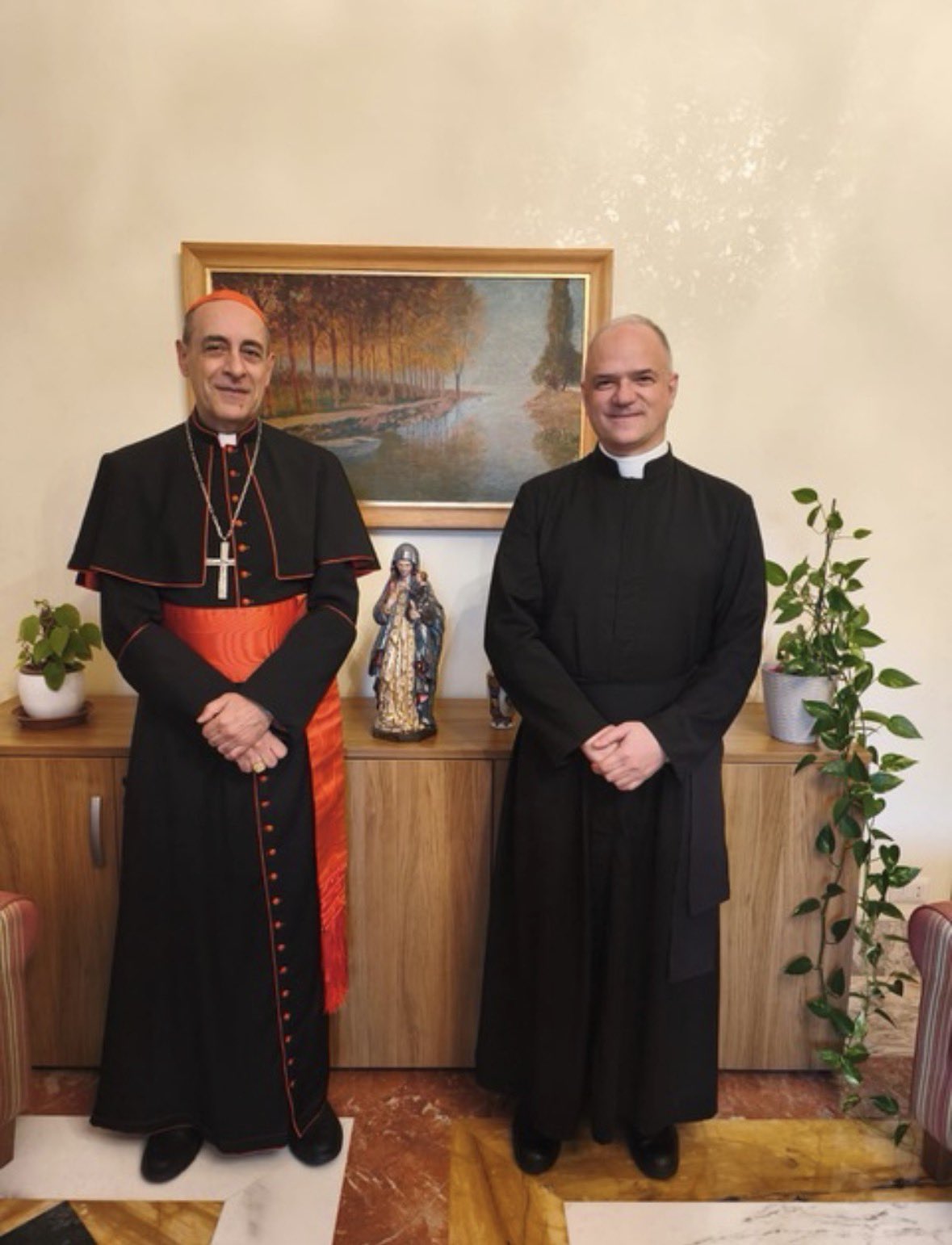
The communiqué issued on 12 February 2026 by the Dicastery for the Doctrine of the Faith following the meeting between Cardinal Víctor Manuel Fernández and Fr Davide Pagliarani, Superior General of the Society of Saint Pius X, marks a decisive moment in the Church’s ongoing struggle to define the boundaries of communion in a post-conciliar age.¹ The text proposes a “specifically theological path of dialogue” aimed at identifying the “minimal requirements necessary for full communion,” while simultaneously warning that episcopal consecration without pontifical mandate would constitute a decisive rupture of ecclesial communion.²
This pairing of invitation and admonition reveals the depth of the present crisis. What is being negotiated is not merely the timing of episcopal consecrations. What is being tested is the contemporary Catholic understanding of authority, obedience, doctrinal development, and unity itself.

The Distinction Between Divine Faith and Religious Submission
Central to the communiqué is the distinction between the assent of divine and Catholic faith and the “religious submission of mind and will.” Canon 750 §1 affirms that truths revealed by God and proposed as such by the Church must be believed with divine and Catholic faith.³ Canon 750 §2 extends definitive assent to certain non-revealed truths intimately connected with revelation.⁴ Canon 752, however, governs teachings not proposed definitively, requiring religious submission rather than the assent of theological faith.⁵
This distinction is not academic. It is foundational. If all conciliar texts were to demand the same level of assent as dogmatic definitions, then theological dispute would be foreclosed. Yet the Council itself, as Pope Paul VI explicitly stated, “avoided giving solemn dogmatic definitions engaging the infallibility of the ecclesiastical magisterium.”⁶ This historical fact does not diminish the authority of the Council; rather, it situates its texts within the broader structure of magisterial gradation.
The present dialogue implicitly recognises that the Council’s documents do not all occupy the same theological tier. The identification of “minimal requirements” for communion presupposes that some matters belong to the substance of faith while others admit of legitimate theological discussion.¹
Episcopal Consecration and the Nature of Schism
The Holy See reaffirmed that episcopal ordination without pontifical mandate constitutes a decisive rupture of ecclesial communion and cited Ecclesia Dei (1988).² Canon 1387 of the 1983 Code prescribes latae sententiae excommunication for such consecrations.⁷ Yet the canonical and historical landscape is more nuanced than a superficial reading suggests.
The 1917 Code of Canon Law imposed suspension, not excommunication, for episcopal consecration without mandate.⁸ Moreover, Pope Benedict XVI, in his 2009 letter to the bishops of the world, described such consecrations as raising “the danger of a schism,” not as automatically constituting schism in every circumstance.⁹ Canon 751 defines schism as the refusal of submission to the Roman Pontiff or of communion with those subject to him.¹⁰ The essential juridical question therefore becomes whether an episcopal act performed under appeal to necessity represents repudiation of papal authority in principle, or grave disobedience claimed to be justified by extraordinary conditions.
This distinction is not rhetorical. It is the hinge upon which canonical liability turns.
The Canonical Doctrine of Necessity
The SSPX has invoked a state of necessity in defending both past and proposed episcopal acts. Canon law itself recognises necessity as potentially exculpatory. Canon 1323 §4 provides that no penalty is incurred by one who acts out of necessity, unless the act is intrinsically evil or harmful to souls.¹¹ Canon 1324 allows mitigation where necessity is sincerely but erroneously believed.¹² Penal norms, moreover, are to be interpreted strictly, according to canon 18.¹³
The doctrine of necessity has deep roots in canonical tradition. It presupposes that in extraordinary circumstances—where the salvation of souls is gravely endangered—actions otherwise illicit may not incur penalty. The burden of proof lies upon the one invoking such necessity. Yet the category exists within the law. It is not an innovation of the SSPX; it is a juridical principle embedded in the Church’s canonical order.
How Rome chooses to interpret and apply this doctrine in the present case will establish precedent. The implications extend beyond one fraternity.
Implications for Other Traditional Catholic Bodies
The SSPX dialogue is not isolated. It bears directly upon other traditional Catholic bodies operating in canonical irregularity while affirming apostolic succession and the papal office.
Both the Servants of the Holy Family and the Old Roman Apostolate affirm the validity of apostolic succession, profess fidelity to the perennial magisterium, recognise the papal office, and invoke necessity in explaining their present posture. Neither denies the papacy. Neither claims formal separation from the Church. Both situate their circumstances within an ecclesiological framework of extraordinary crisis rather than repudiation of authority.
If Rome articulates with clarity that Vatican II contains texts requiring differentiated levels of assent, and that resistance to non-definitive formulations does not automatically constitute schism, then the interpretive climate becomes more precise and more juridically coherent. The appeals to necessity advanced by SSPX, SSF, and ORA would be assessed within recognised canonical categories rather than dismissed as rhetorical constructions.
If, however, communion is defined in maximalist terms—equating theological resistance to non-definitive conciliar texts with rupture—the canonical environment narrows considerably. The line between doctrinal dispute and schism becomes blurred, and juridical conformity risks overshadowing theological precision.
The Deeper Ecclesiological Question
At stake is the structure of communion itself. Is unity safeguarded primarily by doctrinal clarity rooted in the perennial magisterium, or by administrative uniformity? Can theological resistance within defined limits coexist with communion, or must assent be functionally total?
The Church’s supreme law remains the salvation of souls.¹⁴ Canon 1752 closes the Code by reminding legislators and judges alike that the salus animarum must always stand before their eyes. This principle does not abolish law; it orients law toward its proper end.
The present moment therefore transcends tactical negotiation. It concerns whether unity is to be preserved through disciplined theological precision or enforced through expansive juridical interpretation. The outcome will shape not only the future of the SSPX, but the broader ecclesiological landscape in which traditional Catholic bodies are judged.
What is unfolding is not merely a canonical episode. It is a test of how the Church understands herself in an age still widely acknowledged as one of crisis.
¹ Dicastery for the Doctrine of the Faith, Communiqué, 12 February 2026.
² John Paul II, Apostolic Letter Ecclesia Dei, 2 July 1988, nn. 3, 5c.
³ Code of Canon Law (1983), can. 750 §1.
⁴ Ibid., can. 750 §2.
⁵ Ibid., can. 752.
⁶ Paul VI, General Audience, 12 January 1966.
⁷ Code of Canon Law (1983), can. 1387 (revised 2021).
⁸ Code of Canon Law (1917), can. 2370.
⁹ Benedict XVI, Letter to the Bishops of the Catholic Church, 10 March 2009.
¹⁰ Code of Canon Law (1983), can. 751.
¹¹ Ibid., can. 1323 §4.
¹² Ibid., can. 1324 §1, 8°.
¹³ Ibid., can. 18.
¹⁴ Ibid., can. 1752.
RELATED ARTICLES


Latest
- Today’s homily: Christ the KingThe homily reflects on Christ’s kingship as seen in the Gospel narrative. It contrasts earthly authority with divine truth, emphasising that true allegiance to God requires genuine obedience and transformation. Believers are called to examine their personal commitments and respond to Christ’s demands in everyday life, ultimately recognising their identity as bearers of God’s image.
- Sermon for Christ the KingToday marks the celebration of Christ the King and the Twenty Second Sunday after Pentecost, a feast asserting Christ’s sovereignty against totalitarianism. St. Paul emphasised Christ’s supremacy over power and principalities, challenging early Gnostic beliefs. The early Church’s victory over evil is affirmed in Christ’s resurrection, offering hope and unity amidst contemporary struggles.
- Today’s Mass: October 25 SOVEREIGNTY OF OUR LORD JESUS CHRIST, SUPREME KINGThe Feast of the Sovereignty of Our Lord Jesus Christ celebrates Christ’s dual kingship by birth and conquest. Established by Pius XI, it aims to deepen faith and counter anti-clericalism. The liturgical observance underscores His authority as King, advocating for societal recognition of His reign to bring peace and harmony.
- TRADITION BEHIND THE FENCEThe Vatican’s prohibition of the traditional Ad Petri Sedem pilgrimage to St Peter’s Basilica has sparked controversy, especially among traditional Catholics. While some cite scheduling conflicts, the broader issue lies in the restrictive policies of Traditionis custodes, which may confine traditional liturgical practices to specific enclaves, risking the transmission and recognition of Catholic Tradition within the wider Church.
- Today’s Mass: October 24 St Raphael the ArchangelThe Feast of Saint Raphael the Archangel highlights his healing powers as depicted in the Book of Tobit, where he aids Tobit and his son, Tobiah. Venerated as a protector of travellers and the blind, Raphael is celebrated for his miraculous interventions. His legacy includes support for nurses, matchmakers, and Catholic studies.





Leave a Reply