From Quinquagesima to the First Sunday of Lent, the Church leads us from blindness to vision, from ashes to combat. Charity prepares the heart, repentance humbles it, and Christ’s victory in the desert strengthens it. Lent begins not in despair—but in disciplined hope.
The Employment Rights Act 2025 introduces a proactive duty for employers to prevent third-party harassment, reshaping risk distribution in civil society. While harassment definitions remain unchanged, the Act’s focus on prevention encourages cautious behavior, leading to fewer controversial discussions hosted in various venues, ultimately narrowing public discourse.
OLD ROMAN TV’s Lenten Daily Schedule for 2026 offers a structured rhythm of prayer and reflection, addressing modern distractions. The schedule includes Morning Prayers, Mass, midday recollection, Stations of the Cross, and the Rosary, fostering active participation in faith. It aims for spiritual formation and recovery of time’s sanctity within Lent.
Ash Wednesday marks the beginning of Lent in the traditional Roman Rite, characterized by the imposition of ashes symbolizing mortality and repentance. It originated as a public penance rite but later extended to all Christians. This day emphasizes humility, discipline, and the journey towards spiritual renewal, contrasting earthly glory with eternal truths.
The text discusses the traditional Catholic practices of fasting and abstinence during Lent, emphasizing their historical significance and theological basis. Rather than being personal choices, these practices are collective disciplines meant to shape spiritual maturity and clarity. Fasting is seen as a restoration of order, integral to understanding freedom and fostering prayer.
The pre-1955 Roman Lent, or Quadragesima, is a structured penitential season emphasizing discipline, hierarchy, and the formation of the penitent. It integrates elements such as fasting, ritual prayer, and a modified liturgical structure to reflect a coherent Christian anthropology. This tradition underscores that grace follows discipline, leading to a deeper understanding of redemption.
Sexagesima Sunday marks the second Sunday of the Gesima season, focusing on the Parable of the Sower. This parable illustrates various responses to God’s word, emphasizing that while many do not respond, a faithful remnant exists. Despite struggles, believers are encouraged to persist in spreading the Gospel, as some will indeed bear fruit.
The recent publication of the new Statute for the Pontificia Accademia Mariana Internazionale occurs alongside a doctrinal note limiting certain Marian titles, reflecting a shift towards centralization and caution within the Church regarding its Marian vocabulary. This adjustment raises concerns about potential minimalism in theological language and the implications for Marian devotion and Christological understanding.
From a Canadian school massacre to a $2 million detransitioner verdict in New York, February 2026 has exposed structural weaknesses in how institutions respond to adolescent identity distress. The UK’s revised school guidance urges caution—but without mandatory psychological gatekeeping at the medical threshold, safeguarding remains incomplete.
From Quinquagesima to the First Sunday of Lent, the Church leads us from blindness to vision, from ashes to combat. Charity prepares the heart, repentance humbles it, and Christ’s victory in the desert strengthens it. Lent begins not in despair—but in disciplined hope.
The transition from Quinquagesima to Lent emphasizes spiritual preparation through liturgical practices, reflecting dependence on divine mercy and the necessity of charity. Themes include healing, repentance, and discipline, culminating in a call to combat temptation. Lent is framed as a journey toward resurrection, guided by the Church’s pedagogical approach.
The Church of England faces a crisis regarding its stance on LGBTQ+ issues, particularly as many gay Anglicans are reportedly “quietly leaving” due to dissatisfaction with the ongoing Living in Love and Faith (LLF) process. With no consensus achieved on marriage definitions, institutional fatigue, and varying clergy opinions highlight a fragile authority, risking long-term doctrinal ambiguity and fragmentation within the Anglican Communion.
The CPS is asking the High Court to reinstate the conviction of Hamit Coskun for burning a Qur’an. Parliament abolished blasphemy in 2008. Is public-order law now being used to reintroduce it by another name? A defining free speech test for England.
The discourse in Britain reveals an inconsistency in addressing sexual abuse across religious institutions. While Christian abuses are scrutinized structurally, similar inquiries into alleged Islamic grooming gangs face accusations of bigotry. This highlights the need for balanced scrutiny to ensure accountability and justice without conflating religion with criminal actions.
The article discusses the tension in Catholic circles regarding support for the modern State of Israel, especially following Carrie Prejean Boller’s dismissal for questioning the anti-Zionism-antisemitism equation. It emphasizes that while antisemitism is condemned, criticism of Zionism relates to political ideology rather than faith, advocating for religious freedom and moral discernment separate from state allegiance.
Clifford Longley proposes a “paradigm shift” for English Catholicism, urging the Church to engage more collaboratively in public life, moving beyond defensiveness. Mark Lambert counters that this approach continues a declining trend over sixty years, emphasizing that the Church’s true mission lies in doctrinal clarity and supernatural identity rather than mere social utility.
Concerns are rising about St. Peter’s Basilica due to plans for a terrace restaurant above the tomb of the Apostle Peter and increasing incidents of profanation. Critics highlight the symbolic implications of commercial activities in such sacred spaces, questioning governance and reverence within the Church. Eucharistic irregularities during Mass further compound these issues.
The Church of England’s General Synod has ended the Living in Love and Faith (LLF) process after nearly a decade of debate on sexuality and marriage, passing the motion with 252 votes. Despite this closure, discussions on same-sex marriage for clergy continue, reflecting ongoing divisions within the Anglican Communion amid declining church attendance.
The SSPX–Rome dialogue represents a pivotal moment in defining ecclesial communion. A communiqué warns that episcopal consecration without papal mandate disrupts unity, addressing authority and doctrinal development. The Church must discern the nature of necessity within canon law, impacting traditional Catholic groups and the broader understanding of ecclesiastical unity amidst crisis.
The Labour government’s integration of gender guidance into the Keeping Children Safe in Education framework elevates safeguarding responsibilities for schools regarding gender-questioning children. While revisions aim for child protection, concerns arise about long-term wellbeing, medical consequences, and mental health, reflecting broader societal debates on identity and safeguarding practices.
Bishop Kevin C. Rhoades of Fort Wayne–South Bend publicly opposed the appointment of Professor Susan Ostermann at Notre Dame due to her pro-abortion stance, which he argues contradicts Catholic teaching on the sanctity of life. He urged the university to reconsider the appointment to uphold its Catholic identity and mission.
On 12 February 2026, the Dicastery for the Doctrine of the Faith issued a communiqué following a meeting with the Society of Saint Pius X. It emphasizes a need for theological dialogue on essential doctrines, aiming to clarify “minimal requirements for full communion.” This marks a potential shift in addressing post-conciliar tensions within the Church.
A recent priestly ordination in western France has highlighted ongoing tensions regarding the implementation of Traditionis custodes, particularly its restrictions on traditional Roman liturgy. Bishop Alain Castet ordained Brother Thomas-Marie Warmuz using the pre-conciliar Pontificale Romanum, defying clarifications that prohibit its use, raising complex questions about episcopal discretion and uniformity in enforcement.
The UK Supreme Court’s 2025 ruling clarified that “sex” in the Equality Act 2010 refers to biological sex, yet the Equality and Human Rights Commission’s forthcoming guidance won’t address workplace regulations. This leaves employers, especially in the NHS, facing unresolved compliance issues amid ongoing regulatory fragmentation and legal ambiguity regarding single-sex spaces.
Mount Melleray Abbey, a historic Trappist monastery in Ireland, closed in early 2025 due to declining vocations and ageing monks. However, Ave Maria University plans to establish a campus there by Autumn 2026, transforming the site into an educational institution while preserving its Catholic identity amidst broader trends of repurposing religious properties.
The decline of religious vocations in the West is stark, with a significant drop in perpetual professions and an aging population among religious institutes. Sociological factors, cultural shifts towards individualism, and the impacts of the Second Vatican Council’s reforms have contributed to this crisis. Stronger religious identities may yield greater stability and renewal.
Dr. Jerome Lloyd’s address, “Can You Build a Future on Borrowed Faith?”, critiques Britain’s declining moral and cultural foundations amid demographic shifts and rising mental health issues. He argues the nation perpetuates a moral framework rooted in Christianity while discarding its underlying beliefs, leading to a civilizational crisis characterized by moral credit depletion and cultural disconnection.
In the UK, approximately 75,000 children go missing annually, often unnoticed due to the gradual nature of these disappearances. The crisis is exacerbated by systemic failures, particularly concerning children in care and those vulnerable to exploitation. Institutional responses have become routine, reflecting a disturbing normalization of child absence rather than urgent action.
Bangor University’s Debating and Political Society refused to host a debate with Reform UK, citing concerns over racism and discrimination, sparking national debate about free speech. Critics argue this reflects a troubling trend of pre-censorship, risking the essence of democratic discourse. Advocates warn that this undermines universities’ role in fostering open debate.
The Holy See has authorized the beatification process for Archbishop Fulton J. Sheen, concluding a period of uncertainty following a 2019 postponement. Bishop Louis Tylka announced that a liturgical celebration date will be set soon. Sheen, an influential 20th-century evangelist, is recognized for his profound impact on Catholic communication.
Under Pope Leo XIV, recent episcopal appointments signal a shift toward governance over doctrine, prioritizing stability and administrative competence. Bishops Hicks, Moth, and Grünwidl exemplify this trend in navigating cultural challenges while maintaining institutional continuity. This model consolidates under Francis’s vision, emphasizing management over teaching, raising concerns about doctrinal clarity and authority.
The association of prominent New Atheists like Richard Dawkins and Lawrence Krauss with Jeffrey Epstein reveals a failure of their secular moral framework. Despite advocating for reason over religion, their relationships highlight a lack of ethical restraint, demonstrating that without a transcendent moral basis, values can erode under the influence of power and money.
The Catholic Church’s primary mission is the salvation of souls, guided by the principle that law serves this end. Historically, extraordinary measures may be necessary to preserve faith when conventional norms fail. In the wake of Vatican II, concerns arise regarding doctrinal purity and liturgical integrity, prompting calls to resist harmful innovations and uphold tradition.
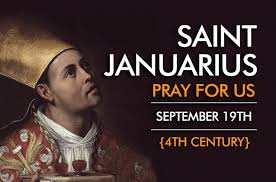
St. Januarius and companion martyrs were martyred during the persecution under Diocletian. St. Januarius, patron of the city of Naples and bishop of Beneventum, was beheaded with his deacons and some others.
Today we celebrate the feast of St. Januarius and his companions. About St. Januarius little is known except that he was among the many martyrs during the great persecution under the Emperor Diocletian.
The editorial emphasises the importance of understanding our inheritance as custodians rather than owners. It highlights the obligation to preserve and transmit the Christian Faith, sacraments, and traditions to future generations. Through gratitude and fidelity, those who receive must ensure that what has been entrusted does not end with them.
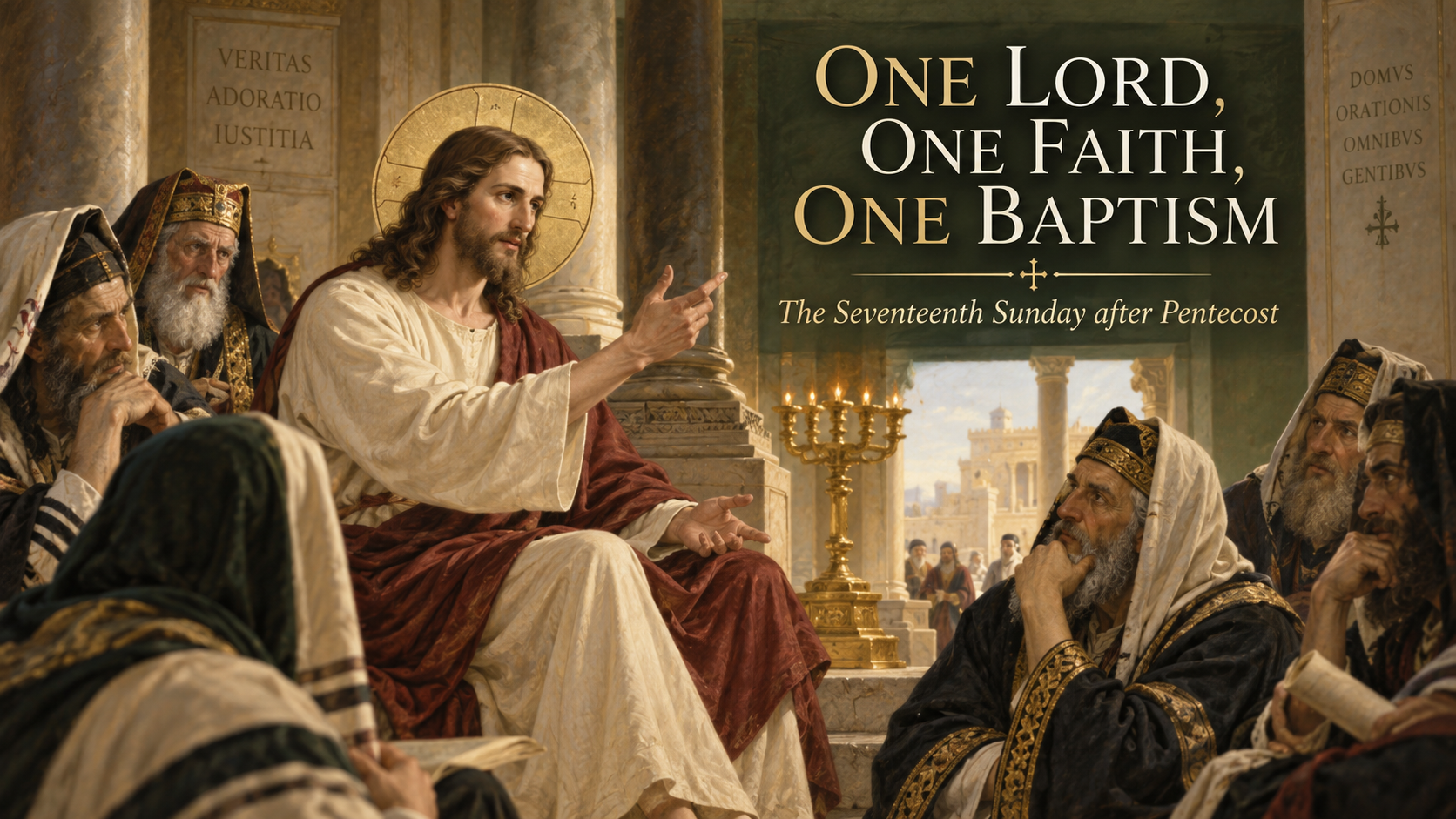
The Seventeenth Sunday after Pentecost emphasises the love of God and neighbour, rooted in divine justice. The Mass articulates the necessity of one faith and baptism, ensuring charity is not sentimental but deeply theological. The Gospel challenges believers to recognise Christ’s dual nature as both David’s son and Lord, reinforcing true Christian charity.
Lambeth Palace has withdrawn the Hubert Walter Award given to Hafiz Tahir Ashrafi for reconciliation, citing previously unknown controversial comments. This raised questions about the vetting process prior to the award. While Ashrafi has defended his record of protecting minority rights, the Palace must clarify why such issues were overlooked initially.



 The Employment Rights Act 2025 introduces a proactive duty for employers to prevent third-party harassment, reshaping risk distribution in civil society. While harassment definitions remain unchanged, the Act’s focus on prevention encourages cautious behavior, leading to fewer controversial discussions hosted in various venues, ultimately narrowing public discourse.
 OLD ROMAN TV’s Lenten Daily Schedule for 2026 offers a structured rhythm of prayer and reflection, addressing modern distractions. The schedule includes Morning Prayers, Mass, midday recollection, Stations of the Cross, and the Rosary, fostering active participation in faith. It aims for spiritual formation and recovery of time’s sanctity within Lent.
 Ash Wednesday marks the beginning of Lent in the traditional Roman Rite, characterized by the imposition of ashes symbolizing mortality and repentance. It originated as a public penance rite but later extended to all Christians. This day emphasizes humility, discipline, and the journey towards spiritual renewal, contrasting earthly glory with eternal truths.
 The text discusses the traditional Catholic practices of fasting and abstinence during Lent, emphasizing their historical significance and theological basis. Rather than being personal choices, these practices are collective disciplines meant to shape spiritual maturity and clarity. Fasting is seen as a restoration of order, integral to understanding freedom and fostering prayer.
 The pre-1955 Roman Lent, or Quadragesima, is a structured penitential season emphasizing discipline, hierarchy, and the formation of the penitent. It integrates elements such as fasting, ritual prayer, and a modified liturgical structure to reflect a coherent Christian anthropology. This tradition underscores that grace follows discipline, leading to a deeper understanding of redemption.
 Sexagesima Sunday marks the second Sunday of the Gesima season, focusing on the Parable of the Sower. This parable illustrates various responses to God’s word, emphasizing that while many do not respond, a faithful remnant exists. Despite struggles, believers are encouraged to persist in spreading the Gospel, as some will indeed bear fruit.
 The recent publication of the new Statute for the Pontificia Accademia Mariana Internazionale occurs alongside a doctrinal note limiting certain Marian titles, reflecting a shift towards centralization and caution within the Church regarding its Marian vocabulary. This adjustment raises concerns about potential minimalism in theological language and the implications for Marian devotion and Christological understanding.
 From a Canadian school massacre to a $2 million detransitioner verdict in New York, February 2026 has exposed structural weaknesses in how institutions respond to adolescent identity distress. The UK’s revised school guidance urges caution—but without mandatory psychological gatekeeping at the medical threshold, safeguarding remains incomplete.
 From Quinquagesima to the First Sunday of Lent, the Church leads us from blindness to vision, from ashes to combat. Charity prepares the heart, repentance humbles it, and Christ’s victory in the desert strengthens it. Lent begins not in despair—but in disciplined hope.
 The transition from Quinquagesima to Lent emphasizes spiritual preparation through liturgical practices, reflecting dependence on divine mercy and the necessity of charity. Themes include healing, repentance, and discipline, culminating in a call to combat temptation. Lent is framed as a journey toward resurrection, guided by the Church’s pedagogical approach.
 The Church of England faces a crisis regarding its stance on LGBTQ+ issues, particularly as many gay Anglicans are reportedly “quietly leaving” due to dissatisfaction with the ongoing Living in Love and Faith (LLF) process. With no consensus achieved on marriage definitions, institutional fatigue, and varying clergy opinions highlight a fragile authority, risking long-term doctrinal ambiguity and fragmentation within the Anglican Communion.
 The CPS is asking the High Court to reinstate the conviction of Hamit Coskun for burning a Qur’an. Parliament abolished blasphemy in 2008. Is public-order law now being used to reintroduce it by another name? A defining free speech test for England.
 The discourse in Britain reveals an inconsistency in addressing sexual abuse across religious institutions. While Christian abuses are scrutinized structurally, similar inquiries into alleged Islamic grooming gangs face accusations of bigotry. This highlights the need for balanced scrutiny to ensure accountability and justice without conflating religion with criminal actions.
 The article discusses the tension in Catholic circles regarding support for the modern State of Israel, especially following Carrie Prejean Boller’s dismissal for questioning the anti-Zionism-antisemitism equation. It emphasizes that while antisemitism is condemned, criticism of Zionism relates to political ideology rather than faith, advocating for religious freedom and moral discernment separate from state allegiance.
 Clifford Longley proposes a “paradigm shift” for English Catholicism, urging the Church to engage more collaboratively in public life, moving beyond defensiveness. Mark Lambert counters that this approach continues a declining trend over sixty years, emphasizing that the Church’s true mission lies in doctrinal clarity and supernatural identity rather than mere social utility.
 Concerns are rising about St. Peter’s Basilica due to plans for a terrace restaurant above the tomb of the Apostle Peter and increasing incidents of profanation. Critics highlight the symbolic implications of commercial activities in such sacred spaces, questioning governance and reverence within the Church. Eucharistic irregularities during Mass further compound these issues.
 The SSPX–Rome dialogue represents a pivotal moment in defining ecclesial communion. A communiqué warns that episcopal consecration without papal mandate disrupts unity, addressing authority and doctrinal development. The Church must discern the nature of necessity within canon law, impacting traditional Catholic groups and the broader understanding of ecclesiastical unity amidst crisis.
 The Labour government’s integration of gender guidance into the Keeping Children Safe in Education framework elevates safeguarding responsibilities for schools regarding gender-questioning children. While revisions aim for child protection, concerns arise about long-term wellbeing, medical consequences, and mental health, reflecting broader societal debates on identity and safeguarding practices.
 Bishop Kevin C. Rhoades of Fort Wayne–South Bend publicly opposed the appointment of Professor Susan Ostermann at Notre Dame due to her pro-abortion stance, which he argues contradicts Catholic teaching on the sanctity of life. He urged the university to reconsider the appointment to uphold its Catholic identity and mission.
 On 12 February 2026, the Dicastery for the Doctrine of the Faith issued a communiqué following a meeting with the Society of Saint Pius X. It emphasizes a need for theological dialogue on essential doctrines, aiming to clarify “minimal requirements for full communion.” This marks a potential shift in addressing post-conciliar tensions within the Church.
 A recent priestly ordination in western France has highlighted ongoing tensions regarding the implementation of Traditionis custodes, particularly its restrictions on traditional Roman liturgy. Bishop Alain Castet ordained Brother Thomas-Marie Warmuz using the pre-conciliar Pontificale Romanum, defying clarifications that prohibit its use, raising complex questions about episcopal discretion and uniformity in enforcement.
 The UK Supreme Court’s 2025 ruling clarified that “sex” in the Equality Act 2010 refers to biological sex, yet the Equality and Human Rights Commission’s forthcoming guidance won’t address workplace regulations. This leaves employers, especially in the NHS, facing unresolved compliance issues amid ongoing regulatory fragmentation and legal ambiguity regarding single-sex spaces.
 Mount Melleray Abbey, a historic Trappist monastery in Ireland, closed in early 2025 due to declining vocations and ageing monks. However, Ave Maria University plans to establish a campus there by Autumn 2026, transforming the site into an educational institution while preserving its Catholic identity amidst broader trends of repurposing religious properties.
 The decline of religious vocations in the West is stark, with a significant drop in perpetual professions and an aging population among religious institutes. Sociological factors, cultural shifts towards individualism, and the impacts of the Second Vatican Council’s reforms have contributed to this crisis. Stronger religious identities may yield greater stability and renewal.
 Dr. Jerome Lloyd’s address, “Can You Build a Future on Borrowed Faith?”, critiques Britain’s declining moral and cultural foundations amid demographic shifts and rising mental health issues. He argues the nation perpetuates a moral framework rooted in Christianity while discarding its underlying beliefs, leading to a civilizational crisis characterized by moral credit depletion and cultural disconnection.
 In the UK, approximately 75,000 children go missing annually, often unnoticed due to the gradual nature of these disappearances. The crisis is exacerbated by systemic failures, particularly concerning children in care and those vulnerable to exploitation. Institutional responses have become routine, reflecting a disturbing normalization of child absence rather than urgent action.
 Bangor University’s Debating and Political Society refused to host a debate with Reform UK, citing concerns over racism and discrimination, sparking national debate about free speech. Critics argue this reflects a troubling trend of pre-censorship, risking the essence of democratic discourse. Advocates warn that this undermines universities’ role in fostering open debate.
 The Holy See has authorized the beatification process for Archbishop Fulton J. Sheen, concluding a period of uncertainty following a 2019 postponement. Bishop Louis Tylka announced that a liturgical celebration date will be set soon. Sheen, an influential 20th-century evangelist, is recognized for his profound impact on Catholic communication.
 Under Pope Leo XIV, recent episcopal appointments signal a shift toward governance over doctrine, prioritizing stability and administrative competence. Bishops Hicks, Moth, and Grünwidl exemplify this trend in navigating cultural challenges while maintaining institutional continuity. This model consolidates under Francis’s vision, emphasizing management over teaching, raising concerns about doctrinal clarity and authority.
 The association of prominent New Atheists like Richard Dawkins and Lawrence Krauss with Jeffrey Epstein reveals a failure of their secular moral framework. Despite advocating for reason over religion, their relationships highlight a lack of ethical restraint, demonstrating that without a transcendent moral basis, values can erode under the influence of power and money.
 The Catholic Church’s primary mission is the salvation of souls, guided by the principle that law serves this end. Historically, extraordinary measures may be necessary to preserve faith when conventional norms fail. In the wake of Vatican II, concerns arise regarding doctrinal purity and liturgical integrity, prompting calls to resist harmful innovations and uphold tradition.



Leave a Reply