

The Lenten Ember Days: Springtide Penance, Apostolic Order, and the Theology of the Seasons
The Wednesday, Friday, and Saturday following the First Sunday of Lent are known in the traditional Roman Rite as the Lenten Ember Days, the Quatuor Tempora of spring. These quarterly fasts, rooted in the earliest strata of Roman liturgical life, sanctify the seasons by prayer, fasting, and solemn intercession. They bind the natural order to the supernatural economy of grace and teach the faithful that time itself must be consecrated.
In Lent, this sanctification of time assumes a particular urgency. As the earth begins its annual renewal, the Church intensifies her summons to repentance. Spring does not excuse discipline; it demands it. The swelling of sap and the quickening of life must be met with interior recollection. The quarterly fast stands as a liturgical hinge between nature’s awakening and the soul’s purification.
Roman Antiquity and Apostolic Witness
The Ember fasts are Roman in origin and were firmly established by the fifth century. Pope St. Leo the Great preached repeatedly on the quarterly fasts, identifying them as offerings of gratitude for the fruits of the earth and as works of reparation. In his sermon On the Fast of the Tenth Month, he declares that fasting “is not only a curb of the flesh, but the nourishment of the soul,” and insists that almsgiving must accompany abstinence so that what is denied to oneself may benefit the poor.¹
Leo further connects the fasts to the sanctification of agricultural abundance. The fruits of the earth, he argues, are not autonomous blessings but gifts entrusted to man for righteous use. The quarterly fast thus purifies enjoyment by thanksgiving.
The biblical resonance of four annual fasts appears in Zechariah 8:19, and the early Church inherited Jewish fasting discipline while transposing its days. The Didache already testifies to the Christian custom of fasting on Wednesdays and Fridays rather than the Jewish Mondays and Thursdays (Didache 8). This weekly discipline is intensified during Embertides, when Saturday—recalling Christ’s repose in the tomb—forms a vigil-like culmination.
Liturgical Structure in the Tridentine Rite
The Lenten Ember Days preserve ancient Roman liturgical forms. Ember Wednesday and Ember Saturday are adorned with multiple lessons before the Epistle, reflecting their vigil character. The Saturday Mass in particular bears striking structural similarities to the Paschal Vigil, with successive readings from the Law and the Prophets.
The Canticle of the Three Youths (Daniel 3:52–90) occupies a central place in the Ember Saturday liturgy. The Church summons all creation—sun and moon, frost and flame, seas and mountains—to bless the Lord. The fasting faithful stand at the heart of a cosmic doxology. Asceticism is thus framed not as negation but as participation in universal praise.
Dom Prosper Guéranger, in The Liturgical Year, observes that the Ember Days are “consecrated to the fast which the Church imposes at the beginning of each of the four seasons,” and he emphasises their Roman character and their connection with ordinations.² Guéranger sees in the Lenten Embertide a deliberate deepening of penitence at the outset of the season, aligning natural transition with spiritual renewal.
Similarly, Pius Parsch, in The Church’s Year of Grace, describes the Ember Days as “days of recollection and renewal,” noting their ancient association with the bestowal of Holy Orders and their character as “miniature retreats” within the broader liturgical year.³ Parsch insists that the Ember fasts remind the faithful that the Church lives within time yet continually sanctifies it.
Johannes Baur and other twentieth-century liturgical commentators underline the agrarian and cosmological symbolism embedded in the Roman calendar. The quarterly fasts, they note, link liturgy and land without collapsing theology into mere seasonal sentiment. Creation becomes the arena of redemption.
Spring and the Patristic Theology of Creation
The Lenten Embertide corresponds to the beginning of spring. The Church interprets this transition theologically rather than sentimentally.
St. John Chrysostom marvelled at the orderly succession of seasons, describing them as virgins dancing in harmony and praising the divine wisdom that moderates their transitions.⁴ Theophilus of Antioch compared creation to a ship guided by an unseen pilot, teaching that God is perceived through His works.⁵ St. Cyril of Jerusalem reminded catechumens that human limitation in counting raindrops or stars reveals divine immensity.⁶
Scripture itself grounds this contemplation. Ecclesiasticus 43 exults in the sun, moon, frost, and storm as works of the Most High. Psalm 103 celebrates the Lord who renews the face of the earth. Psalm 148 summons mountains and beasts, kings and maidens, to praise the Creator. These texts echo through the Ember liturgy.
Isaiah 61:11—“As the earth bringeth forth her bud… so shall the Lord God make justice to spring forth”—provides a prophetic key. Natural rebirth mirrors moral renewal. As catechumens prepare for Easter baptism and penitents for reconciliation, the Church aligns spring’s vitality with sanctifying grace.
Scholastic and Theological Reflection
Scholastic theology locates fasting within the virtue of temperance. St. Thomas Aquinas teaches that fasting is ordered to bridling concupiscence, raising the mind to contemplation, and satisfying for sin (Summa Theologiae II–II, q.147, a.1).⁷ These three ends are conspicuous in the Lenten Embertide. The discipline restrains desire, clarifies prayer, and offers reparation.
Aquinas further notes that fasting must be accompanied by charity, lest bodily abstinence remain sterile. The Ember fast, historically tied to almsgiving and ordinations, situates asceticism within ecclesial communion.
Magisterially, the Council of Trent affirmed the value of ecclesiastical fasts as aids to discipline and penance (Session XXIII, Decree on Reform). While the modern Code of Canon Law (1983) no longer binds the Ember fast universally, the traditional Roman discipline preserves its theological logic: the Church has authority to regulate fasting for the sanctification of the faithful.
Station Churches and Ordinations
In Rome, the Lenten Ember Days are associated with fixed station churches: Ember Wednesday at Basilica di Santa Maria Maggiore; Ember Friday at Santi Apostoli; Ember Saturday at San Pietro in Vaticano.
This progression is deeply ecclesial. Marian intercession frames the fast; apostolic witness grounds it; Petrine authority confirms it. Historically, Ember Saturdays were privileged days for priestly ordinations in Rome, a practice attested in the early medieval sacramentaries. The abundance of scriptural readings underscores the gravity of invoking the Holy Ghost upon candidates for Holy Orders.
Thus, the Embertide binds together creation, priesthood, and governance. The fruits of the earth become sacramental matter; the fast prepares hearts; the Church ordains ministers to offer the Sacrifice.
Creation Offered Back to God
St. Francis of Assisi in his Canticle of the Creatures gives poetic voice to what the Ember liturgy enacts: Brother Sun, Sister Moon, Sister Water, and Brother Fire praise the Most High. Creation is not deified; it is directed toward doxology.
The Ember Days therefore resist both exploitation and romanticism. They teach stewardship rooted in self-mastery. Fasting disciplines consumption; thanksgiving sanctifies enjoyment. The wheat of summer, the grapes of autumn, the olives of winter, and the flowers of spring all find their consummation at the altar.
A Consecration of Time
Ecclesiastes teaches that to everything there is a season. The Lenten Ember Days engrave this wisdom into the Church’s calendar. Time is not neutral succession but sacred trust.
As spring dawns and light lengthens, the Church commands the soul to awaken. Let justice spring forth. Let repentance prepare the ground. Let the works of the Lord bless Him. And let the quarterly fast—praised by the Fathers, expounded by scholastics, preserved in the Roman Rite—continue to consecrate the seasons until the Paschal light transforms all things.
¹ Leo the Great, Sermon 19 (On the Fast of the Tenth Month).
² Prosper Guéranger, The Liturgical Year, Lent, Ember Days.
³ Pius Parsch, The Church’s Year of Grace, Lent.
⁴ John Chrysostom, Homily IX on the Statues.
⁵ Theophilus of Antioch, To Autolycus, I.
⁶ Cyril of Jerusalem, Catechetical Lecture VI.
⁷ Thomas Aquinas, Summa Theologiae, II–II, q.147.
related articles


Latest articles
- Today’s homily: Feast of the Holy RelicsThe Feast of the Holy Relics affirms the dignity of the human body and Christ’s promise of resurrection. Drawing upon Scripture, the early martyrs and England’s Catholic inheritance, this homily considers the communion of saints, our duty towards the departed and the holiness demanded of our own earthly lives.
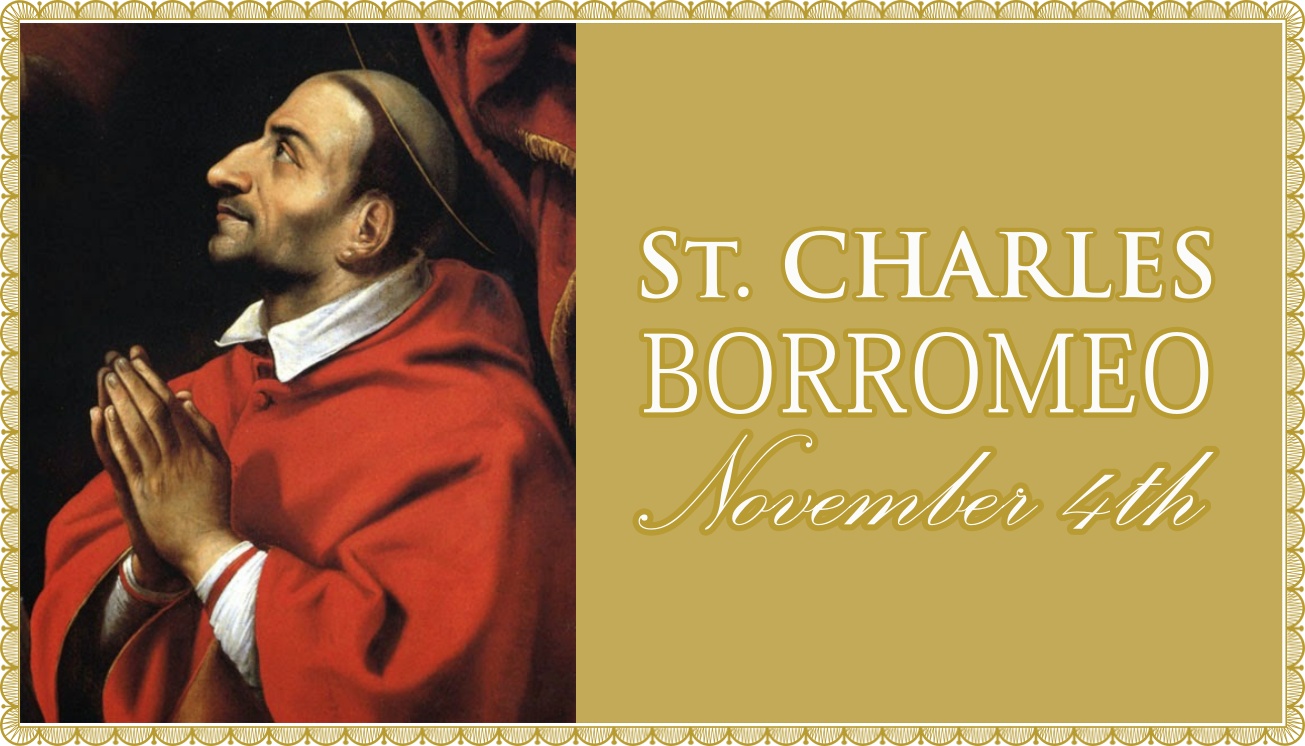
- Today’s Mass: November 5 Feast of the Holy RelicsSt. Charles Borromeo (1538–1584) reformed the Church through holiness amid the corruption of his age—guiding Trent, renewing Milan, and serving heroically during plague. With Ss. Vitalis and Agricola and in the Octave of All Saints, he calls today’s Church to fidelity, reverence, and courageous sanctity amid confusion and decline.
- Today’s Mass: November 4 St Charles BorromeoSt. Charles Borromeo (1538–1584) reformed the Church through holiness amid the corruption of his age—guiding Trent, renewing Milan, and serving heroically during plague. With Ss. Vitalis and Agricola and in the Octave of All Saints, he calls today’s Church to fidelity, reverence, and courageous sanctity amid confusion and decline.
- MEMENTO MORI: LEARNING TO LIVE IN THE LIGHT OF ETERNITYThis pastoral meditation reflects on the importance of remembering death to inspire a more faithful life, especially during the month of All Saints and All Souls. It urges individuals to embrace their mortality, make meaningful choices, and engage in prayer for the departed, thereby cultivating a closer relationship with God and living purposefully.
- WHEN THE BISHOP BECOMES THE MESSAGE: The Cult of Personality, Episcopal Pride and the Betrayal of Apostolic TrustArchbishop Josef Grünwidl of Vienna has openly advocated for women’s ordination, reflecting a troubling trend among bishops who express personal opinions at odds with established Catholic doctrine. This practice undermines their primary role of teaching the faith and raises concerns about episcopal pride and the proper handling of doctrinal authority by the Church.





Leave a Reply