

When Worship Forgets God: Ritual, Culture, and the Crisis of Form
Peter Kwasniewski’s recent essay Ritual and Anti-Ritual: Cultic and Cultural Consequences (October 27, 2025) belongs to that rare category of theological reflection which transcends polemic and enters anthropology. His thesis is both simple and devastating: that the Novus Ordo Missae, even when validly celebrated, lacks the essential qualities of a rite and therefore fails to form men in the habit of divine worship. The problem is not primarily doctrinal or aesthetic but ontological. The liturgical reform of the 1960s replaced ritual with performance, theocentrism with anthropocentrism, and form with expression — mirroring the broader cultural disintegration that has followed.
The Nature of the Rite
For Kwasniewski, three properties are indispensable to any true rite. First, it must emerge from “ageless depths,” as an organic development rather than an invention. Second, it must be semper idem—unchanging and stable, expressing the immutability of divine truth. Third, it must be wholly directed toward God as its sole object and end. The traditional Roman Rite fulfils all three: its fixed language, ceremonial discipline, and objective orientation manifest the sacred order of heaven upon earth. “The priest,” Kwasniewski writes, “is nothing but a servant who says and does what he is told to say and do. You are forgotten as you remember God.”¹
By contrast, the modern liturgy is marked by fluidity and improvisation. Its innumerable options, vernacular idiom, and performative posture render it anthropocentric. Even when reverently celebrated, it appears as something constructed rather than received, a communal expression rather than an act of adoration. “Anthropologically, phenomenologically,” Kwasniewski concludes, “it is not a rite.”² What remains is “ritish,” gesturing toward ritual form without attaining it.
Ritual Order and the Presence of God
This diagnosis echoes the warning of Dietrich von Hildebrand in The Devastated Vineyard, who saw in the new liturgy a “frustration of the confrontation with Christ” through the loss of reverence and awe.³ The postconciliar desire for accessibility, he observed, inverts the very logic of religion: worship ceases to elevate man toward God and instead seeks to bring God down to man. The measure of prayer becomes comfort, not conversion.
The old Roman Rite, by contrast, disciplines both soul and senses. Its silence and structure draw the worshipper into recollection; its stability teaches humility before mystery. It is not a reflection of human creativity but a participation in divine order. In forgetting this, modern worship forgets what it means to adore — and therefore what it means to be human. As Kwasniewski has elsewhere remarked, “When the priest faces the people, the mystery faces extinction.”⁴
From Rite to Anti-Rite
Kwasniewski’s most striking insight is his description of the Novus Ordo as an anti-rite. Drawing on Mikhail Bakhtin’s analysis of Carnival in Rabelais and His World, he identifies within the postconciliar liturgical culture the same spirit of inversion that once characterised the medieval festival: a temporary dissolution of form, hierarchy, and restraint. Carnival symbolised the “world turned upside down,” an escape from the order of Lent.
The modern liturgy, Kwasniewski argues, has internalised this carnivalesque impulse. Its casual posture, spontaneous gestures, and preference for novelty reflect a psychological need to suspend the discipline of sacred form. “The Bugnini Mass,” he writes, “is an anti-rite with a very long, nay, quintessentially medieval, tradition in Western Christianity. That tradition is called Carnival.”⁵
Once the liturgy itself becomes the theatre of inversion, the distinction between sacred and profane collapses. In the medieval world, the Roman liturgy restrained Carnival by reminding men of divine order. Now the liturgy reinforces the very instability it once opposed. The result is a spiritual feedback loop: irreverent worship breeds irreverent culture, and a desacralised culture, in turn, demands ever more profane worship.
The Crisis of Form
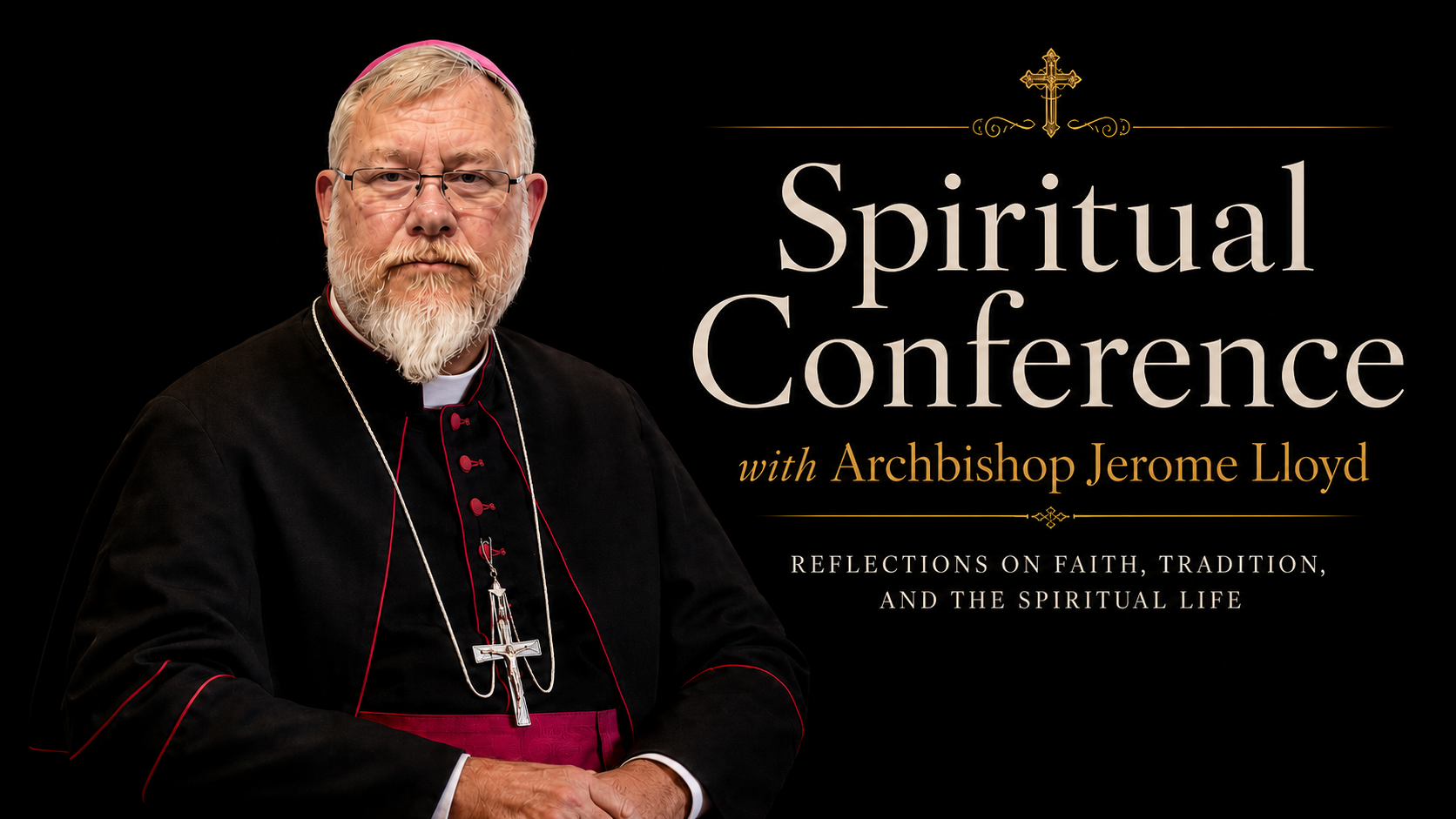
The Archbishop of Selsey has repeatedly described this dynamic as the deeper “crisis of form” afflicting both Church and civilisation. In his August 2025 pastoral commentary Veritatem Praedicare – To Preach the Truth, he writes that “the Church’s greatest peril lies not in the world’s hostility but in her own forgetfulness — for when she ceases to act ritually, she ceases to act truthfully.”⁶ The loss of ritual order, he explains, is inseparable from the loss of doctrinal clarity and moral coherence.
In The Orphaned Altar (October 2025), the Archbishop elaborates that “when worship becomes a mirror of the people rather than a window to God, the altar becomes an orphan — loved but unclaimed, served but unsanctified.”⁷ The rejection of form in worship thus leads to the rejection of fatherhood in the Church, of authority in doctrine, and of identity in man.
Form, in Christian philosophy, is not constraint but revelation. It gives shape to being; it is the visible expression of truth. To abolish or alter form in liturgy is to obscure the very principle by which grace perfects nature. Hence the Archbishop’s warning in The Crisis of Form (Nuntiatoria XXIII, September 2024): “Every loss of sacred form in worship precedes a loss of moral form in life.”⁸
The Social Reign of Christ and the Hierarchy of Order
This rupture of form in worship is inseparable from the collapse of the social reign of Christ. The liturgy, rightly understood, is the visible enactment of the Kingship of Christ over creation. Its hierarchical structure, sacred language, and fixed orientation manifest a world ordered to divine law. The altar, facing east, symbolises the axis of creation turning toward its Redeemer. When this form is dissolved, the image of divine sovereignty fades from the collective imagination.
Pius XI’s encyclical Quas Primas (1925) established the feast of Christ the King precisely to restore this lost vision: that the peace of Christ cannot reign in men until it reigns in their institutions. The desacralisation of worship thus parallels the secularisation of politics. As the throne before the altar was dismantled, so too was the concept of moral law above the state.
The Archbishop of Selsey has observed that “liturgical democracy begets political democracy; once the priest ceases to mediate, the crowd will rule.”⁹ In this sense, the restoration of traditional worship is not an antiquarian impulse but a civilisational act. The form of the Mass is the form of civilisation; its orientation teaches every man and polity to bow before truth.
Ritual and the Formation of the Soul
Kwasniewski’s argument is not confined to liturgical theory; it is also psychological. Ritual forms the soul by repetition and reverence. Its immutability teaches fidelity, its beauty trains the heart for contemplation. “The human soul,” he writes, “is tuned to heaven by the same gestures repeated over generations.” The Novus Ordo, in dissolving these repetitions, leaves the soul untuned — restless, self-conscious, and distracted.
Boniface Luykx, a peritus at the Second Vatican Council, came to the same conclusion: “A primary reason the faithful flock to the Tridentine Mass is their need for the reverence, holiness, and prayerfulness that emanate from the Presence of God in its very celebration.”¹⁰ Ritual, then, is not a cultural artifact but a metaphysical necessity. It is how time is sanctified and community is formed.
The crisis of ritual is therefore the crisis of humanity. A society that forgets how to worship will soon forget what it means to be human. The cultural disorder of the present age—its restlessness, vulgarity, and loss of continuity—finds its root not in politics but at the altar. The failure of worship is the failure of culture.
Conclusion: Remembering God Again
“When worship forgets God,” Kwasniewski reminds us, “it forgets man as well.” The restoration of ritual order is thus the precondition of any genuine renewal—ecclesial, moral, or civilisational. The traditional liturgy endures not because it is old, but because it is true: a participation in eternal order. Its silence teaches humility; its form teaches fidelity; its direction teaches transcendence.
In his Nuntiatoria essay When Christ Is Not King: Islam, Immigration, and the Collapse of Christian Britain (July 2025), the Archbishop of Selsey concluded that “Christ’s Kingship will never again be seen in public life until it is seen upon the altar.”¹¹ The restoration of sacred worship, then, is not a matter of taste but of truth. It is the recovery of reality itself—the moment when the Church remembers God, and the world remembers order.
¹ Peter A. Kwasniewski, Ritual and Anti-Ritual: Cultic and Cultural Consequences (27 October 2025).
² Ibid.
³ Dietrich von Hildebrand, The Devastated Vineyard (Franciscan Herald Press, 1973), 37–38.
⁴ Peter A. Kwasniewski, Close the Workshop: Why the Old Mass Isn’t Broken and the New Mass Can’t Be Fixed (Os Justi Press, 2024), 217.
⁵ Kwasniewski, Ritual and Anti-Ritual.
⁶ ✠ Jerome OSJV, “Veritatem Praedicare – To Preach the Truth,” Nuntiatoria LXVI (8 August 2025), selsey.org.
⁷ ✠ Jerome OSJV, “The Orphaned Altar: On the Crisis of Episcopal Fatherhood,” Nuntiatoria LXX (21 October 2025), selsey.org.
⁸ ✠ Jerome OSJV, “The Crisis of Form,” Nuntiatoria XXIII: Dolor et Amor (13 September 2024), selsey.org.
⁹ ✠ Jerome OSJV, “Veritatem Praedicare,” Nuntiatoria LXVI (8 August 2025).
¹⁰ Boniface Luykx, A Wider View of Vatican II: Memories and Analysis of a Council Consultor (Praeger, 1998), 117–18.
¹¹ ✠ Jerome OSJV, “When Christ Is Not King: Islam, Immigration, and the Collapse of Christian Britain,” Nuntiatoria LXIII (26 July 2025), nuntiatoria.org.



Leave a Reply