
- Devotion Without Order: The Black Nazarene, the 2026 Traslación, and the Crisis of Catholic Worship in the Philippines
 The Black Nazarene’s Traslación in 2026 marked a pivotal moment in Filipino Catholic worship, witnessing participation of 7.3 to 9.6 million people, with significant injuries and fatalities. This event’s transformation from a structured penitential act to chaotic mass devotion highlights the need for reformation in faith practices to prioritize safety, order, and theological integrity.
 - Sermon for Presentation of the Blessed Virgin Mary (Nov 21)
 The Feast of the Presentation of the Blessed Virgin Mary, celebrated on November 23, is rooted in traditions from the Protoevangelium of James. This document, though not a canonical Scripture, shapes the liturgical observance. Emphasizing Mary’s unique role as the mother of Christ, the feast highlights her significance within Christian devotion across history.
 - Sermon for St. Luke (Oct 18)
 Today, we commemorate St. Luke, who authored the Gospel and Acts of the Apostles, emphasizing his role as both evangelist and historian. He aimed to provide an authentic account of Jesus through meticulous investigation of oral and documentary sources. St. Luke’s writing underscores the Gospel’s public significance, linking faith to the broader historical narrative of early Christianity.
 - Church in the Philippines Demands a Total Ban on Online Gambling
 The Catholic Church in the Philippines has called for a complete ban on online gambling, citing its detrimental effects on addiction and family life. Church leaders argue that regulation merely normalizes vice and undermine moral values. They emphasize protecting human dignity over profit, advocating for spiritual renewal amidst increasing gambling-related issues in society.
 - Sermon for St. Jerome (Sept 30)
 St. Jerome, born around 342, dedicated his life to biblical scholarship after a wayward youth. Though he faced various controversies, his enduring legacy lies in his translation of the Bible into Latin, known as the Vulgate. He sought to uphold orthodox Christianity amidst increasing worldliness in the Church until his death in 420.
 - Sermon for St. Michael and All Angels (Sept 29)
 St. Jerome, born around 342, dedicated his life to biblical scholarship after a wayward youth. Though he faced various controversies, his enduring legacy lies in his translation of the Bible into Latin, known as the Vulgate. He sought to uphold orthodox Christianity amidst increasing worldliness in the Church until his death in 420.
 - From the Primus 28.09.25
 The Old Roman Apostolate addresses the faithful, emphasizing the importance of holiness amid modern trials. Saints like Wenceslaus and Jerome exemplify courage and truth against societal challenges. The message calls for steadfastness against compromise, encouraging believers to live authentically, uphold God’s teachings, and embody the faith exemplified by saints, declaring that “truth is strong.”
 - ORDO w/c 28.09.25
 The upcoming week of feasts in the Tridentine calendar highlights various saints, each exemplifying aspects of Christian virtue and leadership. From St. Wenceslaus to St. Francis of Assisi, their testimonies encourage believers to integrate faith into governance, scholarship, personal struggles, and communal life, emphasizing fidelity to Christ in diverse contexts.
 - Halal by Default: Newcastle University and the Claims of Conscience
 Newcastle University’s decision to exclusively offer halal meat exposes a crisis of asymmetric multiculturalism, where one faith’s practices become compulsory for all. Critics argue this shift compromises the conscience of non-Muslim students and reflects a broader trend of redefining inclusion as coercion. True pluralism requires respecting diverse dietary choices without forcing participation in rituals.
 - Britain and the Phantom Bill: The Illusion of Palestinian Reparations
 Speculation regarding potential £2 trillion reparations claims from a Palestinian state against Britain due to its Mandate era involvement is unfounded. The absence of a universally recognized Palestinian state and legal precedents renders such claims unenforceable. The distinction between moral responsibility and legal liability is crucial, as historical grievances cannot equate to financial obligations.
 - “Unity” and Its Counterfeit: The Suppression of the Latin Mass in Monterey
 On September 14, 2025, Bishop Daniel Garcia announced the cessation of the Traditional Latin Mass in Hollister, citing the need for “unity.” This decision, interpreted as a suppression of tradition, raises concerns about the faithful’s rights to worship according to their approved rite, neglecting the value of liturgical diversity within the Church.
 - The Crisis of Clarity: Doctrine, Liturgy, and the Perils of Continuity
 Pope Leo XIV’s interview highlights a tension within the Church, balancing continuity and necessary change. While some view his diplomacy as a source of reformation, others see ambiguity threatening doctrine. Central issues include the relationship between attitudes and fixed beliefs, and concerns over liturgical clarity and authority within the Church.
 - Sermon for Sixteenth Sunday after Pentecost
 In today’s Gospel from St. Luke, Jesus challenges the Pharisees by healing a man on the Sabbath, raising questions about the law’s application. The Pharisees, strict observers of Jewish law, struggle with this as it conflicts with their interpretations. Jesus emphasizes that the Sabbath is meant for humanity, not restrictive rules, heralding the Kingdom of God.
 - The Sixteenth Sunday after Pentecost in the Tridentine LiturgyThe Sixteenth Sunday after Pentecost emphasizes Christian humility and dependence on divine grace. The liturgy blends themes of humility and confidence, highlighting St Paul’s prayer for inner strength and Christ’s love. Through Christ’s actions and teachings, believers learn that true exaltation stems from humility, echoing the necessity of divine mercy in their lives.
- Paracetamol, Autism, and the Politics of Risk
 Paracetamol, commonly used for fever and pain relief, faces controversy over its potential link to autism or ADHD when used prenatally. Despite studies suggesting no causal relationship, activists misrepresent findings, fueling public fear and litigation. Regulatory bodies advocate cautious use, highlighting the importance of discernment amidst health anxieties and misinformation.
 - The Banality of Evil and the Ideology of Violence
 Eichmann’s trial revealed that evil is not always monstrous—it is often ordinary men surrendering to dangerous ideas. Today, Islamism sanctifies violence, and the secular Left dehumanises opponents as “fascists.” Even bishops echo the rhetoric. The Church must resist without mirroring hate: truth with charity, courage with love.
 - The Silent Mark: Policing by Allegation and the Rise of Shadow Criminality
 Helen Joyce’s experience of being logged as a criminal suspect without formal charges highlights the shift in British policing towards ideological surveillance through non-crime hate incidents (NCHIs). Despite the lack of evidence, subjective complaints can lead to significant repercussions, prompting calls for reform or abolition of this practice to protect free speech and justice.
 - “Thou Shalt Not Steal”: Faithful March on Manila’s Streets
 On September 21, tens of thousands marched in Manila, uniting against corruption and echoing the 1986 People Power Revolution. Church leaders emphasized the need for both social and personal transformation to combat corruption, urging a deep moral awakening within individuals. They affirmed the Church’s role in advocating for justice and truth in society.
 - Honoring Contradiction: The Paprocki–Durbin–Cupich Controversy
 The Archdiocese of Chicago’s decision to award Senator Dick Durbin, a pro-abortion advocate, incites controversy over Catholic identity and moral witness. Bishop Paprocki protests, emphasizing adherence to Church teachings on life, while Cardinal Cupich defends the honor, framing it as recognition for social justice. The dispute highlights broader issues of episcopal responsibility and unity.
 - The Enduring Gift of Christian Sexual Ethics
 Christian sexual ethics promote love as a covenant, emphasizing the permanence and fidelity of marriage. This framework fosters stronger families and social stability, supporting the well-being of children and communities. Its principles cultivate character, dignity, and responsibility, ultimately enriching societal harmony and presenting a path toward authentic human fulfillment.
 - The Vatican’s Trial of the Century in Crisis: The Case for Recusal, the Shadow of Pell, and the Question of Justice
 The Vatican’s appeals phase in a significant financial scandal is under scrutiny as defense lawyers seek the recusal of chief prosecutor Alessandro Diddi due to claims of collusion and evidence-tampering. Cardinal Angelo Becciu and others face severe charges amidst concerns that political manipulation jeopardizes the trial’s integrity and the Holy See’s judicial credibility.
 - St. Wenceslaus: The Saintly Duke Behind the Carol and His Witness for Our Age
 St. Wenceslaus (907–929/35), the Bohemian duke behind the carol “Good King Wenceslas,” was a ruler formed by faith, betrayed by his brother, and martyred on his way to Mass. His life embodied the rex justus — just leadership rooted in charity and fidelity to Christ. More than a carol figure, he calls today’s Church to courage, sacrifice, and service amid betrayal, secularism, and crisis.
 - The Return of the “Brit Card”?
 The Return of the “Brit Card”? Starmer’s Digital Identity Gamble and Britain’s Forgotten Instinct for Liberty When reports surfaced in late September that Prime Minister Keir Starmer would soon unveil plans for… Read more: The Return of the “Brit Card”?
 - Gaza and the Charge of Genocide: Law, Rhetoric, and Reality
 The charge of genocide in Gaza is unproven. Courts have not ruled, and the ICC has not indicted Israel for genocide, though Hamas leaders face such charges. Leftist hyperbole and partisan NGOs distort the conflict, aid Hamas propaganda, and trivialise the term “genocide.” The truth demands sober law, not rhetoric.
 - Testimony in the Public Square: Christian Witness at the Charlie Kirk Memorial and the Rumours of Revival
 The memorial for Charlie Kirk, held in Arizona on September 21, 2025, transformed into a Christian revival, marked by powerful testimonies of faith from prominent figures. Following his death, many churches saw increased attendance and conversions, highlighting the profound impact of Kirk’s witness and the enduring power of Christian testimony in public life.
 - Halal Meat, Restore Britain, and the Claims of Conscience
 The debate on halal meat in Britain has intensified, focusing on animal welfare, religious rights, and consumer preferences. Concerns arise over unlabelled non-stun slaughtered meat in the food supply. The Restore Britain campaign argues for greater transparency and labeling, advocating consumer rights while highlighting the need for reciprocal freedoms for all religious groups.
 - Shock and Sorrow in Lyon: The Martyrdom of Ashur Sarnaya
 Shock in France as Ashur Sarnaya, a disabled Chaldean Catholic refugee from Iraq, was murdered in Lyon while livestreaming his prayers. Having fled ISIS persecution, he fell victim to violence in his place of refuge. His death exposes the vulnerability of refugee Christians in Europe, the failures of secular France to protect them, and the threat of Islamist ideology within immigrant enclaves.
 - The Cross in the Public Square: Christian Patriotism at the Unite the Kingdom March
 The Unite the Kingdom march on September 13, 2025, showcased Christian patriotism, emphasizing free speech and accountability amid government failures on immigration and civil liberties. Critics, linking the event to nationalism, misrepresented its intent. The march aimed to reaffirm Britain’s Christian roots, calling for moral renewal through Christ in public life.
 - The Laws We Should Not Need: Virtue, Legalism, and the Hillsborough Bill
 The Hillsborough Law aims to enforce honesty among public officials through a duty of candour and new criminal offenses like Misleading the Public. While it garners support, critics argue it highlights a deeper moral decline where laws replace conscience. Genuine change requires cultural renewal, not merely legal measures, to restore public trust.
 - Spanish Bishops Reject ‘Conversion Practices’: Pastoral Shift or Doctrinal Compromise?
 On September 19, Spanish bishops, notably Cardinal Cobo and Bishop Satué, rejected conversion practices, aligning with legal restrictions against altering sexual orientation. Their approach of welcome challenges traditional Catholic doctrine, causing concern among critics who argue it undermines moral clarity. The debate highlights the balance between pastoral care and maintaining doctrinal integrity.
 - The Myth of a Palestinian State: A Historical Reality Check
 The article argues that the notion of a Palestinian state existing before Israel’s establishment in 1948 is historically inaccurate. It outlines that historical rule in the region was predominantly by empires, with Jewish sovereignty being the only indigenous governance. Consequently, Britain’s recognition of a Palestinian state is seen as a distortion of historical facts.
 - One Law for All: Sharia and the Challenge to British Democracy
 The discussion around Sharia in Britain highlights tensions between integration, legal equality, and cultural sensitivity. Sharia councils often undermine women’s rights and create a parallel legal system, challenging democratic principles. The article advocates for a unified legal framework under British law, ensuring equal rights and justice for all citizens, regardless of faith.

28.09.25 Nuntiatoria LXXIII: Veritas Fortis
1–2 minutes


LATEST ARTICLES
- Today’s Mass: September 09 Day II in the Octave of The Nativity of the Blessed Virgin MaryThe feast of Our Lady’s Nativity, of ancient Eastern origin and established at Rome by the time of Pope St Sergius I, celebrates Mary as the immaculate New Eve and the dawn of salvation, the chosen tabernacle from whom the Redeemer would take His flesh. Today the Church also commemorates St Gorgonius, an officer of the imperial household at Nicomedia who, with his companion Dorotheus, embraced the Faith and suffered martyrdom under Diocletian in A.D. 303; his relics were later translated to Rome.
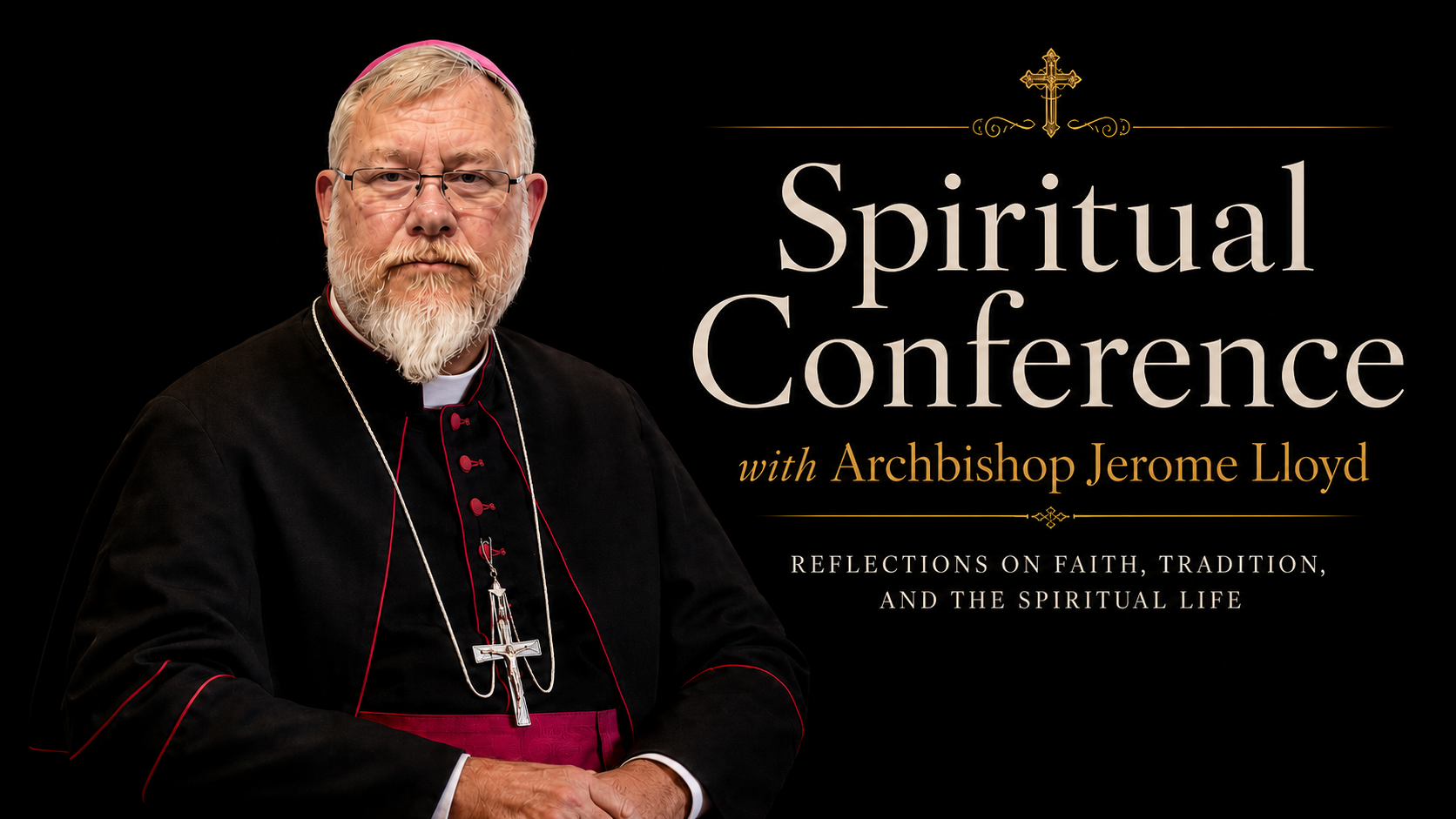
- NOMEN MANET, RES DEEST ~ The Name Remains; the Reality Is Lacking: Spiritual Conference for Nuntiatoria CXXIIThe content emphasises the disconnect between the names associated with Catholicism and the actual practices of faith. It highlights the importance of embodying belief through genuine actions, urging self-examination rather than mere external observance. Ultimately, it advocates for a restoration of sincerity in faith, calling individuals to authentically reflect their beliefs through their lives and worship.
- Mary Is Co-Redemptrix: Cardinal Burke Reopens Rome’s Marian ControversyCardinal Raymond Leo Burke has declared the Virgin Mary as “Co-Redemptrix” amidst controversy over the Vatican’s restriction on this title. The debate revolves around the appropriateness of certain theological language and whether terminology historically used can still accurately express Marian cooperation in Redemption without compromising Christ’s unique role.
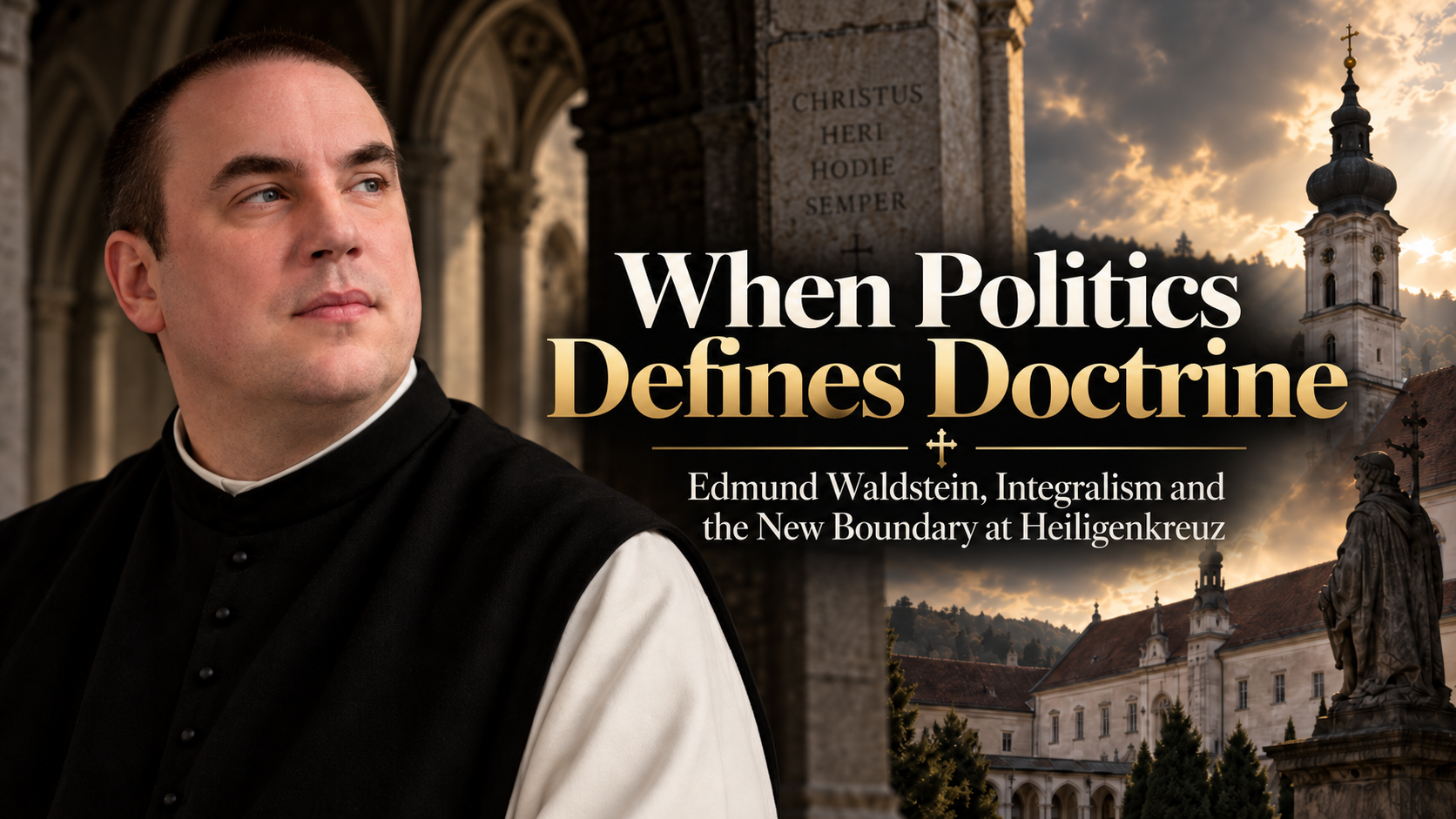
- When Politics Defines Doctrine: Edmund Waldstein, Integralism and the New Boundary at HeiligenkreuzThe ongoing exclusion of Father Edmund Waldstein from teaching at Heiligenkreuz has sparked debate on the limits of acceptable Catholic thought, particularly regarding integralism and its relationship to Church doctrine. Critics argue that Waldstein and similar positions challenge both Catholic teachings and democratic values, raising questions about the intersection of faith and politics.
- Christianity Is Right ~ Not Right WingThe article discusses the distinction between Catholic orthodoxy and modern political ideologies, particularly the Right and Christian nationalism. It argues that Catholic beliefs about family, morality, and authority predate contemporary political classifications and should not be conflated with right-wing politics. The ordo amoris framework is presented as a guiding principle for evaluating political alliances while maintaining a focus on the common good and the Social Kingship of Christ.



Leave a Reply