
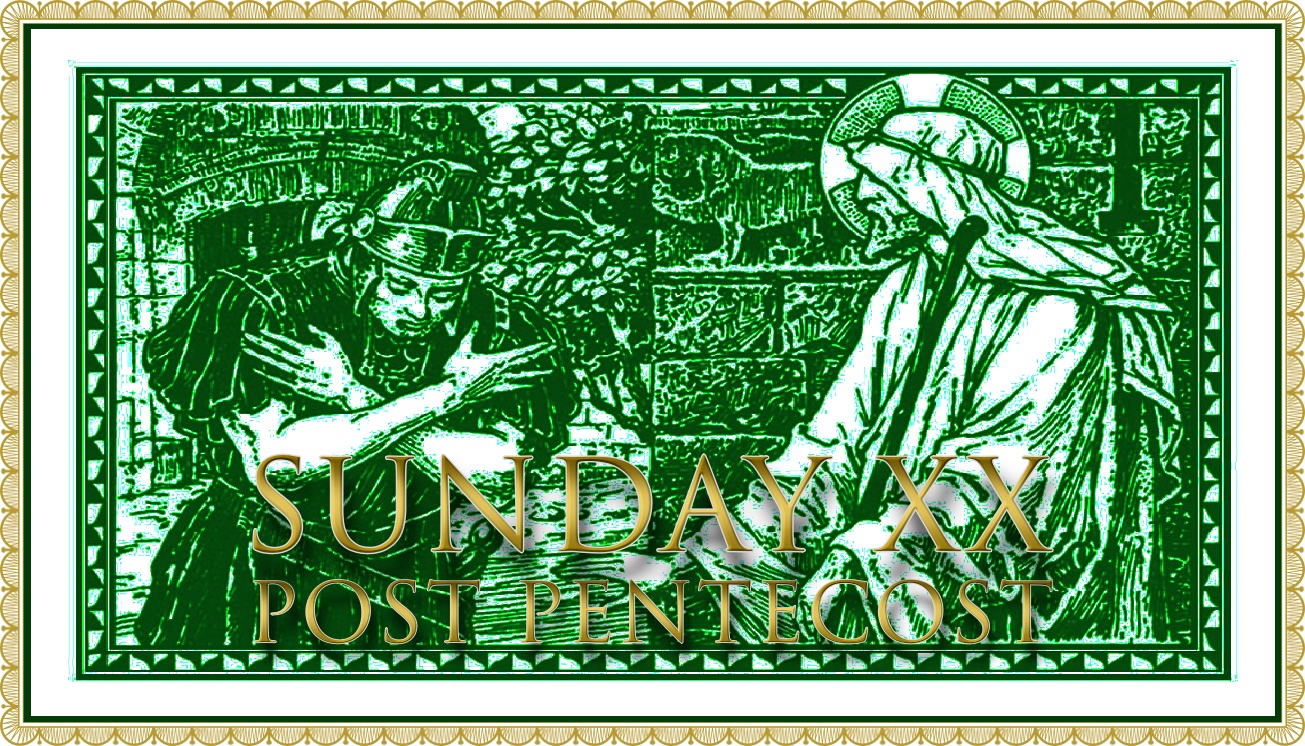
Twentieth Sunday after Pentecost: Missa “Omnia quae fecisti nobis, Domine”
The Twentieth Sunday after Pentecost, in the ancient Roman calendar, invites the faithful to meditate upon the mercy of God and the power of faith to restore the soul to life. The propers of the Mass, drawn largely from the Book of Daniel and the Gospel of St. John, unite in a single theme: repentance, faith, and the vivifying word of Christ.
The Introit and Collect
The Introit proclaims: “Omnia quae fecisti nobis, Domine, in vero judicio fecisti: quia peccavimus tibi, et mandatis tuis non obedivimus.” — “All that Thou hast done to us, O Lord, Thou hast done in true judgment: for we have sinned against Thee, and we have not obeyed Thy commandments.” These words, taken from Daniel, express the confession of a people chastened by trial and exile, who yet acknowledge God’s justice and mercy. The Church places them upon our lips to remind us that divine chastisement is always medicinal, leading the soul back to grace through contrition. The Collect continues this plea for mercy: “Grant, we beseech Thee, merciful Lord, that Thy faithful may be governed both outwardly in body and inwardly in mind.” It is a prayer for integrity — that the order of grace may heal both the disorder of the heart and the weakness of the flesh.
The Epistle
St. Paul exhorts the Ephesians (5:15–21) to “walk circumspectly, not as unwise, but as wise; redeeming the time, because the days are evil.” This admonition captures the vigilance of the Christian life. We are not to drift with the world’s current, but to live soberly, gratefully, and filled with the Spirit. The Apostle opposes drunkenness with the hymn of thanksgiving — the true intoxication of the soul filled with divine charity. In the early Church, these “spiritual songs” were not sentimental; they were the sound of souls transfigured by grace.
The Gospel
The Gospel (John 4:46–53) recounts the healing of the ruler’s son at Capharnaum. The nobleman, whose child was near death, implores Jesus to come down before the boy dies. The Saviour replies, “Unless you see signs and wonders, you believe not.” Yet, in a movement of faith purified from sight, the man believes the word of Christ: “Go thy way; thy son liveth.” He returns home to find the child healed at that very hour. This miracle, as St. Augustine remarks, prefigures the raising of the soul from the death of sin by the life-giving word of Christ. It is a sign of faith’s power to unite the soul to the divine will even before it sees the effects of grace.
The Eucharistic Mystery
Throughout this Sunday’s liturgy, the tone is penitential yet hopeful. The Gradual and Offertory implore deliverance, while the Communion verse rejoices in divine faithfulness: “Bring up sacrifices, and come into His courts: adore the Lord in His holy court.” Here the faithful, renewed by grace, are invited to the true court of the King — the altar, where the living Christ heals and restores His people.
The Fathers often saw in this Gospel the image of faith preceding sight, as in the Eucharist: we believe before we see, and in believing we receive life. The ruler’s son lives because the father believed. So too does the soul live because it trusts in the promise of the Saviour who speaks through His Church.
Liturgical Reflection
As autumn darkens and the Sundays of the Time after Pentecost draw toward their close, the Church’s tone becomes increasingly eschatological. She calls her children to vigilance, to repentance, to faith that lives by the word alone. Each Sunday becomes a rehearsal for the final summons — the hour when Christ’s word will again call forth life from death.
Thus the Twentieth Sunday after Pentecost teaches us to believe even when the heavens seem silent, to pray even when chastised, and to walk wisely in evil days. The God who healed the ruler’s son by His word heals us daily in the Holy Sacrifice of the Mass, if only we, like that father, will take Him at His word and go our way in faith.
Footnotes
¹ Daniel 3:28–29 (Vulgate numbering) — source of the Introit for this Sunday.
² Ephesians 5:15–21 — the Epistle exhorting Christians to live wisely in the Spirit.
³ John 4:46–53 — the Gospel of the healing of the ruler’s son at Capharnaum.
⁴ Augustine, Tractatus in Ioannem XVI: “The son who was ill represents the human soul, which by sinning dies; but when the word of faith comes, it revives.”





Leave a Reply