
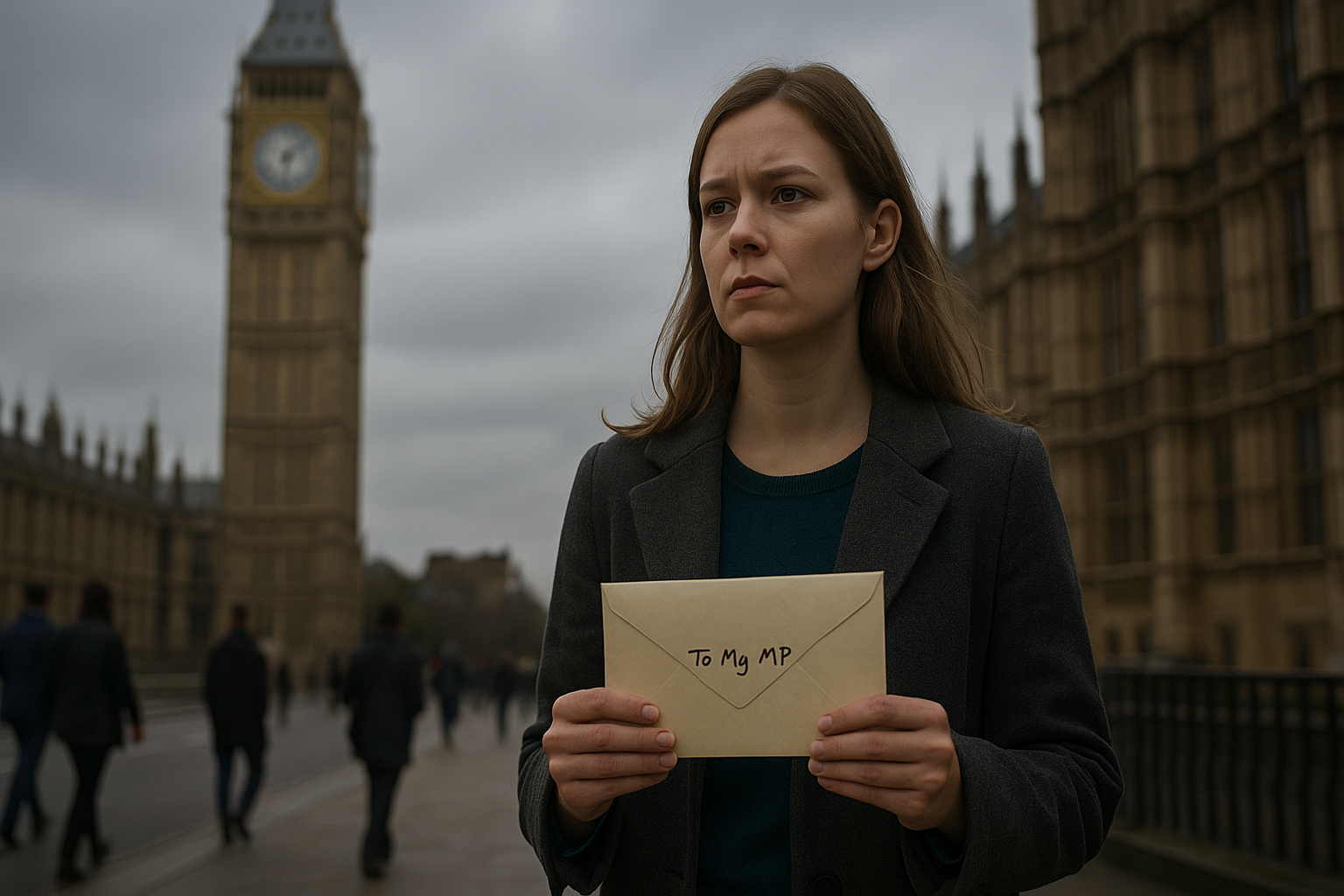
Waiting for Permission to Obey: The Politics of Fear in Modern Britain
Months after the Supreme Court affirmed that “sex” means biological sex, ministers still hesitate — trapped between law, ideology, and the fear of truth itself.
In April 2025, the Supreme Court of the United Kingdom rendered what should have been a moment of closure in one of the country’s most fraught legal debates. In For Women Scotland Ltd v The Scottish Ministers, the justices unanimously affirmed that, within the meaning of the Equality Act 2010, the word “sex” refers to biological sex—the unchangeable fact of being male or female—rather than to gender identity or any form of self-declared status. The judgment confirmed what the framers of the Act had always intended and what Parliament itself had never altered. It was, in effect, a reaffirmation of settled law.
Yet, half a year later, the ruling lies dormant. Government departments, public institutions, and local authorities continue to behave as though nothing has changed. The Equality and Human Rights Commission (EHRC) has yet to release definitive guidance. Civil servants speak of “ongoing consultations.” Ministers promise that “clarifications” are on the way. Legal certainty has been replaced by political hesitation. What should have been a moment of clarity has become another chapter of confusion.
This vacuum has prompted the advocacy group Sex Matters to launch a campaign urging the public to act where government will not. Under the rallying call “Write to your MP: The Government Must Stand Up for Women’s Rights,” the organisation implores citizens to contact their representatives and demand enforcement of the law as now confirmed. Their case is simple: the courts have spoken, the law is clear, yet the machinery of state refuses to act.
The Campaign and Its Context
Sex Matters, founded in 2021 to defend biological reality in law and policy, has become a key voice in the battle over sex-based rights. Its central concern is that women’s legal protections—once thought secure—have been steadily eroded by the adoption of “gender identity” frameworks in public life. The group argues that the blurring of sex and gender in policy documents, diversity training, and data collection has produced a quiet but far-reaching redefinition of womanhood itself.
The campaign emphasises that this is not a theoretical dispute. It affects women’s refuges, prisons, hospital wards, sports, and public toilets—places where physical privacy and safety depend on the recognition of biological difference. “The law is the law,” the group declares, “but those charged with upholding it are waiting for permission to obey it.”
Their demands are threefold. First, that government departments revoke outdated guidance based on gender self-identification rather than biological sex. Second, that public databases and digital identity systems record sex accurately, so that policy decisions, crime statistics, and healthcare data reflect reality. And third, that ministers explicitly instruct civil servants to follow the law as interpreted by the Supreme Court, ensuring consistency across every branch of public administration.
Law Without Action
The EHRC, Britain’s equalities watchdog, issued interim guidance in April 2025 acknowledging that sections of its own 2011 Code of Practice were now inconsistent with the Supreme Court’s ruling. However, a full statutory Code of Practice—binding on public bodies—has yet to appear. Officials confirmed that a draft was submitted to ministers months ago but remains under review.
In the House of Lords debate of 15 October 2025, peers expressed concern that the government’s delay risked undermining the very clarity the Court had provided. Ministers cited “necessary impact assessments” and “consultations with devolved administrations.” Civil servants spoke of “ensuring careful alignment across legal frameworks.” The effect was a new fog of procedural caution where there should have been daylight.
Meanwhile, organisations across the country are caught between conflicting obligations. The old EHRC Code, still technically in force, tells them to accommodate gender identity in single-sex services. The Supreme Court’s ruling tells them to prioritise biological sex. To act on the new interpretation risks complaints of discrimination; to act on the old one risks lawsuits for noncompliance.
As Reuters reported in October, the EHRC itself has urged the government to act “rapidly” to bring guidance into line with the law, warning that “law without guidance undermines enforcement.” But The Times suggests that final guidance may not appear for “a year or more.” In effect, Britain is operating under two definitions of sex—one juridical, one ideological—and the state dares not choose between them.
Why a Year for What Is Already Law?
There is no genuine legal reason for this delay. The Supreme Court’s judgment did not change the law; it merely clarified it. In a constitutional sense, the ruling took effect immediately. No act of Parliament, no fresh statutory instrument, no additional order was required. What prevents implementation, therefore, is not legality but will.
Five overlapping causes can be identified.
1. Bureaucratic paralysis
Modern Whitehall is governed by a culture of procedural self-protection. Every decision, however minor, must pass through equality impact assessments, regulatory consultations, and layers of sign-off designed to eliminate blame rather than achieve clarity. In this environment, even a settled legal point becomes a matter of infinite review. Officials fear that enforcing the Court’s ruling will invite lawsuits from trans-rights groups; doing nothing risks action from women’s groups. Paralysis becomes the path of least resistance.
2. Political cowardice
Neither major party wishes to take ownership of a ruling that cuts across the gender orthodoxy of the last decade. Ministers understand that enforcing the biological definition of sex will provoke outrage among activists and sections of the media, while delighting others. The potential for protests, social-media campaigns, and reputational fallout is real. The government’s strategy, therefore, is to delay—hoping time will dissipate the controversy or shift responsibility to the EHRC. It is governance by avoidance.
3. Institutional ideology
For years, government departments, universities, the NHS, and corporate HR divisions have built their equality policies on the premise that gender identity supersedes sex. Training programmes, reporting systems, and diversity metrics have enshrined this belief. Reversing it would require not only policy reform but intellectual repentance. The reflex of bureaucracy is to resist such upheaval. The “consultation period” thus becomes a mechanism of slow defiance—a way to signal compliance in theory while maintaining ideological continuity in practice.
4. The cult of consultation
Britain’s administrative culture treats consultation as a moral act in itself. Every issue must be discussed, surveyed, and focus-grouped, even when the facts are immovable. But when the biological distinction between male and female becomes a matter for “stakeholder engagement,” governance collapses into relativism. The state ceases to govern and begins to negotiate with unreality.
5. Fear of unrest
Finally, there is the shadow of recent history. The Scottish Government’s attempt to introduce gender self-identification in 2022–23 triggered mass protests, deep political division, and the eventual downfall of First Minister Nicola Sturgeon. Westminster has no appetite to ignite similar turmoil. Delay serves as a buffer—an attempt to outlast controversy by silence.
Consequences of the Delay
The practical effects are immediate and serious. Women’s refuges remain uncertain whether they can lawfully exclude males who identify as female. NHS trusts, still guided by outdated documents, continue to place trans-identifying men in women’s wards. Sporting bodies hesitate to enforce sex-based categories. Prisons risk the same confusion that has already led to public scandal and danger.
For public institutions, the lack of guidance creates a legal minefield. The EHRC’s interim advice warns that reliance on the old 2011 Code may expose organisations to legal challenge, yet offers little protection if they apply the new interpretation without ministerial confirmation. The result is paralysis through uncertainty—a condition that rewards the most aggressive ideological actors and punishes those seeking to uphold the law.
For the public, the consequences are corrosive. When the state hesitates to act on its own laws, confidence in justice erodes. Citizens are left to wonder whether law is now subordinate to fashion. As Sex Matters observed, “We are governed by people who know the truth but lack the courage to speak it.”
The Deeper Malaise
At heart, this is not merely a legal or administrative problem—it is a moral and philosophical crisis. A government that cannot affirm the biological distinction between man and woman reveals a deeper loss: the loss of confidence in truth itself.
From a traditional Catholic perspective, the Supreme Court’s decision corresponds to natural law: the recognition that humanity is created male and female, and that sexual difference is intrinsic to personhood. Civil law, to be just, must reflect that natural order. When it diverges from it, confusion follows.
Yet the Church also insists on charity and prudence. Those who struggle with gender dysphoria deserve compassion and pastoral care. But compassion must never obscure reality. To defer enforcement of truth for fear of causing offence is not mercy—it is moral surrender. It treats reality as negotiable, as if justice itself required a public consultation.
As St. Thomas Aquinas taught, “An unjust law is no law at all.” Yet a law unenforced—allowed to lie dormant out of fear or fashion—is no less unjust in its consequences. It leaves the vulnerable unprotected, the conscientious uncertain, and society unmoored from the truth of the human person.
Conclusion: Waiting for Permission to Obey the Law
The Supreme Court has spoken. The Equality and Human Rights Commission has drafted. The law is settled. But ministers still wait. They speak of “prudence,” of “alignment,” of “impact.” In reality, they are waiting for cultural permission to acknowledge what both nature and Parliament have already declared.
It should not take a year to affirm what is already law. Yet in a nation where truth itself has become politically negotiable, hesitation has replaced conviction. The delay is not technical—it is spiritual. It marks a society unsure whether it still believes in the authority of reality.
For women, the consequences are concrete and immediate. For the state, they are existential. When law bows before ideology, when officials fear to enforce what they know to be true, justice is no longer blind—it is paralysed.
The campaign by Sex Matters may therefore prove prophetic. Its insistence that “the law is the law” echoes a deeper call: that truth, once spoken, must be lived. Until Britain finds the courage to obey its own laws—to act upon the truth it already knows—it will remain a country waiting for permission to be honest.
- For Women Scotland Ltd v The Scottish Ministers, UK Supreme Court, 16 April 2025.
- “Write to your MP: The Government Must Stand Up for Women’s Rights,” Sex Matters, 2025.
- “Equality Act 2010: Meaning of ‘Sex’,” House of Lords Debate, 15 October 2025.
- “EHRC Interim Guidance Following the Supreme Court Decision,” DWF Group Insights, April 2025.
- “Equalities Watchdog Urges UK to Act Rapidly on Court Transgender Ruling,” Reuters, 16 October 2025.
- “Government May Wait a Year for Guidance on Biological-Sex Ruling,” The Times, May 2025.
- “Supreme Court Judgment Brings Clarity and Confidence, Says Government,” The Guardian, 16 April 2025.
- “UN Expert Demands Scottish Government Uphold Sex-Based Rights,” The Times, 18 June 2025.



Leave a Reply