
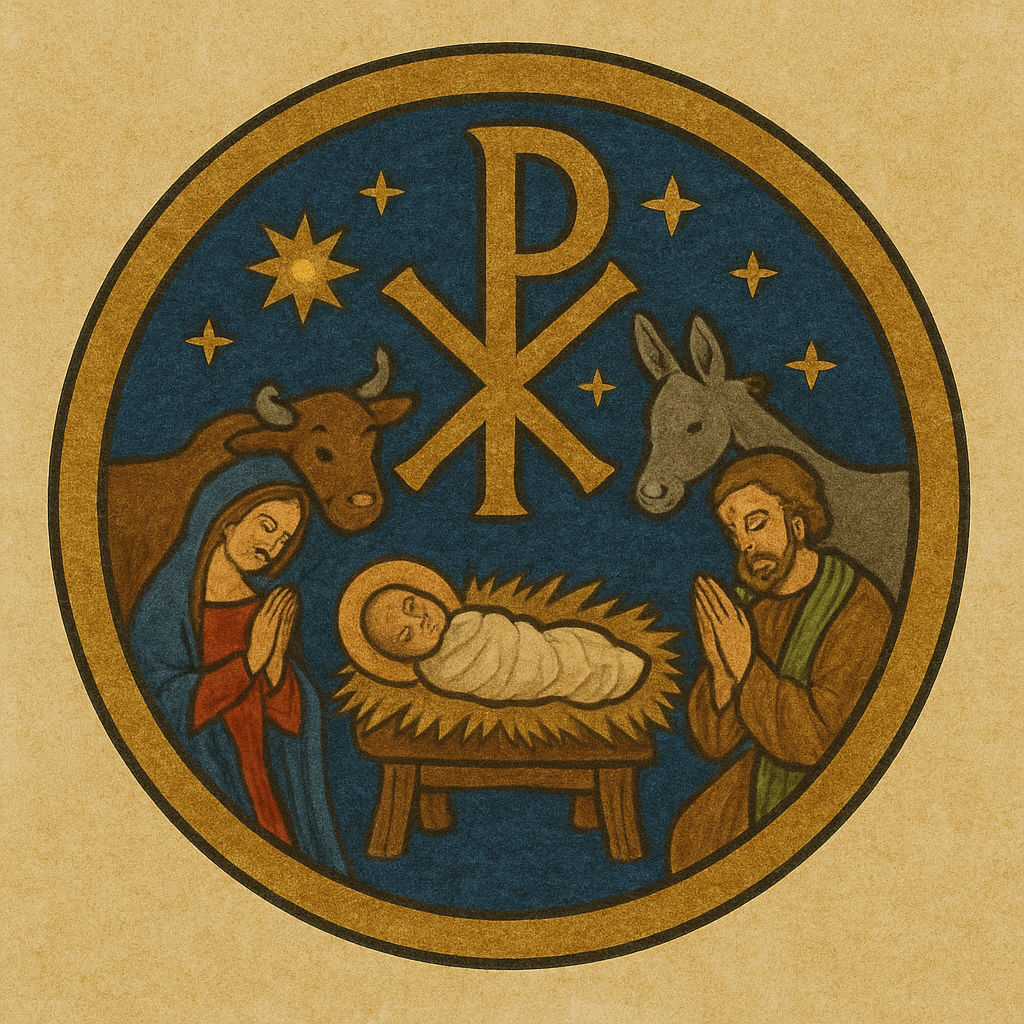
The Nativity — The Word Made Flesh

With the Nativity, the long pilgrimage traced by the Jesse Tree reaches its fulfilment. What was promised in creation, foreshadowed in covenant, sung by prophets, guarded by obedience, and carried along dusty roads is now revealed in flesh and blood. In Bethlehem, God does not merely speak to His people—He comes to dwell among them. “The Word was made flesh, and dwelt among us.”¹
Symbol: Manger
Reading: Luke 2:1–20; John 1:14
Theme: God dwells among us
St Luke situates this moment deliberately within the structures of worldly power. A census is decreed; empires count and command. Yet God’s decisive act takes place beyond the centres of authority, in poverty and obscurity. Mary gives birth and lays her Child in a manger, because there is no room at the inn.² The rejection is quiet, almost unnoticed, yet it reveals the world’s inability to recognise its Lord. The Creator enters His creation as one dependent, vulnerable, and poor.
The Fathers insist that this humility is not accidental but revelatory. St Leo the Great teaches that “He who is true God is born in the complete and perfect nature of a true man,”³ not by surrendering His divinity, but by manifesting divine love in its most radical form. The manger becomes a throne; the stable, a sanctuary. The God who once dwelt in cloud and fire now rests in human arms.
Heaven itself responds. Angels announce peace—not to rulers or philosophers, but to shepherds, men accustomed to vigilance and night. “Glory to God in the highest; and on earth peace to men of good will.”⁴ The first witnesses are those prepared by humility and watchfulness. They come, they see, and they adore. The proper response to the Nativity is not analysis but worship.
In this Child, every thread of the Jesse Tree is gathered and resolved. The Light shines in the darkness. The Root of Jesse stands revealed. The Shepherd King lies among His flock. The Lawgiver submits to infancy. The Judge of the living and the dead comes as one who must be carried. Creation receives its Creator; history receives its meaning.
As we place the manger upon the Jesse Tree, Advent gives way to adoration. The waiting Church kneels. Salvation is no longer anticipated; it is present. God has taken flesh and made His dwelling among us—not in abstraction, but in a Child.
The Word is born. Emmanuel is here.
- John 1:14 (Douay-Rheims).
- Luke 2:7.
- St Leo the Great, Sermon 21 on the Nativity.
- Luke 2:14.
THE JESSE TREE REFLECTIONS


Related Articles


Latest Articles
- FRANCE BEFORE LEO XIV: THE NUMBERS ROME MUST FACEIn the week before Pope Leo XIV’s visit to France, alarming statistics underscore significant declines in French Catholicism: 68% fewer priests, 72% fewer parishes, 64% fewer baptisms, and 81% fewer marriages since 1980. Despite a rise in adult baptisms, the Church faces challenges in transmitting faith while navigating a diminished sacramental culture.
- A GOOD HABIT — BUT FOR WHOM?Blackfriars Oxford’s Good Habit café creatively meets community needs while providing revenue but lacks explicit support for the poor. Inspired by St Dominic’s legacy of charity, the café could incorporate pay-it-forward schemes to invite those in need to share the space, ensuring hospitality extends to all, not just paying customers.
- SLAVERY, REPARATIONS AND THE MISSING DEFENDANTSCaribbean governments are moving towards possible legal action against Britain over slavery. Britain’s responsibility is real, but so are African participation in supplying the Atlantic trade, Britain’s later international campaign to suppress it, the liberation of some 150,000 Africans by the Royal Navy and the deaths of approximately 2,000 British personnel during suppression. Any coherent doctrine of reparations must explain how historical liability is inherited and why the same principle applies to some successor states but not others.
- IVREA: WHEN SYNODALITY MEETS A CLOSED DOORIn the Diocese of Ivrea, disparate grievances have emerged among various communities regarding liturgical restrictions, clerical transfers, and financial transparency, leading to a crisis in confidence. The fundamental issue is whether Bishop ✠Salera’s authority translates into the listening and reconciliation he advocates, as congregations increasingly feel unheard and overlooked.
- Today’s homily: St Eustace & Co. Martyrs, XVII Post PentecostThe reflection on St Eustace and his family’s martyrdom highlights the profound commitment required of Christian households to love God entirely. Their example illustrates that true love for God often entails sacrifices, including comfort and earthly bonds, and that a family must priority spiritual unity over worldly concerns to cultivate faith and strive for eternal salvation.



Leave a Reply