
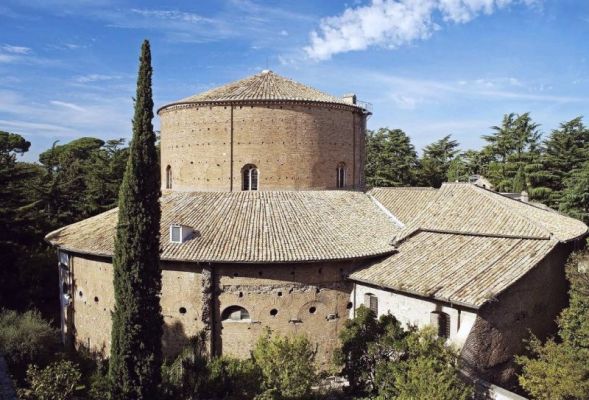
Statio ad St Stephanum in Caelio Monte
The pilgrim gathers first at the collecta of Basilica of Saints John and Paul, and from there ascends the Caelian Hill to the Station at Santo Stefano Rotondo. This movement—short in distance, yet immense in meaning—mirrors the inner journey of Passiontide itself. The Church, having already veiled her images and silenced the psalm Judica me, now leads us into a place where the Cross is no longer contemplated at a distance, but encountered in its historical and bodily reality.
The choice of this site is deliberate. This hill once bore the marks of pagan religion and imperial power—rites of the Magna Mater, the hidden cult of Mithras, the presence of soldiers and their loyalties to earthly dominion. Today, that same ground is consecrated by the memory of martyrs. The liturgy of this day, which presses upon us the innocence of Christ and the growing injustice of His Passion, finds here a fitting counterpart: a place where the violence of the world meets the fidelity of the saints. What was once a site of exclusion and secrecy has become a proclamation—open, visible, and irrevocable—that Christ reigns through sacrifice.
Within the church, the circular form immediately reshapes the pilgrim’s perception. Modeled upon the Church of the Holy Sepulchre, it abolishes the linear movement of the basilica and instead encloses the faithful within a single, unified space. This is not accidental. In the liturgy of Passiontide, time itself seems to contract; we are no longer moving forward so much as being drawn inward—into the mystery of the Cross. The altar stands at the centre, as Calvary stands at the centre of history. The encircling columns and ambulatory suggest not progression, but participation: we are not spectators of the Passion, but those gathered around it.
The frescoes intensify this liturgical reality. As the Mass texts speak of betrayal, persecution, and the tightening opposition to Our Lord, the walls of Santo Stefano Rotondo answer with the visible continuation of that same drama in the lives of His saints. Each martyrdom depicted—named, dated, and grounded in Scripture—echoes the Passion proclaimed at the altar. The Church’s prayer and the Church’s memory converge: what Christ suffered once in His own flesh is lived again in His Mystical Body. The pilgrim cannot evade this unity. The liturgy interprets the place; the place renders the liturgy tangible.
Even the chapels deepen this synthesis. The relics of Saints Primus and Felician, translated here by Pope Theodore I, and the ancient mosaic that honours them, remind us that the Church’s memory is not abstract but incarnate. The presence associated with Pope Gregory the Great evokes the pastoral office that sustains the faithful through persecution. These are not incidental details; they are part of the Church’s living continuity, gathered into the liturgy of this day.
Thus, the Station of Passion Friday is revealed in its full meaning. As the liturgy draws us ever closer to the hour of Christ’s sacrifice, the Church places us within a space that embodies its consequences. The circular church gathers us around the altar as witnesses; the frescoes confront us with the cost; the very ground beneath our feet proclaims the victory of grace over the world.
Here, the question of the Passion is no longer theoretical. It is immediate, personal, unavoidable. The same Christ who goes forth to His suffering calls His disciples to follow. And in the silent, enclosing space of Santo Stefano Rotondo, the pilgrim understands: to stand at the Station is to stand at the threshold of Calvary itself—and to be asked, with all the weight of history and liturgy combined, whether he will remain faithful unto the end.
RELATED ARTICLES


LATEST ARTICLES
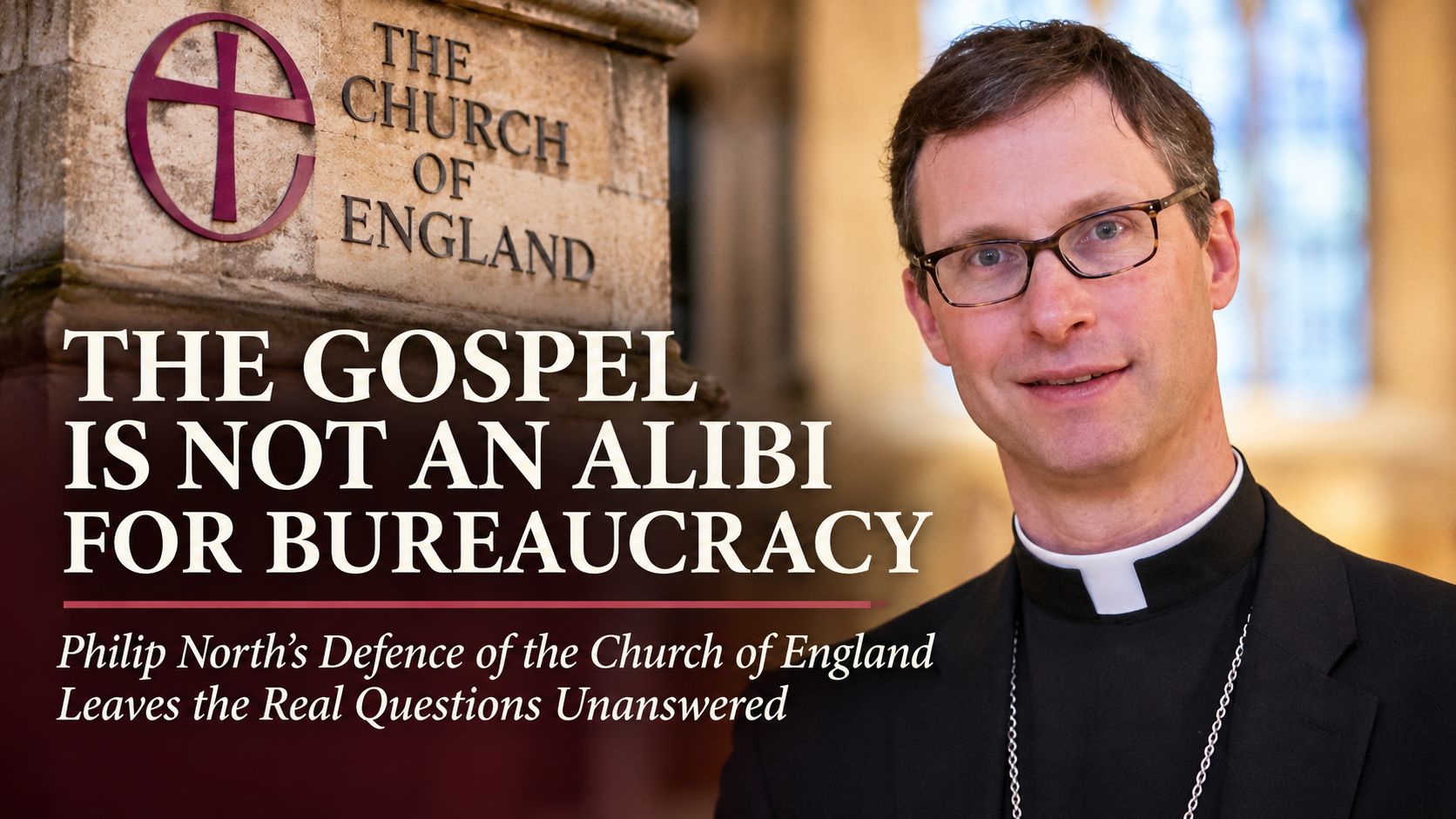
- THE GOSPEL IS NOT AN ALIBI FOR BUREAUCRACYBishop Philip North contends that spiritual renewal is paramount for the Church of England, sidelining organisational reform. He defends diocesan administration despite concerns over rising costs and declining clergy and congregations. This editorial emphasises the need for both faithful evangelisation and responsible financial stewardship as interconnected necessities for the Church’s survival.
- Today’s Mass: November 2 All SoulsAll Souls’ Day is observed on 2 November, commemorating the faithful departed. The Church encourages prayers, alms, and Masses of Requiem to aid souls in need of cleansing from sins. Originating in the early Christian practices, it aims to provide spiritual support for the deceased, ensuring their journey towards eternal rest.
- DE PROFUNDIS: THE PRAYER THAT WILL NOT LEAVE THE DEAD BEHINDThe De Profundis serves as a profound prayer for the dying and the deceased, urging honesty in facing sin and reliance on Christ’s mercy. Through its historical context and traditions, it encourages ongoing remembrance of the departed within the family, emphasising the importance of intercession and maintaining a connection with faith.
- EVERY VOICE — EXCEPT THE OLD MASS?Pope Leo XIV has appointed Father Giacomo Costa and Sister Elena Massimi to oversee synodal implementation. Massimi’s prior support for Traditionis Custodes raises concerns about the Church’s authenticity in listening. As synodality takes a more central role in governance, it remains uncertain if traditional Catholics’ voices will be genuinely considered, questioning the credibility of the process.
- THE COUNCIL SAID PRESERVE IT. THEY TORE IT OUT.James Likoudis’s last defence of the liturgical reform highlights a disconnect between Vatican II’s true directives and the significant alterations that followed. The 1965 interim Mass illustrates that the Council’s goals could be achieved without the 1969–70 reconstruction. Official documents document the loss of sacred heritage and misuse of Vatican II’s intentions, raising questions about ecclesiastical responsibilities and the difference between true reform and the abandonment of tradition.


Leave a Reply