

The Vanishing of the Altar Rail: Bishop Martin’s Decree and the Battle for Eucharistic Reverence in Charlotte
A Shock Through the Sacred Landscape of North Carolina
The Diocese of Charlotte—long respected for its strong growth, orthodox reputation, and unusually high number of vocations—has been shaken by a sweeping liturgical decree from Bishop Michael T. Martin. He has ordered the removal of all altar rails, whether fixed, moveable, or temporary, by 30 November 2025, the First Sunday of Advent¹. This directive is not limited to traditional wooden rails but includes kneeling pads and any structure used to support kneeling for Holy Communion².
For ordinary Catholics, this is not merely administrative housekeeping. The altar rail is where families have taught their children to kneel; where the elderly rely on stable support; and where countless souls have made some of their most reverent acts of faith. To many, its removal feels like a forced abandonment of long-lived devotion.
How a Draft Became Doctrine
The decree is directly traceable to the earlier leaked document Go in Peace, Glorifying the Lord by Your Life, which the diocese confirmed as authentic—though it claimed it was “only a draft.”³ The document contains the very language now enacted: a strong criticism of Latin, a rejection of ad orientem, an insistence that kneeling is no more reverent than standing, and a denunciation of altar rails as symbols of clerical elitism⁴.
Its final norms stated clearly that new altar rails were forbidden, existing fixed rails “should no longer be used,” and moveable rails or kneelers “should be removed.”⁵ Bishop Martin’s new decree aligns word-for-word with these contested proposals.
Universal Law Says Something Different
Despite the sweeping diocesan language, universal law firmly protects the faithful’s right to kneel for Holy Communion. The General Instruction of the Roman Missal, in the United States adaptation, states that while standing is the norm, Communion may not be denied to a person who chooses to kneel⁶. The Vatican’s instruction Redemptionis Sacramentum (2004) reinforces this right and condemns any denial of the Eucharist on the basis of posture⁷.
Regarding Latin, Vatican II’s Sacrosanctum Concilium plainly declares that “the use of the Latin language is to be preserved” in the Roman Rite, and that the faithful should be able to say or sing parts of the Mass in Latin⁸. The US bishops’ document Sing to the Lord likewise instructs pastors to ensure the faithful can sing the Ordinary in Latin⁹.
As for ad orientem, the Congregation for Divine Worship has repeatedly clarified that nothing in the GIRM forbids the practice. The widely misunderstood GIRM §299 does not prohibit eastward celebration; a 2000 clarification from the CDW explicitly states that ad orientem remains fully permissible¹⁰.
Thus, several of the assumptions embedded in the draft—and now reflected in diocesan law—contradict the Church’s universal norms and stated magisterial priorities.
A Targeting of the Diocese’s Most Fruitful Parishes
Perhaps most revealing is the demographic reality: parishes in Charlotte that maintain altar rails, foster Latin chant, or use ad orientem have produced approximately 75% of the diocese’s seminarians, a figure reported by commentators reviewing diocesan vocation data¹¹. These communities are among the most vibrant and devout in the diocese. Yet they are the ones most severely impacted by the new policy.
Instead of strengthening what works, the decree appears to suppress it. This has raised serious pastoral questions about whether the diocese is undermining its own spiritual vitality.
What the Altar Rail Actually Is
The new norms treat the altar rail as a barrier—or worse, an expression of clericalism. But historically, the altar rail is a threshold: the meeting point between the nave (the domain of the pilgrim Church) and the sanctuary (the domain of the heavenly liturgy). It expresses the ancient Christian understanding that the Eucharist is holy ground.
Its removal represents more than architectural change. It erases the physical catechesis of reverence. It disrupts the bodily grammar of worship. It isolates kneeling individuals rather than supporting a communal expression of humility.
Christians of East and West have instinctively knelt for nearly two millennia. Removing the rail will not eliminate the instinct—it will only make its expression more difficult, unsupported, and socially pressured.
The Deeper Struggle Beneath the Surface
Charlotte is now a case study in a larger ecclesial conflict. The draft document reflects what scholars have identified as a “rupture hermeneutic,” interpreting Vatican II as a mandate to abandon inherited forms rather than renew them¹². Under this model, the sanctuary becomes a stage; the priest becomes a facilitator; reverence is recast as a private option rather than the Church’s common language.
Yet the faithful intuitively know that gestures teach doctrine. Architecture forms the soul. Posture shapes belief. And when visible signs of transcendence are stripped away, invisible truths often follow.
The debate in Charlotte is therefore not simply about rails, kneelers, or candles. It concerns the deeper battle for whether reverence, continuity, and Catholic identity will be protected or marginalised.
A Future Marked by Contest and Conscience
The consequences of the decree will extend far beyond Advent. Canon lawyers have already noted that universal law supersedes diocesan legislation when rights are impaired. Faithful Catholics retain the right to kneel regardless of diocesan preferences. Priests committed to reverent worship will require courage and fidelity to the Church’s actual teaching—not merely the tastes of diocesan policymakers.
Charlotte’s situation is emblematic of a national battle: whether modernisation will be imposed at the cost of tradition, and whether the Church’s liturgical patrimony will be treated as treasure or as impediment.
The altar rail may vanish from Charlotte’s sanctuaries.
What remains to be seen is whether the reverence it embodied will survive—in the hearts of the faithful, and in the future of Catholic worship.
- Decree of Bishop Michael T. Martin mandating the cessation of altar-rail use by 30 November 2025.
- Draft diocesan norms prohibiting moveable kneelers, prie-dieus, and similar supports.
- Diocese of Charlotte acknowledgement of the leaked liturgical draft as an “early draft.”
- Go in Peace, Glorifying the Lord by Your Life (leaked text): criticisms of Latin, kneeling, altar rails, and ad orientem.
- Closing liturgical norms of the leaked draft forbidding new rails and banning the use of existing ones.
- General Instruction of the Roman Missal (U.S. adaptation), §160.
- Congregation for Divine Worship, Redemptionis Sacramentum (2004), §91.
- Second Vatican Council, Sacrosanctum Concilium, §§36, 54.
- USCCB, Sing to the Lord: Music in Divine Worship (2007).
- CDWDS Response, Prot. 564/00/L (2000), clarification on GIRM §299 and ad orientem.
- Commentary citing vocational statistics showing approx. 75% of seminarians formed in parishes with altar rails or traditional practices.
- Scholarly analysis identifying the draft’s hermeneutic as rupture-oriented rather than continuity-based.


Latest
- TRADITION BEHIND THE FENCEThe Vatican’s prohibition of the traditional Ad Petri Sedem pilgrimage to St Peter’s Basilica has sparked controversy, especially among traditional Catholics. While some cite scheduling conflicts, the broader issue lies in the restrictive policies of Traditionis custodes, which may confine traditional liturgical practices to specific enclaves, risking the transmission and recognition of Catholic Tradition within the wider Church.
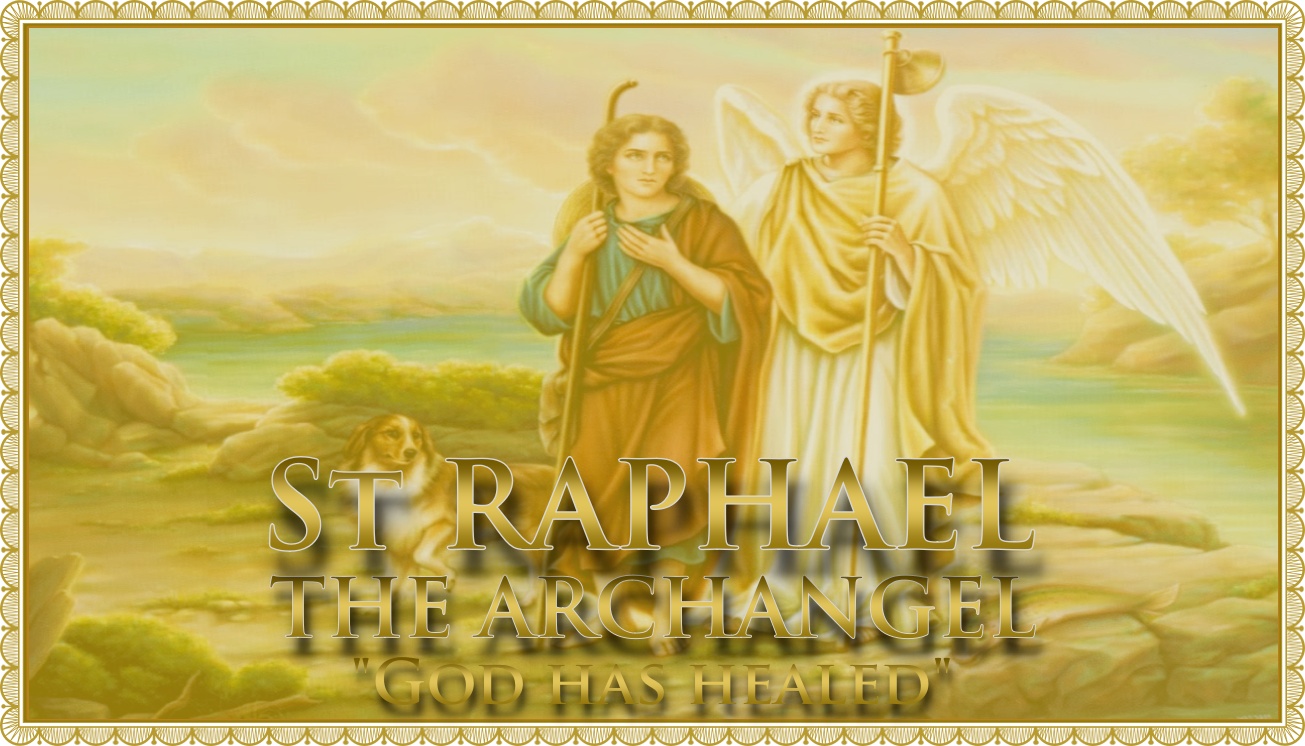
- Today’s Mass: October 24 St Raphael the ArchangelThe Feast of Saint Raphael the Archangel highlights his healing powers as depicted in the Book of Tobit, where he aids Tobit and his son, Tobiah. Venerated as a protector of travellers and the blind, Raphael is celebrated for his miraculous interventions. His legacy includes support for nurses, matchmakers, and Catholic studies.
- 25.10.26 Nuntiatoria CXXIX: CHRISTUS REXThe text discusses the relationship between Christ’s kingship and authority within the Church amidst contemporary challenges. It contrasts ecclesiastical power with genuine faith, emphasising that authority must protect divine truth rather than alter it. The witness of imprisoned priests illustrates the enduring significance of fidelity to Christ over institutional conformity.
- THE DOMESTIC CHURCH: 25 October – 2 November 2026 A Home with Room for Heaven: Preparing for All Saints and All SoulsThe content outlines a week’s plan for traditional Catholic families to prepare for the feasts of All Saints and All Souls. Emphasising daily prayers, remembrance of the deceased, and engagement with children’s activities, it aims to integrate Catholic customs into family life, enriching spiritual practices and fostering a shared faith experience.
- ORDO w/c 25.10.26The text outlines the liturgical calendar for the last week of October and the beginning of November, highlighting key celebrations. Notable events include the Feast of Christ the King, St Evaristus, the Vigil of Saints Simon and Jude, and the Feast of All Saints, emphasising themes of holiness, unity in faith, and the Church’s teachings.




Leave a Reply