
Love, Authority, and Exhaustion: The Church of England Bishops and the LLF Endgame
Background for Catholic Readers
The Church of England is the “by law” established church in England, separated from communion with Rome in the sixteenth century and governed episcopally, but without submission to the Roman Pontiff. While it retains bishops, cathedrals, and a historic liturgical inheritance, its doctrinal authority does not rest in a magisterium. Instead, it is exercised through a combination of Scripture, tradition, parliamentary statute, and synodical governance. Ultimate legislative authority lies with the General Synod, a tripartite body of bishops, clergy, and laity, whose decisions in certain areas require parliamentary approval.¹⁰
Since the twentieth century, the Church of England has undergone sustained theological and moral liberalisation, including the ordination of women to the priesthood in 1994 and to the episcopate in 2014. These developments generated lasting internal division and significantly impaired relations with the Catholic and Orthodox churches. In response, legal and theological accommodations—most notably the Five Guiding Principles—were introduced to manage disagreement without resolving it.¹¹
The Living in Love and Faith (LLF) process, launched in 2020, was presented as a church-wide exercise in discernment on questions of identity, sexuality, relationships, and marriage. In practice, it has become the principal mechanism through which pressure is being applied to revise the church’s teaching and discipline concerning same-sex relationships, particularly as they affect ordained clergy. The current dispute centres on whether clergy may enter same-sex civil marriages and whether formal liturgical blessings for same-sex couples should be authorised.¹²
For Catholic readers, it is important to note that debates within the Church of England take place without a binding doctrinal authority comparable to the Catholic magisterium. Questions that Catholic theology treats as settled matters of faith and morals are, within Anglicanism, routinely subjected to revision through synodical process, episcopal guidance, and pastoral accommodation. This structural difference is essential for understanding both the present controversy and its wider ecclesiological consequences.
What follows examines how these structural realities are now converging in the LLF process, placing unprecedented strain on authority, unity, and coherence within the Church of England.
As the Church of England bishops move toward formal confirmation of decisions arising from the Living in Love and Faith (LLF) process, the temperature within the church has risen sharply. Public sermons, coordinated lobbying, and carefully framed appeals to “courage” and “love” now accompany what was once presented as a slow, patient exercise in ecclesial discernment. In practice, the LLF process has reached its decisive phase: not the resolution of disagreement, but the attempt to force closure.¹,²
The immediate context is the bishops’ intention to reaffirm decisions announced in October, which would halt the introduction of stand-alone services blessing same-sex couples and maintain the existing prohibition on clergy entering same-sex civil marriages. These decisions have provoked open resistance from senior cathedral clergy, including the Dean of Bristol, the Very Revd Mandy Ford, and the Dean of St Edmundsbury, the Very Revd Joe Hawes, both of whom have publicly urged the bishops to reverse course.¹
In sermons delivered from prominent pulpits, the issue has been reframed in moral and emotional terms. Dean Ford asked where, among the bishops, there were those “with the courage to act from love,” while asserting her belief that God had called her to a “faithful, permanent, stable” life with another woman. Dean Hawes went further, describing the LLF process as “toxic,” dismissing compromise as cowardice, and accusing the church of institutional discrimination for continuing to restrict same-sex marriage among clergy. Together, these interventions signal a shift in tone: patience has given way to pressure, and disagreement is increasingly portrayed as harm.¹,⁴,⁵
Alongside this public agitation, quieter pressure is being applied from the opposite direction. The Alliance, a network of church organisations opposed to doctrinal change on marriage, has written privately to senior bishops expressing gratitude for the October decisions, while warning that new “dialogue groups” risk becoming de facto steering committees for same-sex marriage legislation. The Alliance has made clear that any clearer pathway toward same-sex marriage for clergy would revive organised resistance and deepen institutional fracture.¹,⁶
This dual pressure reveals the true character of the LLF endgame. After years of consultation, study materials, facilitated conversations, and episcopal statements, the bishops are no longer being asked to discern but to decide—and whichever way they decide, one faction will accuse them of failure. Yet the framing of the debate itself deserves scrutiny.²,³
Much of the argument advanced by advocates of change rests on appeals to ministerial competence and visible fruitfulness. We are told that gay clergy preach the gospel faithfully, serve the poor, staff foodbanks, minister in prisons and hospitals, and lead cathedrals with skill and dedication. These claims are largely uncontested. But they obscure rather than resolve the central issue. Moral doctrine and sacramental discipline have never operated as rewards for effectiveness. The church has always distinguished between personal virtue, ministerial ability, and moral norms governing ordained life.²
To conflate usefulness with legitimacy is to misunderstand the nature of ecclesial authority. Sacramental theology is not a performance review, and vocation is not self-authenticating. The repeated claim “I believe God has called me” cannot, on its own, override Scripture, received teaching, and canonical discipline without reducing the church’s moral authority to personal narrative. Once that move is accepted, there is no principled stopping point: authority collapses into autobiography.²
Equally revealing is the growing contempt for compromise. What is now dismissed as “mealy-mouthed” restraint was, until recently, presented as a necessary attempt to hold together a deeply divided church. The impatience on display suggests that coexistence was never the goal. The logic is one of inevitability: change must happen, resistance must yield, and those who hesitate are obstacles rather than fellow Christians.¹,⁵
That logic has been tested elsewhere. The United Reformed Church and the Methodist Church pursued similar moral recalibrations, using the same language of justice, inclusion, and relevance. The results are not in dispute: declining membership, closed churches, and a near absence of new vocations. These outcomes are not accidental. When moral teaching is repeatedly revised to mirror the surrounding culture, the church ceases to offer a distinctive claim on belief or obedience.⁷,⁸
There is no reason to think the Church of England will escape this pattern. Further accommodation will not grow the church, convert the unchurched, or restore public credibility. The institution is already culturally irrelevant, and further change aimed at appeasing external opinion will not reverse that condition. What it will do is accelerate internal hollowing: unity maintained only by procedure, authority weakened by exception, and doctrine treated as provisional.
A Parallel Case: The German Synodaler Weg and the Logic of Un-Catholic Reform
The trajectory now visible in the Church of England closely parallels developments in Germany under the Synodaler Weg (Synodal Way), a process launched by the German Bishops’ Conference in 2019 in response to the clerical abuse crisis but rapidly repurposed to advance structural and doctrinal change. Under the language of “listening,” “participation,” and “reform,” questions touching settled Catholic doctrine—sexual morality, priestly celibacy, ecclesial authority, and women’s ordination—were placed before deliberative assemblies subject to majoritarian vote.¹³
From a Catholic perspective, the central problem with the Synodal Way lies not only in its conclusions but in its method. Doctrine was treated as provisional, authority as delegable, and revelation as subject to contemporary moral consensus. Episcopal authority was reframed as facilitation rather than guardianship, while the sensus fidelium was reduced to sociological representation rather than fidelity to received truth. Repeated interventions from Rome warned that the process lacked ecclesial competence to decide such matters.¹⁴,¹⁵
What renders this approach uncatholic is precisely its inversion of how the Church teaches. Catholic doctrine does not arise from consultation, nor does it develop through plebiscite. The Church discerns but does not invent; she deepens understanding but does not revise moral truth to conform to cultural pressure. Synodality, properly understood, is ordered to communion in truth, not to the renegotiation of doctrine or discipline already received. When synodal structures are used to place revelation itself under review, synodality becomes procedural rather than ecclesial.¹⁶
The same structural logic is now evident in the LLF process. Questions that touch the substance of Christian anthropology and moral theology are framed as pastoral adjustments; resistance is moralised; and episcopal leadership is reduced to managing outcomes already assumed. As with the Synodal Way, the appeal is not finally to Scripture or tradition but to experience, inclusion, and the moral authority of those most affected. The result is not renewal but confusion, and not unity but fragmentation.¹⁷
For Catholic readers, the German case functions as a cautionary analogue. When discernment is detached from doctrinal authority and discipline is treated as negotiable, the Church ceases to speak with a unified voice. What remains is an institution still using Catholic language but no longer operating according to Catholic principles—a warning already written into the ecclesial crises now unfolding across Western Christianity.¹⁸
The deeper and more lasting damage lies in the erosion of Christian unity itself. Unity within the church—and unity with the wider Christian tradition—has never been secured by sentiment, institutional loyalty, or shared social causes. It rests on a common submission to received doctrine and discipline. Discipline is the practical expression of belief: it gives concrete form to what a church holds to be true about God, sin, redemption, and the ordering of human life. When that discipline is treated as negotiable—adjusted to accommodate personal conviction or cultural pressure—it ceases to function as a binding reality.⁹
Once this happens, unity becomes merely procedural. It is sustained by votes, structures, and managed disagreement rather than by shared obedience. Appeals to love, inclusion, or pastoral sensitivity cannot replace discipline, because they lack definitional content and are endlessly elastic. What one faction calls love, another experiences as betrayal; what is justified today in the name of compassion will be revised tomorrow in the name of justice. Without a shared discipline rooted in received teaching, disagreement cannot be resolved—only deferred.
This is why innovation presented as “pastoral” ultimately fractures rather than heals. The Church of England has already seen this with the ordination of women, which did not preserve unity but created permanent anomalies, impaired relations with the wider catholic and orthodox world, and required ever more elaborate mechanisms to manage internal division.⁹ A further redefinition of marriage and clerical discipline would deepen that rupture still further.
What remains, once discipline is abandoned, is not communion but coexistence: fragile, contested, and incapable of enduring. Structures may persist, but without a substantive centre they will hold together only by habit. Dysfunction will deepen. Irrelevance will accelerate. And the language of “love” will be left bearing a weight it was never designed to carry.
- Church Times, “Temperature rises ahead of bishops’ formal vote to put the brakes on same-sex marriage,” 15 December 2025.
- Church of England, Living in Love and Faith resources and episcopal guidance, 2020–2025.
- General Synod Standing Orders, including the two-thirds majority requirement for doctrinal and liturgical change.
- Sermon by the Very Revd Mandy Ford, Canterbury Cathedral, December 2025, reported in Church Times.
- Sermon by the Very Revd Joe Hawes, St Edmundsbury Cathedral, 7 December 2025, reported in Church Times.
- Letter from the directors of the Alliance to senior Church of England bishops and members of the LLF Programme Board, December 2025, reported in Church Times.
- United Reformed Church, General Assembly Reports and Statistics, 2010–2024.
- Methodist Church of Great Britain, Statistics for Mission, 2010–2024.
- Church of England, Five Guiding Principles (2014) and subsequent commentary on impaired communion following the ordination of women.
- Church of England, Synodical Government Measure (1969), as amended; House of Commons Library briefing on the established church and parliamentary oversight.
- General Synod of the Church of England, Women in the Episcopate: Five Guiding Principles (GS Misc 1076), 2014.
- Church of England, Living in Love and Faith: Resources for the Whole Church, launch materials and episcopal statements, 2020.
- German Bishops’ Conference, The Synodal Path: Orientation Text, 2019–2023.
- Vatican Press Office, Statement on the Synodal Way in Germany, 21 July 2022.
- Cardinal Pietro Parolin, Letter to the German Bishops’ Conference, 16 January 2023.
- International Theological Commission, Synodality in the Life and Mission of the Church, 2018.
- Dicastery for the Doctrine of the Faith, interventions regarding synodal competence and doctrinal limits, 2022–2023.
- Cardinal Víctor Manuel Fernández, statements on doctrinal authority and synodality, 2023–2024.
RELATED ARTICLES


LATEST ARTICLES
- THE KING’S OATH AND THE DEAD OF SAINT GEORGE’SA tragic attack during a Christian funeral in Karak, Jordan, resulted in nine fatalities and numerous injuries. King Abdullah II has pledged severe retaliation, leading to the arrest of three suspects. The Latin Patriarchate supports the monarchy’s role in ensuring religious freedom, while the Orthodox community vows to remain in their homeland amidst ongoing concerns for their safety.
- THE LAW OF A CHURCH THAT HAS NOT YET BEEN REUNITEDAt the Angelicum conference, Orthodox and Anglican scholars discussed the future of ecclesiastical law alongside Vatican cardinals. Cardinal Koch advocated for a new ecumenical juridical order, connecting these discussions to the upcoming Synodal Assembly of 2028. The conference aimed to address how different Christian governance models could influence Catholic law and authority.
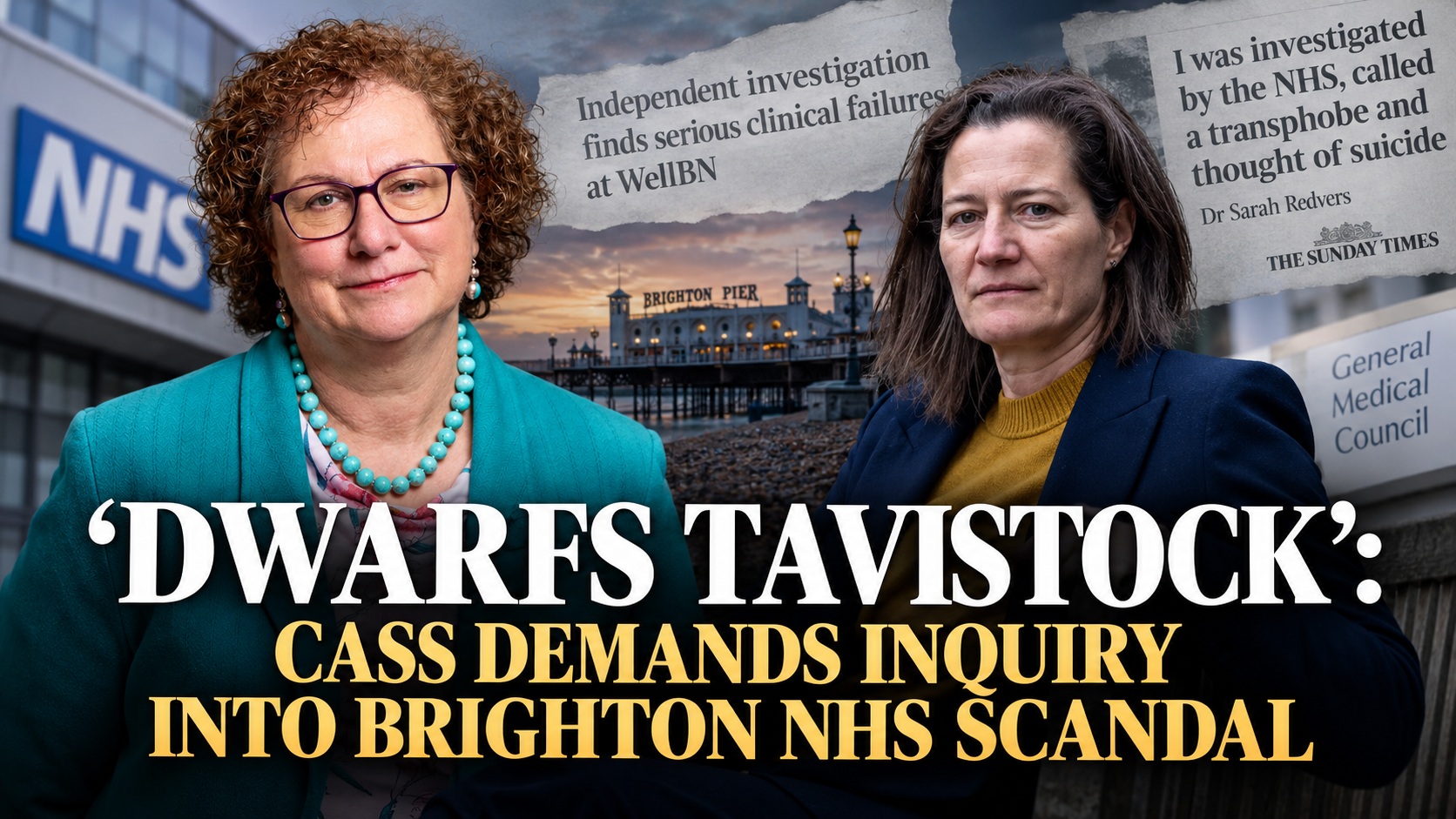
- ‘DWARFS TAVISTOCK’: Baroness Cass demands Inquiry into Brighton NHS ScandalBaroness Hilary Cass has called for an independent inquiry into Brighton’s WellBN practice, claiming it overshadowed the Tavistock scandal. An investigation revealed severe clinical failures affecting 78 children, alongside the distressing treatment of safeguarding GP Dr Sarah Redvers, who raised alarms about these practices and faced retaliation. Accountability within the NHS is urgently needed.
- “THAT’S JUST PARANOIA”: Dr Joseph Shaw and the Crisis beyond the Latin MassDr Joseph Shaw’s recent interview highlights his support for the Traditional Latin Mass but inadequately addresses the Society of Saint Pius X’s (SSPX) concerns regarding the Church’s doctrinal crisis. He dismisses SSPX’s fears as paranoia, yet the Society’s extensive theological arguments underscore that preserving the older liturgy is insufficient for restoring Catholic Tradition.
- THE REFUSAL IS NOW IN WRITINGThe Vatican has formally denied the Summorum Pontificum pilgrims permission to enter St Peter’s Basilica together for prayer, a decision communicated through published correspondence. The situation has sparked debate over administrative failures and the Church’s treatment of traditional Catholics. Key questions remain regarding the explanation for this refusal amidst wider pastoral concerns.



Leave a Reply