
When Bishops Disagree: Bishop Egan, Archbishop Naumann, and the Canon Law of the Sunday Obligation
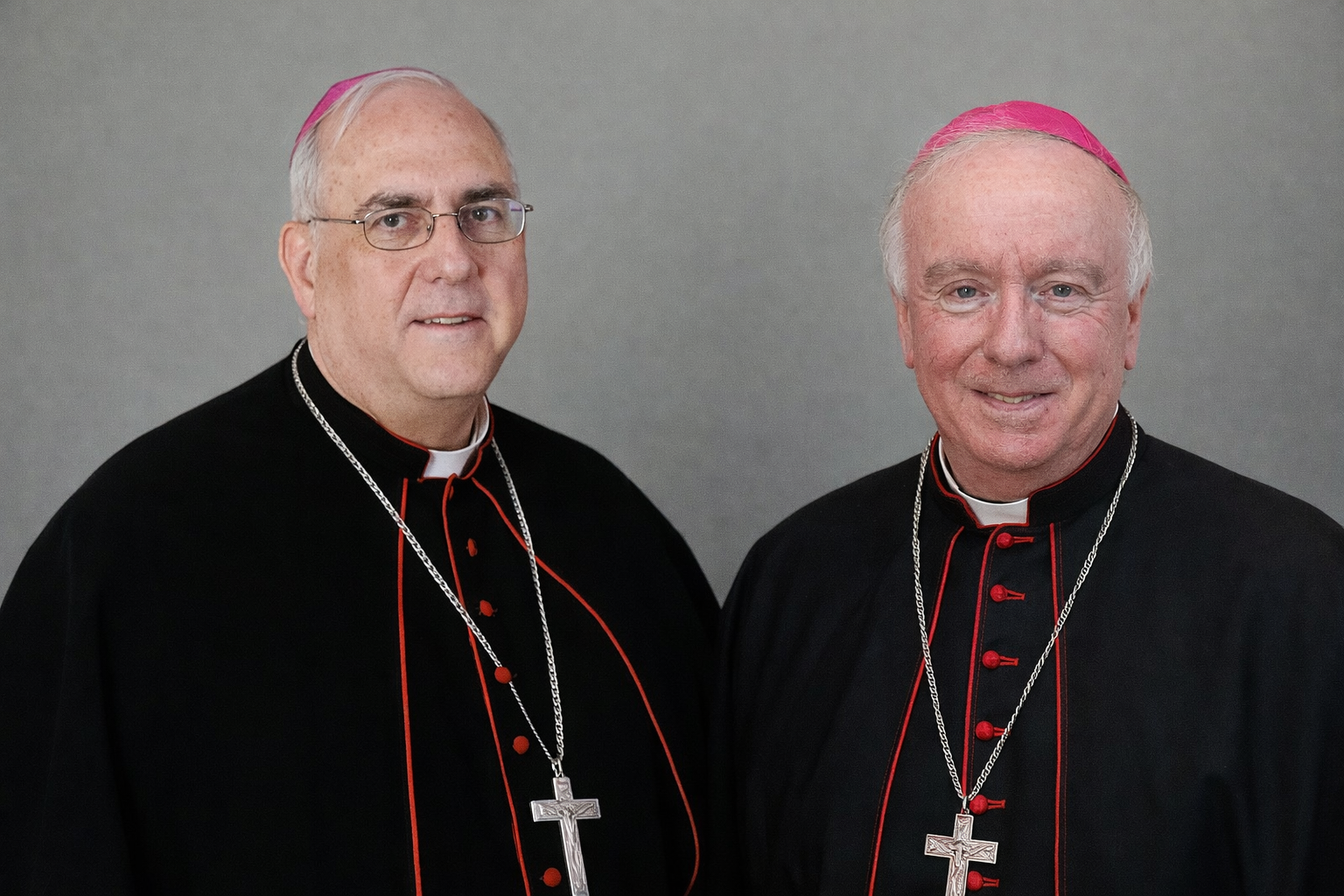
In recent remarks reported in the Catholic press, Bishop Philip Egan of Portsmouth asserted that Catholics ordinarily cannot fulfil their Sunday obligation by attending Mass celebrated by priests of the Society of St Pius X (SSPX).¹ His reasoning rests upon the Society’s irregular canonical status and the fact that its priests generally lack faculties from the diocesan ordinary.²
The claim reflects a pastoral concern widely shared among bishops: Catholics should normally worship within the canonical structures of the Church. Bishops, charged with safeguarding unity and discipline in their dioceses, naturally prefer that the faithful participate in the sacramental life of the Church within the visible structures of diocesan communion. Yet when the question is examined strictly from the standpoint of canon law, the conclusion appears considerably more complex than a simple pastoral admonition might suggest. The juridical question must be distinguished from the prudential one.
Indeed, when the relevant canons, Roman responses, and canonical commentaries are taken together, the law appears to support a position closer to that articulated in another diocese altogether—that of Archbishop Joseph Naumann of Kansas City in Kansas. The contrast between these two episcopal approaches provides a revealing window into the interaction between pastoral caution and canonical interpretation.
The difference between these perspectives is not merely geographical. It touches upon a deeper question about how canon law functions in the life of the Church: whether the faithful are to be guided primarily by pastoral discouragements or by the juridical provisions that the Church herself has enacted for the protection of their spiritual rights.
The Law Governing the Sunday Obligation
The obligation to participate in Mass on Sundays and holy days is established by Canon 1247 of the 1983 Code of Canon Law.³ This canon expresses the perennial discipline of the Church, reminding the faithful that the Lord’s Day must be sanctified through participation in the Eucharistic sacrifice. The obligation itself is ancient, rooted in apostolic practice and reaffirmed repeatedly by ecclesiastical legislation across the centuries.
The manner in which that obligation is fulfilled is defined by Canon 1248 §1, which states:
“A person who assists at Mass wherever it is celebrated in a Catholic rite on the feast day itself or on the evening of the preceding day satisfies the obligation.”⁴
The wording of the canon is deliberately concise and juridically precise. The obligation is fulfilled when the faithful assist at Mass celebrated in a Catholic rite. The legislator does not burden the faithful with additional conditions or juridical complexities beyond this essential requirement. The law speaks with clarity, and its clarity is intentional.
Notably absent from the canon are several conditions often assumed in pastoral discussions. The law does not state that the celebrant must possess diocesan faculties, nor that the Mass must be offered in a parish church, nor even that the priest be incardinated within a recognised ecclesiastical structure.
The legislator speaks simply of the rite of the Mass, not the juridical standing of the celebrant. The focus is sacramental and liturgical, not administrative. Canon law in this instance appears concerned primarily with the objective reality of the Eucharistic celebration rather than the canonical biography of the priest who offers it.
Priests of the SSPX celebrate the Roman Rite of the Catholic Church, and the validity of their Masses has never been disputed by the Holy See.⁵ The Eucharistic sacrifice offered at their altars is not considered invalid or counterfeit. It is a true Mass according to the Roman Rite, celebrated by priests who possess valid priestly orders.
For this reason the Pontifical Commission Ecclesia Dei clarified in a response dated 27 September 2002:
“In the strict sense you may fulfil your Sunday obligation by attending a Mass celebrated by a priest of the Society of Saint Pius X.”⁶
The Commission immediately added that Catholics should avoid developing a schismatic mentality and should ordinarily attend Mass in their diocesan parish if possible.⁷ The pastoral counsel was therefore cautious and measured. Yet the canonical point was unmistakable: attendance at such a Mass can satisfy the obligation.
This distinction between pastoral discouragement and canonical sufficiency lies at the heart of the present debate.
The Principle of “Any Just Cause”
Another provision of the Code reinforces this interpretation and sheds further light upon the legislator’s intention. Canon 1335 provides that when a censure prohibits a priest from celebrating the sacraments:
“The prohibition is suspended whenever a member of the faithful requests a sacrament or sacramental for any just cause.”⁸
The Latin phrase ex qualibet iusta causa—“for any just cause”—has been interpreted broadly within canonical jurisprudence. It reflects a juridical tradition in which the Church has consistently prioritised the spiritual welfare of the faithful over the rigid enforcement of disciplinary penalties upon clergy.
Classical canonists explain that the cause need not amount to grave necessity. The law does not require the faithful to demonstrate an emergency or extreme hardship before approaching a priest who may be under some canonical penalty.
Dominicus Prümmer, in his Manuale Iuris Canonici, notes that the faithful may approach a censured priest whenever any reasonable spiritual motive exists.⁹ Matthaeus Conte a Coronata likewise observes that the cause may be relatively slight, provided it is honest and reasonable.¹⁰ Felix Cappello similarly states that the faithful may request the sacraments whenever some spiritual advantage is present.¹¹
The logic underlying this tradition is pastoral as well as juridical. The Church recognises that the faithful should not suffer spiritual deprivation because of conflicts, censures, or irregularities affecting clergy. Canon law therefore provides mechanisms by which the faithful may still receive the sacraments when a just cause exists.
Examples traditionally cited by canonists include:
• devotion to a particular form of the liturgy
• pastoral convenience
• trust in a particular confessor
• spiritual benefit
These examples illustrate how widely the concept of just cause has historically been understood within canonical commentary.
The principle behind the canon is longstanding and deeply rooted in the Church’s legal tradition: disciplinary penalties imposed upon clergy should not deprive the faithful of access to the means of grace.
The Example of Kansas
A pastoral approach more aligned with this canonical framework can be seen in the Archdiocese of Kansas City in Kansas.
Following the consecration of the large SSPX church known as The Immaculata in St Marys, Kansas, the then ordinary, Archbishop Joseph Naumann issued a notice to the archdiocese acknowledging that Catholics can fulfil their Sunday obligation by attending an SSPX Mass, even while discouraging the practice because of the Society’s irregular status.¹²
This approach reflects a careful distinction between canonical reality and pastoral preference. The archdiocese did not endorse the irregular situation of the Society, nor did it encourage the faithful to abandon their diocesan parishes. Yet it recognised the juridical implications of the law.
Archdiocesan officials emphasised that the SSPX is not formally schismatic and that the faithful who attend such Masses do not thereby place themselves outside the Church.¹³
This position reflects the same distinction articulated by the Holy See: the Mass is valid, and the obligation can be fulfilled, even if the situation remains canonically irregular.
In this respect, the approach taken in Kansas demonstrates how diocesan authorities can uphold ecclesial discipline while still acknowledging the juridical provisions of canon law.
A Wider Canonical Application
The logic of canon law does not apply only to the SSPX. Once the relevant principles are understood, it becomes clear that the same juridical reasoning extends more broadly.
Other clergy who possess valid orders and celebrate the Catholic rites, even if they function outside ordinary diocesan structures, fall within the same canonical framework. Communities such as the Old Roman Apostolate, traditional independent clergy like the Servants of the Holy Family, and even certain sedevacantist chapels present analogous juridical questions.
Each of these cases differs in theological outlook and ecclesial context. Some maintain a complicated relationship with Rome; others adopt positions that raise serious doctrinal concerns. Yet from the narrow standpoint of canon law governing the fulfilment of the Sunday obligation, the question remains fundamentally the same.
In each case the canonical issue remains the same: Is the Mass valid and celebrated in a Catholic rite?
If the answer is yes, Canon 1248 §1 appears to establish that attendance satisfies the Sunday obligation, even though serious ecclesiological concerns may remain. The law does not ask the faithful to investigate the canonical status of every celebrant before fulfilling their obligation. Instead it defines the requirement in terms of the sacramental celebration itself.
The Rights of the Faithful
The Code itself reinforces this approach by emphasising the rights of the faithful. Canon law does not view the faithful merely as passive recipients of ecclesiastical decisions. It recognises that they possess certain juridical rights within the Church.
Canon 213 states:
“The Christian faithful have the right to receive assistance from the sacred pastors out of the spiritual goods of the Church, especially the word of God and the sacraments.”¹⁴
Similarly, Canon 843 §1 provides:
“Sacred ministers may not deny the sacraments to those who seek them at appropriate times, are properly disposed, and are not prohibited by law.”¹⁵
These provisions express a fundamental orientation within canon law: the faithful are to be given access to the sacramental life of the Church whenever possible. The law therefore begins from a presumption in favour of sacramental access, not restriction.
Pastoral Concern and Canonical Precision
None of this resolves the broader ecclesiological questions surrounding groups such as the SSPX. Bishops understandably wish to encourage the faithful to worship within structures fully integrated into diocesan life. Such encouragement reflects legitimate concerns about unity, discipline, and ecclesial communion.
But pastoral preference should not be confused with the juridical meaning of canon law.
Canon 1248 defines the conditions under which the Sunday obligation is fulfilled. Roman authorities have acknowledged that SSPX Masses can satisfy that obligation. Canon 1335 further demonstrates the Church’s longstanding concern that disciplinary penalties should not deprive the faithful of the sacraments.
When these elements are considered together, the conclusion that attendance at such Masses cannot fulfil the obligation becomes difficult to sustain.
The Supreme Law
The Code of Canon Law concludes with a reminder that governs the entire legal system of the Church:
“The salvation of souls must always be the supreme law of the Church.”¹⁶
For centuries canon law has interpreted sacramental discipline in light of this principle. The law bends toward the salvation of souls, not away from it.
In that context, the question raised by Bishop Egan’s remarks illustrates a broader tension between pastoral caution and canonical precision. The Church’s law, as written and historically interpreted, appears to support a conclusion more nuanced than the warning sometimes given from episcopal podiums.
The law of the Church ultimately serves not bureaucratic order but the eternal good of souls. And when the faithful seek the Eucharistic sacrifice offered according to the rites of the Church, the juridical tradition of canon law has long insisted that they should not be lightly told that their obligation remains unfulfilled.
- Catholic Herald, “Bishop Philip Egan gives his verdict on whether SSPX Mass fulfils Sunday obligation”, Niwa Limbu 11 March 2026.
- Ibid.
- Code of Canon Law (1983), c. 1247.
- Code of Canon Law (1983), c. 1248 §1.
- Congregation for the Doctrine of the Faith, statements regarding validity of SSPX sacraments.
- Pontifical Commission Ecclesia Dei, Letter to a member of the faithful, 27 September 2002.
- Ibid.
- Code of Canon Law (1983), c. 1335.
- Dominicus Prümmer OP, Manuale Iuris Canonici, vol. III (Freiburg: Herder, 1927).
- Matthaeus Conte a Coronata OFMCap, Institutiones Iuris Canonici, vol. IV (Rome: Marietti, 1950).
- Felix Cappello SJ, De Censuris (Rome: Gregorian University Press, 1954).
- Archdiocese of Kansas City in Kansas, statement concerning SSPX Mass attendance following the consecration of The Immaculata, 2023.
- Ibid.
- Code of Canon Law (1983), c. 213.
- Code of Canon Law (1983), c. 843 §1.
- Code of Canon Law (1983), c. 1752.
RELATED ARTICLES


Latest ARTICLES
- Today’s Mass: October 08 St Bridget of SwedenSaint Bridget of Sweden, born around 1302, was a noblewoman renowned for her piety and prophetic revelations. After marrying Prince Ulpho and raising eight children, she led a life of austerity and charity, founding the Order of the Holy Saviour. She died in Rome in 1373 and was canonised in 1391.
- Today’s Mass: October 07 Pope St Mark, ConfessorSt Mark’s brief pontificate teaches that God measures fidelity, not duration or worldly achievement. Christ alone possesses the everlasting priesthood; His servants are stewards of what they have received. With the commemorated martyrs, St Mark reminds us to persevere faithfully, so that when the Lord comes, He finds us “so doing.”
- Omnia autem probate: quod bonum est tenete ~ Prove all things; hold fast that which is good: Spiritual Conference for Nuntiatoria CXXVIThe conference reflects on St Paul’s assertion to “prove all things” in relation to self-judgement and the Church. It explores themes of synodality, ecumenism, and the importance of discernment, emphasising the need for humility in understanding truth and the challenge of maintaining genuine holiness in the midst of contemporary ecclesiastical crises.
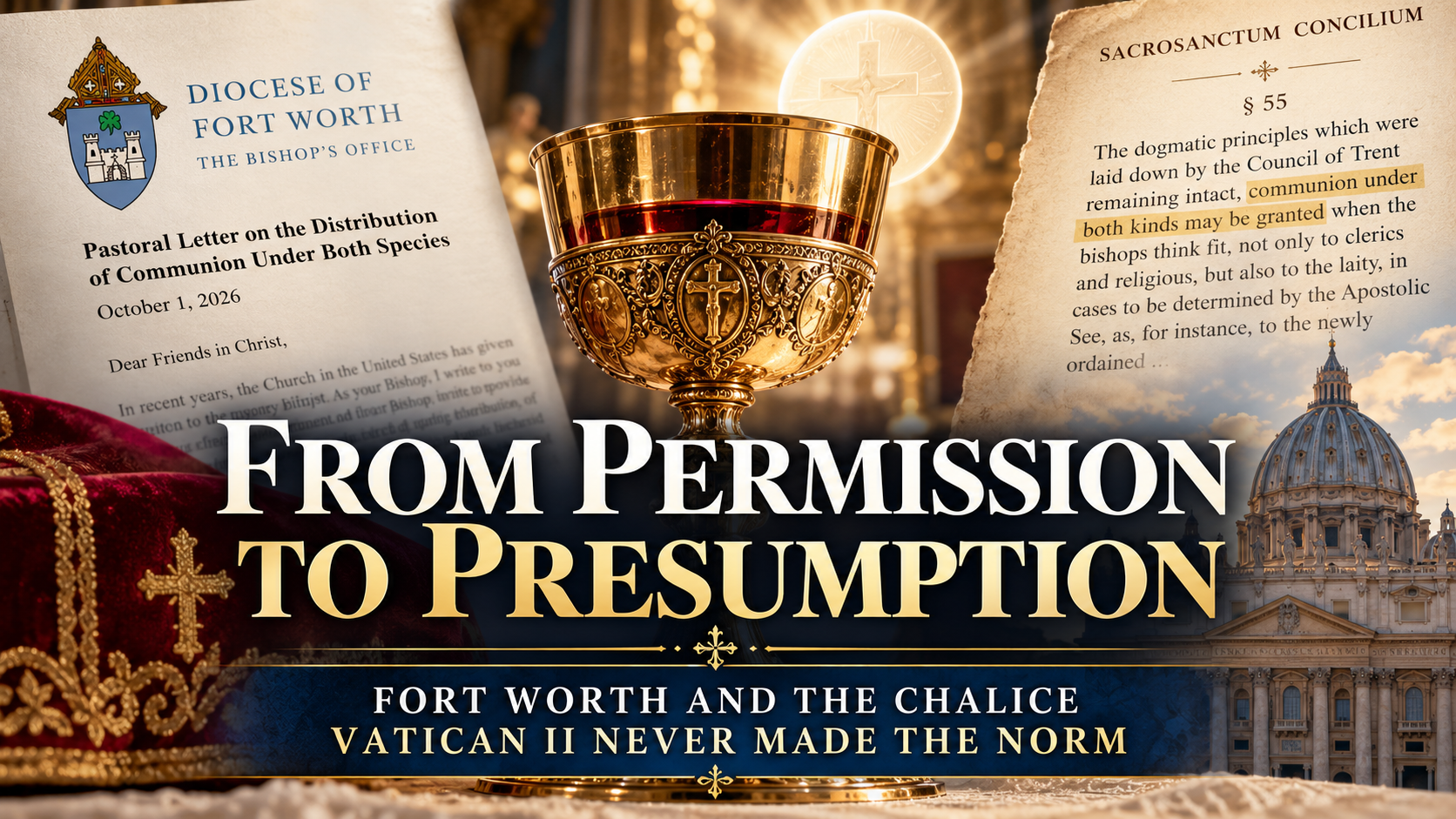
- FROM PERMISSION TO PRESUMPTION: Fort Worth and the Chalice Vatican II never made the NormBishop Michael Olson has implemented strict limitations on the distribution of Communion under both species in the Diocese of Fort Worth, prompting a discussion on the historical evolution of liturgical practices following Vatican II. This decision aims to reaffirm the doctrine of the Eucharist, emphasising that Christ is fully present under either species, while addressing misconceptions surrounding modern practices.
- AUGSBURG 2030: Can Rome commemorate a Confession it once confuted?Pope Leo XIV aims to revitalise the ecumenical spirit of the Augsburg Confession for its 2030 anniversary. However, historical responses from Rome highlight significant doctrinal differences between Catholics and Lutherans. True reconciliation must acknowledge these unresolved issues, as merely celebrating commonality risks glossing over critical theological distinctions that led to the Reformation.



Leave a Reply