

A Shrine Against Forgetfulness: Oslo, the Martyrs, and the Selective Conscience of the West
Bishop Fredrik Hansen’s new shrine to Mary, Mother of Persecuted Christians, gathers the scattered suffering of the Church into one visible act of remembrance. It also confronts a Western culture that has learnt to speak fluently about persecution while remaining strangely hesitant to name its Christian victims.

On 20 June, Bishop Fredrik Hansen blessed an icon of Mary, Mother of Persecuted Christians, and inaugurated a shrine beneath that title at the Church of St John in Bredtvet, Oslo. The day before, thousands of miles away in Sudan’s Nuba Mountains, Fr Youhanna Al-Amin had been shot dead with a parish watchman and another man.¹
No causal connection joined the two events. Yet their proximity disclosed the reason the shrine was needed.
Fr Youhanna had remained in Kauda after worsening insecurity forced other religious personnel to leave. According to local sources cited by Aid to the Church in Need, his killing may have been retaliation for reporting the theft of medicines held by the Church for the local population. He had served the people of the Diocese of El Obeid for almost three decades. When leaving would have been understandable, the shepherd stayed. When silence would have been safer, he spoke.²
It would be premature to apply the Church’s strict canonical judgment of martyrdom to a death whose circumstances are still being clarified. Yet his final fidelity possessed the form of Christian witness. He was not killed at the altar or ordered to renounce the Creed. He died amid the ordinary works of a priesthood lived in an extraordinary place: remaining with his people, protecting medicine intended for the poor and refusing to accommodate theft enforced by violence.
The next day in Oslo, an icon was blessed for men and women living under dangers of precisely this kind.
The shrine was proposed by Fr Benedict Kiely, the English priest who founded Nasarean.org to provide aid and advocacy for persecuted Christians. Similar icons have been installed in New York, London, Stockholm, Astana and Qaraqosh. The Oslo image is an Eleusa icon, showing the tenderness of the Mother and Child, with the title “Mary, Mother of Persecuted Christians” written in Aramaic.³
There is an eloquence in that detail. Aramaic evokes the language of Our Lord and the apostolic world. It is also bound to Christian communities whose presence in the lands of the Bible has been reduced by war, dispossession and organised persecution. Before such an icon, ancient Christianity is not a museum exhibit. It is a living inheritance carried by families who still pray in the languages, rites and homelands of the early Church, and who may pay dearly for doing so.
Nor is Oslo as improbable a location as it first appears. The Diocese of Oslo embraces Catholics originating from more than 180 countries. St John’s is the city’s largest Catholic church, and its congregation includes people from countries in which Christians retain a strong historical memory of oppression, as well as nations where persecution remains present and violent. Bishop Hansen specifically cited Poland, Lithuania, Vietnam, Nigeria, Myanmar and India.¹
The shrine therefore does not import a distant concern into an otherwise unrelated parish. It gives visible form to memories already present in the pews.
Some will remember a church closed by the state. Some will remember a village attacked, a family member threatened, a priest abducted or employment denied because of a Christian name. Others will know the quieter coercion experienced by converts whose baptism brings exclusion from family and community. The shrine tells them that their suffering has entered the public prayer of the Church and will not be treated merely as an awkward chapter of the lives they left behind.
Its significance extends beyond Oslo because the principal obstacle confronting persecuted Christians is no longer a lack of information. Their suffering has been documented repeatedly by churches, charities, governments, human-rights bodies and international commissions. The deeper problem is a hierarchy of sympathy which finds certain victims easier to recognise than others.
Western public culture often imagines Christianity chiefly as a historic source of institutional power. That perception can make the Christian victim difficult to see. A believer murdered in an African village, imprisoned in an Asian police state or expelled from a Middle Eastern town is made to bear the symbolic weight of European Christendom, colonial history and American political power. His actual vulnerability disappears behind an inherited picture of Christian privilege.
The result is a peculiar moral distortion. Those most insistent that disadvantage must be understood through history and social context can become least willing to do so when the disadvantaged person is Christian.
The British Government’s own investigation exposed this failure. In 2019, Foreign Secretary Jeremy Hunt commissioned the Bishop of Truro, Philip Mounstephen, to conduct an independent review of the Foreign and Commonwealth Office’s support for persecuted Christians. Its conclusions were difficult to dismiss as sectarian special pleading. The report described Christian persecution as a genuinely global phenomenon with multiple causes, stretching across the Middle East, Africa, Asia and Latin America. It stressed that contemporary Christianity is centred increasingly in the global South and among the poor rather than among the imagined beneficiaries of Western privilege.⁴
The review adopted the judgment that Christianity was, “by most calculations”, the most persecuted religion of modern times. It repeated an estimate that Christians suffered around 80 per cent of religiously motivated discrimination. That percentage has been contested and should not be treated as though every global act of persecution can be reduced to an exact statistical ledger. The precise proportion is less secure than the underlying conclusion. The geographical spread, numerical scale and severity of anti-Christian persecution are overwhelming, and the Western response has not matched them.
Open Doors’ World Watch List 2026 estimates that more than 388 million Christians face high levels of persecution or discrimination because of their faith—approximately one Christian in seven worldwide. Within its reporting period, the organisation recorded 4,849 Christians killed, 4,712 detained and 3,632 churches or Christian properties attacked.⁵ These figures depend upon the organisation’s methodology and cannot capture every incident in inaccessible or closed societies. They should be read as a measure of documented scale, not as an exhaustive count.
The Truro Review’s most incisive finding concerned not the persecutors but the spectators. It suggested that Christian persecution had been obscured by a “post-Christian bewilderment, if not embarrassment” about religion in general and Christianity in particular. It identified post-colonial guilt, deficient religious literacy and an institutional reluctance to acknowledge the religious motives behind human conduct.⁴
Jeremy Hunt was blunter. Presenting the final report, he admitted that British efforts had not always matched the scale of the problem and attributed part of the failure to “a misguided political correctness” and an instinctive reluctance to discuss religion. He called for a “sea change” in the Foreign Office’s response.⁶
The official follow-up published in 2022 found that the review had helped establish freedom of religion or belief as an enduring theme within the Foreign Office’s human-rights work. Yet it also recorded concern among civil-society organisations that the original focus upon Christian persecution had been “subsumed by, and potentially lost within” the wider policy of freedom of religion or belief for all.⁷
That tension goes to the heart of the matter.
Freedom of religion or belief must belong to everyone: Christian, Muslim, Jew, Hindu, Buddhist, Yazidi, Ahmadi, atheist and convert. Christian concern for persecuted Christians cannot depend upon indifference to the persecution of anybody else. The Truro Review itself was explicit on this point.
Yet a universal principle becomes useless when it is invoked to prevent the naming of particular victims. “All persecution matters” can become the diplomatic equivalent of looking away when it means that the greatest or most neglected burden may never be discussed plainly. Equal concern does not require statistical blindness. A physician does not deny his care to the whole ward by recognising which patient is bleeding most heavily.
The ancient Christian presence in Iraq demonstrates the cost of belated recognition. The Truro Review estimated in 2019 that the country’s Christian population had fallen from about 1.5 million before 2003 to fewer than 120,000. It estimated that Syria’s Christian population had declined from 1.7 million in 2011 to below 450,000.⁸ The figures belonged to a particular moment and subsequent estimates vary, but the historical direction is beyond dispute. Communities rooted in the earliest centuries of Christianity have been reduced to remnants within a generation.
When ISIS entered Mosul and the Nineveh Plains, Christian homes were marked, churches desecrated and populations driven from places inhabited since antiquity. The destruction was not only an assault upon individual lives. It was an attempt to erase memory: to make the physical traces of Christian existence disappear with the Christians themselves.
A similar need for precision applies to Nigeria. Its violence has ethnic, criminal, economic, territorial and political dimensions, and Muslims as well as Christians have been murdered by insurgents and armed groups. Any account which suppresses that complexity becomes propaganda. Yet complexity must not become an alibi for refusing to identify religious targeting where it occurs. The United States Commission on International Religious Freedom reported in 2026 that non-state actors continued to kill, kidnap and attack Christians and others, while Fulani militants escalated assaults upon predominantly Christian villages and churches in the Middle Belt.⁹
The honest account neither turns every conflict into a simple war between religions nor edits Christianity out of violence whose victims were selected because they were Christians.
This is why a shrine matters.
It cannot restore the dead, rebuild a village or compel a government to act. It cannot substitute for diplomacy, material aid, asylum, reconstruction or the prosecution of criminals. Bishop Hansen did not suggest that it could. He described prayer as an act of assistance which also reminds the faithful of the obligation to provide practical support and public advocacy.¹
Prayer does not excuse action. Properly understood, it makes indifference impossible.
The Church prays because persecution is not merely a geopolitical category. It is a wound in the Mystical Body of Christ. “And if one member suffer any thing,” wrote St Paul, “all the members suffer with it” (1 Corinthians 12:26). The Christian in Oslo cannot regard the Christian in Kauda, Qaraqosh or Plateau State as a remote object of benevolence. They are joined by baptism, altar and creed.
Our Lord did not disguise the cost of that communion. “If the world hate you, know ye, that it hath hated me before you” (John 15:18). “If they have persecuted me, they will also persecute you” (John 15:20). Persecution is not proof that every action of a Christian is righteous, nor does suffering absolve Christians of their own sins and historical crimes. It means that the world’s resistance to Christ will repeatedly fall upon those who bear His name.
St John Paul II therefore wrote that the Church had “once again become a Church of martyrs”. Their witness, he insisted, “must not be forgotten”.¹⁰ The language was not rhetorical. He called upon local Churches to collect and preserve the memories of those who had suffered, just as the ancient Church recorded her martyrs in calendars and martyrologies.
The Oslo shrine fulfils that command in visual form. It is a place where the Church remembers before she has forgotten, and where names from contemporary reports may be received not as passing headlines but as members of the household of faith.
Its dedication to the Blessed Virgin gives that remembrance its proper Catholic character. Mary stood beneath the Cross when public power, religious calculation and popular malice converged upon her Son. She could not remove the nails. She did not turn away. “Now there stood by the cross of Jesus, his mother” (John 19:25).
That simple sentence contains the vocation of the Church beside every persecuted Christian: not to explain away the Cross, not to aestheticise suffering, and not to avert her eyes.
Mary is Mother of Persecuted Christians because she is Mother of the Crucified and Mother of those who are made His brethren. Her tenderness in the Eleusa icon is not sentimental softness. It is the tenderness of one who knows what the world can do to innocence and who remains faithful at the place where love appears defeated.
Bishop Hansen said that what struck him most about Christians touched by persecution was the joy and hope they retained despite the horrors they had endured.¹ This testimony recurs so often that comfortable Christians risk turning it into another pious cliché. The persecuted should not be romanticised or made to perform spiritual heroism for the encouragement of those who are safe. They need protection, money, legal advocacy, political pressure and, at times, a secure country in which to rebuild their lives.
Yet their joy still judges us.
It reveals the poverty of a Western Christianity which can possess security, buildings, education and institutional resources while losing confidence in the truth for which others surrender everything. Those who have been deprived of almost all the supports of ordinary life often retain the one thing a materially comfortable Church can no longer assume: the conviction that Christ is worth suffering for.
The shrine in Oslo is therefore neither an ornamental devotion nor a gesture of religious philanthropy. It is an examination of conscience.
It asks governments whether their defence of human rights extends to victims who do not fit fashionable narratives. It asks journalists whether a burned church and a murdered priest are less newsworthy because the persecuted bear a familiar and unfashionable name. It asks churchmen whether administrative processes and internal programmes have displaced the elementary duties of solidarity, intercession and witness. It asks every Christian living in safety whether gratitude for that safety has become an excuse for forgetting those who do not share it.
The Truro Review borrowed the warning that the West must not remain “spectators at the carnage”.⁴ Seven years later, the danger remains. Concern is announced, reports are published, policies are broadened, and the particular faces which prompted them can disappear once again into the language of general principle.
At St John’s in Oslo, the icon will remain after the speeches and the inauguration photographs have passed. Before it will kneel Catholics whose families carry the memory of Communist repression, Islamist violence, militant nationalism, civil war and forced exile. Others will kneel who have never feared attending Mass or displaying a crucifix.
All will look upon the same Mother and Child.
The shrine’s quiet question will be whether the Church still recognises her own children when they suffer far from the centres of Western attention.
Her answer cannot be another report alone. It must be prayer joined to almsgiving, advocacy joined to truth, diplomatic pressure joined to religious literacy, and remembrance joined to action. It must begin by naming the persecuted without embarrassment and refusing to let universal concern dissolve them into anonymity.
The age of the martyrs did not end. Only our attention wandered.
Oslo has now established a place in which it may be summoned home.
- Luke Coppen, “‘Providential’: Bishop Hansen on Oslo’s New Shrine for Persecuted Christians,” The Pillar, 22 June 2026.
- Maria Lozano and John Burger, “Sudan: Priest Who Remained with His People despite Violence Killed in Nuba Mountains,” Aid to the Church in Need, 20 June 2026.
- Coppen, “‘Providential’”; Nasarean.org, “Mission” and “Icon Project.”
- Rt Rev Philip Mounstephen, Bishop of Truro’s Independent Review for the Foreign Secretary of FCO Support for Persecuted Christians: Final Report and Recommendations (London: Foreign and Commonwealth Office, July 2019), 4–7, 12.
- Open Doors International, World Watch List 2026.
- Jeremy Hunt, “Persecution of Christians Review: Foreign Secretary’s Speech Following the Final Report,” Foreign and Commonwealth Office, 8 July 2019.
- Foreign, Commonwealth and Development Office, Assessment of the Implementation of Recommendations of Bishop of Truro’s Independent Review of FCDO Support for Persecuted Christians (London, 4 July 2022), section 3, “Contribution to FoRB for All Policy Priority.”
- Mounstephen, Independent Review, 16.
- United States Commission on International Religious Freedom, Annual Report 2026: Nigeria (Washington, DC: USCIRF, 2026).
- John Paul II, Apostolic Letter Tertio Millennio Adveniente, 10 November 1994, §37.
RELATED ARTICLES


LATEST ARTICLES
- Today’s Mass: October 02 Holy Guardian AngelsThe concept of guardian angels, although not universally accepted as an article of faith by the Church Fathers, is supported by scripture in both the Old and New Testaments. These angels serve as divine protectors, guiding and aiding the faithful, particularly children, and emphasising their role as intermediaries between God and humanity.
- Thou has given His angels charge over theeThe Feast of the Holy Guardian Angels on 2 October acknowledges that Divine Providence assigns a guardian angel to each individual for protection and guidance towards salvation. The theology reinforces the reality of angelic guardianship and its extension to communities, while Catholics are encouraged to integrate their Guardian Angel into various aspects of spiritual life.
- Synodality’s Next Step: Writing the Revolution into Canon LawThe Vatican Canonical Commission’s proposals aim to embed synodal principles into law, resulting in compulsory councils and expanded lay governance. While not all amendments are unprecedented, their cumulative impact risks changing ecclesiastical authority’s practical exercise, asserting that compliance with the new structures may equate to adherence to the Church’s order.
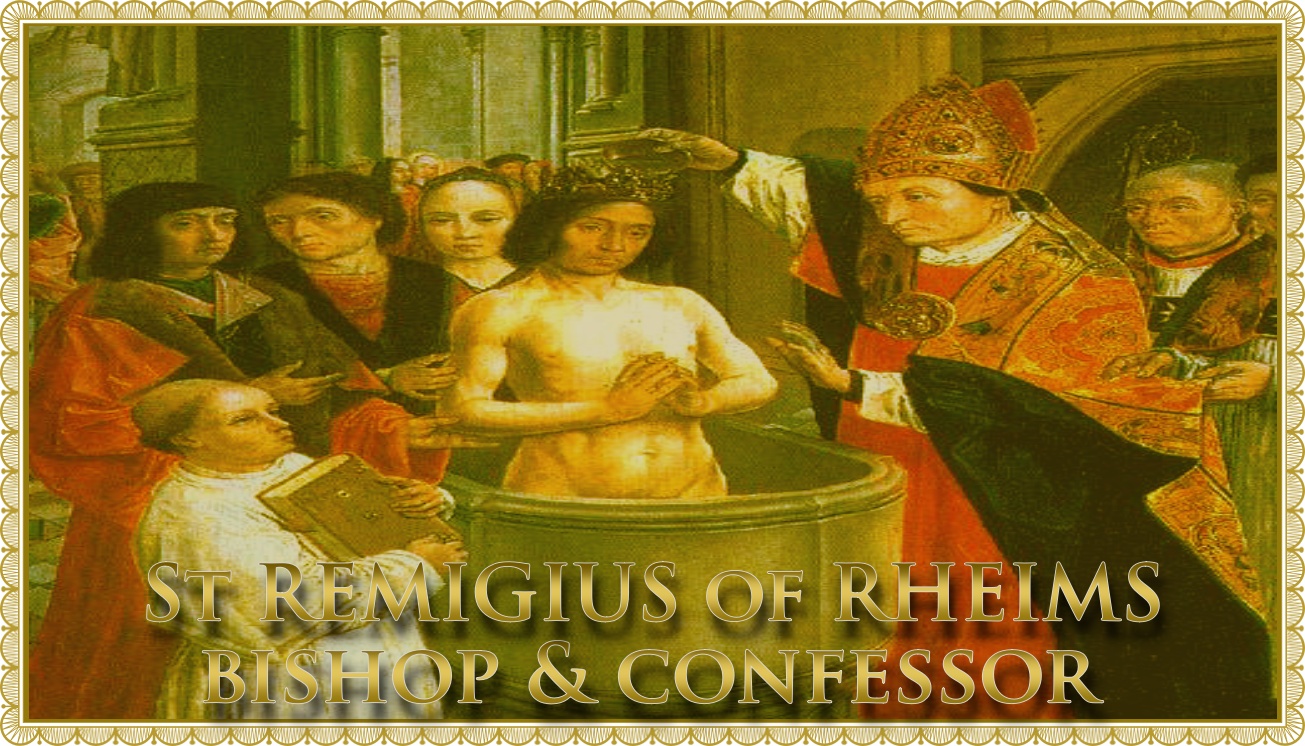
- Today’s Mass: October 01 St Remigius of RheimsSt Remigius of Rheims, a significant bishop and apostle of the Franks, was renowned for his learning, holiness, and miraculous deeds during his seventy-plus years of episcopacy. He was instrumental in spreading Christianity under King Clovis and left a lasting legacy before his death around 530.
- October Beneath Our Lady’s StandardThe Feast of the Most Holy Rosary commemorates the 1571 victory at Lepanto and evolved through papal endorsements, especially under Pope Leo XIII in the late 19th century. October, dedicated to the Rosary, serves as a reminder of prayer’s significance during trials, fostering both personal and communal spiritual resilience in Catholic life.


Leave a Reply