

The Limit Rome Remembered: Germany’s Demand for Lay Homilists and the Sacramental Boundaries No Indult Can Erase
The Vatican’s refusal to permit lay homilists in Germany matters for a reason larger than the German dispute. Rome has acknowledged that ecclesiastical authority does not create the realities it governs: an indult may relax a rule, but it cannot alter the nature of the liturgy.

The most important word in the Vatican’s refusal of Germany’s request for lay homilists was not no. It was nature.
On 30 March, the German Bishops’ Conference asked the Dicastery for Divine Worship for an indult permitting a suitably qualified and episcopally commissioned lay person, in exceptional circumstances, to speak after the Gospel during Mass in place of the homily. Cardinal Arthur Roche replied on 17 June. The answer was published six days later: the requested permission could not be given because the reservation of the homily to a priest or deacon “is not a merely disciplinary norm but derives from the very nature of the liturgy”.¹
That explanation transformed an apparently narrow dispute about who may preach into a much larger statement about the limits of ecclesiastical power.
An indult is an exception granted by authority from a law which that authority is competent to relax. It presupposes that the matter is susceptible to dispensation. The Dicastery’s answer was that this one is not. The obstacle was not administrative caution, Roman centralisation or a reluctance to accommodate German circumstances. It was the nature of the act itself. Authority could not give the permission requested because permission cannot turn one kind of act into another.
That is the real significance of the decision. Rome did not merely enforce a canon. It acknowledged that the canon protects a prior theological reality.
The German request did not emerge from nowhere. In March 2023, the Synodal Way overwhelmingly approved a proposal that “theologically and spiritually qualified” lay faithful, commissioned by the diocesan bishop, should be permitted to preach the homily on Sundays and feast days. Its stated purposes included improving the quality of preaching, drawing upon a wider range of charisms and increasing the participation of women in the Church’s ministry of proclamation.² The Bishops’ Conference subsequently adopted the proposal and presented its case to Rome.
Nor were the pastoral arguments frivolous. Germany has fewer priests, older priests and ever-larger pastoral territories. Bishop Heiner Wilmer argued that some priests presiding at Sunday Mass are unable to preach adequately because of age, infirmity, language difficulties or other impediments. The existing German arrangement, under which authorised lay people may speak at another point in the celebration, was said to be pastorally awkward because they must comment upon readings before those readings have been proclaimed.³
Anyone familiar with ordinary parish life will recognise the underlying problem. Poor preaching is common. Some priests are gifted homilists; others are not. The faithful are sometimes given hurried commentaries, recycled anecdotes, political opinions or moral generalities bearing little relation to the sacred text or the mystery being celebrated. The Dicastery itself acknowledged these failures by urging better and continuing formation for the clergy.
The problem is real. The proposed solution nevertheless confused failure in the exercise of a ministry with the nature of the ministry itself.
A priest’s inability to preach well does not prove that the homily is merely a speaking opportunity which may be reassigned to a more capable person. It proves that the priest requires formation, preparation and, where necessary, fraternal or episcopal correction. Competence matters greatly, but competence does not create sacramental mission. The most accomplished lay theologian does not become a liturgical homilist simply by being more learned or articulate than the priest, any more than a priest acquires expertise in every field merely by being ordained.
This is not a judgement upon the dignity, intelligence or evangelical vocation of the laity. Canon law itself distinguishes between preaching in general and the homily within Mass. Lay people may be admitted to preach in a church or oratory where necessity or pastoral advantage recommends it, subject to the norms of the bishops’ conference. The next canon draws the boundary: the homily is part of the liturgy and is reserved to a priest or deacon.⁴
The distinction is therefore not between clergy who may speak and laity who must remain silent. The Church possesses an immense field of lay proclamation: catechesis, apologetics, theological teaching, retreat conferences, missionary work, personal testimony, evangelisation, sacred writing and preaching in those non-Eucharistic settings where the law permits it. The question is what the act becomes when it occupies the place and performs the function of the homily within the Eucharistic celebration.
The German request attempted to preserve a distinction in language after removing it in practice. It asked for a lay “homiletic contribution” immediately after the Gospel rather than simply calling the proposed address a homily. Cardinal Roche declined the verbal escape. Whatever name was attached to it, its position and purpose would coincide substantially with the homily itself. The Church cannot preserve the nature of an act by changing its label while transferring its function.

The point had already been made in the interdicasterial instruction of 1997 on the collaboration of the non-ordained faithful in sacred ministry. The exclusion of lay persons from the homily, it explained, was not based upon their ability to preach or upon their theological preparation. It arose from the function entrusted through Holy Orders and from the connection between the Church’s offices of teaching and sanctifying. The instruction therefore concluded that even a diocesan bishop could not dispense from the norm.⁵
Redemptionis Sacramentum repeated the prohibition in 2004, expressly excluding seminarians, theology students, pastoral assistants and every other category of lay person. It also rejected the possibility that the prohibition might be evaded by presenting the same act under another designation.⁶ The German bishops were consequently not asking Rome to fill a lacuna in the law. They were asking it to set aside a boundary that the Church had repeatedly identified, explained and defended.
The theological reason is found in the character of the homily itself. It is not an intermission inserted between the Gospel and the Creed, still less a platform allotted according to the principles governing representation within a civic institution. It is a liturgical exposition of the Word proclaimed in the assembly, ordered towards the Eucharistic mystery about to be celebrated. The Church’s Homiletic Directory describes it as an extension of the scriptural proclamation which leads the congregation from the Paschal Mystery announced in the readings to the same mystery made present in the Sacrifice.⁷
The homily thus stands at the meeting of Word and Sacrament. It belongs to the public teaching action of the Church within her worship and is exercised by one who has received a sacramental mission to preach in her name. Holy Orders does not make every cleric eloquent, learned or holy. It does place the ordained minister within a sacramental relation to Christ and His Church that is not conferred by academic qualification, pastoral employment or episcopal commissioning alone.
The Dicastery’s reference to the minister who presides requires some precision, since a deacon may preach although he does not preside at Mass. The essential link is therefore not simply between the homily and presidency. It is between the homily and ordained ministry. Bishop, priest and deacon participate differently in Holy Orders, but each receives through ordination a public ecclesial mission in relation to the proclamation of the Gospel. The lay faithful share fully in Christ’s prophetic office through baptism; that common vocation does not erase the distinct sacramental office conferred through ordination.
The immediate German reaction revealed the depth of the disagreement. Irme Stetter-Karp, president of the Central Committee of German Catholics, urged the bishops to reaffirm their position before Rome and not to regard Cardinal Roche’s letter as a discouragement. The Catholic Women’s Association treated the refusal as evidence of continuing inequality and asked why Rome ignored the charisms and vocations of women and men.⁸
Yet Rome had not denied that lay people possess charisms, theological competence or genuine vocations to proclaim the Gospel. It had denied that those gifts are interchangeable with Holy Orders. The Dicastery spoke about the nature of a liturgical act; its critics replied in the language of access, equality and recognition. One side asked what the homily is. The other asked who was being excluded from it.
Those are not two answers to the same question. They are two different accounts of the Church.
Once ministry is treated chiefly as the possession of functions, every reservation appears as a privilege and every distinction as an inequality. Sacramental theology begins elsewhere. A ministry is not first an opportunity possessed by its minister but a gift ordered towards the service of the Church. Its limits are not necessarily indignities imposed upon those who do not receive it. They may belong to the intelligibility of the gift itself.
The ruling therefore presents a genuine test for synodality. Authentic consultation permits the Church to hear experience, recognise pastoral difficulties and judge how her mission may be exercised more faithfully. It does not place every sacramental distinction into permanent negotiation. Discernment which regards an unwanted answer only as an invitation to renew the campaign is not discernment at all. It is the use of process to exhaust resistance.
The German Synodal Way formally acknowledged that universal matters must be referred to Rome. It has now received Rome’s answer. Those who speak most insistently about listening must demonstrate that listening includes the possibility of hearing a refusal. Otherwise, synodality becomes structurally incapable of reaching any conclusion except the one its organisers already desired.
There is, however, another side to the judgement, and it concerns Rome itself.
The principle invoked against the German proposal cannot be reserved for progressive innovations. If liturgy has a nature which administrative permission must serve rather than manufacture, ecclesiastical authority is bound by that truth whenever it regulates worship. The Church is not the proprietor of the sacred liturgy but its custodian. She possesses genuine authority to order, reform and protect her rites; she does not possess the freedom of an owner redesigning private property.
The point is particularly uncomfortable after years in which the Church’s ancient Roman liturgy has been discussed principally in the vocabulary of concessions, permissions and restrictions. The cases are not identical. The regulation of a liturgical rite is not the same question as the sacramental reservation of the homily to ordained ministers. Yet the deeper principle remains: what the Church has received cannot be treated as though its ecclesial meaning were created solely by the permission currently attached to it.
The same Roman authority which tells Germany that pastoral advantage cannot override the nature of the liturgy must itself resist every temptation to administer liturgical tradition as raw material. A custodian may regulate an inheritance for the good of the family. He may not behave as though the inheritance began with him.
This is why the Dicastery’s decision deserves more than the applause of those pleased to see the German Synodal Way frustrated. It recalls a truth by which every party must be judged. The progressivist cannot turn sacramental ministry into a programme of institutional equality. The traditionalist cannot reduce every legitimate regulation to tyranny. The bishop cannot solve failures of formation by dissolving the nature of office. Rome cannot invoke liturgical objectivity selectively, as though inherited worship were sacred when resisting innovation but disposable when imposing policy.
Authority in the Church is real, but it is ministerial. Its greatness consists not in possessing an unlimited capacity to change what has been received, but in recognising what lies beyond arbitrary alteration and guarding it faithfully.
The German bishops asked for an exception. Rome answered that the matter was not exceptional because it was not merely disciplinary. An indult could not supply what Holy Orders confers, nor could a new designation change the nature of an act occupying the place and performing the office of the homily.
For once, ecclesiastical authority defined its strength by acknowledging a limit.
The Church will be safer when that principle is remembered everywhere.
- Dicastery for Divine Worship and the Discipline of the Sacraments, “Press Release,” 23 June 2026, summarising the letter of Cardinal Arthur Roche to Bishop Heiner Wilmer SCJ, 17 June 2026.
- The Synodal Path of the Catholic Church in Germany, “Proclamation of the Gospel by Commissioned Baptised and Confirmed Persons in Word and Sacrament,” decision adopted 9 March 2023, §§5–6.
- Heiner Wilmer to the Dicastery for Divine Worship and the Discipline of the Sacraments, 30 March 2026, request and accompanying justification for an indult concerning lay preaching; Arthur Cardinal Roche to Heiner Wilmer, 17 June 2026.
- Code of Canon Law (1983), canons 766 and 767 §1.
- Congregation for the Clergy et al., “Instruction on Certain Questions Regarding the Collaboration of the Non-Ordained Faithful in the Sacred Ministry of Priests,” 15 August 1997, art. 3 §§1–4.
- Congregation for Divine Worship and the Discipline of the Sacraments, Redemptionis Sacramentum, 25 March 2004, §§64–66.
- Congregation for Divine Worship and the Discipline of the Sacraments, Homiletic Directory, 29 June 2014, §§10–15; cf. Second Vatican Council, Sacrosanctum Concilium, 4 December 1963, §§35 and 52.
- Irme Stetter-Karp and Ruth Fehlker, statements reported by Katholische Nachrichten-Agentur, 23 June 2026.
- Second Vatican Council, Sacrosanctum Concilium, §22; cf. Redemptionis Sacramentum, §§11–12.
RELATED ARTiCLES


LATEST ARTICLES
- Today’s Mass: October 02 Holy Guardian AngelsThe concept of guardian angels, although not universally accepted as an article of faith by the Church Fathers, is supported by scripture in both the Old and New Testaments. These angels serve as divine protectors, guiding and aiding the faithful, particularly children, and emphasising their role as intermediaries between God and humanity.
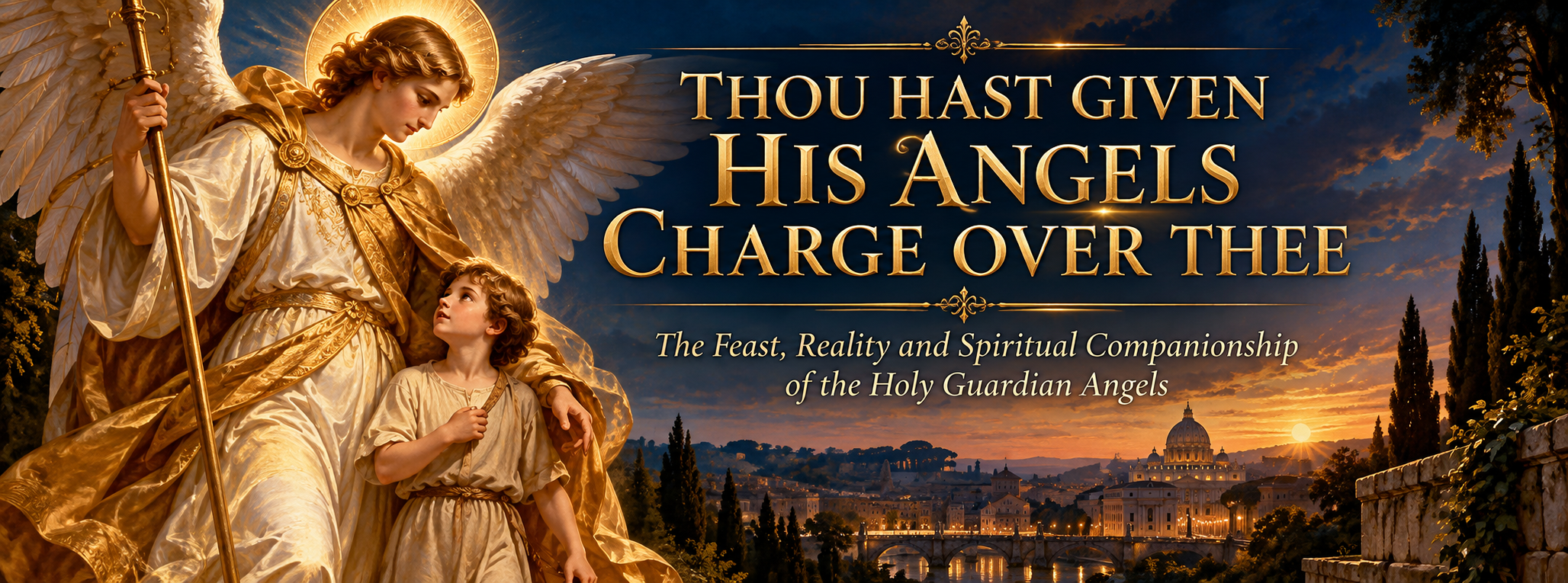
- Thou has given His angels charge over theeThe Feast of the Holy Guardian Angels on 2 October acknowledges that Divine Providence assigns a guardian angel to each individual for protection and guidance towards salvation. The theology reinforces the reality of angelic guardianship and its extension to communities, while Catholics are encouraged to integrate their Guardian Angel into various aspects of spiritual life.
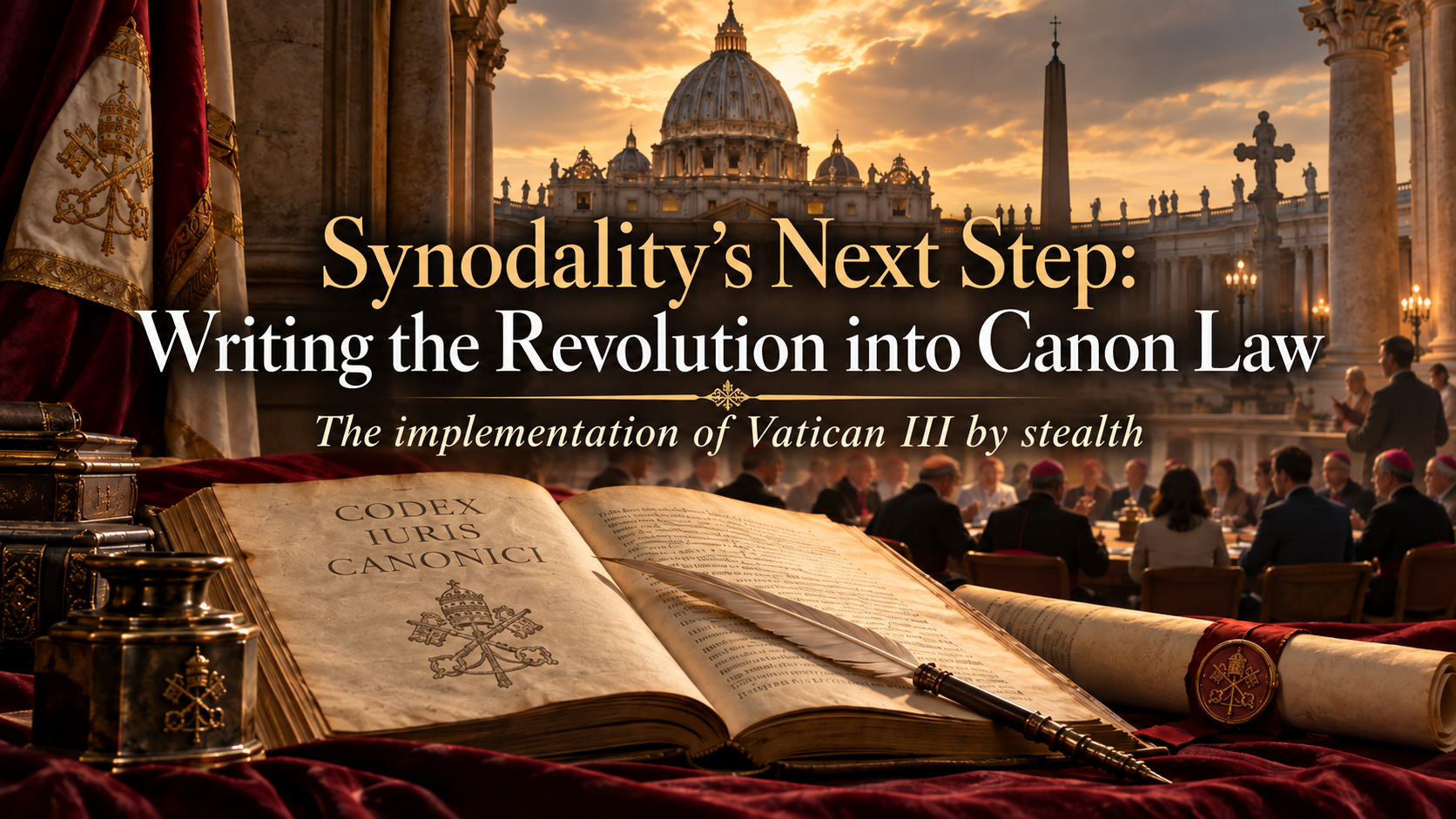
- Synodality’s Next Step: Writing the Revolution into Canon LawThe Vatican Canonical Commission’s proposals aim to embed synodal principles into law, resulting in compulsory councils and expanded lay governance. While not all amendments are unprecedented, their cumulative impact risks changing ecclesiastical authority’s practical exercise, asserting that compliance with the new structures may equate to adherence to the Church’s order.
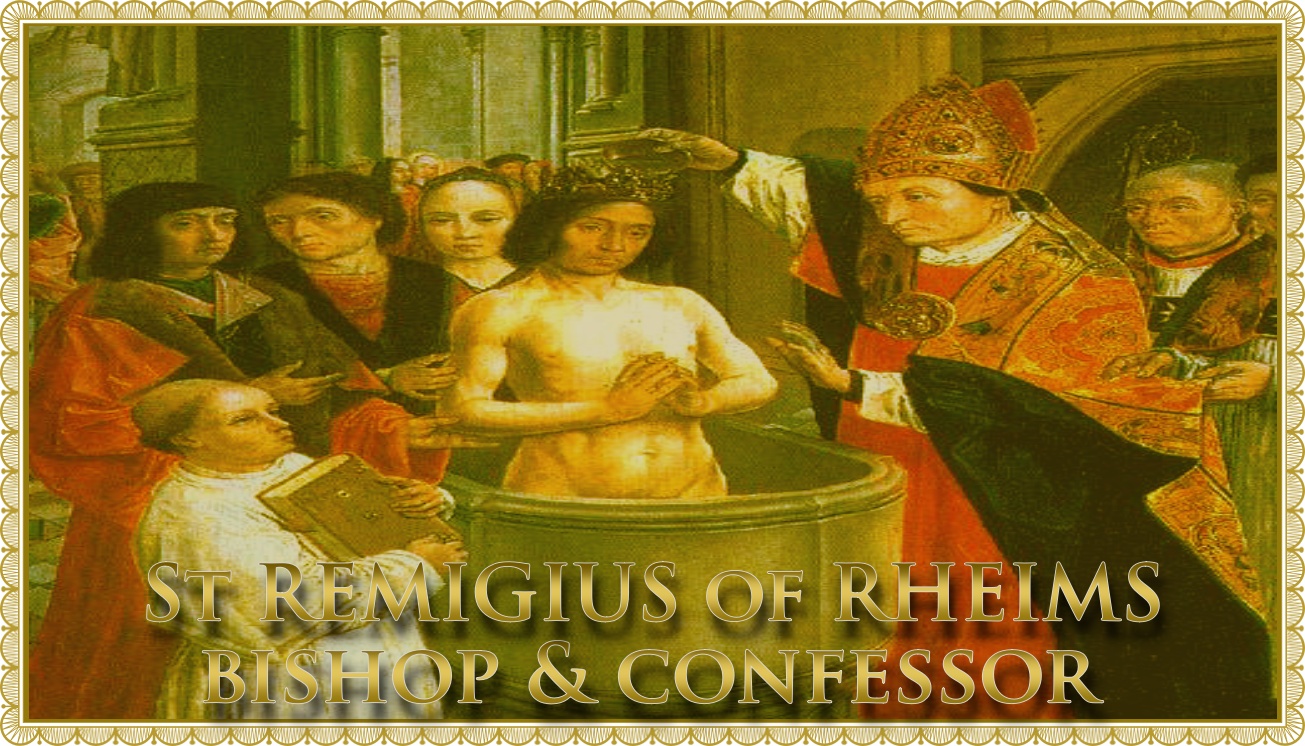
- Today’s Mass: October 01 St Remigius of RheimsSt Remigius of Rheims, a significant bishop and apostle of the Franks, was renowned for his learning, holiness, and miraculous deeds during his seventy-plus years of episcopacy. He was instrumental in spreading Christianity under King Clovis and left a lasting legacy before his death around 530.
- October Beneath Our Lady’s StandardThe Feast of the Most Holy Rosary commemorates the 1571 victory at Lepanto and evolved through papal endorsements, especially under Pope Leo XIII in the late 19th century. October, dedicated to the Rosary, serves as a reminder of prayer’s significance during trials, fostering both personal and communal spiritual resilience in Catholic life.
CURRENT EDITION


Today’s Mass Propers
- Today’s Mass: October 02 Holy Guardian Angels
 The concept of guardian angels, although not universally accepted as an article of faith by the Church Fathers, is supported by scripture in both the Old and New Testaments. These angels serve as divine protectors, guiding and aiding the faithful, particularly children, and emphasising their role as intermediaries between God and humanity.
Leave a Reply