

St Catherine of Alexandria: The Wisdom of the Cross
MASS Loquebar de testimonies
EPISTLE Ecclesiasticus 51:1–8
GOSPEL St Matthew 25:1–13
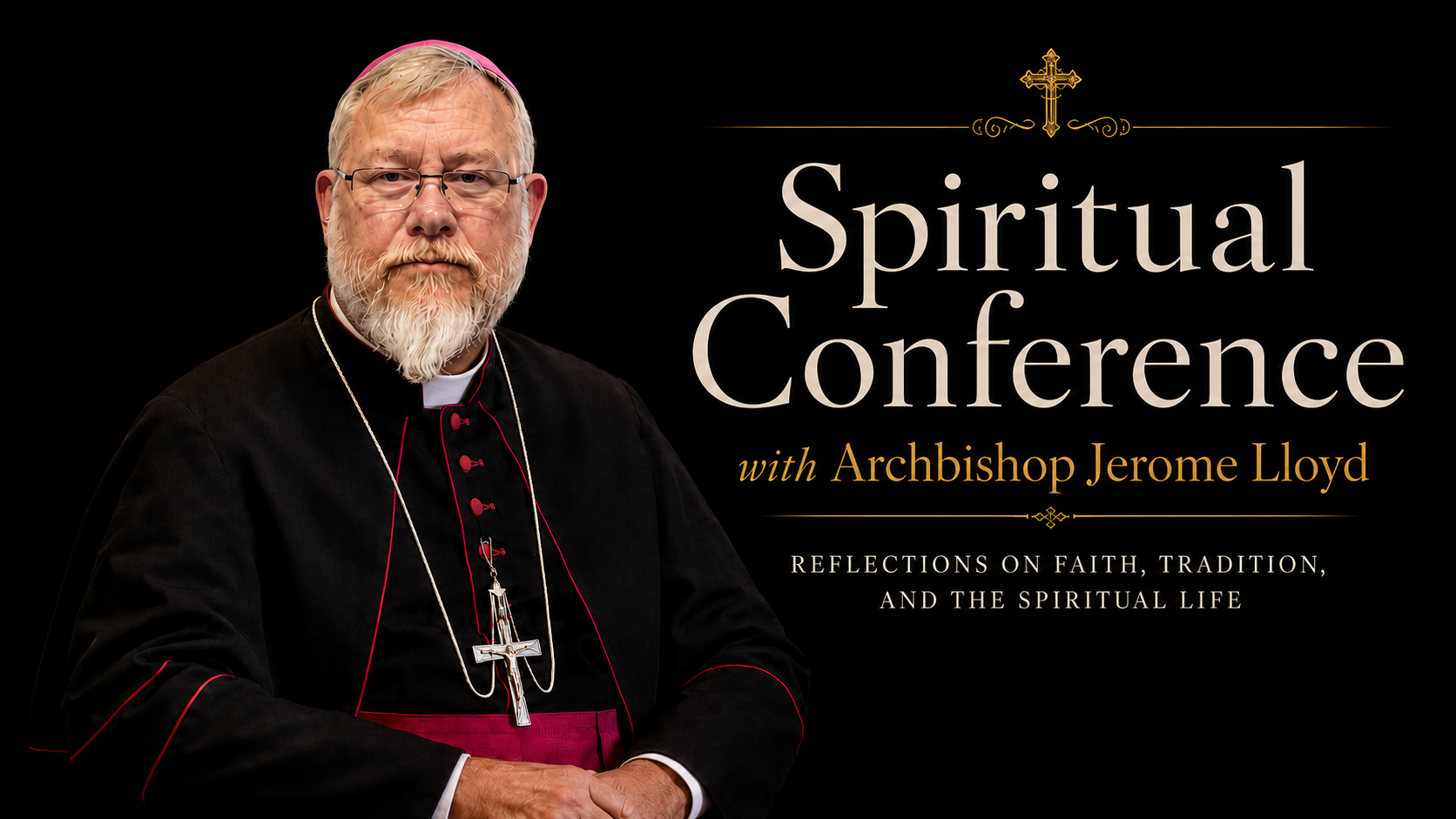
HOMILIST Mt Revd Jerome Lloyd OSJV

In the Name of the Father, and of the Son, and of the Holy Ghost. Amen.
Carissimi, beloved in Christ
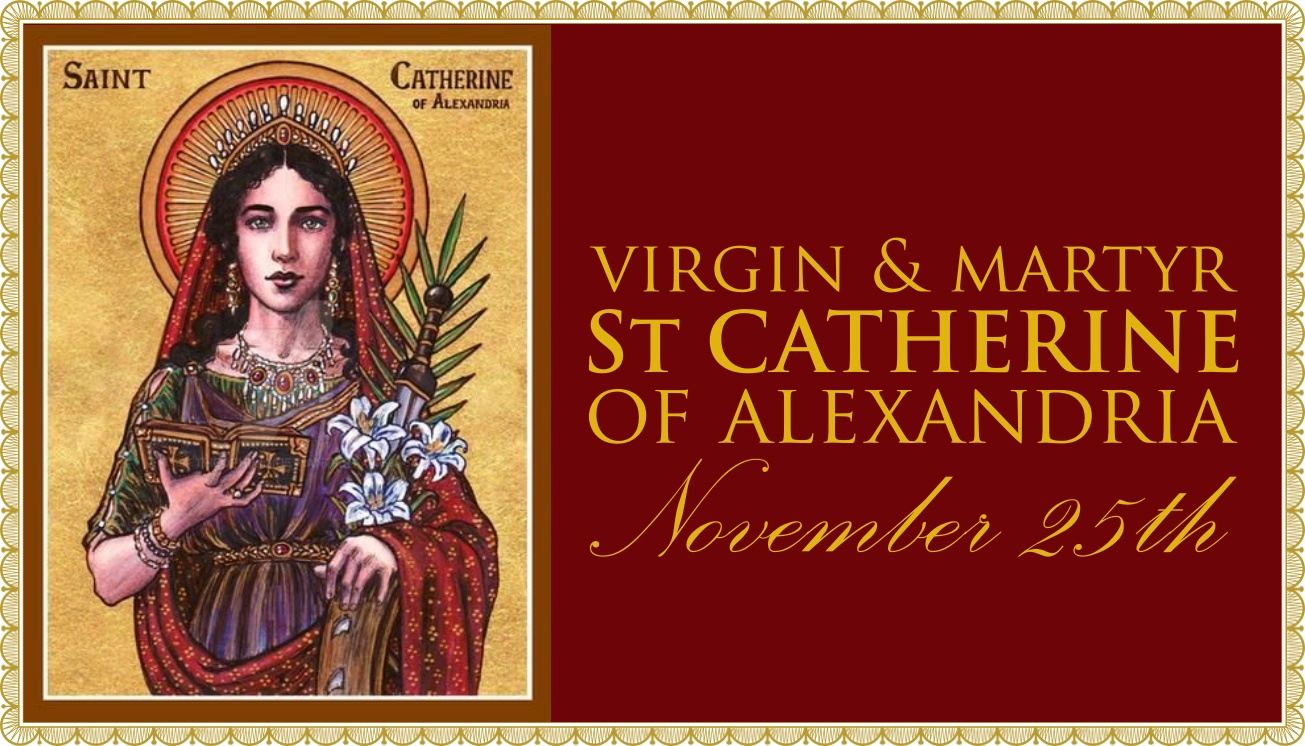
The Collect of today’s Mass brings together two events which might at first seem rather curious companions: the giving of the Law to Moses upon Mount Sinai and the tradition that the body of St Catherine of Alexandria was conveyed there by angels after her martyrdom. The Church then asks that, through her merits and intercession, we may attain to the mountain which is Christ. The prayer provides us with a particularly beautiful expression of the Christian understanding of wisdom.
According to the traditional account of her martyrdom, Catherine was a young woman of considerable learning who challenged the persecution of Christians under the Roman Empire. Philosophers were summoned to dispute with her, and some were themselves converted. Though the precise circumstances of her martyrdom are difficult to establish historically, the devotion which developed around her is instructive. She became the patroness of philosophers, scholars and students. Medieval Christians evidently saw nothing incongruous in placing the intellectual life under the patronage of a young woman whose greatest achievement was her fidelity to Christ unto death.
Christianity arose in a civilisation which had already produced some of the greatest philosophers in history. The Greeks had devoted considerable attention to the nature of reality, the purpose of human existence and the character of a good life. Their achievements deserve our admiration. Yet they could neither agree among themselves concerning man’s ultimate destiny nor provide the means by which he might attain it.
When St Paul preached at Athens, he acknowledged the religious aspirations of his hearers and even quoted their poets. His discourse proceeded quite satisfactorily until he began to speak of the resurrection of the dead, at which point some of his audience evidently decided that they had heard quite enough. Yet the Resurrection was precisely what made his preaching necessary. He had come to proclaim what the philosophers could never have discovered for themselves.
The Catholic religion has always acknowledged the capacity of reason to discover truth. We can know by reason that God exists and recognise fundamental principles of the moral law. Through revelation, however, God makes known truths beyond our natural understanding, including the mystery of the Blessed Trinity and our vocation to share in the divine life. We believe these things because God has revealed them, and God can neither deceive nor be deceived.
We should therefore have no fear of genuine learning. St Thomas Aquinas could make extensive use of Aristotle without supposing that Aristotle had anticipated Christianity. He appreciated what the philosopher had discovered and recognised where revelation carried human understanding further. The God who created our minds is the same God who has revealed Himself to us.
Our difficulty today is that we possess an extraordinary quantity of information without necessarily having acquired much wisdom. We can communicate almost instantaneously with someone on the other side of the world, yet frequently prove incapable of conducting a civil conversation with someone whose opinions differ from our own. Medical science enables us to prolong human life considerably, whilst society remains remarkably confused about the purpose for which human life should be prolonged.
Knowledge enables us to accomplish things; wisdom enables us to judge whether they ought to be accomplished. A child may receive an expensive education, acquire excellent qualifications and obtain a very respectable position without having learned how to be a good husband or father. We have perhaps become so concerned with preparing children to earn a living that we have rather neglected to teach them how to live.
In today’s Gospel Our Lord describes ten virgins going out to meet the bridegroom. Five were wise and five foolish. All possessed lamps, all expected the bridegroom, and all eventually fell asleep. The difference became apparent when he arrived. Some had made provision for his coming and others had neglected to do so.
The foolish virgins had presumably intended to attend the marriage feast. They had made the journey and waited with the others. Yet their intentions could not supply what was wanting when the bridegroom appeared. Our Lord concludes with the warning that we know neither the day nor the hour.
St Augustine, preaching upon this parable, associates the oil with charity and particularly warns against performing good works for the sake of human approval. We must have within ourselves that love of God which gives our works their supernatural worth. Another person’s holiness cannot compensate for our refusal to repent, however much the prayers of others may assist us in obtaining the grace of repentance.
We generally make quite sensible provision for things which may never happen. We insure our possessions, make arrangements for retirement and protect ourselves against various contingencies. Yet death, which is considerably more certain than most of the eventualities against which we insure ourselves, is frequently treated as though it were a remote possibility which need not concern us.
Next Sunday we begin Advent. The Church will direct our attention towards the coming of Christ, both in the humility of His Incarnation and in the glory of His return to judge the living and the dead. It would be well to begin our preparation now, remembering that the particular judgement of each of us will follow immediately upon our death.
Preparation for that meeting with Christ need not make us anxious. God desires our salvation and has provided the means by which we may attain it. If we have committed mortal sin, let us return to Him in confession. Let us recover the habit of daily prayer if we have neglected it, and approach Holy Communion with the reverence due to the reception of Our Lord Himself. These are practical expressions of the wisdom commended in today’s Gospel.
The Epistle gives thanks to God for deliverance from danger and from the hands of those who sought the life of the speaker. How appropriate that the Church should employ these words upon the feast of a martyr. Catherine’s persecutors could deprive her of earthly life, yet they could not deprive her of the eternal life promised by Christ. Her apparent defeat was her victory.
Here we begin to understand why St Paul speaks of Christ crucified as the wisdom of God. Catherine had, according to her traditional history, considerable intellectual gifts. But the greatest wisdom she possessed was knowing that nothing her persecutors offered her could compensate for the loss of Christ. She had recognised the one good for whose sake everything else might be surrendered.
Most of us will never be required to defend the Faith before an imperial tribunal. We may nevertheless be called upon to explain what we believe to someone who has never properly understood Christianity. We may have to forego some advantage rather than act dishonestly, or endure ridicule rather than be ashamed of Our Lord. In such circumstances our knowledge of the Faith must be accompanied by the charity which makes its truth intelligible through our conduct.
Let us return, then, to the Collect with which we began. Moses ascended Sinai to receive the Law of God. Catherine, in the tradition commemorated by the Church, was brought there after giving her life in fidelity to that Law fulfilled in Christ. We ask today that we ourselves may attain to the mountain which is Christ.
May St Catherine obtain for us the wisdom to know Him, the charity to love Him, and the perseverance to remain faithful to Him. Let us keep our lamps supplied with oil, lest we discover, when the Bridegroom comes, that we have learned a great many things during our earthly pilgrimage except that which was necessary for our salvation.
In the Name of the Father, and of the Son, and of the Holy Ghost. Amen.





Leave a Reply