
- Decriminalised to Death: The Quiet Passage of Abortion Up to Birth in Britain
 The British Parliament has passed Clause 208, removing criminal liability for women terminating their own pregnancies without limit on gestation. While the Abortion Act 1967’s 24-week limit remains, its practical enforcement is undermined. Critics argue this change represents a profound moral shift in legal protections for the unborn, altering the foundations of human rights.
 - The Unravelling of Legal Protection for the Unborn in Britain
 Bishop Stephen Conway’s intervention in the House of Lords regarding Clause 191 of the Crime and Sentencing Bill highlights a critical concern over the legal removal of protections for viable unborn children. By suggesting procedural changes instead of preserving legal accountability for abortion, he exemplifies a troubling shift in moral discourse, undermining both justice and the sanctity of life.
 - ORDO w/c 04.01.26
 The content outlines the liturgical schedule for the Octave of the Epiphany, detailing specific celebrations, readings, and masses for each day from January 4 to January 6. It emphasizes the significance of these dates, the colors used in the liturgy, and special notes regarding practices such as the blessing of Epiphany water.
 - From the Primus 21.12.25
 The edition of Nuntiatoria, during Advent, critiques ecclesial uncertainties and cultural disintegration. It examines episcopal governance and public morality, highlighting growing Christian marginalization and the displacement of true beliefs. Through worship, it emphasizes the need for fidelity rather than reinvention, seeking to strengthen hope amid societal confusion and faith challenges.
 - Today’s Mass: December 19th Ember Friday in Advent
 The Ember Week, rooted in Roman tradition, emphasizes prayer and fasting, particularly for priestly ordinations in December. Celebrated with processions and liturgies, it highlights the importance of divine guidance and the significance of Mary’s intercession. Scriptural readings focus on God’s promises and the arrival of salvation through Jesus Christ.
 - Today’s Mass: December 18th The Expectation of the Blessed Virgin Mary
 The Feast of the Expectation of the Blessed Virgin Mary, originating from the 10th Council of Toledo in 656, aims to honor the Annunciation and prepare for Christmas. Celebrated on December 18, it reflects the fervent devotion to Mary’s maternity, blending ancient practices with the Church’s timeline for the Incarnation celebrated on March 25.
 - Today’s Mass: December 17th Feria Quarta Quattuor Temporum Adventus
 The Feria Quarta Quattuor Temporum Adventus commemorates the Annunciation during Ember Week in Advent, highlighted by the Roráte Mass. This Mass, associated with the light arriving in darkness, symbolizes hope and grace. It features prayers and readings from Isaias, culminating in Mary’s acceptance of her divine role, embodying faith and expectation for the Messiah.
 - Sermon for Ember Wednesday in AdventThe Third Sunday of Advent, or Gaudete Sunday, encourages rejoicing amidst societal crises. It reflects on St. Paul’s message to the Philippians, emphasizing thanksgiving and the need for God. As confidence in reason wanes, the Christian faith may find renewed relevance, offering true hope and peace beyond self-reliance in troubled times.
- Today’s Mass: December 16th S. Eusebius, Bishop and Martyr
 Saint Eusebius, Bishop and Martyr, reminds us that persecution did not end with Constantine but returned through heresy within the Church. Standing against imperial Arianism, he upheld the Nicene Creed at great personal cost—exile, suffering, and humiliation. His witness teaches that Advent hope is rooted in doctrinal fidelity: Christ is true God, and only steadfast confession of that truth brings light, consolation, and salvation.
 - Today’s Mass: December 15th Octave Day of the Conception of the Blessed Virgin Mary
 The Octave Day of the Conception of the Blessed Virgin Mary celebrates her unique creation and purpose, reflecting God’s eternal plan. The feast emphasizes Mary’s role as the mother of Christ and highlights that every individual is similarly chosen by God for their specific purposes in salvation history.
 - Today’s Mass: December 14th Third Sunday of Advent
 The Third Sunday of Advent, known as “Gaudete,” emphasizes joy as the Church anticipates the coming of Jesus. St. John the Baptist announces the Savior’s presence and encourages repentance and prayer. The Mass includes readings that inspire rejoicing in the Lord, reflecting on faith, hope, and the significance of Jesus’ impending arrival.
 - Sermon for Third Sunday in AdventThe Third Sunday of Advent, or Gaudete Sunday, encourages rejoicing amidst societal crises. It reflects on St. Paul’s message to the Philippians, emphasizing thanksgiving and the need for God. As confidence in reason wanes, the Christian faith may find renewed relevance, offering true hope and peace beyond self-reliance in troubled times.
- Pope Leo XIV appointments to the Dicastery for the Causes of Saints
 The recent appointments to the Dicastery for the Causes of Saints signal a shift towards post-conciliar pastoral theology and contemporary moral reasoning in the evaluation of sanctity. Key figures like Cardinal Woelki and Archbishop Amarante emphasize the complex interplay between doctrine and pastoral experience, raising questions about how saintly virtue will be assessed in today’s Church.
 - From the Primus 14.12.25As Advent unfolds, the Church emphasizes a prayer highlighting the importance of waiting for salvation and justice. The text reflects on the need for liturgical restraint and the dangers of modern interpretations that prioritize management over tradition. This edition of Nuntiatoria urges a return to receptivity for spiritual renewal amidst contemporary crises.
- ORDO w/c 14.12.25The content outlines the liturgical calendar and significance of events during Advent from December 14 to December 21. It highlights varying themes such as joy, Mary’s role, the importance of fasting, and the anticipation of Christ’s birth. Each day emphasizes preparation, penitence, and a call for spiritual readiness leading to Christmas.
- “Ero cras”: The Great O Antiphons and the Church’s Final Advent Cry
 The Tridentine liturgy of Advent emphasizes a season of disciplined expectation and moral sobriety, particularly through the Advent Ember Days. These ancient observances integrate fasting, prayer, and Scripture to prepare the faithful for Christ’s coming, highlighting the necessity of moral readiness and transforming anticipation into a structured journey of faith.
 - Gaudete: The Third Sunday of AdventGaudete Sunday, the Third Sunday of Advent, emphasizes a unique joy rooted in repentance and humility rather than mere sentiment. This joy is doctrinal, sacramental, and eschatological, highlighting the nearness of God. The liturgy instructs the faithful in joy’s moral discipline, tying it to sacrifice and the anticipation of salvation through Christ.
- Gaudete Sunday: The Nearness of Salvation and the Manifestation of Jerusalem
 Gaudete Sunday, the Third Sunday of Advent, signals a shift towards a measured joy in liturgy, celebrating the nearness of salvation. Rose vestments and partial return of festive elements reflect this joy, symbolizing hope grounded in the Incarnation. The Church encourages vigilance and penance while rejoicing in Christ’s proximity, embodying the joy of the heavenly Jerusalem.
 - THE TRIDENTINE LITURGY AND ADVENT EMBER DAYS
 The Tridentine liturgy of Advent emphasizes a season of disciplined expectation and moral sobriety, particularly through the Advent Ember Days. These ancient observances integrate fasting, prayer, and Scripture to prepare the faithful for Christ’s coming, highlighting the necessity of moral readiness and transforming anticipation into a structured journey of faith.
 - Whither the Mass of Vatican II? The Missal the Council Never Saw
 Dom Alcuin Reid argues that the Mass typically referred to as the “Mass of Vatican II” does not reflect the liturgy approved by the Second Vatican Council. His historical analysis highlights how post-conciliar reforms diverged from the original intentions of the Council, leading to a significant ecclesial liturgical crisis, despite the later rites being valid.
 - Fabricated quotations, selective authority, and the creep of modernism: A procedural, jurisprudential, and cultural analysis of Peggie v NHS Fife
 The Peggie v NHS Fife ruling has garnered attention for its questionable judicial reasoning, which includes misattributions and selective citations of higher court rulings. This analysis critiques the lack of adherence to the common law’s requirement for accurate legal citation, highlighting a trend where emotionalism and modernism undermine professional legal standards, impacting public confidence in the tribunal system.
 - The Schneider contradiction: Kazakhstan, liturgical relativism, and the unresolved fracture in modern Catholicism
 Bishop Athanasius Schneider’s perspective on Kazakhstan’s liturgical practices highlights a contradiction within Catholicism, balancing reverence for the Traditional Latin Mass with support for the Novus Ordo. This duality underscores a deeper structural issue, wherein adherence to tradition clashes with contemporary adaptability, risking theological coherence and liturgical identity.
 - The criminalisation of compassion: silent prayer, free speech, and the new UK abortion buffer zones
 Isabel Vaughan-Spruce faces criminal charges for silently praying outside an abortion clinic, highlighting a significant shift in UK law regarding public expression of belief. The introduction of buffer zones reflects an increasing tendency to regulate not just actions but thoughts and intentions, raising concerns about moral authority and freedom of conscience.
 - Fractured allies: the collapse of Britain’s Islamo-Leftist experiment
 The collapse of Britain’s Your Party reveals tensions in merging Islamist activism with progressive ideologies. Infighting over social issues, particularly regarding gender and sexuality, led to significant resignations. This crisis reflects broader challenges in British politics surrounding Muslim representation, institutional responses, and the intersection of cultural norms with progressive values.
 - Cardinal Fernández: omissions, concerns, and the unresolved problem of eroticised spirituality
 Cardinal Fernández’s writings evoke concerns regarding theological method and pastoral practice, using sensual and erotic imagery in spiritual contexts that diverge from classical Catholic teachings. This raises issues of transparency, doctrinal fidelity, and the risk of modernist tendencies overshadowing traditional moral principles, necessitating a renewed commitment to the Church’s doctrinal patrimony.
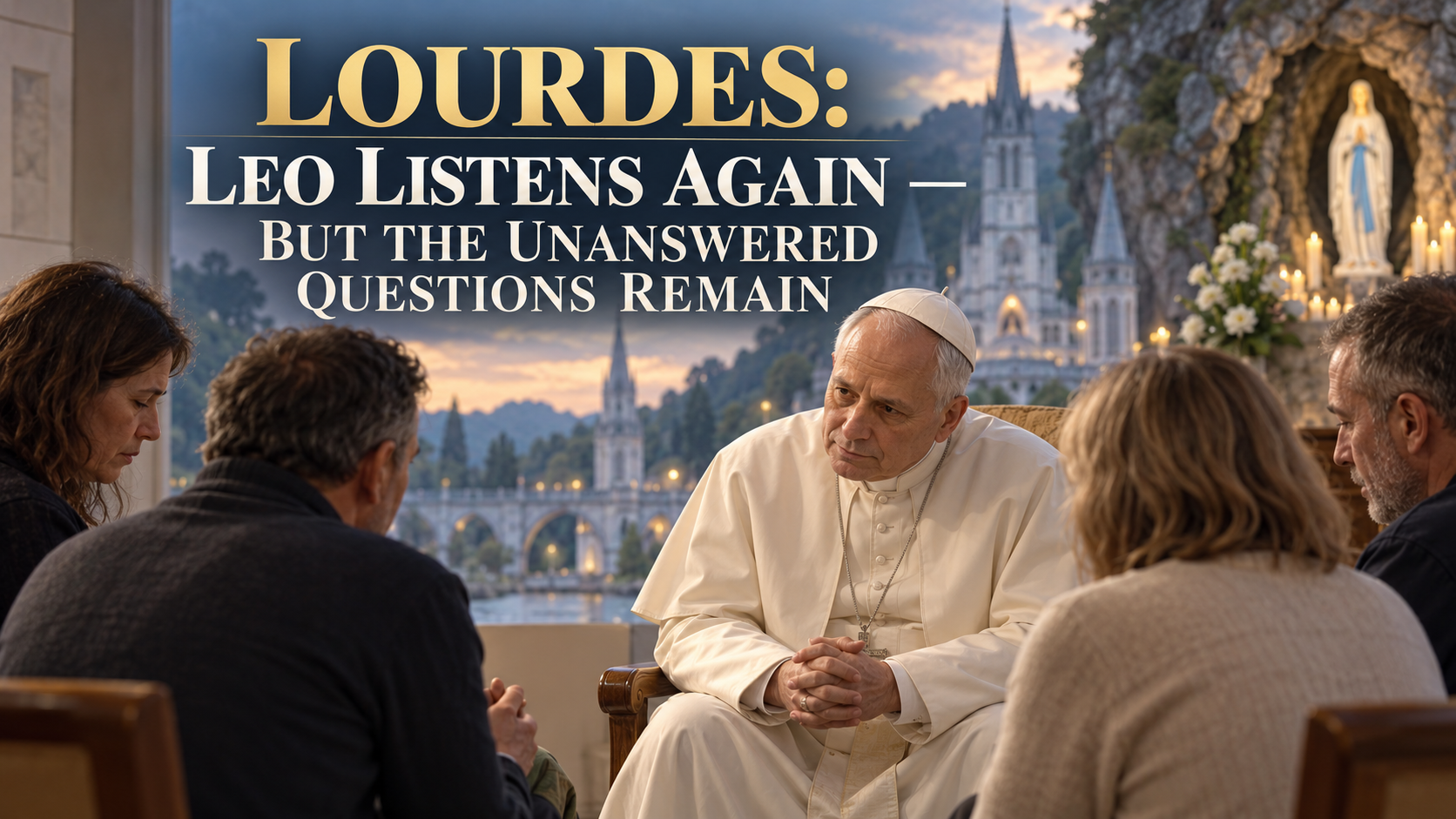
 - When Zero-Tolerance Ends in Silence: Leo XIV, Chiclayo, and the Crisis of Credibility
 A case from Peru raises questions about Pope Leo XIV’s record on abuse. Victims say canonical justice was denied through a dispensation that avoided a trial. A balanced analysis asks: did “zero-tolerance” become institutional silence? Reform is urgently needed.
 - When safeguarding becomes silence: how the British state punishes dissent through child protection
 A jury cleared Royal Marine Jamie Michael in minutes. A secret safeguarding process then branded him “unsuitable” to work with children and banned him from coaching his daughter’s team. This editorial shows how safeguarding is being twisted into a tool of political punishment.
 - Put Christ Back into Christmas: When Proclaiming Christ Becomes Extremism
 In December 2025, Tommy Robinson’s initiative “Put Christ Back into Christmas” sparked controversy, highlighting Britain’s cultural shift from Christian belief to secular celebration. Despite Christmas’s continued popularity, belief in Christianity has waned significantly. The Church of England’s reluctance to assert Christian truths reflects broader cultural anxieties about public expressions of faith.
 - Civil recognition and silent chains: Bishop Zhang Weizhu and the capitulation of Rome in China
 The Holy See expressed satisfaction over Bishop Zhang Weizhu’s civil recognition in China, despite his ongoing house arrest and surveillance. This situation reveals the complex dynamics of the Sino-Vatican Provisional Agreement, raising concerns about the Church’s complicity in state-led coercion and the erasure of underground Catholic voices under increasing oppression.
 - The Forgotten Disposition: The Crisis of Priesthood and the Loss of Sacramental Culture
 The contemporary crisis of priesthood is rooted in a loss of sacramental culture and structural support for priests’ identities. Despite ongoing grace, priests face exhaustion from conflicting expectations, necessitating personal visibility over traditional ritual. For renewal, the Church must restore ritual depth and communal support, ensuring priests can truly embody their sacrificial role.
 - Royal Holloway in the dock: Campus discipline, free speech, and the new boundaries of political identity
 The case of Royal Holloway student Brodie Mitchell highlights tensions over free speech and political identity in UK universities. Suspended after a controversial incident during a Freshers’ Fair, he argues that disciplinary actions lack context and have harmed his education. This issue exemplifies broader national challenges regarding campus activism and academic freedom.
 - Regulating the Public Square: Belfast’s Street Preaching Dispute and the Boundaries of Lawful Restriction
 The Belfast City Council’s debate over street preaching regulation highlights a critical issue regarding the balance between civic order and freedom of expression. Proposed laws could infringe on rights protected by European human rights conventions, particularly concerning religious expression in public spaces, transforming lawful preaching into inaudible acts and suppressing legitimate moral discourse.
 - Conscience and contempt: the principle Enoch Burke defended, and the mistake that now obscures it
 Enoch Burke, a teacher, faced suspension for refusing to address a student by preferred pronouns, citing his Christian beliefs. After breaching a High Court injunction forbidding his presence at school, he was jailed for civil contempt. His refusal to comply shifted focus from his beliefs to legal process, obscuring critical constitutional debates on conscience and compelled speech.

14.12.25 Nuntiatoria LXXXIV: Rorate Caeli
Advent, framed by Rorate caeli, gives this edition its governing logic: salvation and justice descend from above but require an earth opened by fasting, restraint, and fidelity. Set within Gaudete Sunday and the Advent Embertide, the editorial connects the contemporary crises in law, conscience, universities, and the liturgy itself, arguing that where truth is replaced…
1–2 minutes




Leave a Reply