

SCRIPTURE, SPEECH, AND THE EXPANDING DEFINITION OF HARM
Canada’s hate-law row and Westminster’s return to a “conversion practices” ban
Over the past fortnight, Canada has seen a fast-moving public row over whether quoting marriage-related scripture could, in practice, be treated as hate speech. The immediate trigger was a remark by Canada’s Culture Minister, Marc Miller, who stated that he does not “think people should be using the Bible, the Qur’an or the Torah to escape from committing a hate crime.”¹ The remark was widely interpreted as endorsing the removal of an explicit legal safeguard protecting good-faith religious expression. Canadian bishops responded by warning of a likely chilling effect on religious expression, particularly where traditional moral teaching intersects with contested social questions.²
What is actually at stake in Canada is a specific legal protection. Section 319(3)(b) of the Criminal Code currently provides a defence to a charge of wilful promotion of hatred where, “in good faith,” a person expressed an opinion on a religious subject or an opinion based on belief in a religious text.³ The Canadian Conference of Catholic Bishops has warned that removing this defence would create legal uncertainty for ordinary believers and institutions, even if prosecutions remain rare. The danger is not merely criminal sanction, but self-censorship, as individuals and organisations adjust behaviour in anticipation of risk.
This concern is not abstract. Legal commentators have noted that explicit statutory defences function as bright-line reassurances. Their removal shifts the burden onto citizens to guess where lawful teaching ends and criminal liability might begin, a burden most will avoid by silence rather than litigation.⁴ In practice, the absence of clarity disproportionately affects religious communities lacking the resources to test boundaries in court.
The wider Canadian legislative context reinforces these fears. Bill C-9, which amends the Criminal Code in relation to hate propaganda and hate crimes, has brought renewed attention to the religious-expression defence. Submissions to the House of Commons Standing Committee on Justice and Human Rights show that some advocacy groups explicitly regard the defence as an obstacle to stronger hate-speech enforcement and have urged its repeal.⁵ The bishops’ intervention should therefore be read not as alarmism, but as a response to a concrete legislative trajectory.
The same fault line is now visible in the United Kingdom, though through a different legislative vehicle. Westminster is again accelerating toward a statutory ban on so-called “conversion practices.” In the House of Commons on 10 December 2025, the Minister for Equalities stated unequivocally: “conversion practices are abusive and we will ban them.”⁶
At first glance, the statement appears uncontroversial. Coercion, threats, violence, harassment, and abuse are already criminal offences under UK law. During Commons debate, MPs acknowledged that such conduct is not only illegal but “incredibly rare, to the point of being all but wiped out.”⁷ The live policy question is therefore not whether abuse should be prohibited, but whether new legislation will criminalise ordinary speech, prayer, pastoral support, and even marriage counselling.
The risk lies in definition rather than intention. Draft proposals discussed publicly define “conversion practices” as attempts to:
A) change a person’s sexual orientation or gender identity, or
B) suppress a person’s expression of sexual orientation or gender identity.⁸
It is the breadth of “suppression” that creates the legal danger. Once the concept is detached from coercion, it can encompass voluntary pastoral care, parental guidance, prayer, or counselling that affirms traditional understandings of marriage and sexual ethics. In practical terms, stating that sexual intimacy is properly ordered toward marriage between a man and a woman—a belief shared by Christianity, Judaism, Islam, and other faiths—could be reframed as suspect or harmful in itself.
This lands directly on support for real marriage. Once the law moves from regulating conduct to adjudicating anthropological and moral claims, it ceases to be neutral. The issue is no longer whether someone is harmed by coercion, but whether the state will permit certain truths about human nature, sexuality, and family life to be spoken at all.
Civil-society responses in the UK reflect this divide. Church bodies and religious-liberty organisations have repeatedly warned that campaigners conflate criminal abuse with the ordinary work of churches—teaching, prayer, pastoral conversation—and then use that conflation to justify broad criminal prohibitions.⁹ By contrast, campaign groups advocating a comprehensive ban argue that religious contexts must be included precisely because they involve moral teaching, and that “suppression” is central to the phenomenon the law must address.¹⁰
The dispute therefore turns on a deeper question: whether the state will criminalise contested moral and anthropological claims. Once “suppression” itself becomes a legal target, the law risks shifting from policing coercive actions to policing convictions and counsel.
This shift would have predictable institutional effects. Clergy, counsellors, teachers, and parents may withdraw from voluntary support roles out of fear of complaint or investigation. As Canadian bishops have already observed in their own context, the chilling effect of legal uncertainty often precedes any actual prosecutions.²
A further policy assumption also warrants scrutiny. Advocates of an expansive ban often assert that change is impossible and that all attempts at support are inherently harmful. This claim is more contested than public rhetoric suggests. Sociologist Dr Paul Sullins, analysing large longitudinal survey datasets, has shown that many individuals report changes in sexual behaviour and identity over time.¹¹ Whatever one’s moral framework, public policy should not hard-code the metaphysical claim that change never occurs into criminal law.
UK law already contains a carefully balanced settlement. The Public Order Act 1986 prohibits threatening or abusive conduct while explicitly safeguarding lawful expression of belief, including on sexual ethics, provided it does not cross into genuinely threatening behaviour.¹² A conversion-practices bill that effectively reclassifies orthodox belief about marriage as “hate” or “abuse” would contradict that settlement and invite enforcement by complaint rather than by objective harm.
Two safeguards are therefore essential before any bill is introduced.
First, consensual pastoral care, parental guidance, prayer, and marital counselling must be explicitly protected in statute, not left to prosecutorial discretion.
Second, lawful discussion of marriage—including the sex of the parties—must remain lawful discussion, consistent with existing public-order law and the European Convention on Human Rights.
Without these protections, the law risks crossing a critical threshold: from preventing genuine harm to enforcing ideological conformity, narrowing—quietly but decisively—the space in which religious belief, moral reasoning, and family life may be freely lived and discussed.
Conclusion
These debates cannot be understood in isolation. Similar pressures are emerging in education, professional regulation, and church governance, where safeguarding language is increasingly used to police belief rather than behaviour. Even where prosecutions are rare, institutional risk-aversion produces immediate effects. Canada’s proposed removal of a bright-line defence and Westminster’s struggle to define “suppression” illustrate the same danger: law drafted broadly becomes policy enforced widely.
- Marc Miller, remarks reported in Canadian national media, early December 2025.
- Canadian Conference of Catholic Bishops, public statement on religious expression and hate-speech law, December 2025.
- Criminal Code (Canada), s. 319(3)(b).
- Dan Michaluk, “The Conundrum of the Religious Defence to Hate Expression,” Slaw, December 2025.
- House of Commons (Canada), Standing Committee on Justice and Human Rights, evidence on Bill C-9, 2025.
- UK House of Commons, Hansard, statement by the Minister for Equalities, 10 December 2025.
- UK House of Commons, debate on conversion practices, December 2025, Hansard.
- Sky News, reporting on draft UK conversion practices proposals, December 2025.
- Public statements and consultation submissions by UK church and religious-liberty organisations, 2024–2025.
- Stonewall, policy materials advocating a comprehensive ban on conversion practices, 2023–2025.
- Paul R. Sullins, “Sexual Orientation Change: Evidence from Longitudinal Data,” Archives of Sexual Behavior, 2017.
- Public Order Act 1986, Part III; Crown Prosecution Service guidance on freedom of expression.
RELATED ARTICLES


LATEST ARTICLES
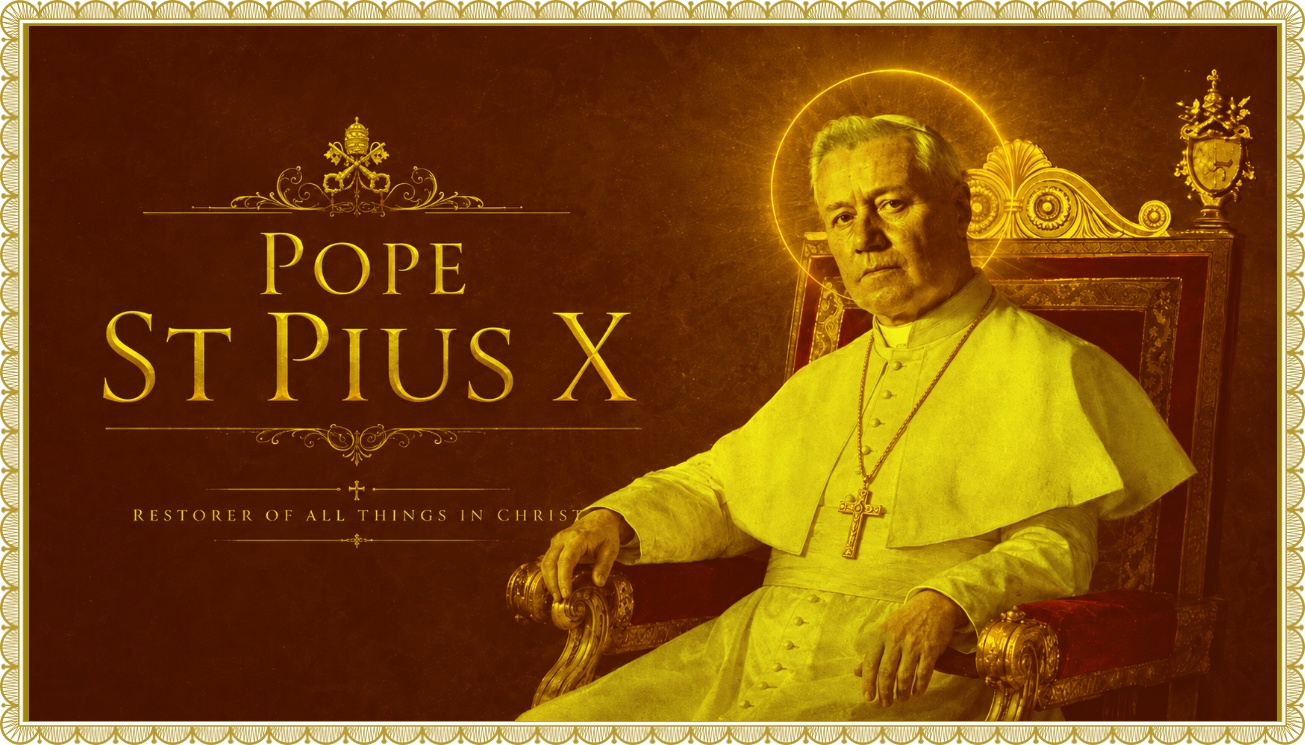
- Today’s homily: St Pius X, PopeThe text reflects on the life and legacy of Pope St Pius X, who was chosen from humble beginnings to reform the Church. His pontificate focused on defending the Catholic Faith, restoring liturgical sanctity, and fostering deeper connections between believers and Christ. Pius X exemplified a balance of truth and pastoral charity.
- Today’s Mass: September 03 Pope St Pius X,Pope St Pius X, born Giuseppe Melchiorre Sarto, was a significant reformer who emphasised preserving the Catholic Faith against Modernism. His pontificate (1903-1914) featured reforms in liturgy, frequent Holy Communion, and seminaries, rooted in a pastoral desire to restore everything in Christ. He died in 1914 and was canonised in 1954.
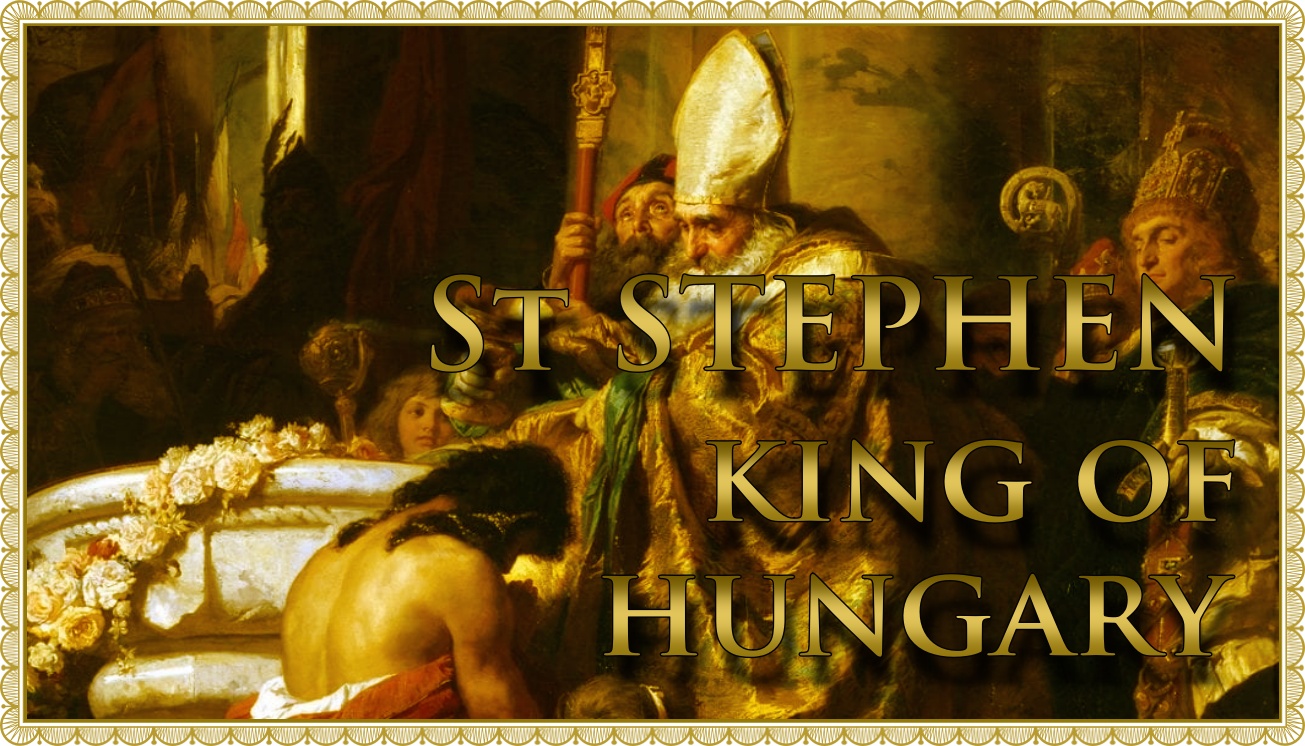
- Today’s homily: St Stephen of HungaryThe homily reflects on the life of Saint Stephen of Hungary, illustrating his transition from a powerful ruler to a saint. He embraced the responsibilities of kingship guided by faith, understanding his authority as stewardship. His legacy teaches that true governance comes with surrender to God, ultimately placing his kingdom under the protection of the Blessed Virgin Mary.
- Today’s Mass: September 02 St. Stephen the GreatSt. Stephen the Great, King of Hungary (977-1038), was a significant Christian ruler who reinforced the faith throughout Hungary. Anointed king in 1000 by Pope Sylvester II, he fought against paganism and promoted the Church. He was canonised in 1083 and is the patron saint of Hungary, symbolising national identity.
- QUAERITE PRIMUM REGNUM DEI – Seek First the Kingdom: Spiritual Conference for Nuntiatoria CXXIA spiritual conference, “Seek First the Kingdom,” emphasises prioritising God’s reign within individuals over earthly concerns. It explores the necessity of internalising Christ’s teachings, the importance of discernment, and the critical evaluation of the faith in relation to contemporary issues. A genuine Catholic life centres on Christ, fostering holiness and transformation.



Leave a Reply