

Before the Fountain Closes: Mercy, Judgment, and the Urgency of Penance
MASS Miserére mihi
LESSON Jonas 3:1-10
GOSPEL St John 7: 32-39
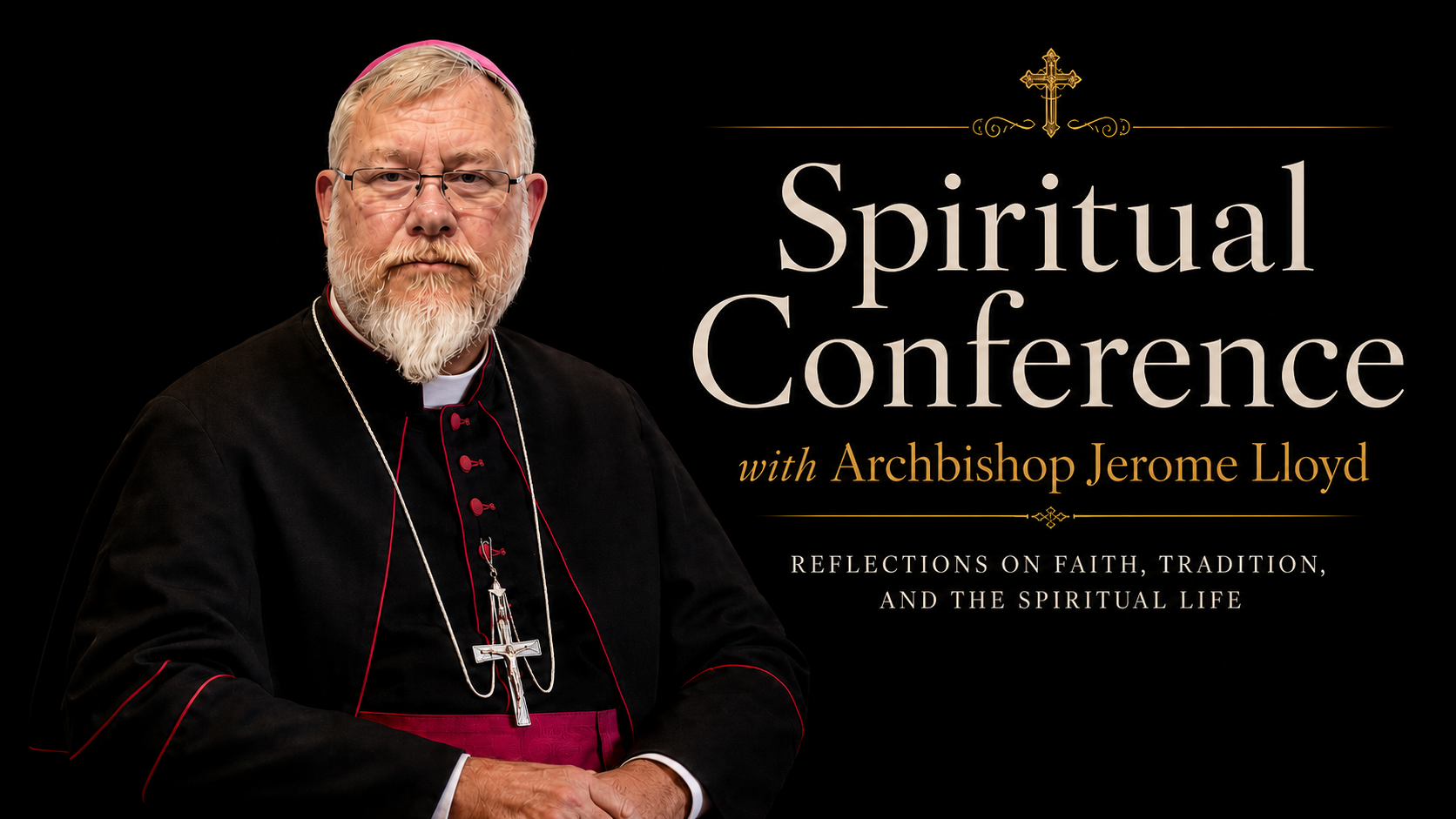
HOMILIST Mt Revd Jerome Lloyd OSJV

Beloved in Christ,
In the deepening shadow of Passiontide’s threshold, the Church leads us across the Tiber into Trastevere, to the ancient basilica of St. Chrysogonus—a place where Rome still breathes with the memory of martyrdom. Beneath the sanctuary lie the vestiges of a domestic church from the age of Constantine: a hidden oratory, a house sanctified by blood, where the faith was not argued but confessed unto death. Here, the liturgy is not abstract; it is architectural. It descends into the earth, as Christ Himself descends toward His Passion.
And already the liturgical signs intensify. The Judica me has fallen silent. The Gloria Patri is withheld. The Church, like a widow in mourning, strips away her ornaments—not as loss, but as focus. We are being trained to see what remains when consolation is removed: Christ alone, and our need for mercy.
“Miserére mihi, Domine…”
“Have mercy on me, O Lord, for man hath trodden me under foot.”
This cry of the Introit is not merely David’s—it is Christ’s voice in His Passion, and it must become ours in penitence. The enemies who “tread upon” are not only persecutors without, but the disordered passions within. The battlefield is interior; the siege is spiritual.
Nineveh and the Logic of True Penance
The Epistle from the prophet Jonas presents us with one of the most arresting scenes in all Scripture: a pagan city, vast, corrupt, and doomed—yet saved.
“Yet forty days, and Ninive shall be destroyed.”
There is no mitigation in the prophecy, no conditional clause, no softening of divine justice. And yet, the entire city—from king to cattle—enters into penance. Sackcloth. Fasting. Ashes. Crying out to God “with all their strength.”
And God relents.
Why?
Because their penance was not theatrical—it was total. Exterior mortification was united to interior contrition. The body fasted because the soul repented. This is the Church’s perennial doctrine, and it stands in stark opposition to the thin, bloodless spirituality of modernity, which would reduce penance to sentiment, conversion to self-expression, and repentance to psychological adjustment.
No—Nineveh teaches us that God is moved not by words alone, but by the embodied humility of the sinner. The flesh must learn what the soul confesses.
And here the liturgy presses upon us a necessary severity: if God spared Nineveh, it was not because He had relaxed His justice, but because they had submitted to it. Mercy does not abolish justice—it fulfills it in repentance.
The Terrible Possibility: “You Shall Seek Me and Shall Not Find Me”
If the Epistle gives us hope, the Gospel gives us warning.
“You shall seek Me, and shall not find Me.”
These are among the most dreadful words ever spoken by Our Lord. Not because He withdraws arbitrarily—but because grace, once persistently resisted, may be withdrawn judicially.
The Pharisees seek to seize Him. They hear His words, but they do not receive them. They see His works, but they do not believe. And so a time comes when the presence they reject is no longer available to them.
This is not merely a historical judgment upon Jerusalem—though it is that, in terrible fullness. It is a spiritual law.
There is a point—known only to God—at which neglected grace becomes inaccessible grace.
How many souls intend to repent “later”?
How many presume upon Easter, as though conversion were a scheduled convenience?
How many silence the voice of conscience until they can no longer hear it?
“You shall seek Me…”
Not casually, but desperately.
“…and shall not find Me.”
Because the door once open has been closed—not by caprice, but by justice.
The Fountain Opened to the Thirsting
And yet—here is the paradox, the luminous contradiction at the heart of today’s Gospel.
The same Christ who warns of absence cries out:
“If any man thirst, let him come to Me and drink.”
Before the door closes, it stands open. Before the judgment falls, mercy is offered. Before the drought, there is a fountain.
And not merely a fountain for ourselves—but a fountain within us:
“Out of his belly shall flow rivers of living water.”
This is the promise of the Holy Ghost. The soul that drinks deeply of Christ becomes itself a source—purified, strengthened, inflamed with charity. Grace is not static; it overflows.
This is why the Church places this Gospel before the catechumens nearing Baptism. They have thirsted in the desert of paganism; soon they will drink at the font. But it is also placed before us—baptised, yet often barren—to remind us that grace received must become grace lived.
The Church of Chrysogonus and the Crisis of Our Age
And here, in this ancient basilica, the lesson becomes inescapably contemporary.
We, too, live in a kind of Nineveh—vast, restless, morally disordered, yet not beyond redemption. But unlike Nineveh, our age often refuses the very idea of penance. It seeks mercy without repentance, absolution without amendment, salvation without sacrifice.
Even within the Church, there is a growing suspicion of mortification, a discomfort with fasting, a preference for affirmation over conversion. The body is indulged, the will is flattered, and the Cross is softened into symbolism.
But the ruins beneath St. Chrysogonus tell another story.
They tell of Christians who understood that faith costs.
That truth demands witness.
That salvation passes through the Cross.
They did not negotiate with the world—they overcame it.
And so the liturgy confronts us: will we be Nineveh—or Jerusalem?
Will we repent while there is time—or seek when it is too late?
Conclusion: The Hour of Decision
We stand now in the narrowing corridor of Lent. The Church has stripped away her consolations. The Passion draws near. The voice of Christ resounds with both warning and invitation.
“Have mercy on me, O Lord…”
“If any man thirst, let him come to Me…”
“You shall seek Me, and shall not find Me…”
Three voices—but one decision.
Now is the acceptable time.
Now is the day of salvation.
Now—before the silence falls.
Let us fast—not only with the body, but with the will.
Let us repent—not only in word, but in truth.
Let us come to Him—not tomorrow, but today.
For the fountain still flows.
But it will not always.
Homilies Archive

Mass Propers


DAILY MASS ONLINE
One of the earliest online apostolates dedicated to the Traditional Latin Mass, Old Roman TV began broadcasting the Holy Sacrifice on the Feast of the Assumption, 15 August 2008. During the COVID-19 pandemic, additional programming — devotions, catechesis, and conferences — was added to support the faithful in prayer and formation.
Support the daily Holy Mass on Old Roman TV by offering a Mass intention — for loved ones, thanksgiving, or the repose of souls. Your intention helps sustain the sacred liturgy and brings grace to those you remember before God’s altar.
SUPPORT THE DAILY MASS ONLINE
Likely the world’s longest-running daily online broadcast of the
Traditional Latin Mass, streaming faithfully since the
Feast of the Assumption 2008.

This apostolate cannot continue without immediate help
Please support us with a contribution toward
chapel rent, sacristy supplies, operating costs, and web-hosting.
Our essential monthly costs reach £1,000.




Leave a Reply