
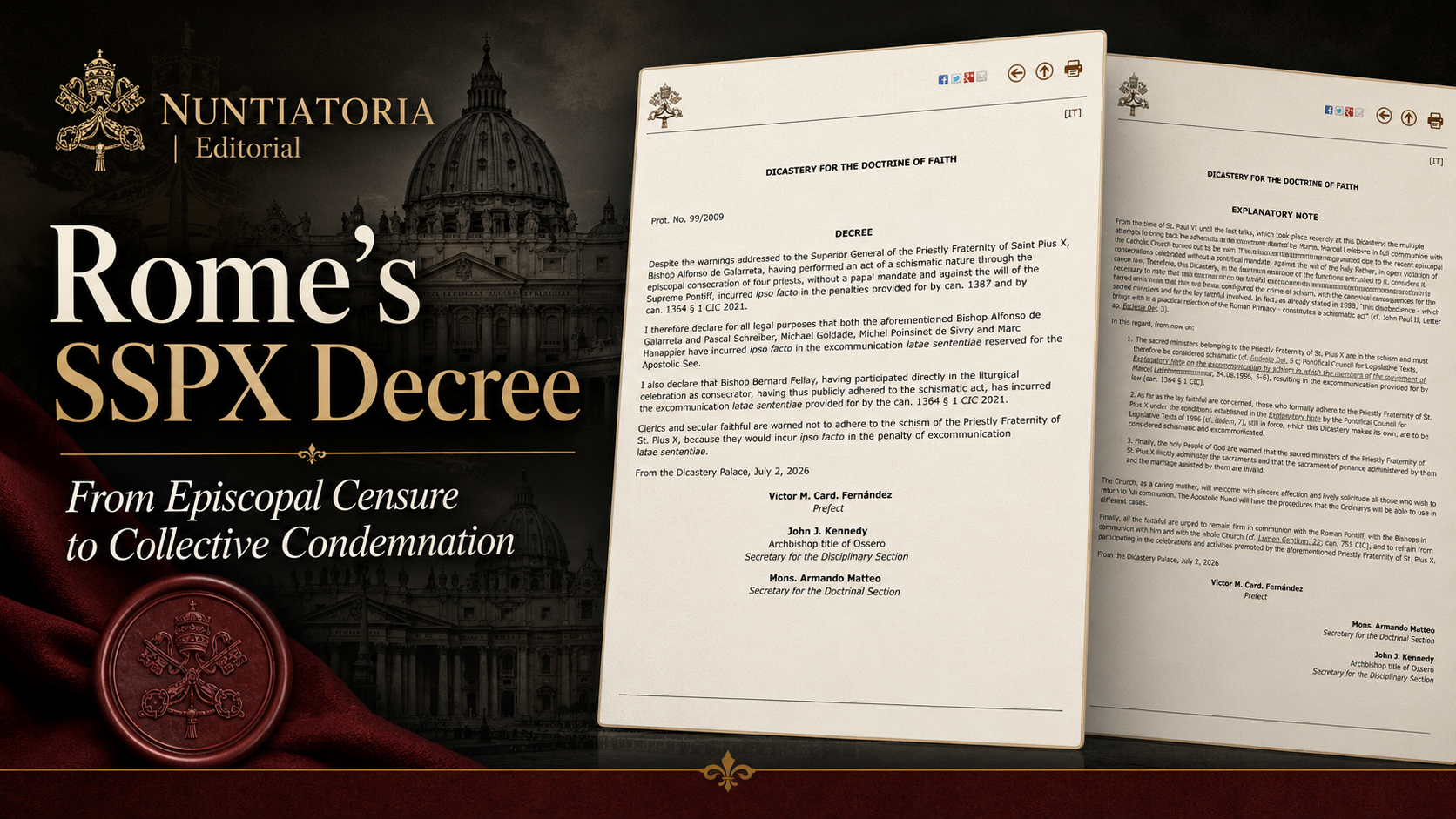
Rome Declares the SSPX in Schism: When Canonical Authority Becomes Collective Condemnation
The Holy See possessed an evident canonical basis for investigating and, where the requirements of penal law were established, declaring censures against the bishops involved in the Écône consecrations. The Dicastery for the Doctrine of the Faith has gone much further. It has classified every SSPX sacred minister as schismatic, treated formally adhering lay faithful as excommunicated, and declared the Society’s confessions and marriages invalid. Écône committed a grave public act against an express papal prohibition. Rome has answered by placing an entire international body of clergy and faithful beneath a sweeping canonical sentence.

The Roman response to the episcopal consecrations at Écône has been swift, severe and substantially broader than the penalty specifically attached by canon law to episcopal consecration without a pontifical mandate. On 2 July 2026, one day after four priests of the Society of St Pius X were consecrated bishops, the Dicastery for the Doctrine of the Faith published a decree declaring Bishop Alfonso de Galarreta and the four recipients — Pascal Schreiber, Michael Goldade, Michel Poinsinet de Sivry and Marc Hanappier — to have incurred latae sententiae excommunication. Bishop Bernard Fellay was separately declared excommunicated because, according to the decree, his participation as co-consecrator constituted public adherence to the schismatic act.¹
Had the Holy See stopped with a decree concerning the six bishops, it would have issued a grave but readily intelligible response to a grave and public violation of ecclesiastical discipline. Canon 1387 provides that both a bishop who consecrates another bishop without a pontifical mandate and the person who receives the consecration incur automatic excommunication reserved to the Apostolic See. The external act occurred publicly, following repeated warnings and against the explicitly declared will of Pope Leo XIV.²
That statutory provision does not, however, operate in isolation from the general principles governing penal liability. An external act may satisfy the material description of an offence without necessarily establishing that an automatic penalty was personally incurred. Canons 1321–1324 determine whether the violation was gravely imputable and whether excusing or mitigating circumstances prevented the penalty from arising. That distinction is fundamental to everything that follows.
Rome did not confine itself to the bishops. The accompanying explanatory note declares that every sacred minister belonging to the SSPX is “in schism” and must therefore be considered schismatic and subject to the excommunication prescribed by canon 1364 §1. It declares that lay faithful who “formally adhere” to the Society under the conditions established in a 1996 Vatican note are likewise schismatic and excommunicated. It says that SSPX ministers administer the sacraments illicitly and specifies that the absolutions they impart and the marriages at which they assist are invalid. Catholics are exhorted to abstain from the Society’s celebrations and activities.³
This is not merely an announcement about the canonical condition of six bishops. It is a declaration concerning an entire clerical body, the sacramental lives of those dependent upon it, and potentially the ecclesial condition of a substantial number of lay faithful.
The exceptional breadth of the Roman response was immediately recognised in international reporting. Reuters described the Vatican as having gone further than the expected censures against the bishops directly involved. The Associated Press similarly reported that the DDF had gone “above and beyond” the minimum sanctions associated with unauthorised episcopal consecration. At the time of writing, no developed official SSPX response specifically addressing the decree and explanatory note had appeared. The Society’s published defence therefore remains principally the statement issued after the consecrations and the declaration read during the rite itself.⁴
The General House described the new prelates as auxiliary bishops without territorial jurisdiction. It said that the consecrations had been required by “exceptional circumstances”, regretted that they had occurred without papal authorisation, and simultaneously presented them as a grace for the Society and the Church. Father Davide Pagliarani had assured Pope Leo XIV that the Society possessed no desire to separate from the Roman Church and believed that its extraordinary action was intended to serve a mother in distress. The declaration read during the rite presented the consecrations as a sacred duty required by the present crisis and stated that penalties imposed because of them would be regarded as invalid.⁵
Those professions cannot, by themselves, determine the canonical character of the acts. No person or institution can defeat an allegation of schism merely by declaring an intention to remain Catholic. Actions may contradict professions. Nor, however, does every act of grave disobedience become schism merely because authority describes it as such. Canon 751 defines schism specifically as the refusal of submission to the Supreme Pontiff or the refusal of communion with the members of the Church subject to him. The juridical question is therefore whether the conduct manifests the particular refusal identified by the law.⁶

Pope John Paul II concluded in 1988 that Archbishop Marcel Lefebvre’s episcopal consecrations constituted such a refusal. In Ecclesia Dei, he stated that the act involved a practical rejection of Roman primacy and therefore constituted a schismatic act. The factual parallel in 2026 is considerable: bishops were again consecrated without a pontifical mandate, after failed negotiations and in direct defiance of the Roman Pontiff.⁷
The offence identified in canon 1387 is therefore plainly engaged at the material level. What cannot be assumed merely from that fact is that the latae sententiae penalty was necessarily incurred without further examination of the general norms concerning imputability, necessity and erroneous belief.
The Society invokes necessity, grave inconvenience and the preservation of Catholic Tradition. The Code does not provide that necessity exists only when recognised by the Roman Pontiff. It does not reserve to the Pope an exclusive or self-authenticating determination that a state of necessity either exists or cannot exist. For penal purposes, the law expressly considers both necessity objectively present and the accused person’s belief that necessity existed.⁸
Canon 1323 §4 exempts from penalty one who acts by reason of necessity or grave inconvenience, unless the act is intrinsically evil or tends to be harmful to souls. Canon 1323 §7 also exempts one who, through no personal fault, believed that such a circumstance existed. Canon 1324 §1, nos. 5 and 8, then mitigates responsibility where the act is intrinsically evil or tends to harm souls, or where the person culpably but erroneously believed that necessity existed. Most significantly, canon 1324 §3 provides that a person acting under any of the mitigating circumstances listed in §1 does not incur a latae sententiae penalty, although lesser penalties or penances may subsequently be imposed.⁹
The canonical importance of this provision can scarcely be overstated. Even if Rome concludes that no objective necessity existed, that conclusion alone does not establish that the automatic excommunication was incurred. The competent authority must still consider whether the individual genuinely believed necessity existed, whether that belief arose without fault or through culpable error, whether the act tended to harm souls, and what degree of personal imputability remained.
The subjective conviction of the accused is not self-authenticating. The Society cannot conclusively establish canonical necessity merely by declaring that a crisis exists. In the external forum, competent ecclesiastical authority must examine the facts, assess evidence and determine whether the statutory conditions are satisfied. Yet authority must perform that judgement through the categories supplied by the law. It cannot eliminate a defence established by the Code merely by announcing that necessity was impossible.
The 1996 explanatory note of the Pontifical Council for Legislative Texts asserted that necessity must be verified objectively and that there could be no necessity authorising the consecration of bishops against the will of the Roman Pontiff. That is a juridical interpretation advanced by the Holy See in the Lefebvre controversy. It is not the wording of canons 1323 and 1324, and it cannot make their express treatment of mistaken subjective belief disappear.¹⁰
Even if one accepts Rome’s conclusion that consecrating bishops against papal prohibition tends to be harmful to souls, canon 1324 §1, no. 5, directly contemplates precisely that situation: necessity claimed in relation to an act that is intrinsically evil or tends to harm souls. The effect is not complete exemption from every possible sanction, but mitigation — and, under canon 1324 §3, non-incurrence of the automatic penalty. Thus even the Holy See’s preferred characterisation of the act does not by itself exclude the statutory consequence most relevant to a latae sententiae excommunication.
Neither side can settle this question by assertion. Écône’s conviction of necessity does not bind the Church’s tribunals or dicasteries. Rome’s denial of necessity does not dispense those authorities from examining personal belief, error, fault and imputability. A lawful penal declaration requires more than proof that the prohibited external act occurred.
Canon 1321 states that every person is considered innocent until the contrary is proved and that no one may be punished unless the external violation is gravely imputable by reason of malice or culpability. Although imputability is presumed when an external violation has been established, that presumption is rebuttable. Where a penalty is declared through an extrajudicial decree, canon 1342 requires respect for the right of defence and moral certainty in the mind of the authority issuing the decree.¹¹
This does not prove that the six bishops escaped the penalty. It proves that canon 1387 cannot be read as though canons 1321–1324 had ceased to apply. The declaration would have been juridically stronger had it explained why the bishops’ repeated and publicly articulated claim of necessity did not fall within any excusing or mitigating provision, rather than treating the external act and the automatic penalty as virtually synonymous.
The treatment of Bishop Fellay also requires explanation. The decree identifies him as a co-consecrator but invokes only canon 1364, concerning schism, whereas Bishop de Galarreta is declared subject both to canon 1387 and to canon 1364. Canon 1387 refers to the bishop who consecrates, without distinguishing a principal consecrator from assisting co-consecrators. The decree may have a juridical reason for its different treatment of Bishop Fellay, but it does not state it.¹²
The decisive problem, however, lies beyond the six bishops. It lies in the DDF’s treatment of every SSPX priest and deacon as personally situated within the canonical category of schism.
The Dicastery relies upon the 1996 explanatory note concerning adherence to the movement of Archbishop Lefebvre. That document regarded ministerial activity by an SSPX priest or deacon as powerful evidence that the internal and external requirements of formal adherence were present. It also described the movement generally as existing in a schismatic condition pending the restoration of hierarchical communion. The DDF has therefore not invented its argument without precedent.¹³
Yet the same 1996 note contains distinctions indispensable to a proper canonical analysis. It states that formal adherence requires an internal element — a free and conscious adoption of the substance of the alleged schismatic position, placed above obedience to the Pope — and an external manifestation of that choice. It distinguishes the moral question of whether a person has committed the sin of schism from the juridical-penal question of whether that person has committed the canonical delict. It expressly directs that canons 1323 and 1324 be applied.¹⁴
The earlier note went further. It warned that excessive penal formalisation could encompass outward conduct not accompanied by a subjectively schismatic disposition. That warning assumes particular significance when the same document is invoked to support a categorical declaration concerning every sacred minister of a worldwide priestly body.
The internal tension is inescapable. The DDF adopts a text which distinguishes institutional condition, external evidence, subjective intention, moral culpability and juridical liability; it then uses that text to announce that every SSPX sacred minister is in schism and subject to canon 1364. The distinction between evidence of an offence and the personal establishment of penal liability is left largely unexamined.
The DDF’s declaration establishes Rome’s judgement that continued ministerial membership in the Society constitutes formal adherence to its schismatic condition. What the document does not explain is how the individual requirements of knowledge, intention and imputability have been assessed in relation to every cleric. It makes no distinction between a priest who actively demanded the consecrations, one who accepted them reluctantly, one who retains serious reservations, and one who is still discerning his response. All are placed within the same juridical category by virtue of membership and ministerial activity.
Écône supplied Rome with a grave external act by identifiable bishops. It did not, merely through the conduct of those six men, supply proof that every SSPX priest and deacon throughout the world possesses the same schismatic intention, bears the same personal culpability or falls outside every excusing and mitigating provision of penal law.
The DDF has not simply censured an unlawful episcopal consecration. It has treated membership and ministry within the Society as sufficient to establish a general presumption of schism and penal liability. That may constitute an administrative judgement about the objective ecclesial condition of the organisation; it does not automatically answer every question concerning the subjective and juridical culpability of each person belonging to it.
This approach is difficult to reconcile with the precision employed by Pope Benedict XVI in 2009. Explaining the remission of the censures of the four surviving bishops consecrated in 1988, Benedict wrote that “excommunication affects individuals, not institutions”. He distinguished the disciplinary condition of particular persons from the Society’s institutional lack of canonical status and from the illegitimacy of its ministers’ public ministry. SSPX priests, he said, did not legitimately exercise ministry in the Church; he did not therefore declare that every one of them was personally excommunicated.¹⁵
The new note substantially collapses that distinction. Institutional membership, illegitimate ministry, personal schismatic adherence and automatic excommunication are treated as though they follow one another without the need for further individual determination. The DDF may judge the Society objectively separated from hierarchical communion. Penal liability nevertheless attaches to persons, and the Church’s law requires attention to their acts, beliefs, knowledge and imputability.
The position of the lay faithful must be reported with still greater care. Rome has not declared that every person who attends an SSPX Mass is excommunicated. The decisive term is “formally”. The 1996 note says that occasional participation in SSPX liturgical or other activities is insufficient to establish formal adherence. Even exclusive participation, while it may constitute evidence, is not unequivocal because a person may attend such worship without sharing a schismatic disposition. The individual’s intention and its external manifestation must be judged in the competent internal and external fora.¹⁶
No responsible pastor or commentator should therefore tell every elderly worshipper, pilgrim, family or occasional visitor that entering an SSPX chapel has automatically placed him outside the Church. Attachment to the traditional Roman liturgy is not itself schism. Receiving pastoral care from the Society is not, considered in isolation, conclusive proof of formal adherence. A conscious and externally manifested refusal of papal submission is a distinct matter. The distinction must not be obscured by defenders or opponents of the Society.
The sacramental provisions raise questions of equal gravity. Pope Francis granted SSPX priests the faculty to absolve validly and licitly during the Jubilee of Mercy and subsequently extended that faculty “until further provisions are made”. The DDF’s declaration that, “from now on”, SSPX absolutions are invalid is plainly intended to constitute those further provisions. The practical Roman position is clear: ordinary confessions heard by SSPX priests are henceforth regarded as invalid.¹⁷
The document nevertheless lacks the juridical precision warranted by so serious a change. It does not expressly say that the faculty granted by Misericordia et misera is revoked. Nor does the published note identify the particular act of papal approval or delegated authority by which a faculty granted publicly by the Roman Pontiff has been terminated. The absence of such a formula does not prove that the DDF lacked competence or that the intended revocation is ineffective. It does mean that the document announces a conclusion affecting sacramental validity without expressly identifying the juridical mechanism producing it.
Canon 976 remains unaffected. Any priest, even one who lacks the faculty to hear confessions, validly and licitly absolves any penitent in danger of death.¹⁸
The position concerning marriage requires comparable precision. The 2017 arrangement did not give every SSPX priest an unrestricted universal faculty to assist at marriages. It authorised local ordinaries to delegate a diocesan or otherwise regular priest to receive the parties’ consent or, where that was impossible, to delegate the SSPX priest who would celebrate the Mass. Pope Francis expressly approved that letter and ordered its publication.¹⁹
Marriages previously celebrated under actual and valid delegation are not retroactively rendered null by the new note. Ecclesiastical laws ordinarily concern the future unless they expressly provide otherwise, and canon 1060 requires that marriage enjoy the favour of law and be regarded as valid until the contrary is proved. Catholics whose marriages were celebrated under the 2017 provisions should not allow sensational summaries to persuade them that their matrimonial bond has simply disappeared.²⁰
The status of particular delegations already granted for future marriages is less clear. The DDF evidently intends future marriages assisted by SSPX priests to be considered invalid, but the note does not explain whether every existing delegation issued by a local ordinary is automatically extinguished, expressly revoked, or rendered unusable by the minister’s newly declared canonical condition. Again, the conclusion is categorical while the legal mechanism remains unstated.
It is equally important not to claim that Rome has declared every sacrament administered by SSPX clergy invalid. The note says that their sacramental ministry is illicit and specifically identifies absolution and assistance at marriage as invalid. It does not deny the sacramental validity of Masses celebrated by validly ordained SSPX priests, nor the validity of ordinations and confirmations conferred by validly consecrated bishops, although such celebrations are prohibited and gravely illicit under Rome’s judgement.
Immediate post-decree reaction remains less developed than the volume of reporting might suggest. Reuters and the Associated Press have emphasised the unprecedented breadth of the Roman measure, but their reports are journalism rather than canonical adjudication. Earlier interventions from Bishop Athanasius Schneider and several canon lawyers had already identified the central disputes: whether an illicit consecration necessarily constitutes schism; whether canons 1323 and 1324 prevent automatic censures; and what “formal adherence” means for priests and lay faithful. Those interventions do not determine the case, but they demonstrate that the legal questions cannot be responsibly reduced to the fact that the consecrations lacked a mandate.²¹
The DDF was entitled — indeed obliged — to defend the Pope’s responsibility for episcopal communion. The Church is not a voluntary federation in which each priestly body may perpetuate its hierarchy whenever it judges Roman provision inadequate. A bishop does not acquire a canonical right to confer the episcopate against the Roman Pontiff merely because he considers his cause righteous. The Society’s insistence that its new bishops possess no territorial jurisdiction limits one dimension of the rupture; it does not remove the Pope’s authority over admission to the episcopate.
Yet authority is not vindicated merely because it possesses the power to condemn. Canon law itself insists that penal liability is personal, that automatic censures are exceptional, that penal laws are interpreted strictly, that the right of defence is protected, and that moral certainty precedes a declaration of penalty. The law provides for necessity and even erroneous belief in necessity precisely because objective disobedience and subjective penal culpability are not identical.
A censure is medicinal. Its purpose is not to isolate an unwanted class, to satisfy an institutional demand for retribution, or to demonstrate that authority remains in control. Its purpose is to bring identifiable persons to repentance, restore justice, repair scandal and recover communion.
That purpose becomes harder to discern when an entire clerical body is declared schismatic without an evident individual process, when the consciences of lay faithful are placed beneath a warning easily exaggerated in public reporting, and when sacramental concessions previously granted to protect souls are withdrawn through language more categorical in its conclusion than precise in its juridical operation.
The contrast with Benedict XVI’s approach is sobering. Benedict recognised both the objective illegitimacy of SSPX ministry and the complexity of the persons within the Society. He acknowledged that the motives of hundreds of priests might be mixed but presumed that many had entered the priesthood from love of Christ and a desire to proclaim Him. He asked whether the Church should simply allow them to drift farther away and whether reconciliation should not remain an overriding pastoral priority.²²
The new decree answers those questions differently. It offers procedures for individuals wishing to return, but only after declaring the whole clerical body of the Society to be in schism and subject to excommunication. The road now proposed is no longer principally a path of negotiation between an irregular Catholic society and the Apostolic See. It is the road of individual departure from an organisation collectively condemned.
Écône bears grave responsibility for bringing the crisis to this point. The Society acted against a direct papal appeal and made its own judgement of ecclesial necessity operationally superior to the Pope’s judgement concerning episcopal provision. It cannot invoke the disorders of the contemporary Church as though those disorders automatically confer canonical authority upon itself.
Rome nevertheless bears responsibility for the character of its response. It has taken a specific public act involving six bishops and used it as the occasion to reclassify every SSPX sacred minister, alter the sacramental conditions under which faithful had acted in good conscience, and expose an undefined number of lay Catholics to the fear that they too have been expelled from ecclesial communion.
The two acts are not symmetrical. Écône committed a specific act through identifiable bishops. Rome has answered with consequences directed towards an entire international body of clergy and faithful. That difference of scale makes juridical precision, individual justice and pastoral restraint more necessary, not less.
A firm decree against the bishops could have defended papal authority while leaving room for the individual examination of priests, careful treatment of the faithful and an orderly clarification of sacramental faculties. Instead, the DDF has chosen a collective determination whose canonical foundations are strongest at its centre and progressively weaker at its expanding edges.
Pope Leo XIV was right to warn that episcopal communion cannot be preserved by acting against Peter. He must now ensure that Peter’s response does not substitute collective condemnation for personal justice or administrative finality for pastoral government.
The Church required a proportionate canonical answer to Écône. She did not require an entire clergy to be treated as though the contents of every conscience had already been adjudicated.
Join the live Q&A with HE ✠Jerome Lloyd for an in-depth examination of the Écône episcopal consecrations and their consequences for the Society of St Pius X, the wider Church and the future of Tradition.
Notes
- Dicastery for the Doctrine of the Faith, “Decree concerning the Society of St Pius X in the Light of the Episcopal Consecrations of 1 July 2026”, 2 July 2026. See also Joshua McElwee, “Members of Rebel Catholic Group in Schism, Excommunicated, Vatican Says”, Reuters, 2 July 2026.
https://www.vatican.va/roman_curia/congregations/cfaith/documents/rc_ddf_doc_20260702_decreto-scomunica-fsspx_it.html - Code of Canon Law, cann. 1013 and 1387; Leo XIV, Letter to Father Davide Pagliarani, 29 June 2026.
https://www.vatican.va/archive/cod-iuris-canonici/eng/documents/cic_lib4-cann998-1165_en.htmlhttps://www.vatican.va/archive/cod-iuris-canonici/eng/documents/cic_lib6-cann1364-1399_en.htmlhttps://www.vatican.va/content/leo-xiv/en/letters/2026/documents/20260629-lettera-fraternita-sanpiox.html - Dicastery for the Doctrine of the Faith, “Explanatory Note regarding the Situation Arising from the Episcopal Consecrations Celebrated by the Society of St Pius X”, 2 July 2026. See also Nicole Winfield, Associated Press, 2 July 2026.
https://www.vatican.va/roman_curia/congregations/cfaith/documents/rc_ddf_doc_20260702_nota-esplicativa-fsspx_it.html - McElwee, Reuters, 2 July 2026; Winfield, Associated Press, 2 July 2026.
https://www.reuters.com/world/europe/members-rebel-catholic-group-schism-excommunicated-vatican-says-2026-07-02/https://apnews.com/article/6570c6bcc0784f4b9229e20bdec4e5aa - General House of the Society of St Pius X, “General House Statement Following the Episcopal Consecrations”, 1 July 2026; Davide Pagliarani, “Letter from the Superior General in Response to His Holiness Pope Leo XIV”, 30 June 2026; Society of St Pius X, “Habetis mandatum apostolicum?”, 2 July 2026.
https://fsspx.news/en/news/general-house-statement-following-episcopal-consecrations-59913https://fsspx.news/en/news/letter-superior-general-response-his-holiness-pope-leo-xiv-59914https://fsspx.news/en/news/habetis-mandatum-apostolicum-declaration-read-episcopal-consecrations-59936 - Code of Canon Law, can. 751.
https://www.vatican.va/archive/cod-iuris-canonici/eng/documents/cic_lib3-cann747-755_en.html - John Paul II, apostolic letter Ecclesia Dei, 2 July 1988, nn. 3–5.
https://www.vatican.va/content/john-paul-ii/en/motu_proprio/documents/hf_jp-ii_motu-proprio_02071988_ecclesia-dei.html - Code of Canon Law, cann. 1323–1324.
https://www.vatican.va/archive/cod-iuris-canonici/eng/documents/cic_lib6-cann1311-1363_en.html - Ibid., can. 1323, nos. 4 and 7; can. 1324 §1, nos. 5 and 8; can. 1324 §3.
https://www.vatican.va/archive/cod-iuris-canonici/eng/documents/cic_lib6-cann1311-1363_en.html - Pontifical Council for Legislative Texts, “Explanatory Note concerning the Excommunication for Schism Incurred by Adherents of the Movement of Bishop Marcel Lefebvre”, 24 August 1996, especially nn. 4–8.
https://www.vatican.va/roman_curia/pontifical_councils/intrptxt/documents/rc_pc_intrptxt_doc_19960824_vescovo-lefebvre_it.html - Code of Canon Law, cann. 1321 and 1342.
https://www.vatican.va/archive/cod-iuris-canonici/eng/documents/cic_lib6-cann1311-1363_en.html - Dicastery for the Doctrine of the Faith, “Decree”, 2 July 2026; Code of Canon Law, can. 1387.
https://www.vatican.va/roman_curia/congregations/cfaith/documents/rc_ddf_doc_20260702_decreto-scomunica-fsspx_it.htmlhttps://www.vatican.va/archive/cod-iuris-canonici/eng/documents/cic_lib6-cann1364-1399_en.html - Pontifical Council for Legislative Texts, “Explanatory Note”, nn. 3 and 6.
https://www.vatican.va/roman_curia/pontifical_councils/intrptxt/documents/rc_pc_intrptxt_doc_19960824_vescovo-lefebvre_it.html - Ibid., nn. 5–8.
- Benedict XVI, Letter to the Bishops of the Catholic Church concerning the Remission of the Excommunication of the Four Bishops Consecrated by Archbishop Lefebvre, 10 March 2009.
https://www.vatican.va/content/benedict-xvi/en/letters/2009/documents/hf_ben-xvi_let_20090310_remissione-scomunica.html - Pontifical Council for Legislative Texts, “Explanatory Note”, nn. 5–8.
https://www.vatican.va/roman_curia/pontifical_councils/intrptxt/documents/rc_pc_intrptxt_doc_19960824_vescovo-lefebvre_it.html - Francis, apostolic letter Misericordia et misera, 20 November 2016, n. 12; Dicastery for the Doctrine of the Faith, “Explanatory Note”, 2 July 2026.
https://www.vatican.va/content/francesco/en/apost_letters/documents/papa-francesco-lettera-ap_20161120_misericordia-et-misera.htmlhttps://www.vatican.va/roman_curia/congregations/cfaith/documents/rc_ddf_doc_20260702_nota-esplicativa-fsspx_it.html - Code of Canon Law, can. 976.
https://www.vatican.va/archive/cod-iuris-canonici/eng/documents/cic_lib4-cann959-997_en.html - Pontifical Commission Ecclesia Dei, “Letter to the Ordinaries of the Episcopal Conferences Concerned on the Faculties for the Celebration of Marriages of the Faithful of the Society of St Pius X”, 27 March 2017.
https://press.vatican.va/content/salastampa/en/bollettino/pubblico/2017/04/04/170404d.html - Code of Canon Law, cann. 9 and 1060.
https://www.vatican.va/archive/cod-iuris-canonici/eng/documents/cic_lib1-cann7-22_en.htmlhttps://www.vatican.va/archive/cod-iuris-canonici/eng/documents/cic_lib4-cann998-1165_en.html - Athanasius Schneider, “Declaration concerning the Episcopal Consecrations of the SSPX”, June 2026; “Opinion of a Canon Lawyer concerning the Consecrations”, FSSPX News, 8 June 2026; Cathy Caridi, “New Episcopal Consecrations Planned by the SSPX”, Canon Law Made Easy, 14 May 2026.
https://fsspx.news/en/news/declaration-bishop-athanasius-schneider-sspx-consecrations-59493https://fsspx.news/en/news/opinion-canon-lawyer-concerning-consecrations-59531https://canonlawmadeeasy.com/2026/05/14/new-episcopal-consecrations-planned-by-the-sspx/ - Benedict XVI, Letter to the Bishops, 10 March 2009.
https://www.vatican.va/content/benedict-xvi/en/letters/2009/documents/hf_ben-xvi_let_20090310_remissione-scomunica.html
RELATED ARTiCLES


LATEST ARTICLES
- Today’s Mass: October 08 St Bridget of SwedenSaint Bridget of Sweden, born around 1302, was a noblewoman renowned for her piety and prophetic revelations. After marrying Prince Ulpho and raising eight children, she led a life of austerity and charity, founding the Order of the Holy Saviour. She died in Rome in 1373 and was canonised in 1391.
- Today’s Mass: October 07 Pope St Mark, ConfessorSt Mark’s brief pontificate teaches that God measures fidelity, not duration or worldly achievement. Christ alone possesses the everlasting priesthood; His servants are stewards of what they have received. With the commemorated martyrs, St Mark reminds us to persevere faithfully, so that when the Lord comes, He finds us “so doing.”
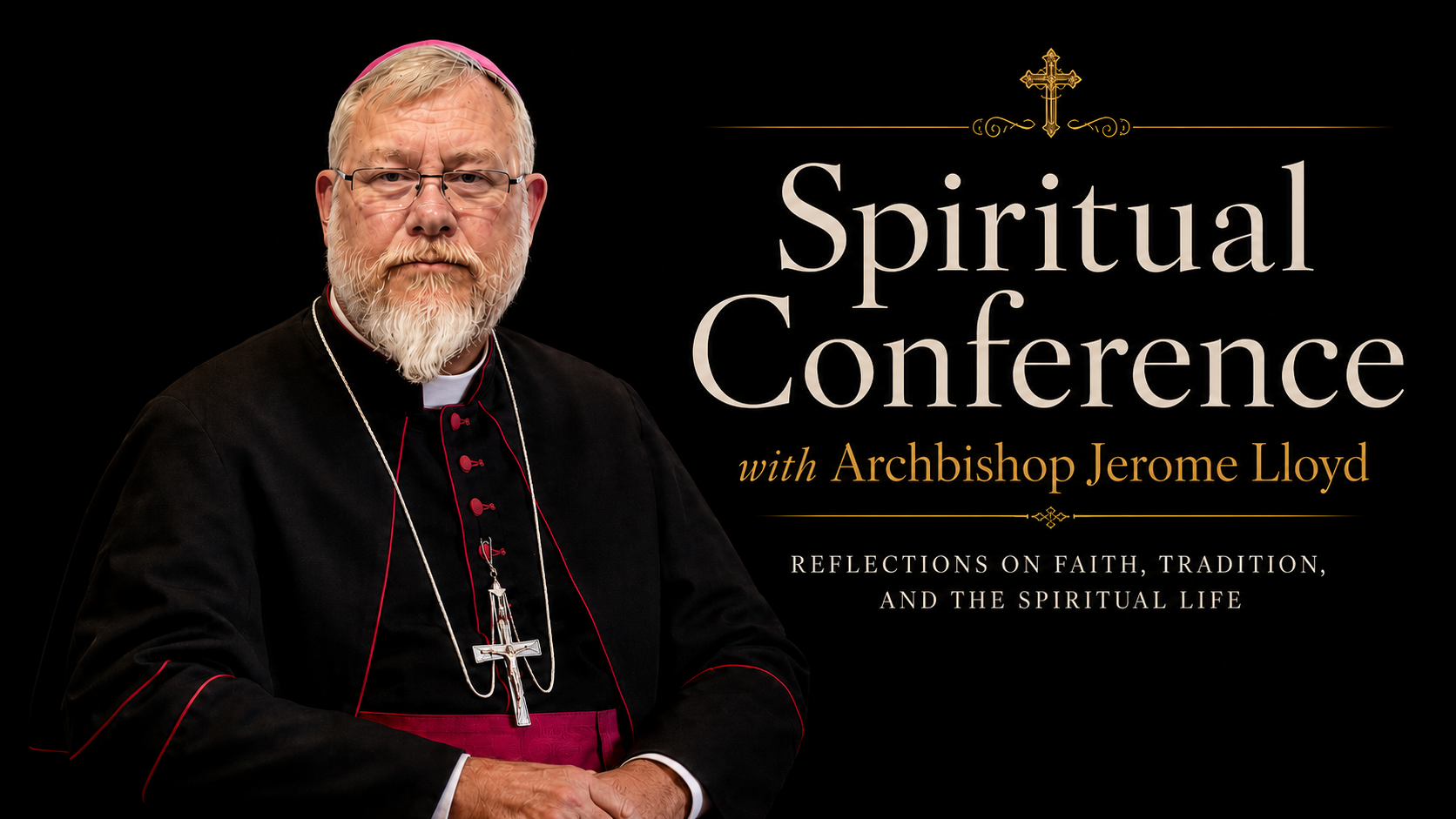
- Omnia autem probate: quod bonum est tenete ~ Prove all things; hold fast that which is good: Spiritual Conference for Nuntiatoria CXXVIThe conference reflects on St Paul’s assertion to “prove all things” in relation to self-judgement and the Church. It explores themes of synodality, ecumenism, and the importance of discernment, emphasising the need for humility in understanding truth and the challenge of maintaining genuine holiness in the midst of contemporary ecclesiastical crises.
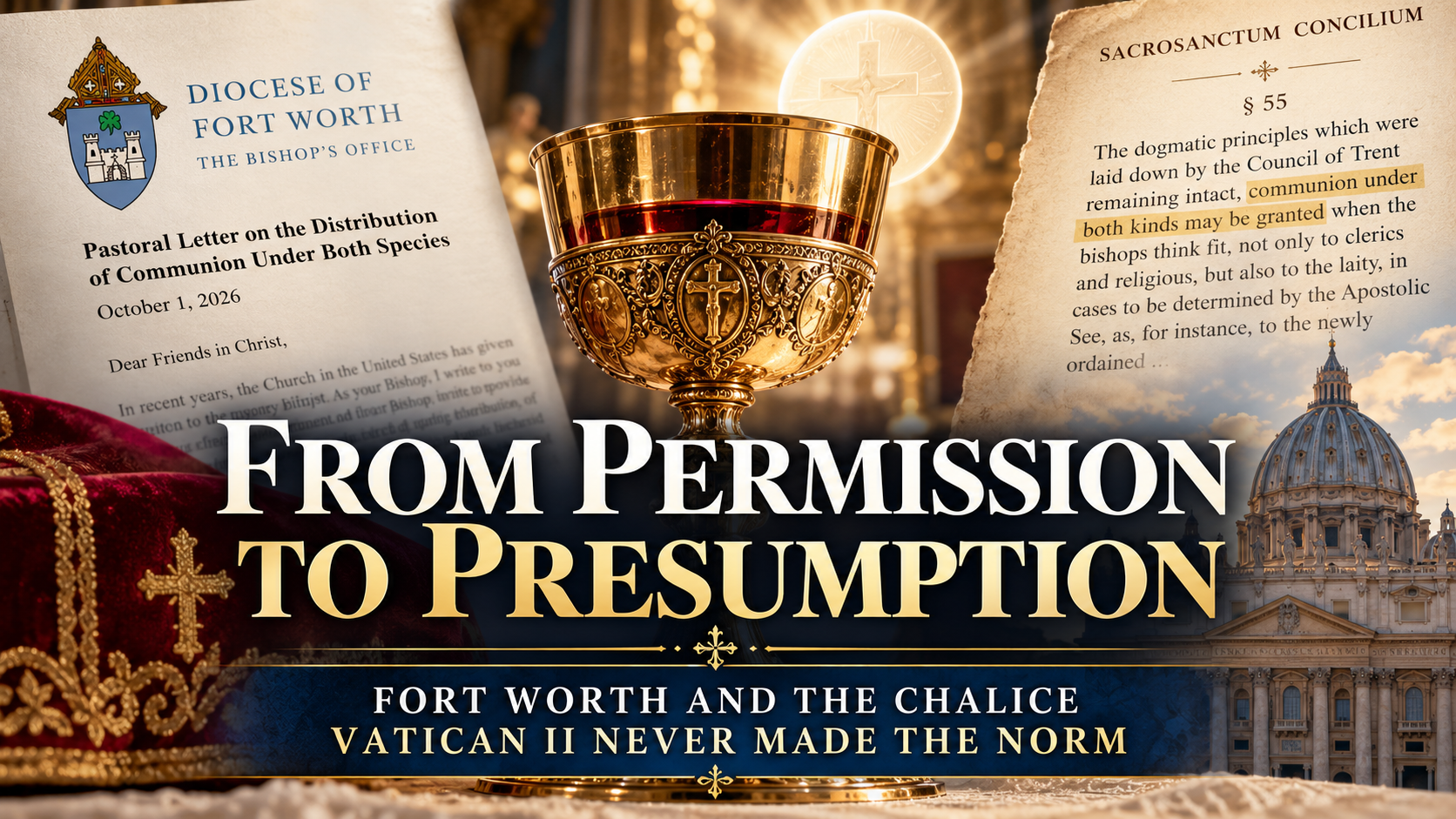
- FROM PERMISSION TO PRESUMPTION: Fort Worth and the Chalice Vatican II never made the NormBishop Michael Olson has implemented strict limitations on the distribution of Communion under both species in the Diocese of Fort Worth, prompting a discussion on the historical evolution of liturgical practices following Vatican II. This decision aims to reaffirm the doctrine of the Eucharist, emphasising that Christ is fully present under either species, while addressing misconceptions surrounding modern practices.
- AUGSBURG 2030: Can Rome commemorate a Confession it once confuted?Pope Leo XIV aims to revitalise the ecumenical spirit of the Augsburg Confession for its 2030 anniversary. However, historical responses from Rome highlight significant doctrinal differences between Catholics and Lutherans. True reconciliation must acknowledge these unresolved issues, as merely celebrating commonality risks glossing over critical theological distinctions that led to the Reformation.
CURRENT EDITION


Today’s Mass Propers
- Today’s Mass: October 08 St Bridget of Sweden
 Saint Bridget of Sweden, born around 1302, was a noblewoman renowned for her piety and prophetic revelations. After marrying Prince Ulpho and raising eight children, she led a life of austerity and charity, founding the Order of the Holy Saviour. She died in Rome in 1373 and was canonised in 1391.

Leave a Reply