

When Protection Becomes Compulsion: The Draft Conversion Practices Bill and the Threat to Conscience, Therapy, and Truth

The Government’s proposed “trans-inclusive” Conversion Practices Bill must be scrutinised with exceptional care. Abuse, coercion, harassment, assault, exploitation and safeguarding failures are already covered by existing law. The danger is that a vague new ban will not merely punish abuse, but enforce an affirmation-only ideology regarding “gender identity,” chilling parental responsibility, pastoral care, ethical therapy, clinical caution and religious teaching.
The announcement in the King’s Speech that the Government will bring forward “a draft Bill to ban abusive conversion practices” has been framed in language designed to disarm opposition. It speaks of abuse. It invokes protection. It suggests that only those indifferent to cruelty could object. Yet that is precisely why the proposal must be examined with unusual care. The real question before Parliament is not whether abuse should be tolerated. It should not. The question is whether the proposed legislation will target objectively abusive conduct, or whether it will become a statutory instrument for enforcing ideological affirmation.
The Government’s own briefing notes state that “conversion practices are abuse” and that it intends to deliver a “trans-inclusive ban on conversion practices.” They say the draft Bill will be published for pre-legislative scrutiny and will seek to “fill the gaps in criminal law.” At the same time, the Government claims that the measure will preserve the freedom of people, and those supporting them, to explore sexual orientation and gender identity; that it will not interfere with legitimate healthcare; and that it will not impinge upon religious belief and expression. These assurances matter. But they are not enough. They must be translated into clear statutory protections, otherwise they will remain political reassurances without legal force.¹
The first duty of Parliament is therefore to ask what gap actually exists. If the conduct in view is assault, battery, threats, intimidation, harassment, coercive control, child cruelty, neglect, exploitation of vulnerable adults, spiritual abuse, safeguarding failure, or professional misconduct, then Britain already possesses a substantial legal framework. The House of Commons Library has already acknowledged that some conversion practices may already be unlawful, particularly where violence is involved. It has also recorded the Government’s argument that existing law does not cover all alleged practices, especially so-called “coercive talking therapies” premised on the idea that one sexuality or gender identity is preferable to another.²
That distinction is decisive. Once the debate moves from violence, threats and degrading conduct into the realm of “talking therapies,” religious counsel, family conversations and pastoral guidance, the issue changes fundamentally. Parliament is no longer dealing only with objectively abusive acts. It is dealing with speech, belief, conscience, therapeutic method and moral anthropology. A law that punishes threats and coercion is one thing. A law that places non-affirming conversation under suspicion is quite another.
No serious Christian, clinician, parent or legislator should defend coercion. A parent who terrorises a child, a minister who spiritually abuses a penitent, a practitioner who degrades a patient, or any adult who exploits vulnerability should face appropriate legal, professional and safeguarding consequences. But a free society must distinguish between abuse and disagreement, between coercion and counsel, between violence and moral teaching, between exploitation and careful inquiry. If that distinction is lost, safeguarding ceases to protect the vulnerable and begins to protect an ideology.
The greatest danger lies in the elasticity of the phrase “conversion practices.” In older public memory, “conversion therapy” evoked aversive, degrading, pseudo-medical or coercive attempts to “cure” homosexuality. But that is no longer the limit of activist usage. Stonewall has described conversion practices as including “medical, psychiatric, psychological, religious, cultural or any other interventions” seeking to change, “cure” or suppress sexual orientation and/or gender identity where one orientation or identity is deemed preferable to another.³ Such wording is extraordinarily broad. It does not merely describe assault or coercion. It sweeps into view religious teaching, pastoral counsel, clinical caution, parental guidance and therapeutic exploration.
Under such a definition, a priest preaching chastity could be accused of suppressing sexual orientation. A parent urging delay before social or medical transition could be accused of suppressing gender identity. A therapist asking why a distressed adolescent has come to reject his or her sexed body could be accused of attempting to change identity. A clinician refusing immediate affirmation could be accused of treating one outcome as preferable to another. That is why statutory precision is not a technicality. It is the line between protecting the vulnerable and criminalising dissent.
The Government’s promise that the ban will be “trans-inclusive” intensifies the problem. To include “gender identity” is not simply to extend protection to a further category of persons. It is to legislate around a contested concept. Sex is a material and bodily reality. “Gender identity,” by contrast, is subjective, fluidly defined and ideologically contested. If Parliament places this concept into criminal law without rigorous definition, the result will be predictable: regulators, schools, professional bodies, local authorities and activist organisations will interpret non-affirmation as potential harm.
This is particularly dangerous after the Cass Review. NHS England commissioned Dr Hilary Cass in 2020 to conduct an independent review of gender identity services for children and young people. The final report was published in April 2024 and has since reshaped the clinical landscape. NHS England’s implementation plan emphasises safe, responsive and holistic care. It records Dr Cass’s warning that clinicians do not yet know enough about which young people may benefit from medical interventions and that access to such treatments should take place within a carefully constructed research programme. NHS England has also adopted a policy preventing the routine prescribing of puberty-suppressing hormones to under-18s with gender incongruence or gender dysphoria because of limited evidence concerning safety, risks, benefits and outcomes. The implementation plan further states that clinicians should apply the Cass assessment framework, including screening for neurodevelopmental conditions and mental-health assessment.⁴
That post-Cass context is not incidental. It goes to the heart of the Bill. Responsible medicine after Cass requires caution, holistic assessment, careful exploration of distress, attention to mental health, consideration of autism and other neurodevelopmental factors, and refusal to assume that affirmation is always the appropriate clinical response. A vague conversion-practices ban could cut directly across that model. It could tell clinicians to assess complexity while exposing them to complaint if they do not affirm quickly enough. It could tell therapists to help young people explore their feelings while allowing activists to characterise exploration itself as suppression.
Therapeutic neutrality is not abuse. Clinical caution is not abuse. Asking why a child or adolescent has come to reject his or her body is not abuse. Exploring trauma, anxiety, depression, autism, social contagion, internalised homophobia, family breakdown, pornography exposure, online influence or peer pressure is not conversion practice. It is often exactly what responsible care requires.
Even the professional Memorandum of Understanding on Conversion Therapy in the UK, despite the assumptions embedded in its own framework, recognises this point. The MoU states that it is not intended to deny, discourage or exclude people with uncertain feelings around sexuality or gender identity from receiving qualified and appropriate help. It supports therapists working with clients who wish to explore, experience conflict with, or are distressed about their sexual orientation or gender identity. It also says that it is not intended to prevent psychological and medical professionals from conducting proper clinical assessment before medical intervention.⁵ These principles must be written directly into any statute. Without them, the Bill will chill ethical therapy.
The chilling effect must not be underestimated. Criminal law does not govern only by convictions. It governs by fear. A parent need not be prosecuted to be silenced; the threat of investigation may suffice. A teacher need not be convicted to become cautious; a safeguarding referral may be enough. A therapist need not lose a case to lose a livelihood; a complaint to a regulator may destroy reputation and practice. A priest need not be imprisoned to be intimidated; the suggestion that traditional Christian doctrine is inherently harmful may be enough to chill preaching, confession, spiritual direction and catechesis.
This is why ministerial reassurance about religious freedom is inadequate. Religious liberty must be protected in the wording of the Bill itself. Christianity cannot accept a model of pastoral care in which compassion is defined as affirmation of falsehood. The Church teaches that man is created male and female; that the body is integral to the person, not an accidental shell; that chastity is a virtue; that repentance is a mercy; and that every person must be received with charity without being confirmed in error. Pastoral accompaniment does not mean baptising confusion. To accompany someone is to walk with him toward truth, not to walk with him away from reality.
The same principle applies to parental responsibility. Parents are not agents of the state. They are not merely emotional-support functionaries required to ratify every self-description a child adopts under pressure from peers, social media, school culture or online communities. A mother who asks questions is not abusing her child. A father who urges caution is not conducting conversion therapy. Parents have not merely a right but a duty to protect children from irreversible decisions made in distress, immaturity or confusion. Any law that places ordinary parental prudence under suspicion is not safeguarding children. It is transferring moral authority from the family to the activist bureaucracy.
Nor should Parliament accept advocacy statistics without scrutinising their definitions. The Government’s briefing cites survey material from Stonewall, Galop and the 2017 National LGBT Survey, including claims that around one in ten LGBT+ respondents in a Stonewall-commissioned survey had experienced a form of conversion practice in the previous year, and that nearly one in five respondents in a Galop survey had been subjected to someone trying to change, “cure” or suppress their sexual orientation or gender identity.⁶ These figures may include genuine cases of cruelty, pressure or abuse. But their legislative value depends entirely on what respondents were told counted as a “conversion practice.” If the definition includes violence, threats and coercion, the law already has obvious instruments. If it includes prayer, moral counsel, therapeutic caution, parental hesitation or religious teaching, then the statistic has been inflated by ideological definition.
This is the point Parliament must not evade. It must not legislate by slogan, anecdote or pressure-group vocabulary. It must demand precise categories. What conduct is already criminal? What conduct is professional misconduct? What conduct is properly a safeguarding matter? What conduct is merely unpopular moral, religious or clinical speech? What is the demonstrable legal gap? Why cannot existing offences concerning assault, harassment, threats, coercive control, child cruelty, neglect, malicious communications, public order, professional regulation and safeguarding duties address the serious cases? Unless the Government can answer these questions with precision, it has not made the case for new criminal law.
There is also a constitutional danger. Criminal law must be foreseeable. Citizens must be able to know, in advance, what conduct is prohibited. Vague law is bad law because it gives discretionary power to the enforcer rather than clear guidance to the citizen. In a field as ideologically charged as gender identity, vagueness will not remain neutral. It will be interpreted in the direction of institutional caution, bureaucratic overreach and activist pressure. The most timid institutions will over-comply. The most ideological institutions will weaponise. The ordinary citizen will withdraw.
The surrounding campaign pressure confirms the danger. Stonewall has criticised delay and called for a fully inclusive ban. Its own language is broad enough to include religious and cultural interventions.⁷ Campaigners present the proposal as a matter of safety and dignity, but Parliament must recognise the practical implications of a law built on elastic definitions. It is one thing to punish a person who threatens, assaults, degrades or coerces another. It is another to punish, investigate or professionally endanger someone because he declines to affirm that a boy can become a girl, that a girl can become a boy, or that affirmation is the only compassionate response to distress.
A just law would therefore need stringent safeguards. It would need to define prohibited conduct by reference to force, threats, intimidation, deception, exploitation, abuse of authority, demonstrable coercion or objectively abusive treatment. It would need to exclude ordinary religious teaching, preaching, prayer freely requested, confession, pastoral counsel, parental guidance, safeguarding caution, ethical psychotherapy, exploratory clinical assessment and medical refusal to endorse contested or unsafe interventions. It would need to state explicitly that lack of affirmation is not, by itself, abuse. It would need to protect the right to say that biological sex is real, that the body has moral meaning, that chastity is good, and that medical transition is not always the answer to distress.
The draft Bill’s promised pre-legislative scrutiny must therefore be real, not performative. Parliament must hear not only from activist organisations demanding a broad ban, but also from psychotherapists concerned about clinical freedom, detransitioners, parents, safeguarding experts, religious bodies, free-speech lawyers, gender-critical feminists, clinicians shaped by the Cass Review, and same-sex attracted people concerned that gender ideology may pathologise sex-role nonconformity and repackage old stereotypes in progressive language. The issue must not be permitted to become a morality play in which only one side is allowed compassion and the other is assigned malice.
There is a legitimate law to be made if Parliament confines itself to objectively abusive conduct. No one should be assaulted. No one should be threatened. No one should be degraded. No one should be subjected to coercive pseudo-therapy. No one should be spiritually manipulated or exploited. But there is also a dangerous law waiting to be made if Parliament allows elastic definitions to transform safeguarding into ideological enforcement.
The final test is simple. Will the Bill protect persons from abuse, or will it protect an ideology from scrutiny? Will it punish coercion, or will it criminalise non-affirmation? Will it allow parents to parent, pastors to teach, therapists to explore and clinicians to assess? Or will it create a legal climate in which everyone is free to discuss gender identity only so long as they arrive at the authorised conclusion?
A humane society must protect the vulnerable from cruelty. A free society must protect conscience from compulsion. A truthful society must refuse to call confusion clarity, caution hatred, or disagreement abuse. If the Government’s draft Bill can meet that standard, Parliament may examine it seriously. If it cannot, then it will not be a safeguarding measure. It will be compelled affirmation in the language of protection.
¹ HM Government, The King’s Speech 2026: Background Briefing Notes (London: Cabinet Office, 2026), Draft Conversion Practices Bill section.
² Douglas Pyper and Joe Tyler-Todd, Prohibiting Conversion Therapy, House of Commons Library Research Briefing CBP-9972, 22 February 2024.
³ Stonewall, “Government Fails to Meet Timeline to Ban Conversion Practices,” 30 April 2026.
⁴ NHS England, “Children and Young People’s Gender Services: Implementing the Cass Review Recommendations,” 7 August 2024, updated 29 August 2024.
⁵ Memorandum of Understanding on Conversion Therapy in the UK, Version 2, Revision A, December 2021.
⁶ HM Government, The King’s Speech 2026: Background Briefing Notes, Draft Conversion Practices Bill section.
⁷ Stonewall, “Government Fails to Meet Timeline to Ban Conversion Practices.”
RELATED ARTiCLES


LATEST ARTICLES
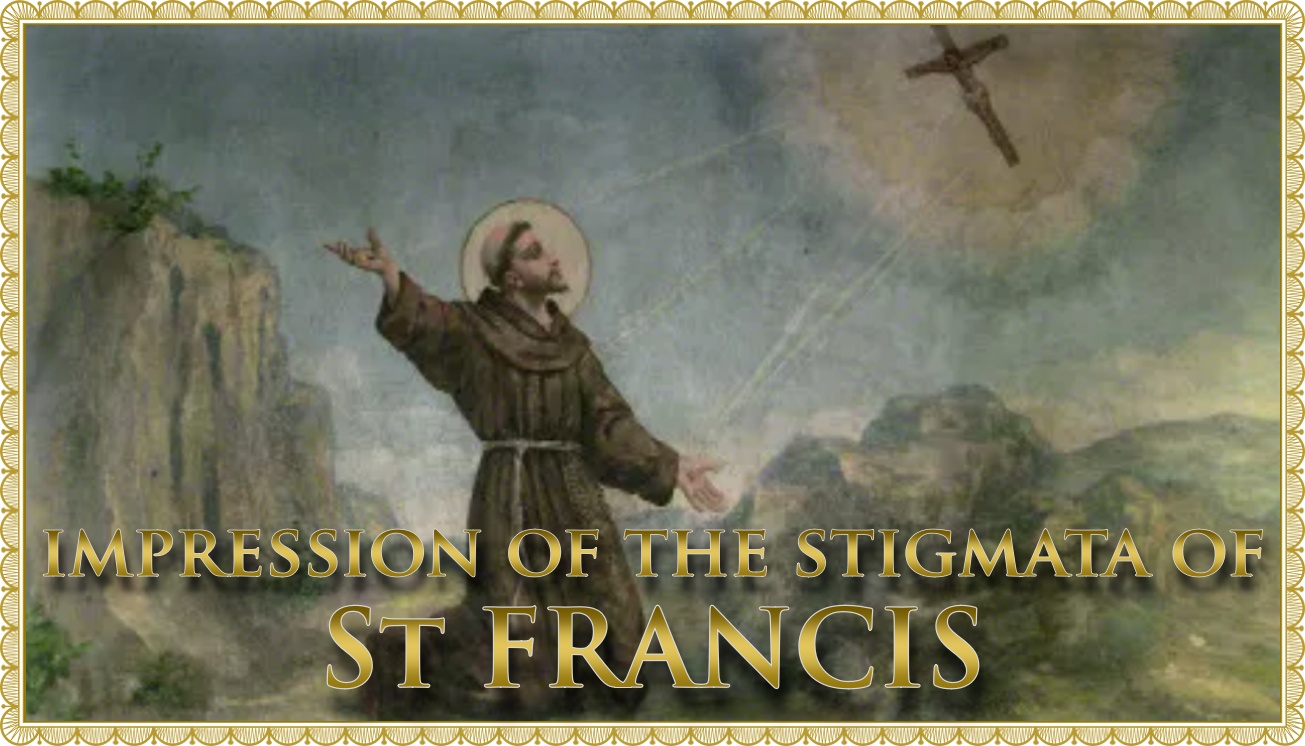
- Today’s Mass: September 17 Impression of the Stigmata of St Francis of AssisiSaint Francis received the stigmata because he had first allowed the Cross to transform his soul. His wounds were not a spectacle, but God’s answer to a world growing cold: the visible sign of a life consumed by crucified love. We may never bear Christ’s wounds in our flesh, but we must bear their likeness through penance, fidelity, patience, mercy and sacrificial love.
- Sermon for Stigmata of St. FrancisToday marks the feast of St. Francis’ stigmata, celebrating his transformation from a wealthy merchant’s son to a devoted preacher of poverty and humility. He founded the Franciscan order, emphasising evangelisation and simplicity. His experience of receiving the stigmata exemplifies the Christian doctrine of redemption through suffering, distinguishing it from other faiths.
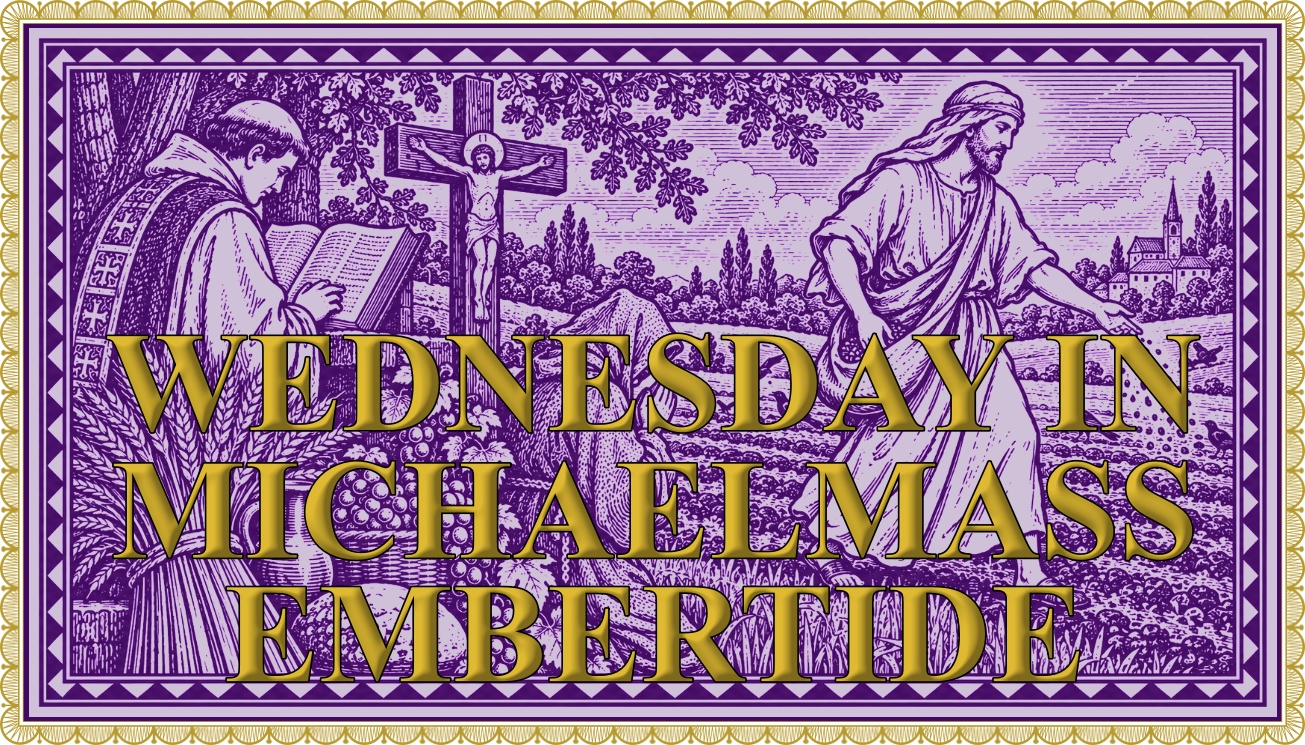
- Today’s homily: Wednesday Michaelmas EmberThe homily reflects on the significance of fasting and prayer in the Christian faith, emphasising their role in spiritual growth and self-mastery. By juxtaposing scripture from Amos and the Gospel of Mark, it highlights the need for gratitude and humility during abundance, urging believers to recognise their dependence on God. True repentance transforms and restores one’s relationship with Him.
- Today’s Mass: September 16 Wednesday Michaelmas EmberThe post commemorates the Ember Days, originally aligned with Roman agricultural festivals. The Catholic Church adopted these days early in its history to honour true worship and avoid disrupting Roman converts’ practices. The Ember Days promote fasting, prayer, and gratitude towards God for nature’s gifts while assisting the needy.
- SEPTEMBER EMBERTIDEThe September Ember Days, rooted in ancient Roman liturgy, are a time of reflection, fasting, and thanksgiving, coinciding with the autumn harvest. Marked by communal penance and prayers for clergy sanctification, these observances connect biblical themes of creation and sacrifice, urging Christians to evaluate their spiritual fruitfulness.
CURRENT EDITION


DAILY MASS ONLINE
One of the earliest online apostolates dedicated to the Traditional Latin Mass, Old Roman TV began broadcasting the Holy Sacrifice on the Feast of the Assumption, 15 August 2008. During the COVID-19 pandemic, additional programming — devotions, catechesis, and conferences — was added to support the faithful in prayer and formation.
Support the daily Holy Mass on Old Roman TV by offering a Mass intention — for loved ones, thanksgiving, or the repose of souls. Your intention helps sustain the sacred liturgy and brings grace to those you remember before God’s altar.
SUPPORT THE DAILY MASS ONLINE
Likely the world’s longest-running daily online broadcast of the
Traditional Latin Mass, streaming faithfully since the
Feast of the Assumption 2008.

This apostolate cannot continue without immediate help
Please support us with a contribution toward
chapel rent, sacristy supplies, operating costs, and web-hosting.
Our essential monthly costs reach £1,000.
MASS INTENTIONS
If your offering is for a Mass Intention, kindly complete the form below in full so we may correctly match it to your donation. For anniversary intentions — birthdays, wedding anniversaries, anniversaries of death — please be sure to include the relevant date.


Today’s Mass Propers
- Today’s Mass: September 17 Impression of the Stigmata of St Francis of Assisi
 Saint Francis received the stigmata because he had first allowed the Cross to transform his soul. His wounds were not a spectacle, but God’s answer to a world growing cold: the visible sign of a life consumed by crucified love. We may never bear Christ’s wounds in our flesh, but we must bear their likeness through penance, fidelity, patience, mercy and sacrificial love.



Leave a Reply