

Busy about My Father’s business
MASS In excélso
EPISTLE Romans 12. 1-5
GOSPEL St Luke 2. 42-52
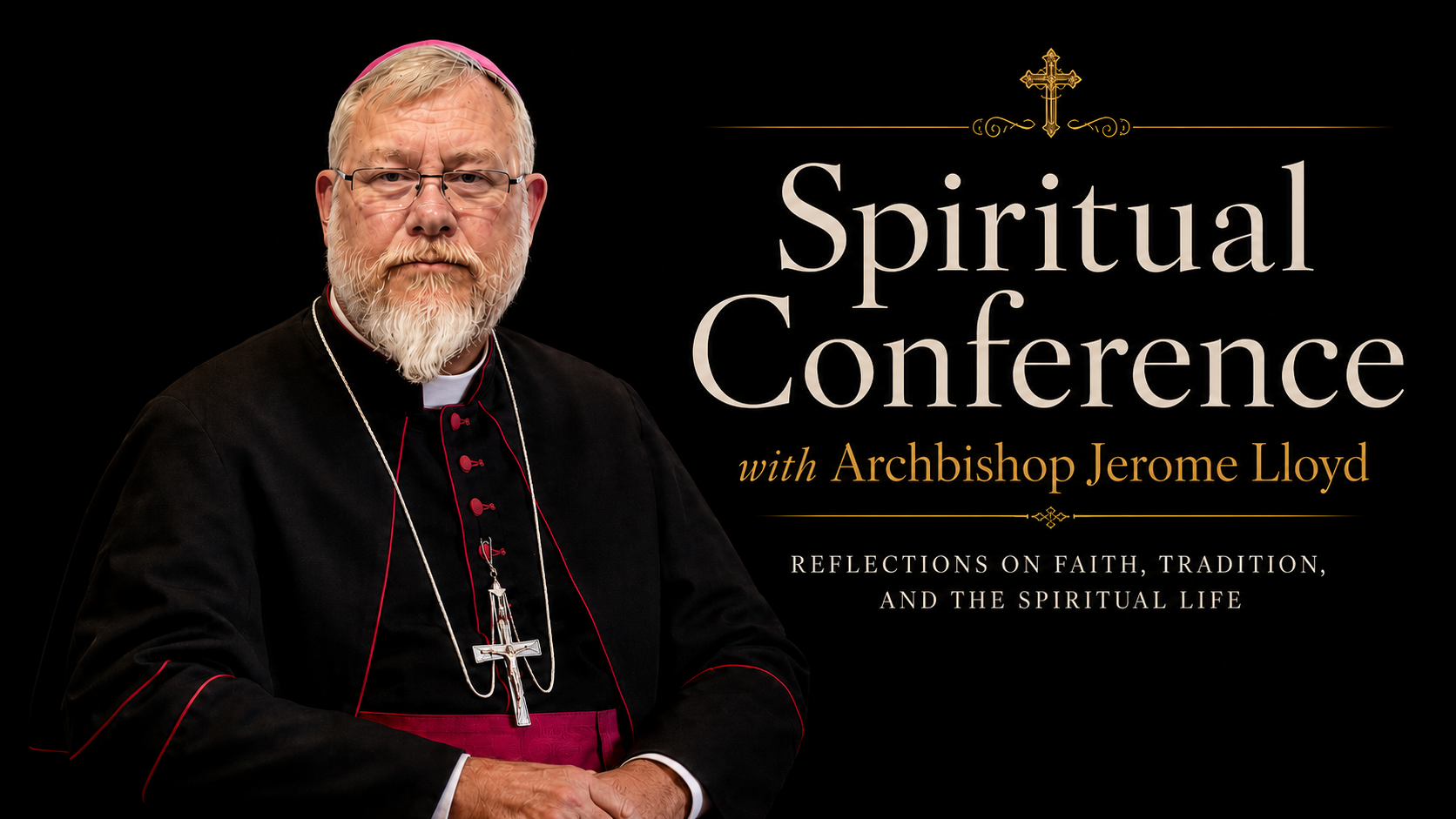
HOMILIST Mt Revd Jerome Lloyd OSJV

“How is it that ye sought me? Did you not know that I must be about my Father’s business?”
Beloved in Christ,
Within the Octave of the great feast of the Epiphany, the Church continues to unfold a single, unified mystery: the manifestation of who Christ truly is. Epiphany is not one isolated moment but a sacred sequence of disclosures. On the feast itself, Christ is revealed to the Gentiles in the persons of the Magi. On the Octave Day, He is manifested at the Jordan, where the Father’s voice is heard and the Holy Ghost descends, revealing the Most Holy Trinity. In the Gospel that follows, at Cana, His glory will be made known through His first sign, and His disciples will believe in Him.
Today’s Gospel belongs fully within that same epiphanic movement. It is not a digression, nor a merely domestic episode. It is another manifestation—quieter, more interior, but no less decisive. Here, Christ is revealed not by star or voice from heaven, but by authority.
The Gospel recounts Christ’s visit to Jerusalem with His parents when He was twelve years old. He is shown to be fully within the life of Israel, obedient to the Law, faithful to its customs, subject to its rhythms. He is, as Saint Paul says, born of a woman, born under the Law, in order to redeem those under the Law, that they might receive the adoption of sons. Yet within this obedience something breaks through that cannot be explained merely by custom or piety.
When His parents return home, Jesus remains behind. After three days of searching, they find Him in the Temple, sitting among the doctors of the Law, listening, asking questions, and astonishing all who heard Him with His understanding and answers. This is the first public glimpse of what will later mark His entire ministry. It is not cleverness that astonishes, but authority. He speaks from within the truth, not as one repeating what has been handed down, but as one to whom the truth belongs.
And then come His first recorded words in the Gospel: “How is it that ye sought me? Did you not know that I must be about my Father’s business?” These words are not a rebuke. They are a revelation. The Child names His identity and His mission. He speaks of God not merely as our Father, but as My Father. He places Himself within the Temple not simply as a pupil of the Law, but as the One to whom the Law points. This is an Epiphany of sonship.
Yet this manifestation is given without rupture. The Gospel is careful to tell us that although His parents did not fully understand these words at the time, He went down with them to Nazareth and was subject to them. The authority revealed in the Temple does not abolish obedience; it sanctifies it. Divine mission does not negate human submission; it passes through it.
What we see here is a foretaste of everything that will follow in Christ’s public ministry. The same authority that astonishes the doctors in the Temple will later astonish the crowds. He will teach not as the scribes, but as one having authority. He will command the winds and the sea. He will speak words that no prophet dared to speak in his own name: “But I say unto you.” He will claim not merely to interpret the Law, but to fulfil it. He will declare that in Himself the Kingdom of God has come near.
This authority was the great stumbling block for His contemporaries, and it remains so today. Many were willing to accept Him as a prophet; fewer could accept His claim to be more than a prophet. For the prophets spoke for God; Jesus spoke as the Son. He claimed that man’s response to Him would determine God’s response on the last day. He claimed to forgive sins. He claimed unique knowledge of the Father. He claimed that to see Him was to see the Father.
Here, beloved, the Gospel presses upon us with particular force in our own time. We live in an age that is comfortable with religious sentiment but deeply suspicious of authority—especially divine authority. Christ is often welcomed as a moral teacher, a spiritual guide, or a symbol of compassion, but His claim to command belief, obedience, and conversion is quietly set aside. The question of the Gospel remains: is He about His Father’s business, or are we trying to fit Him into ours?
The same temptation confronts the Church herself. There is a constant pressure to present Christianity as useful, agreeable, or socially beneficial—something that offers meaning, community, or ethical inspiration—while avoiding the sharper claim that Christ is Lord, Judge, and Redeemer. Yet the Church’s mission does not originate in cultural usefulness or institutional survival. It originates, as Christ Himself declares, in the Father’s business.
The Church is most faithful to her mission when she speaks with the authority of Christ, not as one voice among many, but as the bearer of divine truth. Like her Lord, she is called to teach not merely what is acceptable, but what is true; not merely what consoles, but what converts. When the Church forgets this, she risks becoming an echo of the world rather than a sign of contradiction to it.
For the faithful, this Gospel is equally searching. To confess Christ is not merely to admire Him or to agree with Him in part. It is to allow one’s life—family, work, decisions, loyalties, and hopes—to be reordered around His Father’s will. The hidden obedience of Nazareth reminds us that fidelity to Christ is lived not only in dramatic moments, but in daily submission to truth, duty, and grace. To be about the Father’s business often means patience where the world demands immediacy, obedience where the world prizes autonomy, and faithfulness where the world seeks novelty.
Epiphany, then, does not end with recognition. It ends with decision. Either Christ’s claim is false, and He is a blasphemer who demanded an authority He did not possess, or it is true, and He is who He said He was: the only-begotten Son of the Father, who came to forgive sins, to judge the world, and to bring men into communion with God through His saving death and Resurrection.
Within the Octave of Epiphany, the Church lingers here to ensure that we do not evade that choice. The Child in the Temple still speaks. His question is still addressed to us, to our parishes, and to the Church in every age:
“How is it that ye sought me? Did you not know that I must be about my Father’s business?”
To answer that question rightly is not only the task of this feast, but the task of Christian life and the measure of the Church’s mission in the world.
Homilies Archive

DAILY MASS ONLINE
One of the earliest online apostolates dedicated to the Traditional Latin Mass, Old Roman TV began broadcasting the Holy Sacrifice on the Feast of the Assumption, 15 August 2008. During the COVID-19 pandemic, additional programming — devotions, catechesis, and conferences — was added to support the faithful in prayer and formation.
Support the daily Holy Mass on Old Roman TV by offering a Mass intention — for loved ones, thanksgiving, or the repose of souls. Your intention helps sustain the sacred liturgy and brings grace to those you remember before God’s altar.
SUPPORT THE DAILY MASS ONLINE
Likely the world’s longest-running daily online broadcast of the
Traditional Latin Mass, streaming faithfully since the
Feast of the Assumption 2008.

This apostolate cannot continue without immediate help
Please support us with a contribution toward
chapel rent, sacristy supplies, operating costs, and web-hosting.
Our essential monthly costs reach £1,000.



Leave a Reply