
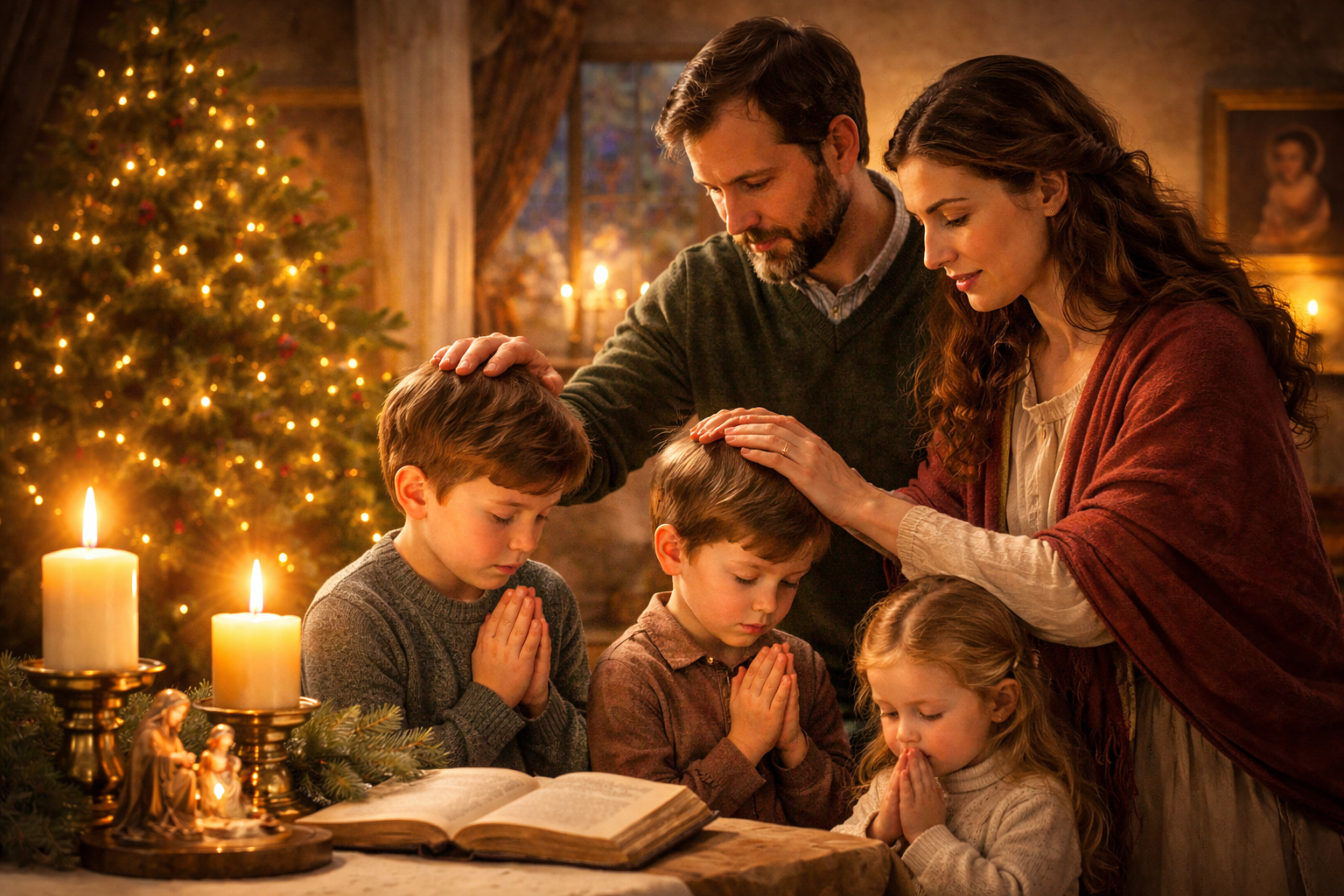
Childermas: Parental Blessings
An old English name for the Feast of the Holy Innocents is Childermas, a term derived from the Old English words for “child” and “mass.” This feast commemorates the male infants tragically killed by King Herod in his attempt to eliminate the Christ Child. These young martyrs are honoured as the first witnesses to Christ, their sacrifice foreshadowing the passion and ultimate victory of Jesus.

Childermas has been observed since the early centuries of Christianity, with records of its celebration found in ancient liturgical texts like the Leonine Sacramentary from the 5th century. The day serves as a poignant reminder of the cost of Christ’s coming into the world and the innocence of children who hold a special place in God’s kingdom.
Background
The Catholic tradition of parents blessing their children on the Feast of the Holy Innocents has deep roots, emphasizing the sacred role of parents as the primary spiritual guardians of their families. In the domestic church, which is the family home, parents take on a priestly role in interceding for and guiding their children in faith. On this feast, they are encouraged to formally bless their children, either through a simple or formal ritual.
For the simple blessing, parents may trace the sign of the cross on their child’s forehead using their right thumb dipped in holy water. As they do so, they say:
“May Almighty God bless you, and may He be the Guardian of your heart and mind—the Father, + Son, and Holy Spirit. Amen.”
This act is a humble yet profound gesture, invoking God’s protection over the child’s heart, mind, and soul while reaffirming the parents’ commitment to raising their child in the faith.
The formal blessing, as found in the Roman Ritual, is a longer prayer that draws upon the imagery of Christ’s embrace of children during His earthly ministry. The blessing reads:
“O Lord, Jesus Christ, Who didst embrace and lay thy hands upon the little children when they came to thee, and didst say to them: ‘Suffer little children to come unto me, and forbid them not, for the kingdom of heaven is theirs, and their angels always see the face of my Father,’ — look with a Father’s eye upon the innocence of these children (and their parents’ devotion), and bless them this day (through our ministry). By thy grace and goodness let them make progress in desiring thee, loving thee, fearing thee, obeying thy commandments — thus coming to their destined home, through thee, Saviour of the world, Who with the Father and the Holy Spirit livest and reignest, God, forever and ever. Amen.”
This prayer highlights the tender relationship between Christ and children, calling upon God’s grace to help the child grow in virtue and faith. It also acknowledges the parents’ devotion, linking their role to Christ’s own ministry of welcoming and blessing children.
Rite of Blessing
Father: O Lord, hear my prayer.
All: And let my cry come unto Thee.
Father: Let us pray.
O Lord Jesus Christ, once Thou embraced and placed Thy hands upon the little children who came to Thee, and said: “Suffer the little children to come unto Me, and forbid them not, for theirs is the kingdom of heaven, and their angels always see the face of my Father!” Look now with fatherly eyes on the innocence of these children and their parents’ devotion, and bless them this day through our prayers.
The father signs the forehead of each child with holy water.
Father: In Thy grace and goodness let them advance continually, longing for Thee, loving Thee, fearing Thee, keeping Thy commandments. Then they will surely come to their destined home, through Thee, Saviour of the world. Who lives and reigns forever and ever.
All: Amen.
Father: May God bless you. And may He keep your hearts and minds — the Father, Son and the Holy Spirit.
All: Amen.
Customs
Historically, the Feast of the Holy Innocents has been marked by various customs. In medieval Europe, the day was associated with the “Boy Bishop” tradition, where a young boy was chosen to act as a bishop for the day, leading processions and sometimes performing symbolic duties in the church. In certain regions, Childermas was considered an inauspicious day for beginning new projects, as it was associated with tragedy and loss.
In Spain and Hispanic countries like Mexico, and the Philippines, the feast is known as “Niños Inocentes” and Childermas is rather like April Fools Day is in the UK, America and France. Tricks are pulled, and the one tricked is called “Innocente!” rather than an “April Fool!” In many places, it is the young who play tricks on their elders, whom they often lock inside rooms and such until the oldsters pay a ransom!
Conclusion
Today, the Feast of the Holy Innocents continues to serve as a reminder of the sanctity of life and the importance of protecting the innocent. The custom of blessing children on this day provides a meaningful opportunity for families to gather in prayer, reflect on the significance of Christ’s incarnation, and renew their commitment to raising children in faith and love. Through these blessings, parents not only invoke God’s protection over their children but also affirm their own role as spiritual leaders within the family. This sacred tradition strengthens the bond between parents and children while fostering a deeper connection to the Church’s rich liturgical heritage.
related articles


Latest articles
- Today’s Mass: September 05 Saint Lawrence JustinianSaint Lawrence Justinian, the first Patriarch of Venice, dedicated his life to the poor and the establishment of monasteries, rejecting noble marriage. Renowned for his humility and pastoral dedication, he emphasised the spiritual integrity of Venice’s safety. He was a precursor to the reforms of the Council of Trent, dying on 8 January 1455.
- 06.09.26 Nuntiatoria CXXII: NOMEN MANET, RES DEESTThis edition of Nuntiatoria explores the disconnect between the names of Catholic institutions and the realities they signify. Despite retaining their titles, many aspects of Catholicism—such as episcopal authority in China and religious practice in Poland—exhibit deteriorating substance. The piece cautions against superficial continuity, stressing the importance of genuine faith and practice over mere nomenclature.
- ORDO w/c 06.09.26The document outlines the liturgical schedule for the week of 6 to 13 September 2026, highlighting significant religious observances such as the Fifteenth Sunday after Pentecost and the Nativity of the Blessed Virgin Mary. It reflects on themes of compassion, holiness, fidelity, and humility, underscoring their importance in Christian life.
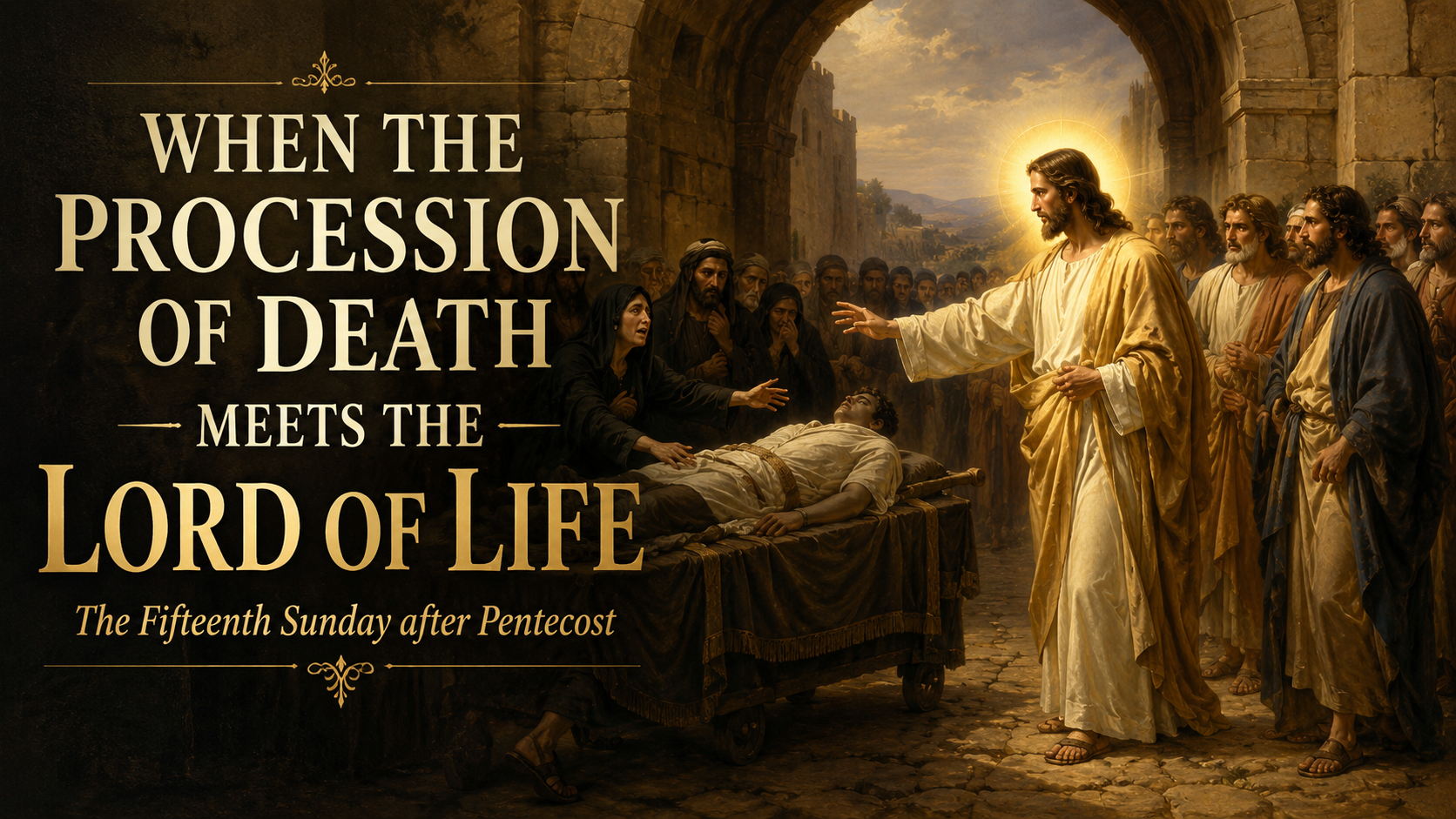
- The Fifteenth Sunday after Pentecost: When the Procession of Death Meets the Lord of LifeThe Fifteenth Sunday after Pentecost focuses on the transformative power of Christ, emphasising the supernatural life granted through grace. The liturgy highlights the Church’s role as a nurturing mother, mourning the spiritually dead while seeking their restoration. Christ’s compassion leads to resurrection, demonstrating that true life is found in dependence on Him.
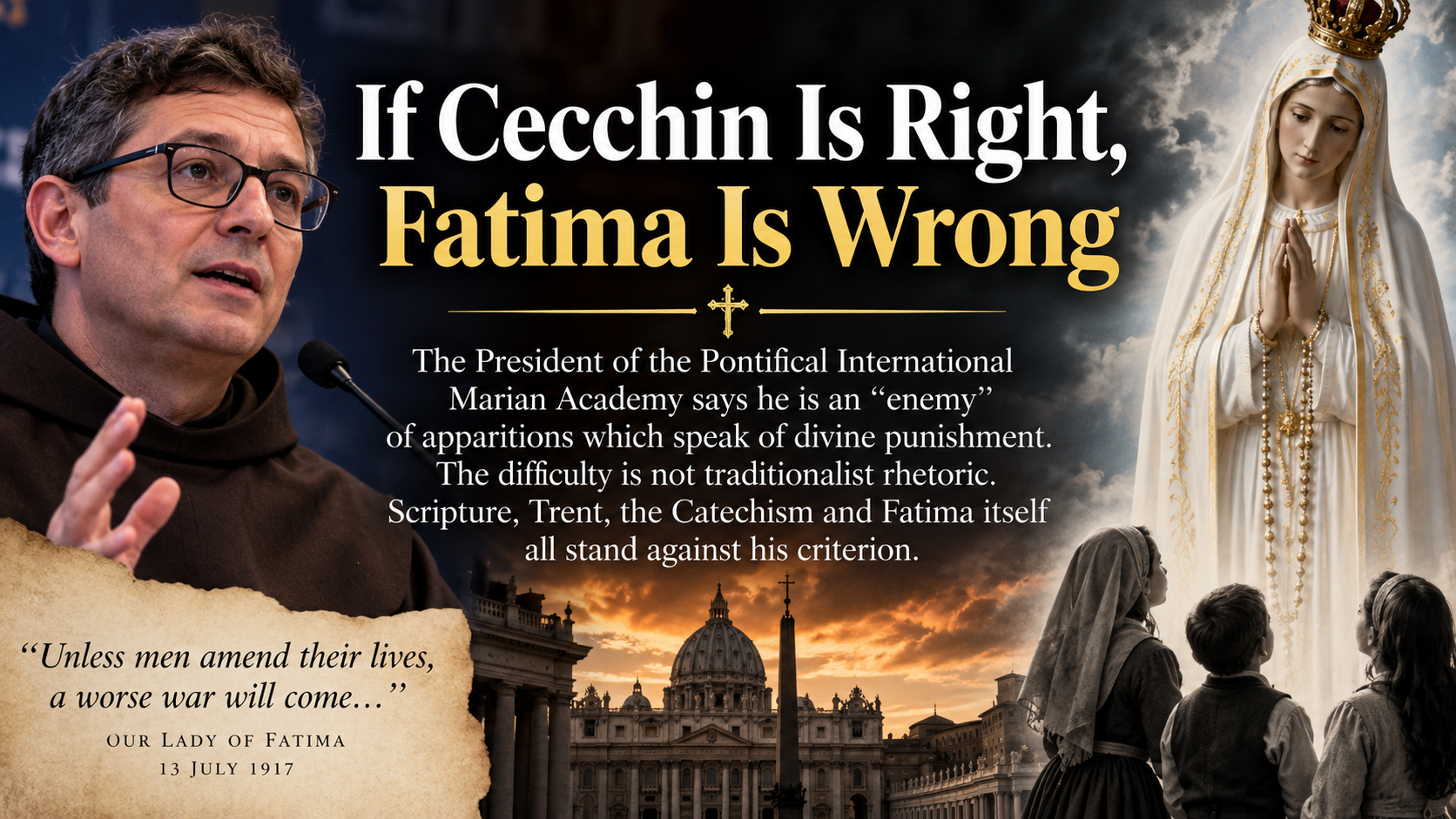
- If Cecchin Is Right, Fatima Is WrongFr Stefano Cecchin, President of the Pontifical International Marian Academy, has declared opposition to apparitions that speak of divine punishment, suggesting they are false. This stance contradicts fundamental Catholic doctrine, including teachings from Scripture, the Catechism, and specifically the Message of Fatima, which warns of divine consequences for sin.


Leave a Reply