
Vatican II, Interpretation, and Irreformability: The Hermeneutic Crisis Behind the SSPX–Rome Impasse
The present doctrinal impasse between the Society of St. Pius X and the Holy See is not fundamentally canonical but hermeneutical. It concerns the theological weight of the Second Vatican Council, the nature of its authority, and whether its pastoral formulations admit of further clarification where tension with prior magisterial teaching is alleged. Until this question is treated with precision, dialogue will remain circular rather than convergent.
The Council itself defined the parameters of its authority. On 6 March 1964, the Doctrinal Commission issued an official clarification regarding the theological note of the Council’s teaching, stating that, given its pastoral character, it did not intend to issue new dogmatic definitions in an extraordinary manner.¹ This clarification was reiterated on 16 November 1964 during the promulgation of Lumen Gentium.² Pope Paul VI confirmed this explicitly in his General Audience of 12 January 1966, explaining that the Council “avoided pronouncing, in an extraordinary manner, dogmas endowed with the note of infallibility.”³ Vatican II therefore exercised authentic magisterial authority, yet consciously refrained from engaging the extraordinary infallible mode characteristic of the Council of Trent and the First Vatican Council.
The theological consequences of this self-limitation were later underscored by Pope Benedict XVI. In his 1988 address in Santiago, Chile, then Cardinal Ratzinger stated that Vatican II “defined no dogma at all” and deliberately chose to remain “on a modest level, as a merely pastoral council,” cautioning against treating it as a “superdogma.”⁴ His point was ecclesiological rather than polemical: a pastoral council that does not issue new dogmatic definitions cannot be absolutised in a manner that eclipses the Church’s prior doctrinal tradition.
From this arises the structural question at the heart of the present dispute: where is the authoritative interpretation of Vatican II formally codified? There exists no single Vatican document systematically reconciling contested conciliar passages—such as those in Dignitatis Humanae—with earlier magisterial texts including Pius IX’s Quanta Cura. There is no official decree classifying conciliar propositions according to their precise theological note. Nor has there been promulgated a comprehensive line-by-line doctrinal reconciliation of conciliar formulations with the pre-conciliar magisterium. The absence is documentary rather than rhetorical.
Interpretation is instead dispersed throughout subsequent magisterial acts. It is found in the conciliar texts themselves and the published Acta Synodalia, in the post-conciliar magisterium of Paul VI and his successors, in the 1983 Code of Canon Law, and in the Catechism of the Catholic Church promulgated by Pope John Paul II in 1992.⁵ It is also articulated programmatically in Benedict XVI’s Address to the Roman Curia of 22 December 2005, where he distinguished between a “hermeneutic of discontinuity and rupture” and a “hermeneutic of reform in continuity.”⁶ The Congregation for the Doctrine of the Faith further clarified aspects of ecclesiology in its declaration Dominus Iesus (2000)⁷ and in its 2007 “Responses to Some Questions Regarding Certain Aspects of the Doctrine on the Church.”⁸ Yet none of these constitutes a consolidated interpretive charter resolving every disputed conciliar formulation.
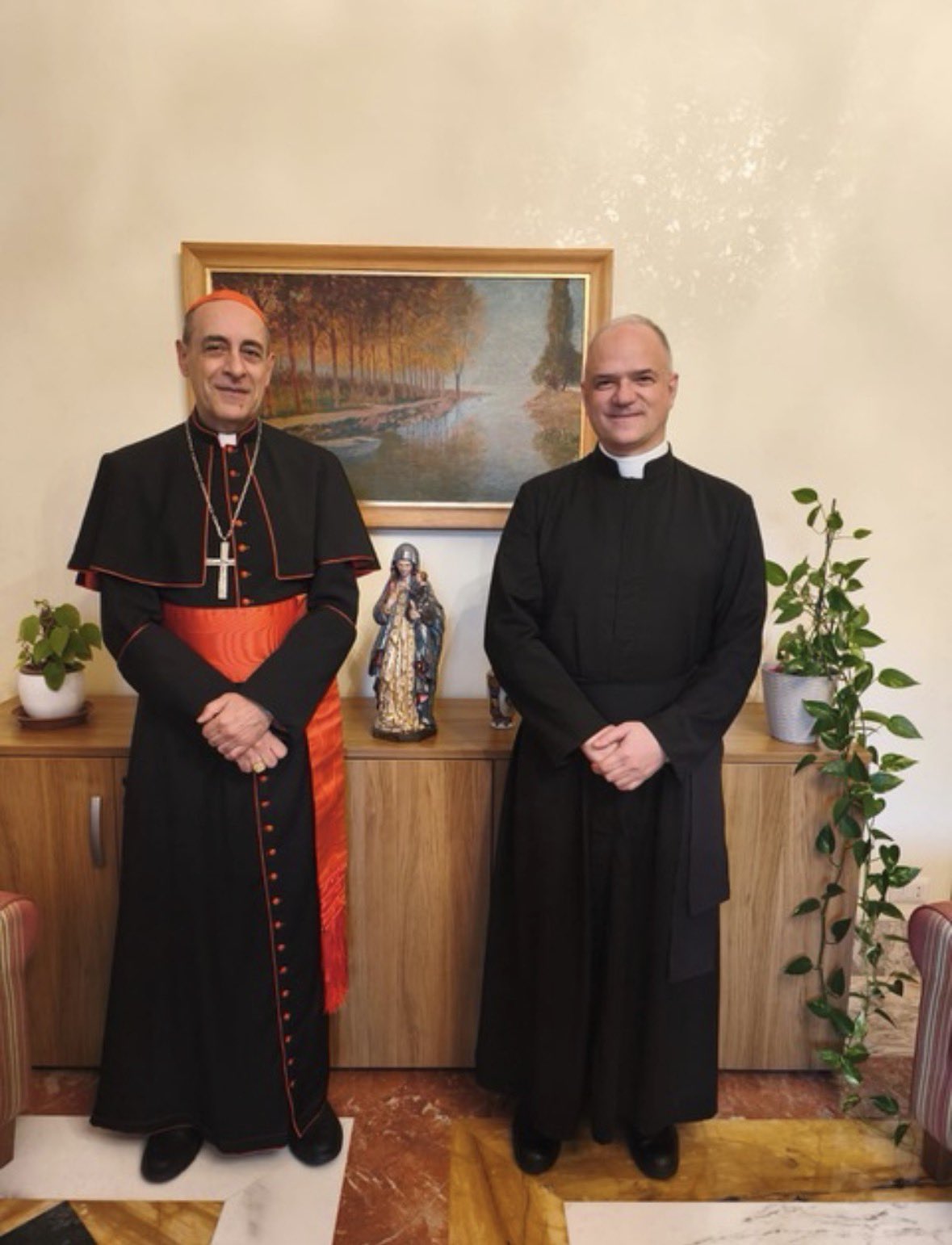
This structural reality illuminates the divergence between Cardinal Victor Manuel Fernandez and Bishop Athanasius Schneider. Cardinal Fernández has indicated that the texts of Vatican II are not open to correction or substantive reinterpretation and that acceptance of them as promulgated is required for reconciliation. Bishop Schneider has responded that only Sacred Scripture and solemnly defined dogma are strictly irreformable, and that pastoral formulations, precisely because they were not presented as definitive dogmatic acts, may admit of clarification in order to secure explicit continuity with the perennial magisterium.⁹ The disagreement is not over the Council’s legitimacy but over the scope of its textual irreformability.
The debate becomes concrete in the matter of religious liberty. Dignitatis Humanae affirms that the human person has a right to religious freedom understood as immunity from coercion within due limits.¹⁰ Pius IX’s Quanta Cura (1864), however, condemned propositions concerning liberty of conscience and worship as formulated in nineteenth-century liberalism.¹¹ Whether these teachings represent development in application, adaptation to distinct juridical contexts, or tension requiring further doctrinal specification is precisely the question that remains unsettled in a formally consolidated manner. Rome maintains that the living magisterium interprets the Council authoritatively. The SSPX maintains that such interpretation must be articulated in terms that demonstrably reconcile conciliar formulations with prior magisterial definitions.
The ecclesiological stakes are therefore considerable. Vatican II is an ecumenical council exercising authentic magisterial authority. Yet it deliberately refrained from issuing new extraordinary definitions.¹ Paul VI confirmed this.³ Benedict XVI warned against absolutising its pastoral language.⁴ If every conciliar formulation is treated as practically irreformable in its wording, the Council’s own self-description as pastoral appears functionally overridden. If, however, pastoral formulations may be clarified in light of Tradition, then the possibility of doctrinal specification remains consistent with the Council’s own stated method.
The SSPX–Rome impasse is thus not fundamentally about obedience but about interpretation and continuity. Where interpretation is diffuse rather than codified, ambiguity endures. Vatican II’s pastoral self-limitation and the absence of a single comprehensive interpretive synthesis together explain why the hermeneutical question remains the defining theological issue of the post-conciliar era.
¹ Second Vatican Council, Doctrinal Commission, Relatio circa modum procedendi in doctrinali expositione, 6 March 1964, in Acta Synodalia Sacrosancti Concilii Oecumenici Vaticani II, vol. III, pars VIII (Vatican City: Typis Polyglottis Vaticanis, 1975), 86–87.
² Second Vatican Council, Promulgation Formula accompanying Lumen Gentium, 16 November 1964, in Acta Apostolicae Sedis 57 (1965): 5–75.
³ Paul VI, General Audience, 12 January 1966, in Insegnamenti di Paolo VI, vol. IV (1966), 699–701.
⁴ Joseph Ratzinger, Address in Santiago, Chile, 13 July 1988, published in Il Sabato, no. 30 (30 July–5 August 1988), 15.
⁵ John Paul II, Apostolic Constitution Fidei Depositum, 11 October 1992, in Acta Apostolicae Sedis 86 (1994): 113–118.
⁶ Benedict XVI, Address to the Roman Curia, 22 December 2005, in Acta Apostolicae Sedis 98 (2006): 40–53.
⁷ Congregation for the Doctrine of the Faith, Declaration Dominus Iesus, 6 August 2000, in Acta Apostolicae Sedis 92 (2000): 742–765.
⁸ Congregation for the Doctrine of the Faith, “Responsa ad quaestiones de aliquibus sententiis ad doctrinam de Ecclesia pertinentibus,” 29 June 2007, in Acta Apostolicae Sedis 99 (2007): 604–608.
⁹ Athanasius Schneider, interview with Maike Hickson, “Bishop Schneider says Cdl. Fernández is completely wrong that Vatican II texts cannot be changed,” LifeSiteNews, 18 February 2026.
¹⁰ Second Vatican Council, Declaration Dignitatis Humanae, 7 December 1965, in Acta Apostolicae Sedis 58 (1966): 929–946.
¹¹ Pius IX, Encyclical Quanta Cura, 8 December 1864, in Acta Pii IX, pars I, vol. 3 (Rome: Typis Vaticanis, 1871), 617–630.
RELATED ARTICLES


Latest
- Mary Is Co-Redemptrix: Cardinal Burke Reopens Rome’s Marian ControversyCardinal Raymond Leo Burke has declared the Virgin Mary as “Co-Redemptrix” amidst controversy over the Vatican’s restriction on this title. The debate revolves around the appropriateness of certain theological language and whether terminology historically used can still accurately express Marian cooperation in Redemption without compromising Christ’s unique role.
- When Politics Defines Doctrine: Edmund Waldstein, Integralism and the New Boundary at HeiligenkreuzThe ongoing exclusion of Father Edmund Waldstein from teaching at Heiligenkreuz has sparked debate on the limits of acceptable Catholic thought, particularly regarding integralism and its relationship to Church doctrine. Critics argue that Waldstein and similar positions challenge both Catholic teachings and democratic values, raising questions about the intersection of faith and politics.
- Christianity Is Right ~ Not Right WingThe article discusses the distinction between Catholic orthodoxy and modern political ideologies, particularly the Right and Christian nationalism. It argues that Catholic beliefs about family, morality, and authority predate contemporary political classifications and should not be conflated with right-wing politics. The ordo amoris framework is presented as a guiding principle for evaluating political alliances while maintaining a focus on the common good and the Social Kingship of Christ.
- Today’s homily: The Nativity of the Blessed Virgin MaryThe Nativity of the Blessed Virgin Mary marks a significant moment in salvation history, representing the dawn of the Incarnation. Mary’s birth, unnoticed by the world, was part of God’s providential plan leading to Christ. This feast invites reflection on humility, obedience, and trust in God’s will, emphasising Mary’s role as the Mother of the Redeemer.
- Today’s Mass: September 08 The Nativity of the Blessed Virgin MaryThe Nativity of the Blessed Virgin Mary celebrates her birth, symbolising a new beginning tied to salvation. Originating in the East, it gained recognition in Rome under Pope Sergius I. Additionally, the feast commemorates Saint Hadrian, a martyr who converted to Christianity, underscoring themes of faith and redemption.



Leave a Reply