
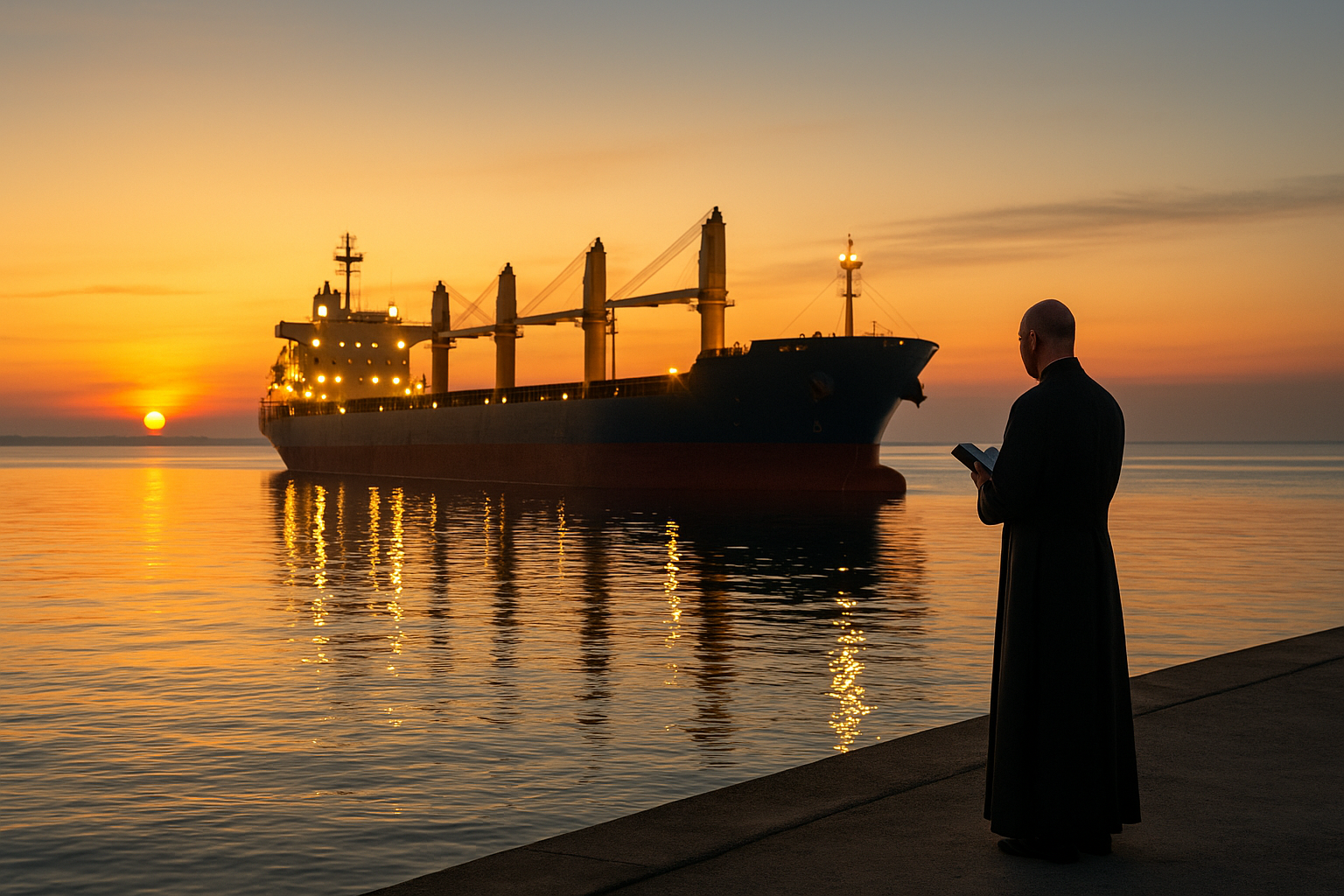
The Church and the Sea: Pope Leo XIV Establishes the New Apostleship of the Sea
A Renewed Structure for an Ancient Pastoral Mission
Pope Leo XIV has formally established the Apostleship of the Sea as the central coordinating body for the Church’s global maritime ministry, issuing a chirograph on 13 November 2025 that also approves its Statutes. The new body consolidates and strengthens the Church’s long-standing commitment to the populi maris — seafarers, fishermen, port workers, maritime families, and all whose daily labour is bound to the world’s waters. The Pope’s intervention recognises that these communities, often far from parish structures and exposed to physical, spiritual, and moral dangers, require an adapted and stable form of pastoral care.
Historical Roots: From Pius X to the Present
The chirograph recalls that the Church’s solicitude for people of the sea has deep historical roots. Pope Pius X initiated the modern apostolate in 1914 with the motu proprio Iam pridem, providing the first juridical foundation for specialised maritime ministry¹. Throughout the decades that followed, the Church continued to develop and refine this pastoral work, culminating in the 1977 decree Apostolatus Maris, issued in the wake of the Second Vatican Council to integrate maritime ministry into the broader life of the Church². St John Paul II further advanced the apostolate in his 1997 motu proprio Stella Maris, which provided updated norms, spiritual direction, and renewed emphasis on the dignity and rights of maritime workers³. In recent years, Pope Francis transferred responsibility for the Apostleship of the Sea to the Dicastery for Promoting Integral Human Development⁴, which now oversees the newly formalised coordinating body.
Consultation and the Vision of Leo XIV
According to Article 166 §1 of Praedicate Evangelium, the Dicastery has competence in overseeing “seafarers and others whose lives are connected with the maritime world.” Guided by this mandate, it launched an extensive global consultation beginning in October 2022, involving national directors, episcopal promoters, and maritime pastoral agents across multiple continents⁵. This process, which continued through 2025, informed the drafting of the new Statutes and highlighted the urgent need for a unified structure capable of sustaining pastoral presence in an increasingly globalised and precarious maritime sector.
Leo XIV’s chirograph expresses “the fervent desire that the Church’s spiritual care in the pastoral ministry of the sea may continue with enthusiasm and generosity,” reaffirming both the missionary imperative of the Church and her responsibility to those who labour in hidden and perilous conditions. The Pope envisions the new Apostleship of the Sea as a visible and stable expression of the Church’s perennial concern for souls who cannot benefit from ordinary parish life due to constant mobility, isolation, or economic vulnerability.
Pastoral and Ecclesial Significance
This renewed structure signals a further clarification of the Holy See’s approach to specialised ministries, integrating them more closely within the ordinary life of the Church while preserving their legitimately distinct charisms. The maritime apostolate, long known affectionately as Stella Maris, has traditionally served as a sign of charity and hope in ports around the world. By establishing a central coordinating body with approved Statutes, Pope Leo XIV intends to secure the stability, doctrinal soundness, and pastoral clarity necessary for its mission in the decades ahead.
The move is also noteworthy in the context of contemporary global challenges. The maritime world faces economic instability, geopolitical tension, labour exploitation, and ongoing threats to physical and mental wellbeing. Against this backdrop, the Church’s resolve to be present “with enthusiasm and generosity” is not merely administrative but profoundly evangelical—a reminder that the Gospel reaches even the most remote corners of human life, including those who work upon the waters.
- Pius X, Iam pridem (1914).
- Sacred Congregation for the Evangelization of Peoples, Apostolatus Maris (1977).
- John Paul II, Stella Maris (1997).
- Dicastery for Promoting Integral Human Development, restructuring directives (2017–2021).
- Dicastery consultation records presented to national directors, October 2022–2025.


Latest
- Today’s Mass: September 05 Saint Lawrence JustinianSaint Lawrence Justinian, the first Patriarch of Venice, dedicated his life to the poor and the establishment of monasteries, rejecting noble marriage. Renowned for his humility and pastoral dedication, he emphasised the spiritual integrity of Venice’s safety. He was a precursor to the reforms of the Council of Trent, dying on 8 January 1455.
- 06.09.26 Nuntiatoria CXXII: NOMEN MANET, RES DEESTThis edition of Nuntiatoria explores the disconnect between the names of Catholic institutions and the realities they signify. Despite retaining their titles, many aspects of Catholicism—such as episcopal authority in China and religious practice in Poland—exhibit deteriorating substance. The piece cautions against superficial continuity, stressing the importance of genuine faith and practice over mere nomenclature.
- ORDO w/c 06.09.26The document outlines the liturgical schedule for the week of 6 to 13 September 2026, highlighting significant religious observances such as the Fifteenth Sunday after Pentecost and the Nativity of the Blessed Virgin Mary. It reflects on themes of compassion, holiness, fidelity, and humility, underscoring their importance in Christian life.
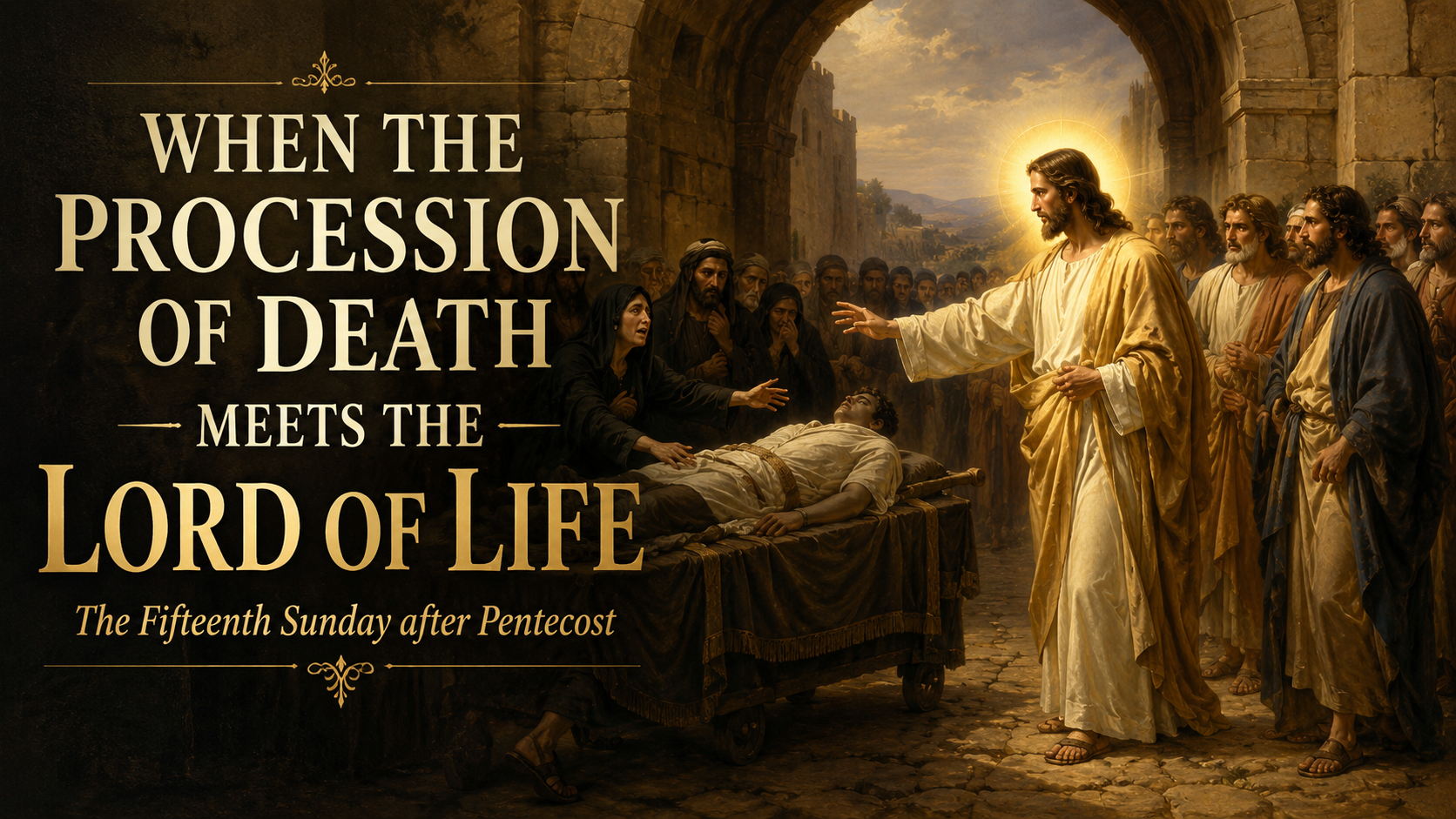
- The Fifteenth Sunday after Pentecost: When the Procession of Death Meets the Lord of LifeThe Fifteenth Sunday after Pentecost focuses on the transformative power of Christ, emphasising the supernatural life granted through grace. The liturgy highlights the Church’s role as a nurturing mother, mourning the spiritually dead while seeking their restoration. Christ’s compassion leads to resurrection, demonstrating that true life is found in dependence on Him.
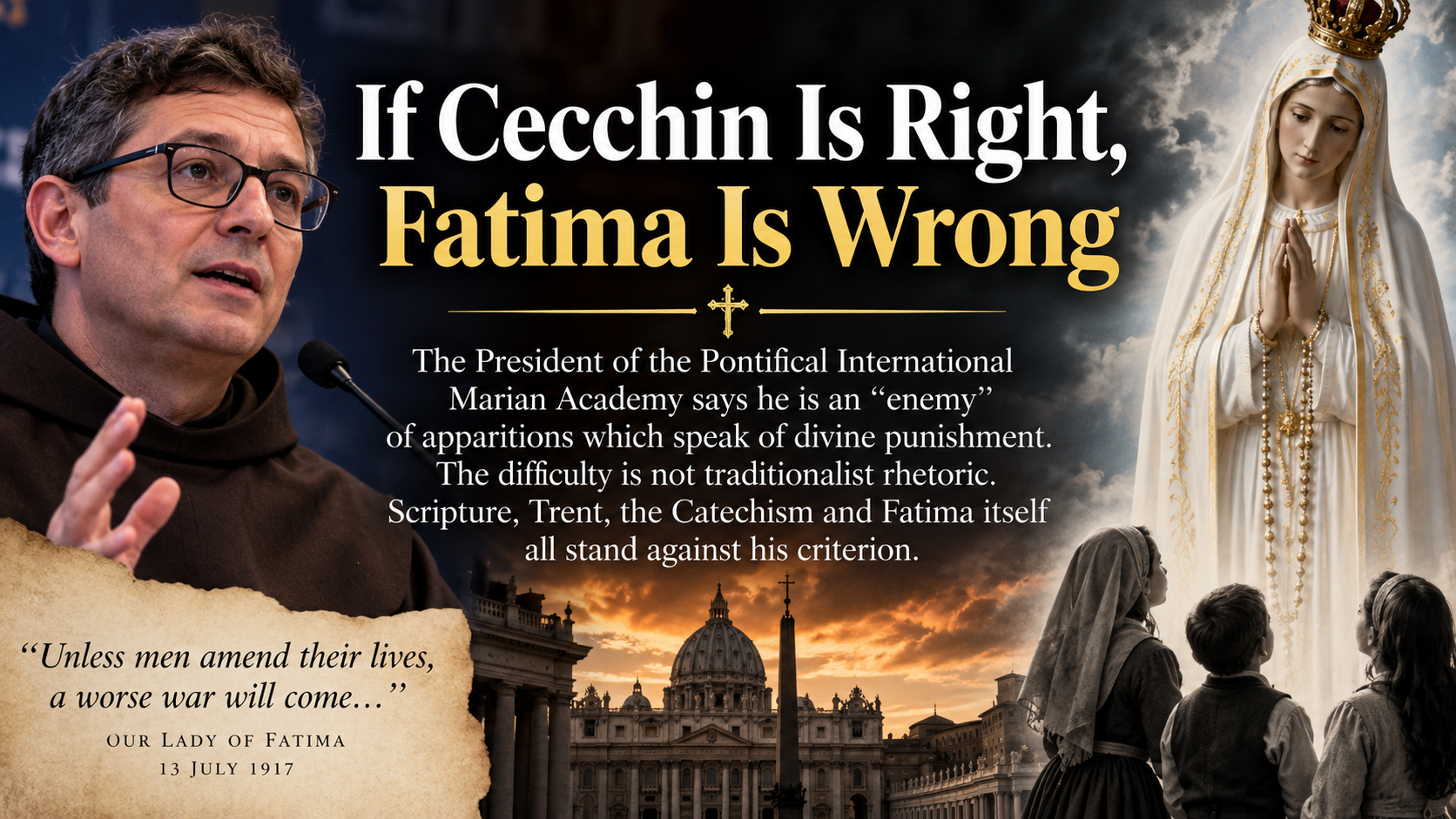
- If Cecchin Is Right, Fatima Is WrongFr Stefano Cecchin, President of the Pontifical International Marian Academy, has declared opposition to apparitions that speak of divine punishment, suggesting they are false. This stance contradicts fundamental Catholic doctrine, including teachings from Scripture, the Catechism, and specifically the Message of Fatima, which warns of divine consequences for sin.


Leave a Reply