

Ordered Fidelity and the Courage of Heaven: St Titus of Crete and St Dorothy of Caesarea
MASS Státuit
LESSON Ecclesiasticus 44. 16-27; 45. 3-20
GOSPEL St Luke 10:1-9
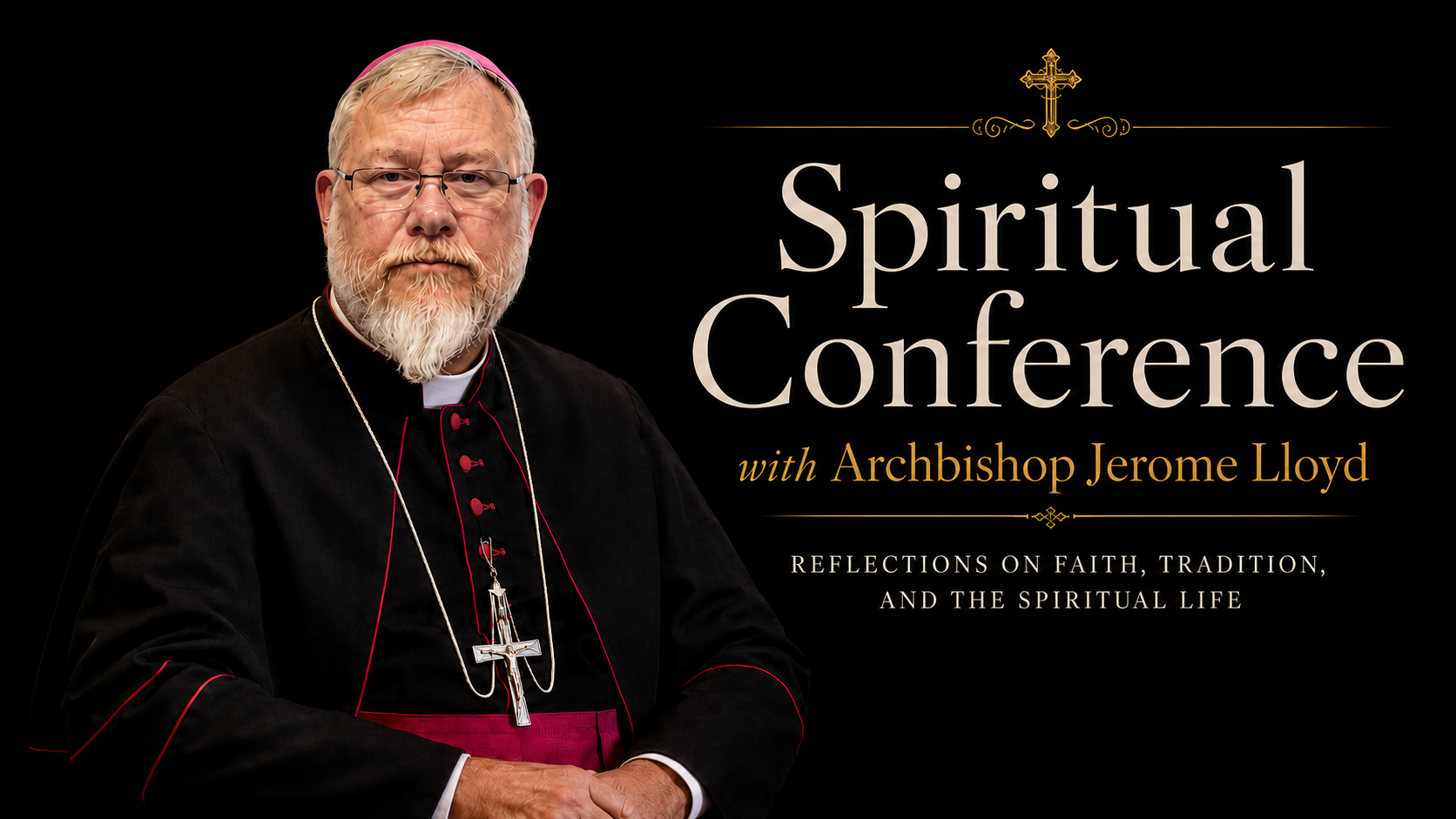
HOMILIST Mt Revd Jerome Lloyd OSJV

Beloved in Christ,
The Church today places before us St Titus, a man formed not by theories of leadership but by the living authority of the Apostles. He belongs to that inner apostolic circle—close enough to the source to know that the Church is not sustained by charisma, novelty, or mood, but by truth received, guarded, and handed on. His greatness lies not in dramatic martyrdom, but in something far more demanding: the daily labour of ordering the Church amid confusion.
St Paul entrusts Titus with difficult missions because he knows the cost of disorder left unchecked. Corinth was fractured by faction and scandal; Crete was infamous for moral instability. To such places Paul does not send soothing words, but a shepherd armed with authority. “For this cause I left thee in Crete, that thou shouldest set in order the things that are wanting, and ordain priests in every city.” This is the language of governance, not suggestion. It reveals a Church already visible, hierarchical, and unapologetically doctrinal.
The Epistle to Titus reads like a mirror held up to our own age. False teachers are active. Moral laxity is rationalised. Clergy must be examined, corrected, and formed. Sound doctrine must be insisted upon precisely when it is unpopular. Titus is commanded to rebuke error when necessary—not because he lacks charity, but because he possesses it. For charity without truth dissolves into indulgence, and truth without authority is soon ignored. The pastoral office exists not to manage feelings, but to save souls.
Here the contemporary force of St Titus becomes unmistakable. Our age is deeply suspicious of order. Authority is mistaken for oppression; clarity for cruelty. The Church is pressured to replace teaching with accompaniment, correction with conversation, governance with endless process. Yet Titus shows us that disorder in belief and morals cannot be healed by sentiment or dialogue alone. It is healed by ordered fidelity. Renewal does not come from softening the faith, but from restoring its nerve.
Tradition tells us that Titus became the first Bishop of Crete, governing not by innovation, but by fidelity to what he had received. Rome herself, cautious in all things liturgical, only later admitted his feast to the general calendar. This restraint underscores not his insignificance, but the sobriety of the Church: when she honours, she does so deliberately. Titus is honoured because his witness has proved perennial.
In commemoration, the Church recalls St Dorothy of Caesarea, whose martyrdom completes this lesson with radiant clarity. If Titus teaches us how the faith is guarded over time, Dorothy shows us why it is worth guarding at all. A virgin consecrated to Christ during the Diocletian persecution, she endured mockery and torture with serene courage. When derided for her hope of paradise, she spoke simply of the garden prepared by her Spouse. God Himself answered her persecutors: roses and fruit were sent from heaven at the hour of her death. The promises of Christ were not metaphor, but reality.
St Dorothy confronts a world that insists faith must remain private, harmless, and inconsequential. Her witness declares that eternity is real, judgment is real, and fidelity has consequences beyond this life. What Titus preserves through authority, Dorothy proves through sacrifice. One orders the Church on earth; the other hastens souls to heaven.
Together they speak with urgency to our present moment. The Church does not renew herself by diluting doctrine or fearing authority. She renews herself by truth spoken clearly, discipline exercised charitably, and faith lived as if heaven is real—because it is. As we approach the penitential season, these saints call us to ordered fidelity: to receive what has been handed down, to live it without excuse, and to confess it without fear, until the garden promised to Dorothy becomes our own inheritance.
Who lives and reigns, Father, Son, and Holy Ghost, unto the ages of ages. Amen.
Homilies Archive

Mass Propers


DAILY MASS ONLINE
One of the earliest online apostolates dedicated to the Traditional Latin Mass, Old Roman TV began broadcasting the Holy Sacrifice on the Feast of the Assumption, 15 August 2008. During the COVID-19 pandemic, additional programming — devotions, catechesis, and conferences — was added to support the faithful in prayer and formation.
Support the daily Holy Mass on Old Roman TV by offering a Mass intention — for loved ones, thanksgiving, or the repose of souls. Your intention helps sustain the sacred liturgy and brings grace to those you remember before God’s altar.
SUPPORT THE DAILY MASS ONLINE
Likely the world’s longest-running daily online broadcast of the
Traditional Latin Mass, streaming faithfully since the
Feast of the Assumption 2008.

This apostolate cannot continue without immediate help
Please support us with a contribution toward
chapel rent, sacristy supplies, operating costs, and web-hosting.
Our essential monthly costs reach £1,000.



Leave a Reply