

Seven Men, One Heart: The Servite Founders and the School of the Cross
MASS Justi decantaverunt
LESSON Ecclus. 44. 1-15
GOSPEL St Matthew 19. 27-29
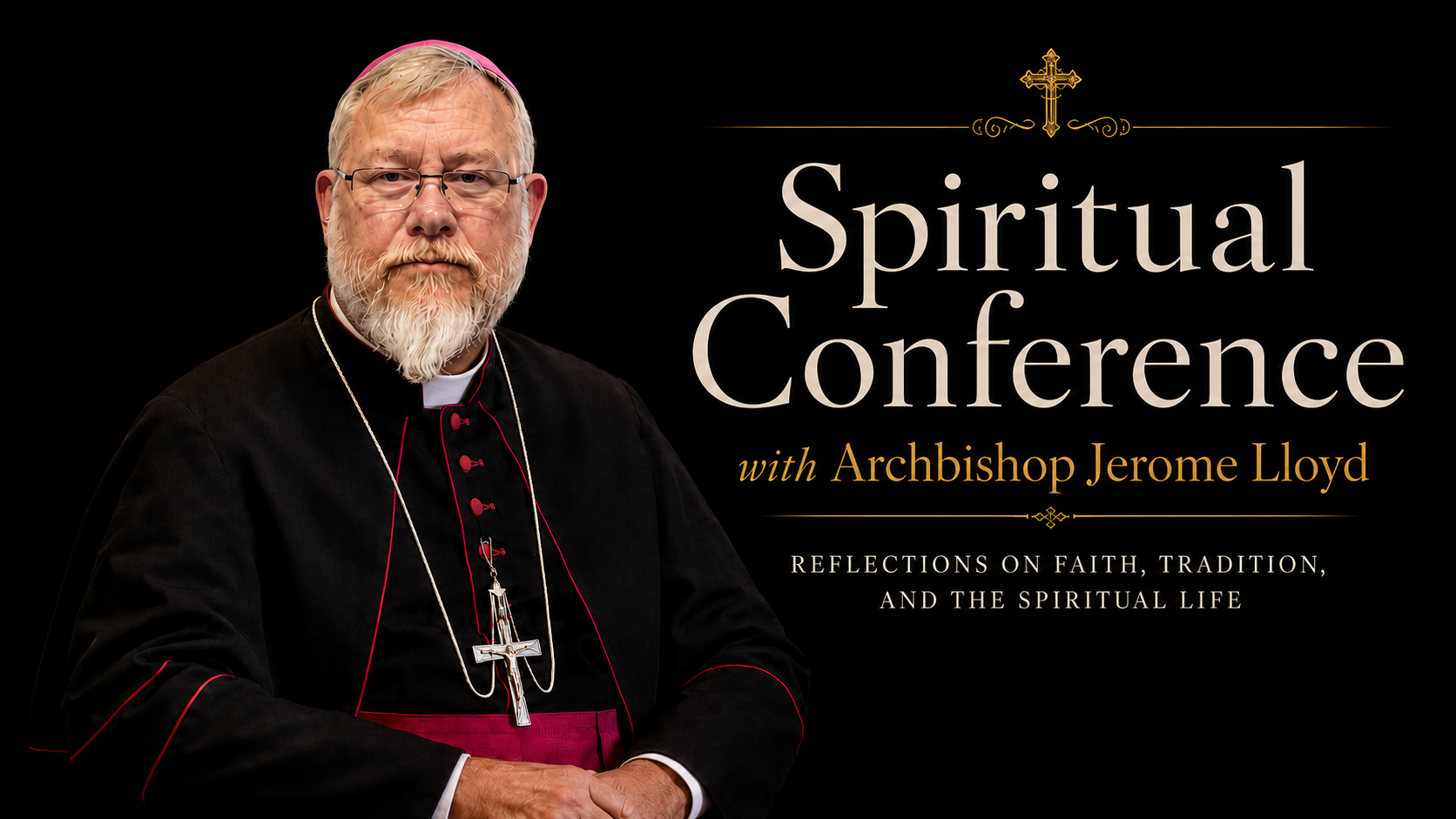
HOMILIST Mt Revd Jerome Lloyd OSJV

Ave Maria, gratia plena, Dominus tecum. Blessed art thou among women, and blessed is the fruit of thy womb, Jesus. Holy Mary, Mother of God, pray for us sinners, now and at the hour of our death. Amen.¹
Beloved in Christ, welcome to this broadcast Mass on the Feast of the Seven Holy Founders of the Servite Order. Seven men. Seven founders. A singular event in the history of the Church. All were men of noble lineage, men of standing and influence, yet they forsook the world and chose to live together in poverty, penance, and brotherly harmony. In seven bodies there was, as it were, but one soul. One rule of life. One Marian devotion. Even death did not divide them, for their bones rest together in a single coffin, so intermingled that they can no longer be distinguished.² Seven men — one heart.
They founded the Servite Order for a precise and demanding purpose: to cultivate the spirit of penance and to contemplate the Passion of Christ through the Seven Sorrows of His Mother. Their humility explains why their works are little known. Yet through preaching, home missions, and Marian devotion, they have benefited countless souls, leading generations of the faithful to stand with Mary beneath the Cross.³
The Breviary recounts that amid the violent factionalism and moral disorder of thirteenth-century Florence, God called these seven men from the nobility. In the year 1233 they met, prayed, and discerned together. The Blessed Virgin appeared to them, calling each individually to a more perfect life. Casting aside rank and wealth, clothed in sackcloth beneath worn garments, they withdrew to a small dwelling outside the city. They chose the eighth of September — the Nativity of Our Lady — to begin this new life, consecrating their conversion to her whose entire existence was ordered to God.⁴
Soon afterward, as they begged alms through the streets of Florence, they heard children cry out: Servants of Holy Mary. Among those children was Saint Philip Benizi, then an infant of only five months. From the mouths of children came the name by which the Church would know them.⁵
In time they withdrew further into solitude on Monte Senario, devoting themselves wholly to prayer, contemplation, and penance. Their Order was canonically approved, flourished across nations, and they themselves were canonised by Pope Leo XIII in 1888. Their charism endures to this day: devotion to Our Lady of Sorrows — the Mater Dolorosa, the Pietà — Mary standing at the foot of the Cross, her heart pierced as Simeon foretold.⁶
This devotion is not sentimental. It is profoundly theological. To contemplate the Sorrows of Mary is to contemplate the love of God made visible in Christ — a love wounded by sin, a love that suffers for redemption. One cannot truly contemplate the sorrow of the Mother without entering into the sorrow of the Son, whose Heart was pierced for the sins of the world.⁷
The Servites, by uniting themselves to the pierced Heart of Mary, bind themselves also to the Sacred Heart of Jesus — the Heart of Divine Mercy. And this, my brothers and sisters, is not the vocation of religious alone. Every Christian is called to unite himself to the love of God revealed in Christ, and therefore to share in the sorrow that accompanies the world’s need for redemption.⁸
We proclaim the Resurrection. But we cannot proclaim Easter while forgetting Good Friday. There is no risen Christ without the Crucified. Christ’s sacrifice upon the Cross is the one, perfect, and sufficient atonement for sin. Yet in His mercy, He allows His members to participate in that saving work by uniting their sacrifices to His. Thus we are drawn — not as equals, but as members — into the mystery of salvation itself.⁹
Much is said today about the title Co-Redemptrix in reference to Our Lady. Properly understood, this title affirms not equality with Christ, but singular participation under Him. In an analogous and subordinate sense, all Christians are called to cooperate in redemption — working with Christ, in Christ, and through Christ for the salvation of souls.¹⁰
When we venerate the martyrs, we recognise that their sufferings are united to Christ’s Passion. So too must we unite our own trials and tribulations to His Cross, offering them for the salvation of the world. This is the meaning of the Christian life as a living sacrifice.¹¹
Our Lord foretold this to the Apostles when He spoke of the chalice they would drink. They assented without fully understanding. We, with the clarity of history, know He was prophesying their martyrdom. We may not be called to shed our blood, but we are called daily to mortification — to die to self — that our sacrifices of love may unite us to the Passion of Christ and to the sorrowful fidelity of Mary.¹²
Our Lady stands before us as the perfect disciple. Her heart and mind were wholly attuned to the will of God. Nothing was withheld. Nothing refused. And the will to which she conformed herself was this: the salvation of souls.¹³
We must not deceive ourselves. Union with Christ does not spare us suffering. It sanctifies it. Physical weakness, emotional pain, spiritual trial — all remain. What is promised is not exemption, but eternal life. And this promise renders every suffering endurable.¹⁴
The saints were not spared testing. They embraced it. They neither fled suffering nor complained of it. They accepted it so as to be conformed more perfectly to Christ crucified.¹⁵
Saint Peter reminds us that no suffering of this present time compares with the glory that shall be revealed. The Christian life is a striving toward that perfection which will be fully realised only in the life to come. It is the restoration of harmony between God and creation, accomplished in the Incarnation and consummated on Calvary.¹⁶
Throughout history the Mystical Body of Christ has suffered persecution, martyrdom, and injustice — and it suffers still. Many of our brothers and sisters endure violence and death for the Name of Christ. We in the West may not yet be called to such witness, but we are called to fidelity.¹⁷
On the Feast of All Saints the Church is clothed in white, the ancient colour of martyrdom and resurrection. This is our hope: the resurrection of the body and life everlasting in Christ.¹⁸
Let us pray, then, that opening our hearts to the Holy Ghost, we may be emboldened — not to deny, not to renounce, but to confess and proclaim our unity with Christ in all circumstances. *It is no longer I who live, but Christ who lives in me.*¹⁹
If God is for us, who can be against us? Earthly powers may wound the body, but they cannot conquer the soul. Even the devil must bow at the holy Name of Jesus.²⁰
Let us therefore remain united to Christ upon the Cross, offering Him our sufferings and trials, that we may be transformed into His likeness. Following the Seven Holy Founders, and above all the example of Our Lady of Sorrows, may we unite our hearts with hers, so as to fulfil God’s will for our lives and attain the eternal crown of life with the Father, the Son, and the Holy Ghost.
Amen.
- Philippians 2:9–11; James 2:19.
- Luke 1:28, 42; traditional Ave Maria.
- Roman Breviary (1962), Feb. 12, historical lesson.
- Butler, Lives of the Saints, February 12.
- Acta Sanctorum, Feb. II; Servite tradition, 1233 apparition.
- Ibid.; life of Saint Philip Benizi.
- Luke 2:34–35; Feast of the Purification.
- John 19:34; Isaiah 53:3–5.
- John 19:25; devotion of the Two Hearts.
- Hebrews 10:10–14; Romans 12:1.
- Colossians 1:24; Pius X, Ad Diem Illum (1904).
- Galatians 2:20; Romans 8:17.
- Matthew 20:22–23; Acts of the Apostles.
- Luke 1:38; Council of Trent, Session VI.
- Romans 8:18; John 16:33.
- James 1:2–4; Trent, Session VI.
- 1 Peter 1:6–9; 2 Peter 3:13.
- Catechism of the Council of Trent, Creed, Art. IX.
- Revelation 7:9–14; early liturgical symbolism.
- Galatians 2:20.
Homilies Archive

Mass Propers


DAILY MASS ONLINE
One of the earliest online apostolates dedicated to the Traditional Latin Mass, Old Roman TV began broadcasting the Holy Sacrifice on the Feast of the Assumption, 15 August 2008. During the COVID-19 pandemic, additional programming — devotions, catechesis, and conferences — was added to support the faithful in prayer and formation.
Support the daily Holy Mass on Old Roman TV by offering a Mass intention — for loved ones, thanksgiving, or the repose of souls. Your intention helps sustain the sacred liturgy and brings grace to those you remember before God’s altar.
SUPPORT THE DAILY MASS ONLINE
Likely the world’s longest-running daily online broadcast of the
Traditional Latin Mass, streaming faithfully since the
Feast of the Assumption 2008.

This apostolate cannot continue without immediate help
Please support us with a contribution toward
chapel rent, sacristy supplies, operating costs, and web-hosting.
Our essential monthly costs reach £1,000.



Leave a Reply