
Universities Against the Law: Scotland’s Institutional Evasion Exposed
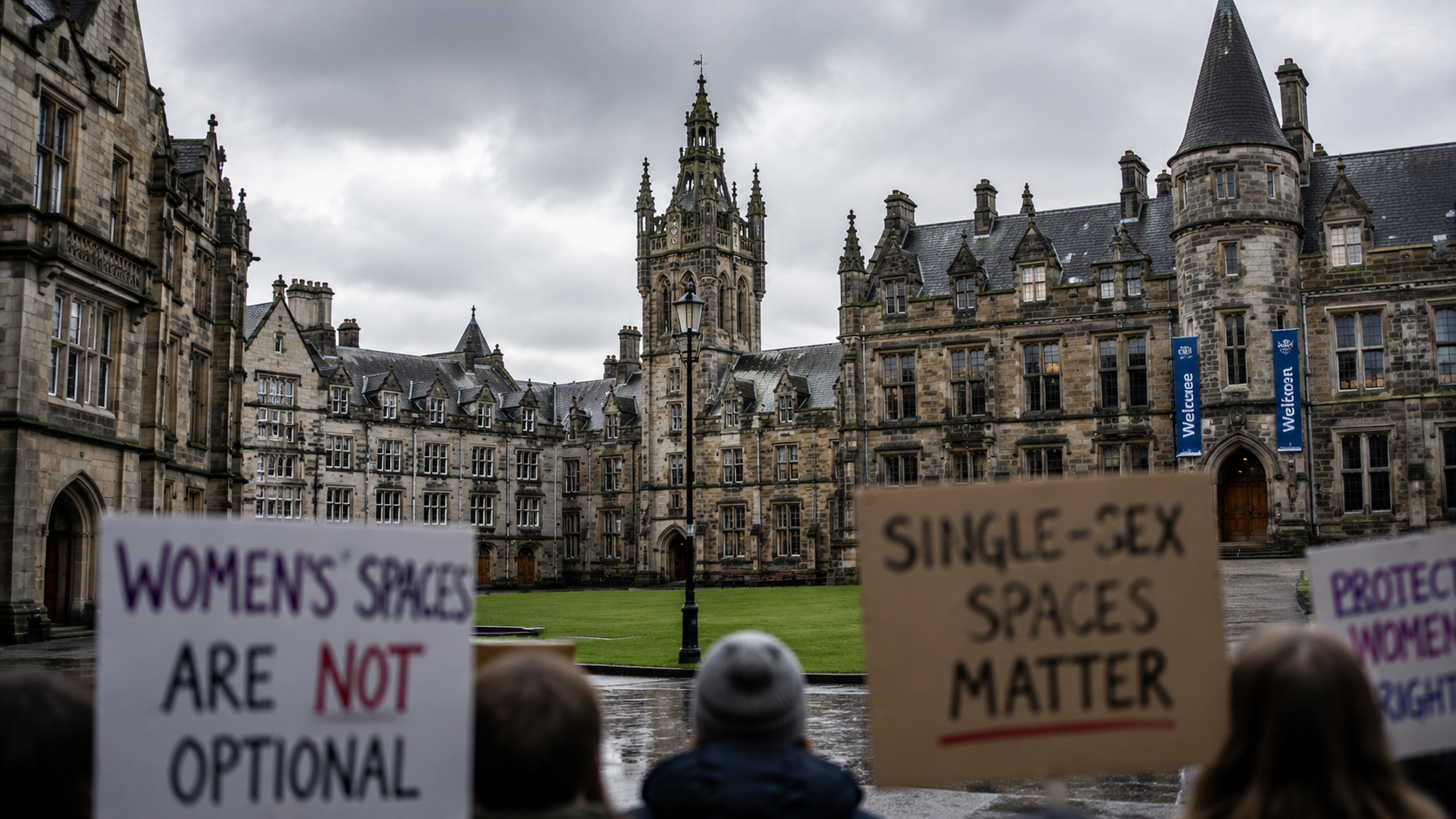
Scotland’s universities are not confused. They are exposed. Sixteen of the country’s seventeen institutions are reported either to maintain policies allowing gender-neutral access to single-sex spaces or to have no clearly stated position at all.¹ That is not a minor administrative gap. It points to a broader failure of governance in institutions expected to uphold the law, safeguard students, and exercise sound judgment.
The difficulty is not uncertainty. It is that the legal position has been clear for some time.

Law Clarified, Not Changed
The UK Supreme Court did not rewrite the Equality Act 2010. It clarified it. The meaning of “sex” within the framework of single-sex provisions—biological sex—was already embedded in the Act.² The Court’s role was not to introduce new obligations, but to restate what those obligations had always been.
That clarification aligns directly with the structure of the legislation. Schedule 3 has long allowed for single-sex services where this is justified by considerations such as privacy, dignity, and safety.³ These are not marginal concerns; they are the reasons such provisions exist. The legal framework itself has been stable, even if institutional practice has not.
The suggestion that universities were “waiting for guidance” deserves careful scrutiny. Guidance can assist with implementation, particularly in complex areas, but it does not determine whether the law applies. The Equality and Human Rights Commission has since made explicit that single-sex services should be understood and applied on the basis of biological sex.⁴ That clarification is useful. It does not, however, alter the underlying legal position.
The question, then, is not whether institutions had enough information, but how they chose to act on what was already available.
From Safeguarding to Preference
It is in this context that Fiona McAnena’s comment carries weight: “These universities are prioritising the feelings of young men who say they are women… The devastating message to women and girls is that they are second-class citizens.”¹ The phrasing is direct, but it reflects a concern that has been expressed more cautiously elsewhere.
Single-sex spaces exist because certain forms of privacy and safety depend upon clear boundaries. Changing rooms, student accommodation, and sporting environments all raise practical issues that the law has long recognised.⁵ Where those boundaries are blurred in practice, the protection they are meant to provide can become uncertain.
This is often framed as a question of balancing competing rights. In reality, the balance is only meaningful if the underlying categories remain stable. If those categories are treated as flexible, the balance itself becomes difficult to sustain.
Public Institutions, Public Consequences
Universities are not insulated from the rest of society. They educate those who will go on to work in schools, healthcare, public administration, and the law. The assumptions formed in these settings tend to carry outward.
This is why the issue has drawn political attention. Scottish Conservative MSP Meghan Gallacher has described the situation as “shocking,” arguing that public bodies are failing to follow the Supreme Court’s clarification.¹ The political dimension is inevitable, but it does not negate the underlying point: public institutions are expected to operate within the law.
Within the sector, there are signs that this is now being addressed. Universities Scotland has indicated that institutions are reviewing their policies in light of the clarified position.⁶ That process may well bring greater consistency. It also highlights how far practice had drifted from the statutory framework.
Where such gaps persist, legal and institutional consequences tend to follow. Duties relating to safeguarding and protected characteristics are not optional. Over time, they are enforced.
A Deeper Uncertainty
There is, however, a broader question beneath the immediate policy debate. Universities have historically understood their role as involving the pursuit and testing of truth—sometimes contested, often refined, but ultimately treated as something that can be known.
That assumption appears less settled than it once was.
When institutions struggle to articulate something as fundamental as the distinction between male and female—something that is both observable and legally defined—it suggests a degree of uncertainty that extends beyond this particular issue. Categories that were once taken for granted now require careful qualification.
That shift matters. Education depends, at least in part, on shared reference points—on the assumption that some things can be described clearly enough to be taught and understood. Where that clarity is lost, the task of education becomes less straightforward.
A Question of Responsibility
This leaves a more direct question. Universities are aware of the legal framework. They have access to guidance, advice, and expertise. The issue is not whether they can understand the law, but how they choose to apply it.
The law did not change. The responsibilities attached to it did not change. What has been in question is the consistency with which those responsibilities have been recognised in practice.
That is now beginning to be addressed. Whether the response proves sufficient remains to be seen.
What is clear is that institutions of this kind cannot remain indefinitely out of alignment with the legal and practical realities they are meant to navigate. Over time, those realities assert themselves. The only uncertainty is how quickly—and at what cost—that adjustment takes place.
¹ Mary Wright and John Glover, “Scottish universities slammed as only one has banned biological men from women’s spaces,” Scottish Daily Express, 26 May 2026.
² UK Supreme Court clarification of “sex” under the Equality Act 2010 in relation to single-sex provisions, as reflected in subsequent EHRC guidance and reporting.
³ Equality Act 2010, paragraphs 26–28.
⁴ Equality and Human Rights Commission, draft statutory guidance on single-sex services following Supreme Court clarification (2025–2026 consultation phase).
⁵ Equality Act 2010, Schedule 3; Explanatory Notes (privacy, dignity, safety).
⁶ Universities Scotland statement on reviewing institutional policies in light of EHRC guidance (as reported contemporaneously).
RELATED ARTiCLES


LATEST ARTICLES
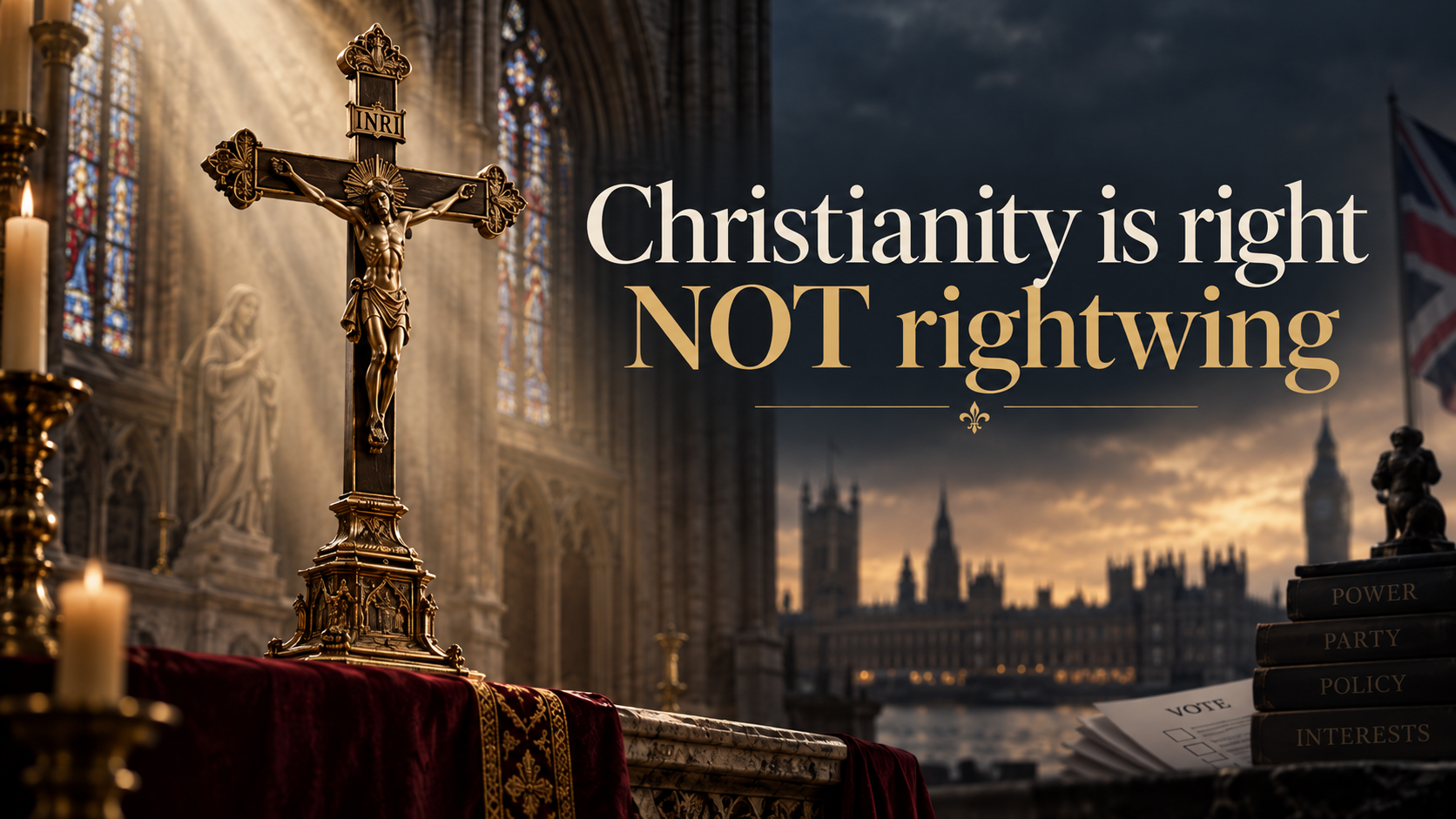
- Christianity Is Right ~ Not Right WingThe article discusses the distinction between Catholic orthodoxy and modern political ideologies, particularly the Right and Christian nationalism. It argues that Catholic beliefs about family, morality, and authority predate contemporary political classifications and should not be conflated with right-wing politics. The ordo amoris framework is presented as a guiding principle for evaluating political alliances while maintaining a focus on the common good and the Social Kingship of Christ.
- Today’s homily: The Nativity of the Blessed Virgin MaryThe Nativity of the Blessed Virgin Mary marks a significant moment in salvation history, representing the dawn of the Incarnation. Mary’s birth, unnoticed by the world, was part of God’s providential plan leading to Christ. This feast invites reflection on humility, obedience, and trust in God’s will, emphasising Mary’s role as the Mother of the Redeemer.
- Today’s Mass: September 08 The Nativity of the Blessed Virgin MaryThe Nativity of the Blessed Virgin Mary celebrates her birth, symbolising a new beginning tied to salvation. Originating in the East, it gained recognition in Rome under Pope Sergius I. Additionally, the feast commemorates Saint Hadrian, a martyr who converted to Christianity, underscoring themes of faith and redemption.
- Sermon for Nativity of Blessed Virgin MaryToday, we celebrate the Nativity of the Blessed Virgin Mary, honouring her unique role as the mother of Jesus Christ, the Word made flesh. The Church venerates her not for independent greatness, but for her obedience and special connection to Christ, revering her as a vital figure in salvation history and Christian faith.
- The Dawn of Salvation: The Nativity of the Blessed Virgin MaryOn 8 September, the Church celebrates the Nativity of the Blessed Virgin Mary, heralded as the beginning of salvation. This feast underscores Mary’s unique role as the Mother of God, prepared by grace for the Incarnation of Christ. It acknowledges her obedience as the New Eve, integral to the divine plan of redemption.
CURRENT EDITION


DAILY MASS ONLINE
One of the earliest online apostolates dedicated to the Traditional Latin Mass, Old Roman TV began broadcasting the Holy Sacrifice on the Feast of the Assumption, 15 August 2008. During the COVID-19 pandemic, additional programming — devotions, catechesis, and conferences — was added to support the faithful in prayer and formation.
Support the daily Holy Mass on Old Roman TV by offering a Mass intention — for loved ones, thanksgiving, or the repose of souls. Your intention helps sustain the sacred liturgy and brings grace to those you remember before God’s altar.
SUPPORT THE DAILY MASS ONLINE
Likely the world’s longest-running daily online broadcast of the
Traditional Latin Mass, streaming faithfully since the
Feast of the Assumption 2008.

This apostolate cannot continue without immediate help
Please support us with a contribution toward
chapel rent, sacristy supplies, operating costs, and web-hosting.
Our essential monthly costs reach £1,000.
MASS INTENTIONS
If your offering is for a Mass Intention, kindly complete the form below in full so we may correctly match it to your donation. For anniversary intentions — birthdays, wedding anniversaries, anniversaries of death — please be sure to include the relevant date.


Today’s Mass Propers
- Today’s Mass: September 08 The Nativity of the Blessed Virgin Mary
 The Nativity of the Blessed Virgin Mary celebrates her birth, symbolising a new beginning tied to salvation. Originating in the East, it gained recognition in Rome under Pope Sergius I. Additionally, the feast commemorates Saint Hadrian, a martyr who converted to Christianity, underscoring themes of faith and redemption.




Leave a Reply