

Rome’s Synodal Process Reaches 2028 — and Begins Again
The Synod on Synodality concluded in October 2024. Its implementation now proceeds through diocesan, national and continental assemblies to a Vatican gathering in October 2028. Yet Rome already describes that gathering as a “relaunch” of synodal conversion. The programme has acquired a permanence that has not been matched by clarity about its authority, doctrinal boundaries or missionary results.

The Synod on Synodality closed on 26 October 2024. Its Final Document was approved, handed to Pope Francis and accepted by him as part of the papal magisterium. No post-synodal apostolic exhortation followed. The assembly had completed the work for which it had been convened.
Rome has since drawn up another four-year programme.
Dioceses and eparchies are to hold evaluation assemblies during the first half of 2027. National and regional assemblies will follow later that year. Continental gatherings will meet during the opening months of 2028. An ecclesial assembly in the Vatican in October 2028 will then receive the accumulated reports and mark what the General Secretariat of the Synod calls a “fundamental milestone” in the implementation process.¹
The stages have been given their own titles: Recollecting, Interpreting, Orienting and Celebrating. The terminology is neat, the timetable exact and the administrative responsibilities carefully distributed.
What remains uncertain is whether anything will actually end.
The General Secretariat says that each assembly, including the final gathering in Rome, is to become “a moment of celebration, evaluation, synthesis and, above all, a relaunch of the Church’s synodal conversion”. Those selected to participate are expected to be willing to sustain the process beyond 2028.² The implementation phase may therefore conclude, but its institutional product is intended to continue.
Miguel Escrivá, writing in InfoVaticana, calls this the “endless synod of synodal synodality”. The phrase sounds like satire because the official programme already borders upon self-parody. A synod that concluded in 2024 is now being implemented through assemblies that will evaluate its implementation, transmit reports on the experience and culminate in a further assembly whose stated purpose includes relaunching the enterprise.³
The Church has held synods for centuries without treating consultation as an end in itself. A synod was convoked to address identifiable matters. It deliberated under legitimate authority, produced its acts and closed. The present process is different. Synodality is no longer merely a method by which pastors consult the faithful or bishops assist the Roman Pontiff. It is being established as an enduring administrative culture, complete with its own teams, facilitators, formation programmes, technical vocabulary and recurring cycles of evaluation.
This was not hidden at the beginning. The General Secretariat explained that the purpose was never to provide a temporary or one-time experience. The objective was a long-term transformation in the Church’s manner of living and acting.⁴ The assemblies of 2023 and 2024 were therefore less a completed event than the inauguration of a system.
That system is now being evaluated largely on its own terms.
A question that presumes the verdict
The common question prepared for the assemblies of 2027 and 2028 is revealing:
“What concrete form is the synodal missionary Church taking, and what new paths of synodality are emerging in your community?”
The wording does not ask whether the synodal project has strengthened the Church’s mission, whether it has justified the resources devoted to it, or whether its continuation is prudent. It assumes that a “synodal missionary Church” is already taking concrete form and that new paths of synodality are emerging. The participating Churches are asked to identify and report them.⁵
Difficulties may doubtless be mentioned, but the permissible difficulty is likely to be one encountered along the synodal road. There is little space for the judgement that the road itself has led nowhere useful, or that the faithful have become weary of consultations whose conclusions appear remote from parochial life.
A genuine evaluation would allow less convenient findings. A bishop might discover that the communities most successful in transmitting the Faith have engaged only marginally with the synodal programme. A parish priest might report that his people require clear preaching, regular confession and a worthy celebration of Mass more urgently than another facilitated discussion. A religious superior might observe that houses possessing a stable rule and unmistakable identity attract vocations, while communities most accomplished in institutional dialogue continue to close.
Such evidence would not disprove every use of synodality. It would challenge the assumption that the Church’s missionary weakness arises from insufficient participation in synodal structures.
The common question avoids that challenge. It asks where synodality is growing, rather than whether its growth has renewed Catholic life. The programme is thus permitted to provide the standard by which its own success will be measured.
Consultation and authority
There is nothing un-Catholic about consultation. A bishop who knows little of the condition of his clergy and people will govern badly. Priests possess pastoral knowledge that cannot be acquired from diocesan reports. Lay Catholics may bring professional competence and experience of marriage, family life and public affairs which ecclesiastical officials lack.
The Church has always consulted through councils, synods, chapters, consistories and the ordinary exchange between pastors and their people. Nor must every advisory group be separately named in the Code of Canon Law before it may lawfully exist.
The difficulty concerns scale, permanence and accountability.
Synodal teams now operate at diocesan, national and continental levels. They help to prepare assemblies, select or form participants, gather contributions and draft the texts transmitted to the next stage. The General Secretariat supplies common questions, methods and materials, while the resulting reports move through an international sequence towards Rome.⁶
None of this gives a synodal team ordinary jurisdiction. It nevertheless gives its members considerable practical influence. Whoever chooses the participants, frames the discussion, classifies the responses and composes the synthesis helps to determine what will later be presented as the discernment of a local Church.
The bishop retains responsibility and must approve the final report. That protection is important. Yet his signature is applied after the process has already shaped the material before him.
Canon law defines diocesan synods, presbyteral councils, pastoral councils, particular councils and episcopal conferences because authority and responsibility must be identifiable. The faithful should know who decides, who advises and who may be held accountable when a procedure is mishandled. The new synodal architecture possesses influence without an equally clear juridical identity.
That ambiguity carries advantages for those directing the process. A conclusion may exert moral pressure while remaining formally consultative. A recommendation may be presented as the fruit of listening throughout the Church without possessing the legal character that would invite precise questions about competence, promulgation and recourse.
The Church risks acquiring a parallel system of influence: powerful enough to shape episcopal decisions, but informal enough to escape the discipline imposed upon recognised organs of government.
The men who already listen
The Vatican guidelines call for particular attention to the involvement of parish priests. The provision is welcome. Its necessity is also rather revealing.
The parish priest is not one interest group among several. He carries the ordinary cure of souls. He baptises children, instructs converts, offers Mass, hears confessions, prepares couples for marriage, visits the sick and buries the dead. He knows whether Catholics understand the Real Presence, whether parents are transmitting the Faith and whether a pastoral initiative has survived contact with reality.
Yet the synodal process has often appeared more congenial to those fluent in the language of facilitation, inclusion, accompaniment and “emerging pathways” than to priests occupied with parochial ministry. The latter must be specially encouraged to participate, while a new ecclesiastical profession develops around the structures established to hear them.
There are now synodal coordinators, continental synodal teams, formation programmes, schools of synodality and meetings dedicated to the management of later synodal meetings. None of this proves bad faith. Many of those involved sincerely expect the process to renew the Church. Institutions nevertheless tend to generate specialists whose expertise depends upon their continuation.
The parish priest brings another difficulty. His ministry is stubbornly concrete. He knows that error is not always the expression of an unheard experience, that welcome does not require assent, and that accompaniment which never approaches repentance has ceased to be pastoral. He deals with souls rather than categories and must give an account of their care before God.
A process designed to achieve convergence may be uncomfortable with judgements that cannot be harmonised. Parish ministry cannot avoid them.
“Conversation in the Spirit” and the claims of truth
The Synod’s preferred method, “conversation in the Spirit”, asks participants to speak, listen, remain silent and reflect upon what has resonated within the group. Used prudently, it may restrain vanity and reduce the tendency of ecclesiastical meetings to become competitions in prepared speeches.
Silence, however, cannot decide a theological dispute.
When an assembly approaches questions concerning Holy Orders, marriage, sexual morality, sacramental discipline or the constitution of the Church, the experiences of participants cannot be the final criterion. Terms must be defined, propositions examined and authoritative teaching brought to bear. A widely shared claim may be sincere and pastorally poignant while remaining incompatible with the Catholic Faith.
The Church does not begin discernment from an empty page. She has received a deposit of faith by which claimed inspirations, pastoral proposals and institutional experiments must be judged. The Holy Ghost assists her to preserve and proclaim what Christ entrusted to the Apostles. He does not contradict His prior work whenever a listening group discovers a new convergence.
The distinction between doctrine, discipline and prudential practice is therefore indispensable. Recent synodal discussion has too often allowed them to mingle. Matters settled by divine revelation have appeared beside questions open to ecclesiastical reform, creating the impression that all remain subject to the same process of communal reconsideration.
No formal denial is necessary when a doctrine can be obscured by qualifications, exceptional cases and prolonged discussion. What the Church continues to teach may gradually cease to govern what she permits.
A method intended to prevent acrimony must not prevent contradiction when contradiction is required. The Fathers of the Church were capable of listening. They also knew that charity sometimes demands the word no.
The bishop and the machinery
Nothing in the published programme formally deprives a diocesan bishop of his authority. He remains the pastor and governor of his particular Church, possessing ordinary, proper and immediate power according to law. He is responsible for the diocesan assembly and approves its final texts.
The danger is not an open abolition of episcopal government.
The bishop is asked to exercise his authority within a programme whose timetable, common question, terminology and reporting structure have already been prepared. He is assisted by a synodal team trained in the preferred method and expected to transmit the diocese’s experience into national, continental and Roman stages.
His canonical freedom remains, but the approved meaning of a responsible decision has already been coloured. A bishop who promotes the process is praised for listening, participation and openness to the Spirit. One who judges it unfruitful may appear resistant to those very goods.
No decree is required. Ecclesiastical expectations can exert pressure more delicately than law, and sometimes more effectively.
The episcopal office is personal. A bishop is not a regional manager implementing a pastoral programme drawn up elsewhere. He is a successor of the Apostles, charged to guard the Faith, sanctify his people and govern the particular Church entrusted to him. Consultation should assist that responsibility. It must not create an administrative environment in which his exercise of it is continually judged by conformity to a process whose value remains disputed.
Synodality is frequently presented as a remedy for clericalism. It may instead weaken visible and accountable authority while increasing the influence of officials who possess neither sacred office nor ordinary jurisdiction.
The uncertain assembly of 2028
The gathering scheduled for October 2028 is described as an “ecclesial assembly”. It is not another ordinary session of the Synod of Bishops. It is not an ecumenical council, a particular council or an episcopal conference. Its composition is intended to represent the diversity of vocations, ministries and charisms within the Church.
The participation of priests, religious and laymen in a consultative gathering is not objectionable. What requires clarification is the assembly’s place within the government of the universal Church.
How will its members be selected? What proportion will belong to the episcopal order? Will participants vote, and upon what? What authority will attach to the final synthesis? How will its proposals relate to the Synod of Bishops, the Roman Curia and the ordinary jurisdiction of diocesan bishops?
These are practical ecclesiological questions. An assembly need not legislate in order to acquire immense authority. If its conclusions are presented as the product of consultation running from the local Churches through national and continental bodies to Rome, opposition may readily be described as refusal to hear the People of God.
The experience of recent years has shown how this works. A proposal is first presented as one voice among many. It later appears as a request repeatedly heard during consultation. It then returns as an expression of the Church’s synodal discernment. By the time authority acts, the direction has acquired the appearance of inevitability.
Before October 2028, Pope Leo XIV should define the assembly’s status, competence and relationship to episcopal government. An institution intended to influence the future life of the Church should not depend upon carefully managed implication.
Mission must provide the judgement
Leo XIV has supplied the correct criterion. Opening the extraordinary consistory on 26 June 2026, he said that the themes before the cardinals, including synodality, converged upon a single question: how the Churches might proclaim the Gospel with greater fidelity, freedom and credibility. Mission, he said, is the Church’s reason for existing and must guide her discernment.⁷
The synodal programme should be examined accordingly.
Has it brought more souls to baptism and conversion? Has it strengthened belief in the Holy Eucharist? Has it increased confessions, vocations and Catholic marriages? Has it enabled bishops to teach more clearly or priests to preach with greater confidence? Have dioceses most committed to synodal structures shown a corresponding revival in sacramental practice?
Spiritual fruit cannot always be reduced to statistics, and the answer will differ from place to place. Yet some evidence is required before a pastoral method is made an enduring characteristic of ecclesial government.
The creation of a synodal team is not evidence of evangelisation. The production of a report is not a missionary result. An assembly at which participants felt respected may have achieved something humanly worthwhile, but it has not necessarily strengthened faith or converted a single soul.
Mission must judge synodality. The order cannot be reversed by defining mission as the construction of a more synodal Church.
Christ sent the Apostles to teach all nations, baptise them and command them to observe whatsoever He had taught. The Church listens because she must preach that Gospel to real men and women in their actual circumstances. She does not listen in order to determine which parts of the Gospel remain acceptable to the age.
Leo XIV’s responsibility
Leo XIV did not devise the Synod on Synodality. Francis convoked it, shaped its method, appointed its principal officials and opened the implementation phase. Any fair assessment must acknowledge the inheritance.
Leo has nevertheless assumed responsibility for its continuation. The General Secretariat states that the implementation phase was “confirmed and promoted” by him. He has encouraged the journey towards the 2028 assembly, met those directing its continental stages and placed synodality among the matters considered by the College of Cardinals.⁸
The assembly of 2028 will belong to his pontificate.
He can preserve whatever legitimate consultation the process has encouraged while correcting its weaknesses. He can require that doctrinal questions be distinguished from disciplinary and prudential matters. He can establish clear accountability for synodal teams, protect the proper authority of diocesan bishops and ensure that parish priests are treated as pastors rather than invited witnesses to an administrative exercise.
He can also insist that the Church be asked a better question. Instead of merely identifying new paths of synodality, the assemblies should establish whether those paths have led souls more securely to Christ, Catholic doctrine and the sacramental life.
The Pope must finally explain what will end in October 2028.
A process without a genuine terminus is difficult to judge. Failure can always be attributed to incomplete implementation. Criticism can be answered with another phase of listening. The absence of fruit becomes evidence that further formation in the method is required.
The word “relaunch” therefore matters. It indicates that the October assembly is not being prepared simply as the completion of a defined task. It is intended to carry the Church from a temporary implementation phase into a permanent synodal condition.
That intention demands scrutiny because the crisis confronting the Church is neither procedural nor obscure. Across much of Europe, sacramental practice has collapsed. Children grow up without catechesis. Religious communities disappear, dioceses struggle to provide priests, and large numbers of Catholics no longer understand doctrines once taught in childhood. Many have ceased to believe that the Church possesses authority to teach at all.
The institutional confidence invested in further assemblies appears strangely detached from that emergency.
The Church certainly requires reform. She needs bishops who govern, priests who preach, religious who observe their rules, parents who transmit the Faith and Catholics willing to convert their lives. She needs worthy worship, doctrinal clarity and the courage to call sinners to repentance without ever despairing of grace.
Consultation may serve these ends. It cannot replace them. Still less should it become an ecclesiology in which the Church’s received constitution is treated as material for permanent communal reassessment.
The Synod ended in 2024. Its implementation is scheduled to culminate in 2028. If the final result is another relaunch, Rome will have proved that synodality can perpetuate itself. It will not yet have proved that it can renew the Church.
Before the system becomes permanent, that judgement must be made.
- General Secretariat of the Synod, “Towards the Ecclesial Assembly in October 2028”, 20 May 2026; Leo XIV, Address at the Conclusion of the Meeting with the Cardinals, 10 January 2026.
- General Secretariat of the Synod, “Towards the Ecclesial Assembly in October 2028: Guidelines Published for the Process of Implementing the Synod on Synodality”, 20 May 2026; General Secretariat of the Synod, Towards the Assemblies 2027–2028: Stages, Criteria and Tools for Preparation, 20 May 2026.
- General Secretariat of the Synod, “Towards the Ecclesial Assembly in October 2028”, 20 May 2026.
- Miguel Escrivá, “The Endless Synod of Synodal Synodality Assembly”, InfoVaticana, 28 July 2026.
- General Secretariat of the Synod, official explanation of the long-term purpose of the Synod on Synodality; see also Pathways for the Implementation Phase of the Synod.
- General Secretariat of the Synod, Towards the Assemblies 2027–2028, common question for the evaluation process.
- General Secretariat of the Synod, “Heads of Continental Bodies Gather in Rome for Three Days of Work on the 2027–2028 Assemblies”, 22 June 2026; “A Sign of Support and Encouragement”, 26 June 2026.
- Leo XIV, Address at the Opening Session of the Extraordinary Consistory, 26 June 2026.
RELATED ARTiCLES


LATEST ARTICLES
- QUI BENE DISTINGUIT, BENE DOCET ~ He who distinguishes well, teaches well: Spiritual Conference for Nuntiatoria CXXIIIIn a series of Tuesday conferences, the speaker explores themes about recognising reality, receiving divine gifts, and understanding spiritual truths. He highlights the importance of making careful distinctions to maintain sound judgment, especially in an age consumed by distractions and superficial assessments. True wisdom lies in distinguishing truth from perception and nurturing an authentic inner life centred on Christ.
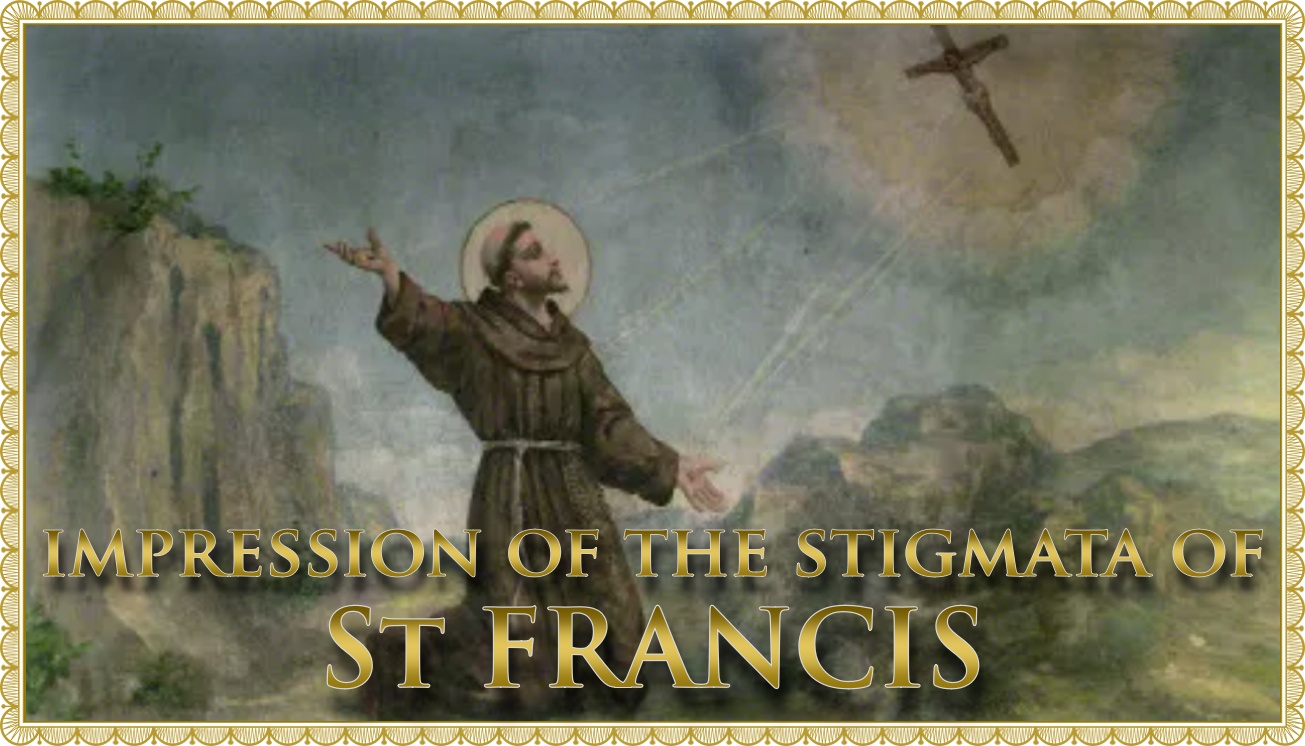
- Today’s homily: Impression of the Stigmata upon St FrancisFrom serving the lepers he once shunned to receiving Christ’s wounds upon Mount Alvernia, Saint Francis shows how grace transforms a soul through obedient love. His stigmata call us to let the Cross shape our lives, beginning with the particular act of mercy or sacrifice we have been reluctant to offer.
- Today’s Mass: September 17 Impression of the Stigmata of St Francis of AssisiSaint Francis received the stigmata because he had first allowed the Cross to transform his soul. His wounds were not a spectacle, but God’s answer to a world growing cold: the visible sign of a life consumed by crucified love. We may never bear Christ’s wounds in our flesh, but we must bear their likeness through penance, fidelity, patience, mercy and sacrificial love.
- Sermon for Stigmata of St. FrancisToday marks the feast of St. Francis’ stigmata, celebrating his transformation from a wealthy merchant’s son to a devoted preacher of poverty and humility. He founded the Franciscan order, emphasising evangelisation and simplicity. His experience of receiving the stigmata exemplifies the Christian doctrine of redemption through suffering, distinguishing it from other faiths.
- Today’s homily: Wednesday Michaelmas EmberThe homily reflects on the significance of fasting and prayer in the Christian faith, emphasising their role in spiritual growth and self-mastery. By juxtaposing scripture from Amos and the Gospel of Mark, it highlights the need for gratitude and humility during abundance, urging believers to recognise their dependence on God. True repentance transforms and restores one’s relationship with Him.
CURRENT EDITION


Today’s Mass Propers
- Today’s Mass: September 17 Impression of the Stigmata of St Francis of Assisi
 Saint Francis received the stigmata because he had first allowed the Cross to transform his soul. His wounds were not a spectacle, but God’s answer to a world growing cold: the visible sign of a life consumed by crucified love. We may never bear Christ’s wounds in our flesh, but we must bear their likeness through penance, fidelity, patience, mercy and sacrificial love.



Leave a Reply