

The Society of Saint Pius X in Japan: A Mission of Fidelity and Quiet Growth
The mission of the Society of Saint Pius X in Japan stands as a striking example of apostolic endurance under conditions of both cultural marginality and ecclesial disorientation. Its history is not one of institutional expansion, but of fidelity—fragile in its beginnings, deliberate in its development, and increasingly rooted through the providential convergence of local initiative and missionary perseverance.
The origins of the apostolate can be traced to the foresight of Fr. R. P. Nanasaki of Nagoya, a scholar and priest devoted to the traditional Roman Rite. Sensing both the doctrinal confusion and liturgical rupture emerging in the wake of the Second Vatican Council, and conscious of his approaching death, he urged his parishioners to appeal directly to Archbishop Marcel Lefebvre to send priests to Japan.¹ This appeal—at once local and prophetic—would form the seed of the Society’s presence in the country.
The first response came in 1978, when a priest of the Society, then Fr. Richard Williamson, travelled to Japan and offered Mass.² Yet this initial gesture did not immediately yield stability. The next Mass would not be celebrated until 1985, and for several years thereafter, the faithful depended on sporadic visits from priests travelling from Australia.³ These early decades were marked by discontinuity, underscoring the difficulty of sustaining a traditional apostolate in a country where Catholicism itself is numerically and culturally marginal.
A decisive turning point came with the vocation and ordination of Fr. Thomas Onoda, whose life both reflects and shapes the trajectory of the mission. A convert to the Faith, he was baptised on Christmas Day 1980 after a rigorous year of catechesis, sacramental preparation, and disciplined participation in parish life.⁴ His formation under Fr. Joseph Marie Jacq—himself a priest of notable liturgical continuity, despite operating within the framework of the Novus Ordo Missae—exposed him early to the tensions within the post-conciliar Church.⁵
Fr. Jacq’s insistence on reverence, doctrinal clarity, and traditional devotional life placed him at odds with diocesan trends, eventually leading to his removal after decades of service.⁶ For the young Onoda, this rupture proved formative. It awakened an awareness of what he would later describe as the “crisis in the Church,” and led him, during his university years in Tokyo, to discover the Traditional Latin Mass.⁷
Encouraged by his former pastor, he entered the seminary at Ecône, where he found not merely formation, but what he described as a spiritual home—centred on the daily celebration of the traditional liturgy and the solemn rhythm of the Divine Office.⁸ Ordained in 1993 by Bishop Alfonso de Galarreta, he was assigned to Manila, from where he began regular missionary journeys to Japan, laying the groundwork for a more stable apostolate.⁹
From this point onward, the mission entered a phase of gradual consolidation. With the presence of a native Japanese priest, monthly Masses were established in Tokyo and Osaka, providing fixed centres of worship and community.¹⁰ By 2017, Tokyo had two Sunday Masses per month, while Osaka secured a permanent rented chapel dedicated to the Immaculate Heart of Mary.¹¹
Alongside sacramental ministry, Fr. Onoda undertook extensive intellectual work, translating key theological and magisterial texts into Japanese—including Quanta Cura, Pascendi Dominici Gregis, Quas Primas, and Humani Generis.¹² This effort reflects a strategic recognition that the evangelisation of Japan requires not only liturgical presence, but doctrinal clarity articulated within the intellectual framework of the culture itself.
The mission also developed a structured spiritual life: Ignatian and Montfortian retreats, annual pilgrimages to Akita drawing dozens of faithful, and ongoing devotional practices centred on reparation and Marian spirituality.¹³ These initiatives reveal an apostolate that is not merely reactive, but intentionally formative—seeking to cultivate a coherent Catholic life grounded in prayer, sacrifice, and doctrinal integrity.
This steady development reached a new stage in January 2021 with the erection of the Stella Maris Priory in Omiya, north of Tokyo. With resident clergy—including Fr. Thomas Onoda, Fr. Étienne Demornex (later succeeded by Fr. Benoît Wailliez), and Fr. Yvon Fillebeen—the Society’s presence in Japan achieved a permanence long absent from its earlier history.¹⁴
Today, the community remains small: approximately 120 faithful in Tokyo and 60 in Osaka, with additional irregular Masses in Nagoya and Sapporo.¹⁵ Yet such figures must be understood within the broader demographic reality: Catholicism in Japan comprises roughly 0.3–0.4% of the population.¹⁶ In this context, the existence of a traditional apostolate—marked not only by stability but by conversions, baptisms, and vocations—constitutes a significant achievement.
Fr. Onoda’s own analysis of the challenges facing the Faith in Japan is both historical and theological. While the early Church in Japan experienced rapid growth following the missionary work of Francis Xavier, it was later suppressed through persecution and prohibition.¹⁷ In the modern period, however, the principal obstacle is not external hostility but internal ambiguity. If the Church presents herself as one path among many—if she appears to concede that other religions suffice for salvation—then the missionary imperative collapses.¹⁸
This diagnosis is particularly acute in the Japanese context, where Christianity is already perceived as foreign. Without doctrinal clarity and missionary conviction, the Faith struggles not merely to grow, but to justify its own existence.
Yet the mission draws strength from a deeper source: the witness of the Japanese martyrs. Their fidelity in the face of persecution, and their response to apostasy through prayer and reparation, provide a model for the present age.¹⁹ This spiritual orientation finds expression in the life of the SSPX communities, where acts of reparation, devotion to Our Lady of Fatima apparitions and Our Lady of Akita apparitions, and a theology of sacrificial love remain central.
Despite these developments, significant challenges remain. Chief among them is the absence of a permanent church in Tokyo. The faithful continue to gather in provisional spaces, lacking both stability and visibility. The aspiration to establish a dedicated church is therefore not merely practical, but symbolic: it would represent the rooting of tradition in a land where it has long struggled to take institutional form.²⁰
For now, this remains a hope rather than a reality. Yet the history of the mission demonstrates that what begins in fragility may, through perseverance, acquire permanence. Sustained by prayer, sacrifice, and the quiet fidelity of its faithful, the SSPX apostolate in Japan continues—small in number, yet significant in witness, and firmly oriented toward the restoration of the Faith in its traditional fullness.
¹ SSPX Asia, History of the SSPX in Japan, district mission summary.
² Ibid.
³ Ibid.; SSPX Asia missionary itineraries (1978–1987).
⁴ SSPX.org, “Interview with Fr. Thomas Onoda,” 4 May 2017.
⁵ Ibid.
⁶ Ibid.
⁷ Ibid.
⁸ Ibid.
⁹ Ibid.; SSPX ordination records (Ecône, 1993).
¹⁰ SSPX Asia mission reports (1993 onward).
¹¹ SSPX.org, “Interview with Fr. Thomas Onoda,” 2017; SSPX Asia district reports (2016–2017).
¹² SSPX.org, “Interview with Fr. Thomas Onoda,” 2017.
¹³ Ibid.
¹⁴ SSPX Asia, “Erection of Stella Maris Priory, Omiya (Japan), January 2021.”
¹⁵ SSPX Asia mission statistics (2023–2025).
¹⁶ Catholic Bishops’ Conference of Japan; Vatican Annuarium Statisticum Ecclesiae.
¹⁷ Historical mission records of Francis Xavier; Japanese edicts under Toyotomi Hideyoshi (1587).
¹⁸ SSPX.org, “Interview with Fr. Thomas Onoda,” 2017.
¹⁹ Ibid.; historical accounts of the Japanese martyrs and the apostasy of Cristóvão Ferreira.
²⁰ SSPX Asia appeals regarding the establishment of a permanent church in Tokyo.
Related Articles


Latest Articles
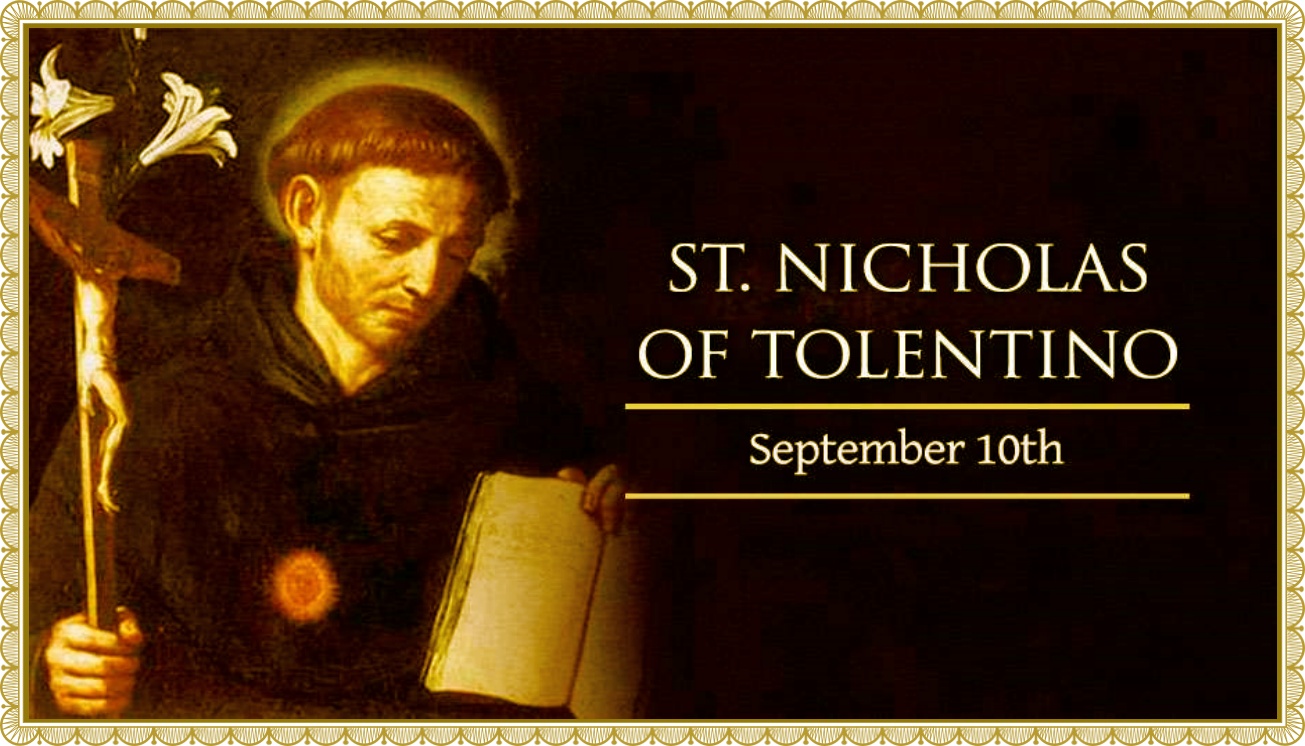
- Today’s homily: St Nicholas TolentinoThe reflection celebrates Saint Nicholas of Tolentino, emphasising that holiness is achieved not through personal efforts but through grace. It highlights his life of service, prayer, and self-discipline, suggesting that his true sanctity stems from dependence on God. The message reinforces the importance of a single-hearted focus on God in one’s spiritual journey.
- Today’s Mass: September 10 St Nicholas of TolentinoSaint Nicholas of Tolentino, born around 1246 in Italy, became a devout Augustinian hermit known for his piety and dedication to preaching. He spent his later years in Tolentino, promoting virtue, and maintaining his chastity until his death in 1306. Canonised in 1446, his tomb is revered by the faithful.
- Sermon for St. Nicholas of TolentinoToday we honour St. Nicholas of Tolentino, who lived from 1245 to 1305. Abiding in Tolentino, he dedicated his life to ministry, healing, and reconciliation amidst societal discord. A member of the Augustinian order, he exemplified service without seeking fame, inspiring others to witness their faith in everyday life.
- Today’s Mass: September 09 Day II in the Octave of The Nativity of the Blessed Virgin MaryThe feast of Our Lady’s Nativity, of ancient Eastern origin and established at Rome by the time of Pope St Sergius I, celebrates Mary as the immaculate New Eve and the dawn of salvation, the chosen tabernacle from whom the Redeemer would take His flesh. Today the Church also commemorates St Gorgonius, an officer of the imperial household at Nicomedia who, with his companion Dorotheus, embraced the Faith and suffered martyrdom under Diocletian in A.D. 303; his relics were later translated to Rome.
- NOMEN MANET, RES DEEST ~ The Name Remains; the Reality Is Lacking: Spiritual Conference for Nuntiatoria CXXIIThe content emphasises the disconnect between the names associated with Catholicism and the actual practices of faith. It highlights the importance of embodying belief through genuine actions, urging self-examination rather than mere external observance. Ultimately, it advocates for a restoration of sincerity in faith, calling individuals to authentically reflect their beliefs through their lives and worship.




Leave a Reply