

Cardinal Burke and the Limits of Conservative Resistance
His critique of synodality is compelling. His refusal to examine the conciliar and liturgical roots from which it grew is not.

Few living cardinals have defended the traditional Roman liturgy more conspicuously than Cardinal Raymond Burke. Few have now criticised synodality more forcefully. Yet these two facts expose the central tension in his position: he condemns the latest fruits of the conciliar and post-conciliar settlement while declining to question fully the ecclesiological and liturgical roots from which they grew.
Following the extraordinary consistory of 26–27 June 2026, Burke delivered one of the clearest criticisms yet made by a member of the Sacred College against the governing ideology inherited from the pontificate of Francis. “There is no definition of synodality,” he said, “there’s no history of it in the Church.” His conclusion was correspondingly blunt: “This whole synodality business” ought to be stopped while its theological and historical claims were subjected to serious examination. The matter, he insisted, concerned nothing less than “the salvation of souls.”¹
Burke’s intervention is significant because he does not confine himself to complaining about an unfortunate report, an unbalanced consultation or an excess committed by progressive activists. He questions whether synodality, elevated into a permanent and supposedly constitutive principle of Catholic life, possesses any sufficiently definite theological meaning or historical foundation.
His description of the June consistory illustrates the danger. Instead of allowing the cardinals principally to address the Pope and one another through open interventions, the gathering adopted the controlled methodology familiar from the Synod on Synodality. The cardinals were divided into small groups, supplied with predetermined questions and expected to produce summaries of those matters upon which their tables could agree. Moderators appeared to have been chosen in advance, while the time eventually allowed for direct interventions before Pope Leo XIV was severely restricted.²
The effect, Burke warned, was that an important dissenting judgment expressed by only one or two cardinals might disappear from the final report. What reached the Pope was not necessarily the full counsel of the Sacred College, but a filtered synthesis of what each table had managed to hold in common.
That is not merely consultation. It is filtration.
Cardinals do not exist to manufacture the appearance of agreement around the Roman Pontiff. They are meant to advise him candidly, drawing upon their theological judgment, pastoral experience and responsibility for the universal Church. The uncomfortable intervention, the solitary warning and the unfashionable objection may be precisely what the Pope most needs to hear. A methodology that privileges table consensus over individual responsibility risks turning counsel into choreography.
Burke described the consistory as a “very controlled” process. He considered its most valuable portion to have been the final period of open discussion, when cardinals could address Pope Leo and the whole assembly directly. Yet even then each intervention was limited to only a few minutes, leaving insufficient time for serious argument.³ The traditional purpose of a consistory had been subordinated to the fashionable procedure of the facilitated discussion table.
This is the persistent paradox of synodality. Its proponents speak incessantly of listening, dialogue, inclusion and participation, while constructing processes that determine the questions, select the participants, regulate the conversation and control the synthesis. Everybody may be invited to speak, but somebody else decides what was heard.
Burke is therefore correct to distinguish synods from the new ideology of “synodality.” The Church has always possessed general and particular councils, provincial synods, diocesan synods and other consultative assemblies. These were juridically recognisable institutions convoked by legitimate authority for defined purposes. They did not place the whole Church in a condition of permanent facilitated discernment, nor were they treated as instruments through which doctrine and moral discipline might be continually reprocessed according to contemporary experiences.
The modern concept is considerably more ambitious. Synodality is presented not simply as an occasional procedure, but as a permanent “style,” a constitutive dimension of the Church and an habitual means of discerning what the Holy Ghost is saying through the entire People of God. The International Theological Commission has described post-conciliar teaching on synodality as “momentous and new,” while identifying the permanent Synod of Bishops as one of the most precious legacies of the Second Vatican Council.⁴
The more expansive the concept becomes, however, the less precise it appears. Synodality may refer to episcopal consultation, participation by the baptised, listening to marginalised groups, decentralisation, discussion in the Spirit, lay involvement in governance, or the adoption of an entirely new ecclesial culture. Its elasticity is not incidental to its usefulness. A word capable of meaning almost everything can be employed to justify almost anything.
Burke opposes this vagueness with the apostolic principle expressed by St Paul: “For I delivered unto you first of all, which I also received” (1 Cor. 15:3). The Deposit of Faith is received and handed down. It is not created through consensus, reconstructed through testimony or revised according to the inclinations of the age. The Church may deepen her understanding of revelation and apply immutable principles to new circumstances, but she cannot treat revealed truth as raw material awaiting collective discernment.
His rejection of ecclesial “paradigm shifts” is equally important. In modern Catholic discourse, a paradigm shift frequently permits doctrine to remain nominally intact while its practical force is removed. A teaching is surrounded by pastoral exceptions, subjective qualifications and appeals to complexity until no one can say with confidence when it still binds. The language survives while the obligation disappears.
Burke’s criticism of Synod Study Group 9 demonstrates that these dangers are not theoretical. He challenged a report that appeared to grant subjective sexual inclination and self-defined identity a determinative place in moral reflection. He also criticised its presentation of allegations against Courage, the Catholic apostolate assisting those who experience same-sex attraction to live chastely, arguing that the claims had not been adequately verified.⁵
Once such assertions appear within an ecclesiastically sponsored report, they acquire an authority far beyond their evidential value. Campaigners may then cite the document as evidence that Catholic teaching is “developing.” The mechanism becomes circular: selected experiences are incorporated into a synodal process; the process is described as ecclesial listening; the resulting synthesis is treated as evidence of reception; and that supposed reception is invoked to demand further change.
Burke correctly returns Catholic moral theology to reality. Truth concerns the nature of things and their proper ends. Man is not fulfilled by requiring revelation to conform itself to his desires. He is perfected by conforming himself to truth and ultimately to God.
For these reasons, Burke’s demand for a suspension of the synodal project deserves serious consideration. The Church cannot safely reconstruct her constitutional life around a concept that remains imprecise, whose processes repeatedly favour managed consensus and whose practical results have so often been employed to advance doctrinal ambiguity.
Yet the strength of Burke’s argument makes the limitation of his diagnosis still more conspicuous. Synodality did not fall inexplicably from the sky during the pontificate of Francis. Its genealogy can be followed from the Second Vatican Council’s treatment of episcopal collegiality, through Paul VI’s establishment of the permanent Synod of Bishops, through the subsequent growth of episcopal conferences and consultative structures, to Francis’s Episcopalis communio and finally to the worldwide Synod on Synodality.
The path is not hidden. It is described in Rome’s own documents.
The Second Vatican Council’s Dogmatic Constitution Lumen gentium taught that the bishops, together with the Roman Pontiff as their head, constitute a college or stable body. The controversy surrounding the formulation was sufficiently serious that a Preliminary Explanatory Note, the Nota Praevia, was added to clarify that the episcopal college could not exist or act independently of its head and that the Pope retained his full primatial authority.⁶
Whatever the intention of these safeguards, the Council’s emphasis supplied the vocabulary through which subsequent structures of collective episcopal participation were developed. On 15 September 1965, before the Council had even closed, Paul VI promulgated Apostolica sollicitudo, establishing in Rome “a permanent Council of bishops for the universal Church” directly subject to papal authority. The Pope explicitly connected the innovation with the close cooperation between himself and the bishops experienced during Vatican II.⁷
The Vatican’s historical profile of the Synod of Bishops is equally clear. It states that the institution took shape in the context of Vatican II and Lumen gentium, which had concentrated upon the doctrine of the episcopate and encouraged greater involvement by bishops cum et sub Petro in matters affecting the universal Church.⁸
The chain therefore begins with Lumen gentium, proceeds to Apostolica sollicitudo, and develops through the repeated ordinary, extraordinary and special assemblies of the Synod of Bishops. What began as an advisory body immediately subject to the Pope gradually acquired a larger symbolic and practical importance as the privileged expression of post-conciliar episcopal cooperation.
Episcopal conferences underwent a similar development. Although conferences had existed before the Council, Vatican II encouraged their wider use and attributed increased pastoral importance to collective episcopal action. In practice, national conferences often accumulated bureaucratic, doctrinal and political influence far beyond their strictly defined juridical competence.
John Paul II eventually found it necessary to restrain exaggerated claims made on their behalf. In Apostolos suos he clarified that bishops governing neighbouring particular Churches do not thereby exercise pastoral authority through collegiate acts equivalent to those of the universal College of Bishops. He also imposed conditions upon the doctrinal authority of conference statements.⁹ The need for those restrictions was itself evidence that the post-conciliar expansion of collegial structures had generated institutional pressures requiring correction.
John Paul II nevertheless continued to describe the Synod of Bishops as an important expression and instrument of episcopal collegiality. The post-conciliar system was thus preserved but qualified: collective episcopal structures were encouraged, while their authority was repeatedly fenced around to protect papal primacy and the responsibility of individual diocesan bishops.
Francis removed much of this reserve. In Episcopalis communio he described the Synod of Bishops as one of the most precious fruits of Vatican II, integrated prior consultation of the People of God into its formal structure and provided that a synodal final document, when expressly approved by the Pope, could participate in the ordinary Magisterium.¹⁰ Consultation was no longer simply preparatory information supplied to an episcopal assembly; it became a theological moment within the synodal process itself.
The Synod on Synodality then widened the model beyond an assembly principally composed of bishops. It began with worldwide diocesan consultations, proceeded through national and continental syntheses, incorporated selected non-episcopal voting members and culminated in an extended implementation phase intended to embed synodality at every level of Catholic life. The Preparatory Document issued in 2021 announced not merely a meeting of bishops but the convocation of “the Church of God” into a synodal process.¹¹
The genealogy is therefore explicit:
- Lumen gentium supplied the ecclesiological vocabulary of collegiality.
- Apostolica sollicitudo institutionalised permanent episcopal consultation.
- The post-conciliar synods accustomed the Church to government by international assembly and synthesis.
- Episcopal conferences fostered national and regional structures of collective action.
- Apostolos suos attempted to contain their exaggerated claims without rejecting the system that
- produced them.
- Episcopalis communio integrated popular consultation more fully into the synodal institution.
- The Synod on Synodality transformed that institution into a permanent model for the life and government of the whole Church.
The Franciscan programme is not identical to what Paul VI established in 1965. But neither is it an alien corruption bearing no relation to the conciliar and post-conciliar settlement. It is a radicalised development of principles, emphases and structures introduced during and after Vatican II. Its architects say so themselves.
Here the internal inconsistency in Cardinal Burke’s position becomes apparent. He demands that synodality be stopped and subjected to rigorous historical and theological examination, yet he refuses to extend that examination fully to the conciliar texts and post-conciliar structures from which synodality claims its legitimacy. He questions the branches while protecting the trunk.
Burke’s position belongs broadly to the conservative project associated with Benedict XVI’s “hermeneutic of reform.” In his address to the Roman Curia on 22 December 2005, Benedict contrasted a “hermeneutic of discontinuity and rupture” with a hermeneutic of reform understood as renewal within the continuity of the Church’s one subject through history.¹² The Council, on this account, must not be treated as the creation of a new Church but interpreted in fidelity to the Church before and after it.
This principle supplied the intellectual foundation for much conservative resistance to post-conciliar radicalism. Vatican II itself was not to be blamed for the crisis; rather, the fault lay with the virtual council constructed by theologians, journalists and ecclesiastical revolutionaries. Authentic conciliar teaching remained continuous with Tradition, while rupture resulted from false interpretation and abusive implementation.
Burke has consistently operated within this framework. He opposes moral revisionism, liturgical iconoclasm, ecclesiastical decentralisation and doctrinal ambiguity, but he does so as a defender of the properly interpreted Council. His solution is a restrained collegiality, an orthodox synod, a reverently celebrated Novus Ordo, a generously available traditional liturgy and a Vatican II read through the preceding Magisterium.
This position is serious and cannot fairly be dismissed as simple bad faith. It represents an effort to preserve both ecclesiastical continuity and obedience during an unprecedented crisis. Yet after more than sixty years it is legitimate to ask whether the hermeneutic of continuity adequately explains the historical evidence.
Ratzinger himself did not deny the severity of the post-conciliar crisis. In The Ratzinger Report, he rejected both a naïve restorationism and the claim that every post-conciliar development could be attributed merely to faithful implementation. He acknowledged collapse, disorientation and a loss of Catholic identity, while continuing to insist that the authentic Council must be distinguished from the revolutionary interpretations imposed upon it.¹³ That distinction remains intellectually important, but the passage of six decades makes it necessary to ask whether every recurring crisis can plausibly be blamed upon interpretation alone.
When disputed conciliar formulations concerning collegiality, ecumenism, religious liberty, relations with non-Christian religions and engagement with the modern world repeatedly produce liberalising conclusions, it is no longer sufficient to attribute every difficulty to malicious interpretation. When the same texts are invoked by successive generations to justify the same departures, the wording, emphases and omissions of the texts themselves must be examined.
The hermeneutic of continuity can serve as a necessary principle of Catholic interpretation: no council may legitimately be understood as contradicting the Church’s prior definitive teaching. It cannot, however, become a method by which every ambiguous formulation is presumed innocent regardless of its demonstrable historical effects. Continuity must be shown, not merely asserted.
Burke applies precisely this demand to synodality. He asks where it came from, what it means, how it corresponds to the Church’s constitution and whether its claimed historical precedents are genuine. Yet he does not apply the same forensic scrutiny to the conciliar and post-conciliar settlement that gave synodality its language, institutions and self-understanding.
The contradiction becomes even more visible in the liturgical sphere. On 2 July 2026, Burke ordained four priests for the Institute of Christ the King Sovereign Priest in the Church of Saints Michael and Cajetan in Florence. The ceremony, celebrated according to the traditional Roman Pontifical, displayed the full doctrinal density, ceremonial hierarchy and sacred splendour of the ancient Roman Rite.¹⁴
Burke has rendered genuine service to priests and faithful attached to that rite. He has celebrated traditional pontificals, defended the older liturgical books against restriction, criticised Traditionis Custodes and proposed the creation of a Vatican body dedicated to those who worship according to the traditional liturgy.¹⁵ His affection for the old Mass is not feigned, and the gratitude owed to him by many traditional Catholics is real.
Yet the magnificence of Florence exposes rather than resolves the inconsistency. Burke continues to celebrate the reformed rite and accepts the essential legitimacy of the post-conciliar liturgical settlement. He has strongly opposed Communion in the hand and defended reception kneeling and upon the tongue, yet he continues to function within the liturgical order in which the contrary practice has been authorised and normalised.¹⁶
His traditionalism is therefore permissive rather than foundational. The ancient rite is regarded as sacred, beautiful and worthy of protection, but as one legitimate form existing beside the reformed liturgy. It is treated as a spiritual patrimony for those attached to it rather than as the received Roman norm displaced by a manufactured reform.
The same principles Burke invokes against synodality should lead him further. If ecclesiastical structures require demonstrable organic continuity with the Church’s inherited constitution, liturgical rites require demonstrable organic continuity with her inherited worship. If paradigm shifts are alien to Catholic Tradition, the most extensive externally imposed transformation of the Roman liturgy in its history cannot be exempted from investigation.
Within a few years Catholics witnessed the replacement of the ancient offertory, the introduction of newly composed Eucharistic Prayers, the reconstruction of the lectionary, the multiplication of options, the practical abandonment of Latin, the normalisation of celebration facing the congregation, the spread of Communion standing and in the hand, and the disappearance or reduction of numerous inherited prayers, gestures and silences.
Not every development was explicitly commanded by the Council, but the liturgical revolution was repeatedly presented as its implementation. Paul VI himself acknowledged in November 1969 that the new order of Mass would disturb the habits of the faithful and that Catholics would notice the disappearance of the familiar Latin language. Nevertheless, he demanded acceptance of the reform as an act of obedience to the Church and to the Council.¹⁷
Whatever one concludes about the validity of the reformed rites or the lawful authority by which they were promulgated, no serious observer can deny the scale of the rupture in Catholic liturgical experience. Worship is not an incidental shell surrounding doctrine. Lex orandi, lex credendi: the law of prayer forms and expresses the law of belief. A transformation of worship on such a scale inevitably changed Catholic consciousness concerning sacrifice, priesthood, sacred space, the Real Presence and the distinction between sanctuary and congregation.
Benedict XVI attempted to heal this rupture through Summorum Pontificum. He declared that the 1962 Missal had never been juridically abrogated and insisted that what earlier generations held sacred remained sacred and great for later generations.¹⁸ Burke has consistently defended that principle.
Yet Benedict’s judgment has implications beyond the conservative settlement ordinarily drawn from it. If the traditional Roman liturgy remained sacred, great and legally extant, then its practical suppression for four decades was not merely an unfortunate pastoral misunderstanding. The reform that displaced it and the regime that treated it as forbidden require judgment.
Traditionis Custodes demonstrated the fragility of Benedict’s compromise. Francis declared the reformed books to be the unique expression of the Roman Rite’s lex orandi and restored the traditional liturgy to a condition of episcopal permission and Roman supervision.¹⁹ Once that premise is accepted, the ancient rite becomes an anomaly and those formed by it become an ecclesiastical problem.
A new Vatican dicastery for traditional Catholics might provide valuable protection. It would not resolve the underlying contradiction. The Roman liturgical inheritance should not require a bureaucratic reservation within the Church that produced it. Traditional Catholics are not requesting the indulgent preservation of an antiquarian preference. They are asking for the worship that formed Western Christendom and sanctified generations of saints.
Burke’s judgment upon the Society of Saint Pius X reveals the same limitation. He characterised its July 2026 episcopal consecrations as a serious schismatic act. Yet the canonical distinction between an illicit episcopal consecration and the delict of schism remains indispensable. Consecrating a bishop without pontifical mandate is a grave canonical offence; schism requires the refusal of submission to the Roman Pontiff or communion with those subject to him. The two may coincide in a particular case, but they are not synonymous by definition.
This does not prove the Society’s defence of necessity, nor does it settle the validity of the penalties subsequently declared. It does mean that categorical language ought not to displace careful juridical analysis. Burke’s solicitude for ecclesiastical order would be more persuasive were it accompanied by an equally searching judgment upon the ecclesiastical policies that denied traditional Catholics stable access to their liturgy, reliable episcopal support and confidence in the transmission of doctrine.
The contrast is increasingly difficult to ignore. Synodal reports may entertain proposals touching the natural moral law. Bishops may openly promote an “LGBTQ agenda.” An apostolate such as Courage may be traduced within an official process. Yet the institutional machinery continues. Traditional priests and faithful, meanwhile, may be treated as disobedient or divisive merely for adhering to rites, doctrines and devotional instincts universally regarded as Catholic before the Council.
Burke opposes both injustices, but he will not confront their common principle: the post-conciliar conviction that received ecclesial realities may be reconstructed according to contemporary pastoral programmes.
None of this renders his intervention worthless. It makes it incomplete. Burke has shown courage where many cardinals have chosen silence or accommodation. He has exposed the managed nature of processes advertised as listening. He has defended objective morality, the advisory freedom of the Sacred College, the apostolate of Courage and the spiritual rights of Catholics attached to the ancient Roman liturgy.
Those are genuine services to the Church.
But gratitude must not become romanticism. Burke remains a conservative critic of the post-conciliar revolution’s excesses, not a critic of the conciliar and post-conciliar settlement at its source. He seeks a Vatican II interpreted according to Tradition, a reverently celebrated Novus Ordo, a restrained collegiality, an orthodox synodal institution and generous provision for the older liturgy. The history of the last six decades has shown that this settlement is not stable. Every concession to Tradition remains dependent upon the favour of the next pontificate, while the revolutionary principles retain possession of the institutions.
When Cardinal Burke quotes St Paul—“I delivered unto you first of all, which I also received”—he invokes the very principle by which synodality must indeed be judged. But apostolic Tradition does not stop at Study Group 9 or the Synod Secretariat. It judges every council, every reform and every innovation by the same measure.
Once that principle is admitted, it cannot be confined to Francis. It reaches back through Episcopalis communio to Apostolica sollicitudo, through the permanent Synod of Bishops to Lumen gentium, and from conciliar collegiality to the wider post-conciliar reconstruction of Catholic worship and government.
The question is not merely whether synodality is faithful to Vatican II. It is whether the conciliar and post-conciliar settlement faithfully transmits what the Church first received.
Cardinal Burke is correct that synodality must be stopped and examined. But the investigation he demands cannot halt at the most recent stage of the development. It must follow the genealogy all the way back. One cannot permanently denounce the fruits while refusing to examine the roots.
The splendid pontificals of Florence testify eloquently to Burke’s love for the ancient liturgy. They cannot substitute for theological consistency. He has become a courageous opponent of the revolution’s latest excesses. Whether he is willing to follow his own apostolic principle to the source of that revolution remains the unanswered question.
- Cardinal Raymond Leo Burke, interview with The College of Cardinals Report, conducted on 28 June and published on 16 July 2026. Burke stated that synodality lacked both a settled definition and a genuine history in the Church and called for the process to be stopped pending serious study.
- Ibid. Burke described the consistory’s small-group methodology, apparent pre-selection of moderators and emphasis upon agreed conclusions as a “very controlled” process.
- Reports following the June consistory noted that the period of open debate was restricted and that individual interventions were limited to approximately three minutes; Burke said that he was unable to deliver his prepared intervention fully.
- International Theological Commission, Synodality in the Life and Mission of the Church, 2 March 2018, introduction and no. 99. The document describes post-conciliar magisterial teaching concerning synodality as “momentous and new” and calls the permanent Synod of Bishops a precious legacy of Vatican II.
- Burke, interview with The College of Cardinals Report, remarks concerning Study Group 9, homosexuality and the allegations made against Courage.
- Second Vatican Council, Dogmatic Constitution Lumen gentium, nos. 22–23, with the Preliminary Explanatory Note concerning the meaning of the episcopal college and its necessary union with the Roman Pontiff.
- Paul VI, Apostolic Letter Apostolica sollicitudo, 15 September 1965. Paul VI established a permanent council of bishops directly subject to papal authority and expressly connected the institution with the closer cooperation experienced during the Council.
- General Secretariat of the Synod of Bishops, “Profile,” explaining that the Synod arose in the context of Vatican II and Lumen gentium, with their emphasis upon greater episcopal involvement cum et sub Petro.
- John Paul II, Apostolic Letter Apostolos suos, 21 May 1998, particularly no. 11 and the complementary norms concerning the doctrinal authority of episcopal conferences.
- Francis, Apostolic Constitution Episcopalis communio, 15 September 2018. Francis describes the Synod as one of the most precious fruits of Vatican II and formally integrates prior consultation of the People of God into the synodal process.
- General Secretariat of the Synod, Preparatory Document for the XVI Ordinary General Assembly, 7 September 2021. The document announced that “the Church of God” was being convoked in Synod and initiated consultation in each particular Church.
- Benedict XVI, Address to the Roman Curia, 22 December 2005. Benedict contrasted the “hermeneutic of discontinuity and rupture” with a “hermeneutic of reform” understood as renewal in the continuity of the Church’s one subject.
- Joseph Cardinal Ratzinger with Vittorio Messori, The Ratzinger Report: An Exclusive Interview on the State of the Church (San Francisco: Ignatius Press, 1985). Ratzinger acknowledged the depth of the post-conciliar crisis while distinguishing the authentic Council from the destructive interpretations and developments attributed to it.
- Cardinal Burke ordained Mateusz Włodarczyk, Sebastian Hugoboom, Nicholas Johanni and Toan Nguyen for the Institute of Christ the King Sovereign Priest in Florence on 2 July 2026.
- Burke’s 2026 interview included criticism of Traditionis Custodes and a proposal for a Vatican dicastery serving Catholics attached to the traditional liturgical books.
- In a 2011 interview, Burke strongly advocated reception of Holy Communion kneeling and upon the tongue and criticised the practice of Communion in the hand. The argument advanced here concerns his acceptance of the wider post-conciliar liturgical settlement, not an allegation that he personally encourages Communion in the hand.
- Paul VI, General Audience, 26 November 1969, concerning the introduction of the reformed Roman Missal. Paul VI acknowledged the disturbance caused by the altered order of Mass and the loss of familiar Latin worship while insisting upon obedience to the reform.
- Benedict XVI, Letter to the Bishops accompanying Summorum Pontificum, 7 July 2007: what earlier generations held sacred “remains sacred and great for us too.”
- Francis, Apostolic Letter Traditionis Custodes, 16 July 2021, art. 1, declaring the liturgical books promulgated by Paul VI and John Paul II to be the unique expression of the Roman Rite’s lex orandi.
RELATED ARTiCLES


LATEST ARTICLES
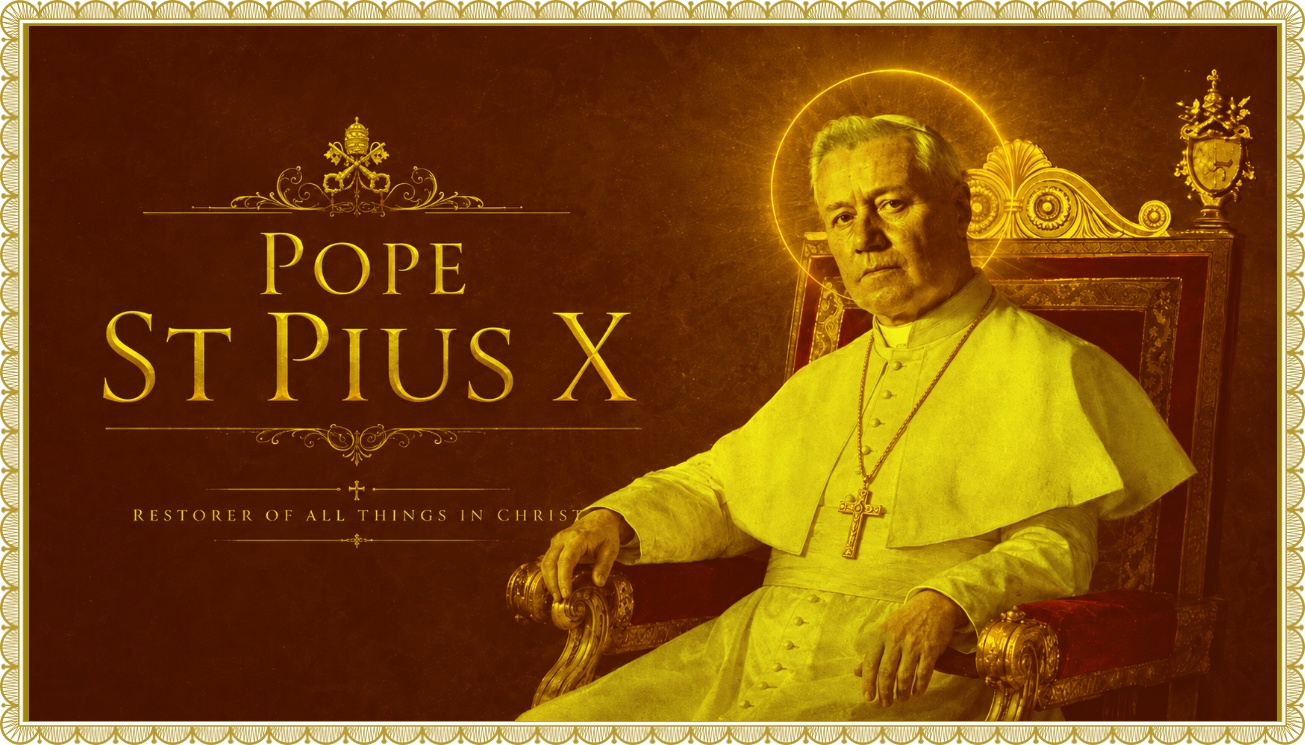
- Today’s homily: St Pius X, PopeThe text reflects on the life and legacy of Pope St Pius X, who was chosen from humble beginnings to reform the Church. His pontificate focused on defending the Catholic Faith, restoring liturgical sanctity, and fostering deeper connections between believers and Christ. Pius X exemplified a balance of truth and pastoral charity.
- Today’s Mass: September 03 Pope St Pius X,Pope St Pius X, born Giuseppe Melchiorre Sarto, was a significant reformer who emphasised preserving the Catholic Faith against Modernism. His pontificate (1903-1914) featured reforms in liturgy, frequent Holy Communion, and seminaries, rooted in a pastoral desire to restore everything in Christ. He died in 1914 and was canonised in 1954.
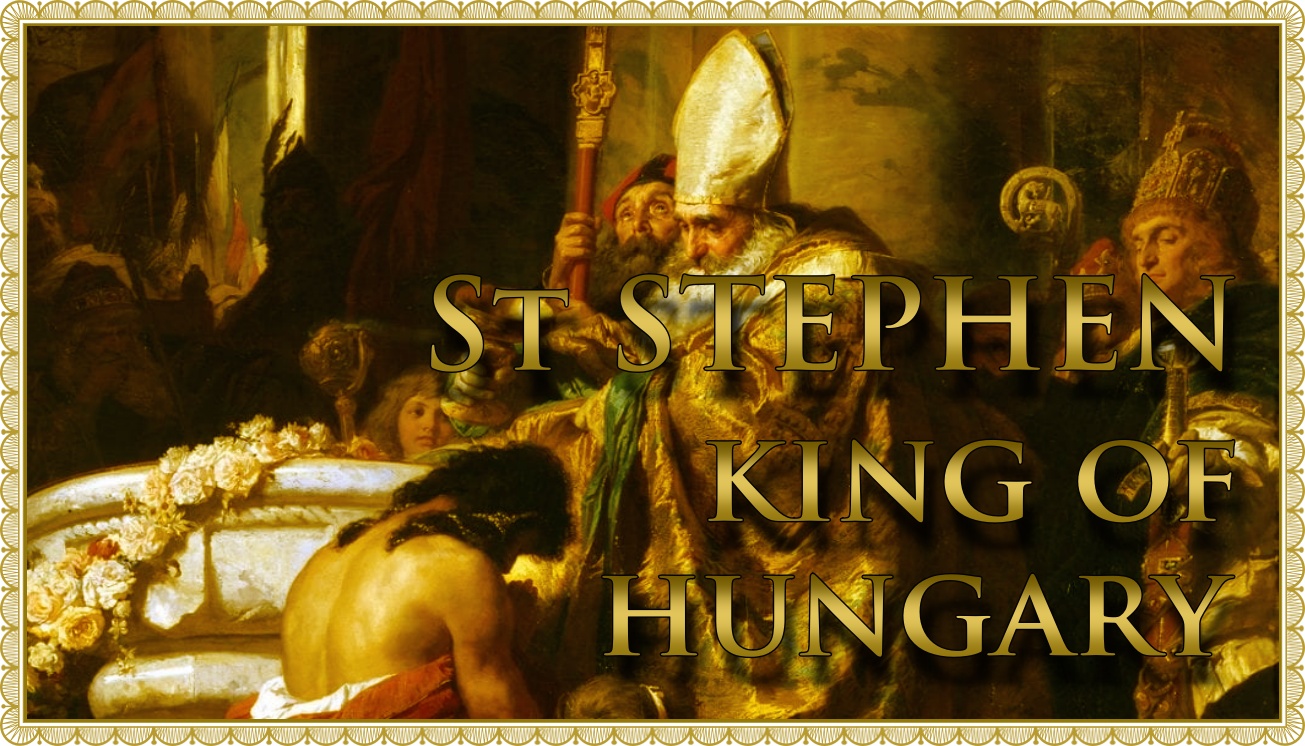
- Today’s homily: St Stephen of HungaryThe homily reflects on the life of Saint Stephen of Hungary, illustrating his transition from a powerful ruler to a saint. He embraced the responsibilities of kingship guided by faith, understanding his authority as stewardship. His legacy teaches that true governance comes with surrender to God, ultimately placing his kingdom under the protection of the Blessed Virgin Mary.
- Today’s Mass: September 02 St. Stephen the GreatSt. Stephen the Great, King of Hungary (977-1038), was a significant Christian ruler who reinforced the faith throughout Hungary. Anointed king in 1000 by Pope Sylvester II, he fought against paganism and promoted the Church. He was canonised in 1083 and is the patron saint of Hungary, symbolising national identity.
- QUAERITE PRIMUM REGNUM DEI – Seek First the Kingdom: Spiritual Conference for Nuntiatoria CXXIA spiritual conference, “Seek First the Kingdom,” emphasises prioritising God’s reign within individuals over earthly concerns. It explores the necessity of internalising Christ’s teachings, the importance of discernment, and the critical evaluation of the faith in relation to contemporary issues. A genuine Catholic life centres on Christ, fostering holiness and transformation.
CURRENT EDITION


Today’s Mass Propers
- Today’s Mass: September 03 Pope St Pius X,
 Pope St Pius X, born Giuseppe Melchiorre Sarto, was a significant reformer who emphasised preserving the Catholic Faith against Modernism. His pontificate (1903-1914) featured reforms in liturgy, frequent Holy Communion, and seminaries, rooted in a pastoral desire to restore everything in Christ. He died in 1914 and was canonised in 1954.
Leave a Reply