

Preserving Stone, Taxing Faith:
Why Britain’s £230 Million Church Heritage Pledge Still Penalises the Sacred
The Government has announced a £1.5 billion package of cultural funding intended to prevent the closure of heritage sites, arts venues, museums, libraries, and historic buildings across the United Kingdom. Presented as a flagship commitment to “saving” the nation’s cultural inheritance, the programme is framed by ministers as both an economic intervention and a statement of national renewal following more than a decade of sustained financial pressure on the cultural sector.¹
At the centre of this initiative is a £230 million allocation for heritage buildings, explicitly including listed places of worship. The funding is intended to support urgent repairs, conservation works, and the long-term preservation of historic structures that serve not only architectural and historical functions but also communal and civic ones. Churches, chapels, and other religious buildings—many of which pre-date the modern state itself—are formally recognised within the scheme as integral components of the nation’s built heritage.²
According to the Department for Culture, Media and Sport, the heritage funding will be distributed across several strands. A portion is directed to buildings formally designated as “at risk,” another to community-led regeneration projects for redundant or deteriorating heritage assets, and a substantial element is allocated to a new Places of Worship Renewal Fund, presented as the successor to the longstanding Listed Places of Worship Grant Scheme.³ This latter fund is described as expanding support for historic churches and chapels facing mounting repair backlogs and declining local resources.
The announcement has been welcomed in principle by heritage bodies and custodians of historic buildings, many of whom have warned for years that deferred maintenance, rising construction costs, and dwindling congregational income threaten the survival of irreplaceable structures. Ministers have emphasised that heritage buildings—religious and secular alike—anchor communities, provide social capital, and preserve continuity with the past in an increasingly fragmented cultural landscape.⁴
VAT and the Fiction of Support
Yet this rhetoric of preservation sits uneasily alongside the continued imposition of Value Added Tax on the very works the Government now proposes to subsidise. Under existing law, listed churches and chapels remain liable for VAT at the standard rate of 20 per cent on most repairs, maintenance, and conservation works, notwithstanding their recognised public, cultural, and historical value. Rather than addressing this anomaly at source, HM Treasury has once again relied on compensatory mechanisms—most notably the successor to the Listed Places of Worship Grant Scheme—which refund VAT only after it has been paid. This preserves the appearance of fiscal neutrality while leaving parishes exposed to significant upfront costs, administrative complexity, and prolonged uncertainty. In practice, the policy affirms religious heritage rhetorically while penalising it structurally.⁵⁶

Unequal Treatment of Sacred and Secular Heritage
The contradiction becomes sharper when the VAT treatment of churches is compared with that of secular heritage assets. Museums, galleries, and local-authority cultural buildings are frequently able to reclaim VAT directly through statutory recovery mechanisms available to public bodies, or through grant structures that absorb VAT costs in advance. Churches, by contrast, are treated neither as public authorities nor as fully recognised cultural institutions for tax purposes, despite providing conservation stewardship, community services, and public access at no cost to the state. The result is a two-tier heritage regime: secular venues benefit from integrated fiscal relief, while sacred buildings remain dependent on retrospective reimbursement administered through Department for Culture, Media and Sport—a disparity that quietly undermines official claims of parity between religious and non-religious heritage.⁷⁸
Beyond questions of equity, this structure has practical consequences. Small parishes and volunteer-run congregations are often required to raise tens or hundreds of thousands of pounds merely to cover VAT before any refund can be sought. For many, this cash-flow burden is decisive, rendering “available” funding functionally inaccessible. In this respect, the Government’s approach continues to treat churches as cultural assets in principle, while declining to recognise them as such in the fiscal architecture of the state.
A Doctrinal Coda: Why Sacred Heritage Is Treated as Expendable
This persistent inconsistency is not merely administrative; it reflects a deeper philosophical ambivalence within modern governance toward religion itself. The contemporary state is willing to value churches as artefacts of history, tourism, or aesthetic memory, but resists acknowledging them as living embodiments of transcendent truth that stand prior to—and above—the state’s own moral authority. Sacred buildings are therefore tolerated as cultural residue rather than honoured as formative institutions. Once religion is reduced to a private preference rather than a public good, its material inheritance becomes negotiable, exceptional, and ultimately expendable. The VAT regime thus exposes a quiet but telling judgment: that what serves the soul may be preserved sentimentally, but must never be structurally privileged. In this sense, fiscal policy has become a proxy for metaphysics, encoding in tax law the modern refusal to grant the sacred any enduring claim upon the common life of the nation.
¹ Department for Culture, Media and Sport, Government announces £1.5 billion package to support culture and heritage, official press release, January 2026.
² Ibid.; see also Historic England, Heritage at Risk Register guidance on places of worship as protected heritage assets.
³ Department for Culture, Media and Sport, Listed Places of Worship Grant Scheme and successor funding: policy overview.
⁴ Statement by the Secretary of State for Culture, Media and Sport accompanying the January 2026 funding announcement.
⁵ HM Revenue & Customs, VAT Notice 708: Buildings and construction, confirming standard-rating of repairs and maintenance to places of worship.
⁶ Department for Culture, Media and Sport, Listed Places of Worship Grant Scheme: Guidance, defining the scheme as a VAT refund mechanism rather than a tax exemption.
⁷ Value Added Tax Act 1994, s. 33, permitting VAT recovery by local authorities and certain public bodies, including museums operated by them.
⁸ Arts Council England and DCMS capital funding guidance allowing VAT costs for publicly funded museums and cultural institutions to be reclaimed or absorbed within grant frameworks.
RELATED ARTICLES


Latest ARTICLES
- 06.09.26 Nuntiatoria CXXII: NOMEN MANET, RES DEESTThis edition of Nuntiatoria explores the disconnect between the names of Catholic institutions and the realities they signify. Despite retaining their titles, many aspects of Catholicism—such as episcopal authority in China and religious practice in Poland—exhibit deteriorating substance. The piece cautions against superficial continuity, stressing the importance of genuine faith and practice over mere nomenclature.
- ORDO w/c 06.09.26The document outlines the liturgical schedule for the week of 6 to 13 September 2026, highlighting significant religious observances such as the Fifteenth Sunday after Pentecost and the Nativity of the Blessed Virgin Mary. It reflects on themes of compassion, holiness, fidelity, and humility, underscoring their importance in Christian life.
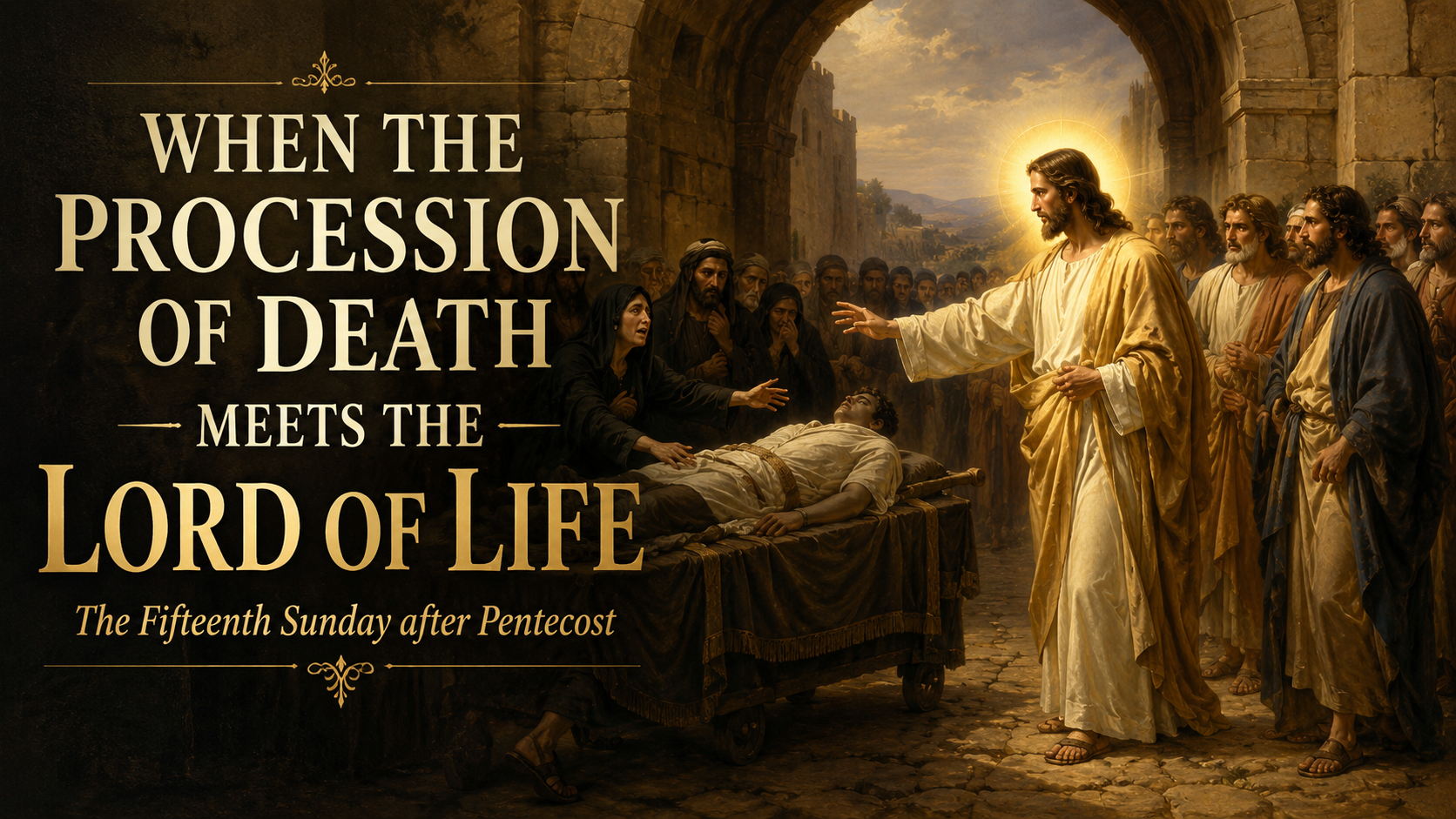
- The Fifteenth Sunday after Pentecost: When the Procession of Death Meets the Lord of LifeThe Fifteenth Sunday after Pentecost focuses on the transformative power of Christ, emphasising the supernatural life granted through grace. The liturgy highlights the Church’s role as a nurturing mother, mourning the spiritually dead while seeking their restoration. Christ’s compassion leads to resurrection, demonstrating that true life is found in dependence on Him.
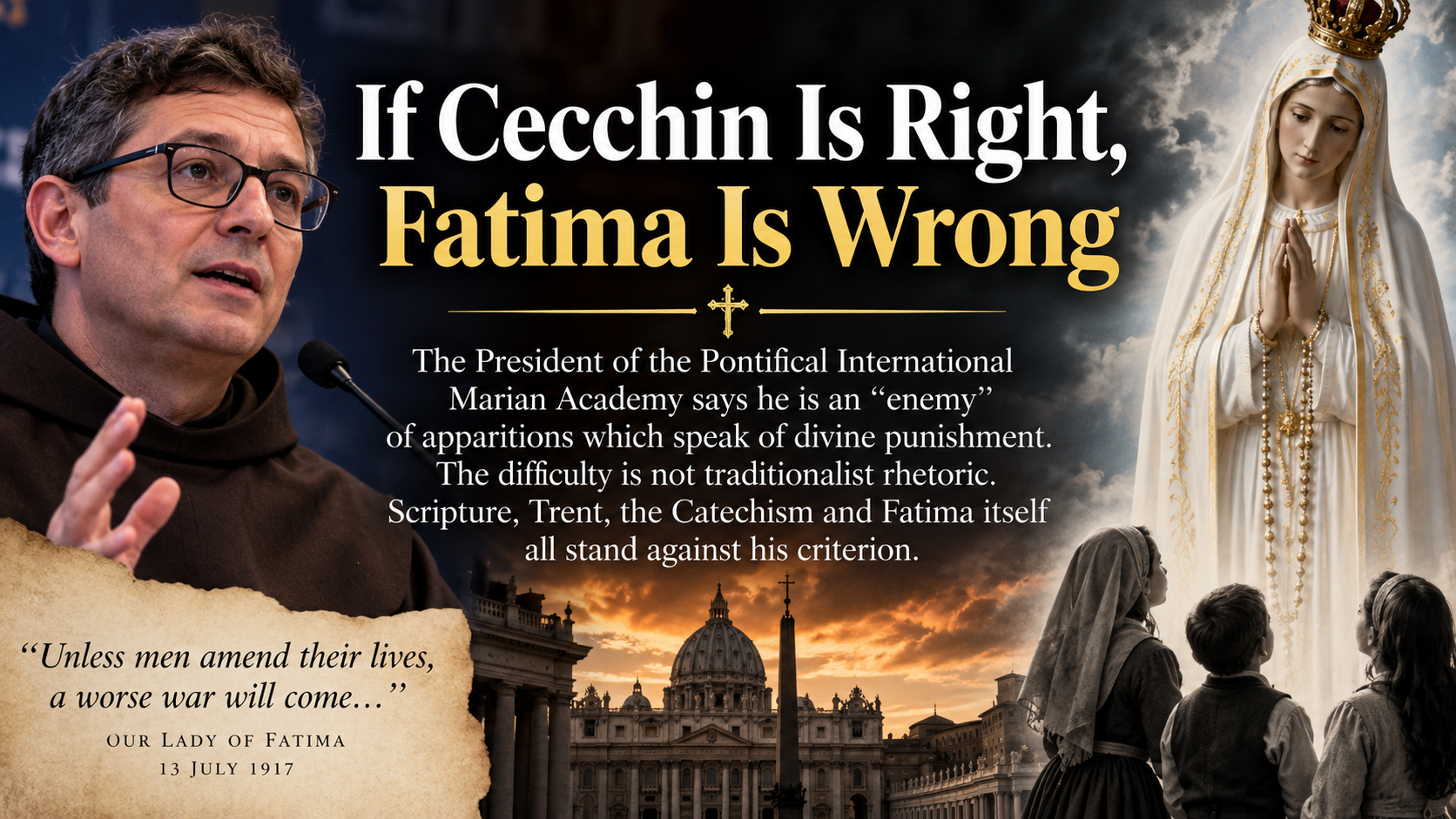
- If Cecchin Is Right, Fatima Is WrongFr Stefano Cecchin, President of the Pontifical International Marian Academy, has declared opposition to apparitions that speak of divine punishment, suggesting they are false. This stance contradicts fundamental Catholic doctrine, including teachings from Scripture, the Catechism, and specifically the Message of Fatima, which warns of divine consequences for sin.
- When Medicine Bows to Multiculturalism: The NHS and Cousin MarriageThe NHS faced controversy over training that minimised the risks of cousin marriage, claiming associated health threats were exaggerated. Despite current materials recognising genetic risks, the government acknowledged previous educational content was inappropriate. This highlights concerns over prioritising cultural sensitivity over clear medical truths, potentially undermining public trust in healthcare.




Leave a Reply