
Authority Is Not Alchemy: The New Mass, the Long Reform and the Limits of Liturgical Obedience

There are two ways of making the traditional Catholic case against the Novus Ordo Missae weaker than it needs to be. The first is to argue that because Paul VI was Pope and possessed authority over the sacred liturgy, whatever he promulgated must therefore have been traditional, prudent and spiritually beneficial. The second is to reply that because the reform represented an extraordinary rupture with the received Roman liturgy, Paul VI cannot really have possessed authority to promulgate it at all. The first turns obedience into positivism; the second attempts to escape the difficulty by denying a power which the pre-conciliar Magisterium expressly recognised. Neither is necessary. The more Catholic conclusion is also the more disturbing one: a Pope may possess genuine authority and exercise it disastrously.
That distinction lies at the heart of the post-conciliar liturgical controversy. Ecclesiastical authority is not alchemy. It cannot make something prudent merely by commanding it, turn discontinuity into continuity by calling it development, or make the deliberate reconstruction of inherited worship organic simply by promulgating the finished book. Authority in the Church is ministerial. The Pope does not own the Roman Rite as a legislature owns a statute book. He receives the Church’s worship as an inheritance, and the greatness of his jurisdiction increases rather than diminishes his responsibility to preserve what has been entrusted to him.
Pius XII stated the jurisdictional principle unequivocally in Mediator Dei. The Roman Pontiff possesses authority to regulate divine worship, including the power “to introduce and approve new rites” and to modify existing ones where he judges modification necessary.¹ It is therefore impossible to sustain the simple proposition that a Pope has no substantial authority over liturgical discipline. Popes altered calendars, rubrics, ceremonial practices and liturgical texts long before the twentieth century, and the Missal standardised by St Pius V was itself subsequently revised by his successors. But Mediator Dei also supplies the principle which prevents that authority from being understood as arbitrary. Pius XII describes the Church as a living organism whose liturgy grows, matures and adapts while the integrity of Catholic doctrine is safeguarded. Growth is not manufacture. Development is not replacement. A living tradition may acquire, refine and mature; that is very different from dismantling an inherited structure, selecting those parts judged useful, discarding others and composing replacements according to contemporary theories of pastoral effectiveness.
This distinction is particularly important because the twentieth-century reform did not suddenly begin in December 1963 with Sacrosanctum Concilium. Its prehistory is considerably longer. Recent polemics have spoken of a supposed “1958 Bugnini memorandum” which allegedly anticipated what would later be done at Vatican II. That claim should not be repeated without an original text. There is no need to rely upon an unverifiable document when the authentic record is already revealing enough.
In 1948, under Pius XII, a small Pontifical Commission for Liturgical Reform began work under the Sacred Congregation of Rites. An official historical account later published in Notitiae records the existence of the Memoria sulla Riforma liturgica, printed by the Vatican Polyglot Press and used as a basis for the work of the Commission; Annibale Bugnini was among those involved in the reforming body.² The point must be framed accurately. The Memoria was not “Bugnini’s secret memo”, nor was it a completed blueprint for the 1969 Missal twenty-one years in advance. What it establishes is more sober and more significant: a programme for a general reconsideration of the Roman liturgy was already being pursued institutionally more than a decade before Vatican II was announced.
Bugnini’s own published work confirms the breadth of the reforming ambition. In 1949 he published Per una riforma liturgica generale—“For a General Liturgical Reform”—in Ephemerides Liturgicae.³ This was not the programme of an outsider criticising Rome from the margins. Bugnini was working inside the reforming machinery. The revised Easter Vigil of 1951, the Holy Week reform of 1955, the rubrical changes of the later 1950s, the new Code of Rubrics and the revised books which followed all belong to the pre-conciliar history of twentieth-century liturgical reform. The Holy See itself subsequently described Pius XII as having resumed the liturgical reforming project through Mediator Dei, a study commission and concrete reforms including the Easter Vigil and Holy Week.⁴
Here Archbishop Marcel Lefebvre adds testimony which deserves to be heard, although it must be given precisely the evidentiary weight it possesses. In a 1982 conference at Montreal, Lefebvre recalled that Msgr Arrigo Pintonello, former Chief Chaplain of the Italian armed forces, had personally told him that in 1955 he had translated Protestant German liturgical texts for Bugnini because Bugnini did not know German.⁵ This is Lefebvre’s report of what Pintonello told him, not an archival document presently before us, and it should not be converted into something stronger than that. Yet it is relevant evidence from a bishop who knew the men and the period personally, and it fits a wider history in which ecumenical liturgical scholarship was already becoming increasingly influential. Lefebvre’s testimony is worth recording precisely because there is no need to inflate it into a conspiracy theory.
The continuity of the reforming history was not perfectly smooth. Bugnini suffered a striking reversal in 1962. Having served as secretary of the Preparatory Commission on the Liturgy, he was not continued as secretary of the Conciliar Commission when the Council opened, and at approximately the same time he lost his teaching post at the Lateran. Bugnini later regarded this as his first “exile”; accounts of the episode associate his eclipse with opposition to the progressive character of his liturgical ideas.⁶ What is certain is the institutional fact: the man who had occupied a central organising position during the preparatory phase did not retain that office when the Council itself began.
The eclipse was brief. After Sacrosanctum Concilium was promulgated, Paul VI placed Bugnini back at the operational centre of reform as secretary of the Consilium created to implement the Constitution.⁷ That restoration is more significant than any speculation about the motives for his earlier removal. A liturgist whose position had become sufficiently controversial for him not to be continued in the Conciliar Commission was soon entrusted with a decisive executive role in implementing the largest reconstruction of the Roman liturgical books in modern history.
This chronology requires precision. There was no single uninterrupted committee sitting from 1948 until 1969 executing an unchanged master-plan. Institutions changed, personnel changed, Popes made their own decisions, projects were modified, rejected or expanded, and the scale of reform increased dramatically after the Council. What endured was something less sensational and historically more consequential: a reforming method, a body of specialist expertise and a growing willingness to treat the inherited liturgical books as a whole capable of systematic revision by organised commissions. Bugnini became one important point of personal continuity within that world, but the process cannot responsibly be reduced to one man.
That history makes the language of Sacrosanctum Concilium more significant rather than less. The Council did not authorise unlimited reconstruction. It demanded the preservation of “sound tradition”, insisted that innovations should be introduced only where the good of the Church “genuinely and certainly requires them”, and required theological, historical and pastoral study. Most importantly, it directed that new forms should “grow organically from forms already existing”.⁸ The Constitution therefore supplied its own test. The question was never simply whether reform had been authorised, but whether what emerged could truly be described as organic development of the received rite.
Pope Leo XIV returned explicitly to that principle on 27 May 2026. In his catechesis on liturgical reform he distinguished immutable elements of divine institution from elements susceptible to alteration and repeated the conciliar conception of legitimate development rooted in authentic Tradition.⁹ Whatever judgment is made of Leo’s broader liturgical policy, his formulation reinforces an older Catholic principle: the exercise of authority does not authenticate itself merely by succeeding juridically. Continuity remains a criterion by which development is judged.
It is precisely at this point that the events of the 1960s become difficult to describe as the ordinary maturation of the Roman Rite. Paul VI himself did not pretend that Catholics were receiving another modest adjustment of the Missal. Speaking on 26 November 1969, immediately before the new Ordo entered general use, he described what was happening as a grave mutazione—a grave change.¹⁰ He acknowledged the disturbance it would cause to established devotional habits and spoke frankly of what would be lost with the displacement of Latin from the ordinary experience of the faithful. The Pope responsible for implementing the reform therefore recognised openly that Catholics were entering a substantially altered liturgical world.
Two years earlier there had already been an illuminating test. On 24 October 1967 the experimental Missa normativa was celebrated before the first Synod of Bishops. It was not textually identical to the final Ordo of 1969, and no serious historical argument should pretend otherwise. It was nevertheless an advanced prototype produced within the reforming process and an important stage in the development of what followed. When the Fathers were asked about its general structure, the recorded vote was 71 placet, 43 non placet, 62 placet iuxta modum, with four abstentions.¹¹ Only 71 therefore gave the proposal unqualified approval; another 105 either rejected it or required modifications.
The distinction between non placet and placet iuxta modum is crucial. A qualified affirmative is not a negative vote, and it would be inaccurate to say that 105 bishops “rejected” the proposed Mass. Yet it is equally inaccurate to treat those 62 qualified votes as though they represented enthusiastic endorsement. They did not. What the vote demonstrates is simpler and harder to dispute: unqualified approval was not the majority response. The experimental rite failed to secure anything resembling an episcopal plebiscite.
The significance of that episode is often obscured because the overwhelming conciliar vote for Sacrosanctum Concilium is retrospectively treated as though it had been an overwhelming episcopal vote for the Missal which appeared six years later. It was not. The Council Fathers voted for a Constitution containing principles and directives. When representative bishops were subsequently shown a developed experimental Mass, the response was divided and heavily qualified. The project was revised and carried forward under Paul VI’s authority. The Synod was consultative and the Pope did not require its majority approval to legislate. Precisely for that reason, the episode tells us something important about the difference between conciliar mandate, episcopal reception and papal authority.
Lefebvre’s 1982 testimony supplies an eyewitness glimpse of the atmosphere in which that reconstruction was being explained. As Superior General of the Holy Ghost Fathers he attended a meeting of 84 Superiors General in Rome at which Bugnini was invited to explain the projected normative Mass. Lefebvre recalled Bugnini speaking of replacing the Offertory, reducing Communion prayers, providing several alternative forms at the beginning of Mass and greatly expanding the vernacular. Lefebvre’s lasting impression was not of a custodian cautiously adjusting a few inherited details but of a reformer treating substantial components of the rite as elements capable of removal, replacement and recombination.¹²
Two exchanges remained particularly vivid in Lefebvre’s memory. When a Benedictine superior asked how the reform’s emphasis upon congregational participation would apply to monastic priests celebrating private Masses, Lefebvre recalled Bugnini replying, “we didn’t think of that.” When another Superior General objected that the successive abbreviations might leave an extraordinarily short Mass, Lefebvre remembered the answer: **“We can always add something.”**¹² One is entitled to allow for the limitations of reminiscence delivered years afterwards; one is not entitled simply to erase eyewitness testimony because it is inconvenient. The significance of Lefebvre’s recollection lies in the mentality it describes—a liturgy no longer encountered simply as a received whole, but discussed as a set of components capable of redesign.
That evidence should neither be exaggerated nor dismissed. Lefebvre was by 1982 the most famous episcopal opponent of the reform and his retrospective interpretation was obviously critical. Yet he had also been Superior General of a major missionary congregation, a member of the Central Preparatory Commission of Vatican II and a bishop who had personally participated in the events he described. His testimony is therefore evidence, even where it is not independent archival proof.
Paul VI proceeded. His Apostolic Constitution Missale Romanum of 3 April 1969 makes the scale of the intervention explicit. He described revision of the Eucharistic Prayer as the “major innovation”; three new Eucharistic Prayers were placed beside the ancient Roman Canon. The rites surrounding the offering of bread and wine were simplified, the lectionary reconstructed, and the Proper of Seasons, Proper of Saints, Commons, ritual Masses and votive Masses substantially revised.¹³ These are not accusations supplied by hostile traditionalists but descriptions found in the promulgating document itself. The scale of the reform is therefore a matter of record.
Lefebvre subsequently recalled another remarkable conversation, this time with Cardinal Amleto Cicognani, Paul VI’s Secretary of State. According to Lefebvre, when he protested against the developing new Mass, Cicognani expressed sympathy but complained of Bugnini’s direct access to Paul VI, telling Lefebvre in substance that Bugnini could go into the Pope and obtain the signatures he wanted.¹⁴ The evidentiary status again matters: this is Lefebvre’s firsthand recollection of what Cicognani allegedly told him, not a transcript from the Secretariat of State. It would be reckless to turn the anecdote into the assertion that Paul VI was merely a passive victim who did not know what he was promulgating. The final responsibility remained papal. But the recollection is relevant to the extraordinary organisational influence Bugnini was perceived to exercise even by those within the Roman hierarchy.
By contrast, Lefebvre’s further story that Paul VI admitted to Cardinal Journet that he had signed a disputed text without reading it is too remote to carry comparable weight. Lefebvre himself acknowledged that Journet had not told him personally; the story reached him through another intermediary.¹⁴ It should not be presented as established fact. Nor is it necessary to do so. The documented acts of Paul VI are sufficient to establish his responsibility for the reform, and the traditional case is not strengthened by relieving the Pope of responsibility through unverified anecdotes.
This is the crucial distinction: papal competence and organic continuity are not synonyms. Paul VI possessed authority to legislate for the Roman liturgy. That establishes that a real juridical act took place. It does not establish that every aspect of the resulting reform fulfilled the traditional principles which ought to govern the exercise of that authority.
Quo Primum is best understood in the same light. St Pius V did not bind all his successors never to alter a rubric. Popes after him modified the Roman Missal. The enduring importance of Quo Primum lies rather in the manner in which Pius V exercised authority. He codified, purified and protected a received Roman usage while preserving other Latin rites capable of demonstrating substantial antiquity.¹⁵ He was not constructing a sixteenth-century Eucharistic liturgy to express the pastoral theories of his age. His legislation reflects a conception in which liturgical tradition possesses claims upon authority because authority first receives what it later regulates.
The contrast, then, is not between a mythical age in which the Roman Rite never changed and a modern age in which the Church finally discovered development. The Roman liturgy had always grown. Feasts were added, calendars developed, prayers accumulated, ceremonial became richer and rubrics evolved. The contrast is between development principally through reception, accretion and gradual refinement, and reform principally through deliberate reconstruction of several principal components at once.
Joseph Ratzinger later identified that difference in language which became famous precisely because it came from the future Benedict XVI. He contrasted the historical growth of the liturgy with what he described as a “fabricated liturgy”.¹⁶ Ratzinger was neither a sedevacantist nor an opponent of Vatican II. His criticism matters because it recognises exactly the distinction which a serious traditional argument must preserve: something may be juridically promulgated and nevertheless represent a profoundly different method of liturgical production.
The point becomes clearer when one stops speaking only in abstractions. Consider the Offertory. In the traditional Roman Mass the priest offers the immaculatam hostiam for his own sins, offences and negligences, for those present and for all faithful Christians living and dead; the chalice is offered for the salvation of the world; the Holy Ghost is invoked upon the sacrifice; the language of sacrifice, unworthiness, propitiation and salvation saturates the prayers before the Canon. In the reformed rite this complex largely disappeared from the preparation of the gifts and was replaced by shorter formulas, while explicitly sacrificial language continues elsewhere, notably in the Orate, fratres and Prayer over the Offerings. Paul VI himself identified the preparation of the offerings as an area deliberately simplified.¹³
The correct conclusion is not that sacrifice vanished from the New Mass. It did not. The conclusion is that much of the ritual density with which sacrificial theology had previously been expressed disappeared.
The same is true of bodily reverence. Catholic worship teaches through the body as well as through propositions. Kneeling, silence, genuflection, orientation, the handling of sacred vessels and the treatment of the consecrated Species all form Eucharistic instinct before the intellect consciously recalls Eucharistic theology. The traditional Mass surrounds the Consecration and the handling of the Blessed Sacrament with repeated acts of adoration. The present General Instruction prescribes three genuflections by the priest during Mass: after showing the Host, after showing the Chalice and before Communion.¹⁷ The issue is not arithmetic. The issue is formation. Repeated ritual action teaches Catholics what the Church believes by training their bodies to behave as though it were true.
The Roman Canon presents another example. For centuries one Eucharistic Prayer occupied an extraordinarily stable position at the heart of Roman worship. Paul VI placed three new Eucharistic Prayers beside it in one reform.¹³ The Roman Canon therefore survived; nothing justifies saying it was abolished. But what had been fixed became optional. Liturgical culture is not formed simply by what a book permits but by what the faithful encounter habitually.
Latin tells the same story. Sacrosanctum Concilium did not command its extinction. It said that the use of Latin was to be preserved in the Latin rites while allowing a wider use of the vernacular, and required pastors to ensure that the faithful remained able to say or sing their proper parts of the Ordinary in Latin.⁸ Yet the practical result across great areas of the Western Church was the almost complete disappearance of Latin from ordinary parish worship. Paul VI knew that a major inheritance was being surrendered and said so openly.¹⁰ Whatever else may be argued, the resulting linguistic revolution cannot simply be presented as the literal command of Vatican II.
None of this requires the traditional Catholic to say something which the official liturgical books contradict: that the Novus Ordo formally denies the Eucharistic Sacrifice, propitiation or the Real Presence. It does not. The present General Instruction explicitly situates the reformed Missal within Catholic doctrine concerning the Eucharistic Sacrifice and the substantial presence of Christ under the Eucharistic Species.¹⁷ A critique which says simply that the official New Mass is a Protestant memorial supper can therefore be answered from the Church’s own books.
That admission does not weaken the traditional case. It removes an exaggeration which has too often allowed defenders of the reform to avoid the more difficult question. Lex orandi, lex credendi is not exhausted by locating an orthodox doctrinal sentence in the General Instruction. Liturgy teaches by accumulation. Silence teaches. Direction teaches. Repetition teaches. The distinction between sanctuary and nave teaches. The treatment of the altar and sacred vessels teaches. The manner of receiving Holy Communion teaches. Omission teaches as surely as inclusion. A doctrine may remain propositionally affirmed while the ritual world which once impressed it almost involuntarily upon generations of Catholics is substantially attenuated.
This is the proper context in which to read the intervention of Cardinals Alfredo Ottaviani and Antonio Bacci. In September 1969 they transmitted to Paul VI the Brief Critical Study of the New Order of Mass, warning that the new Ordo represented, considered as a whole and in its details, a striking departure from the Catholic theology of the Mass formulated at Trent.¹⁸ Subsequent revision and clarification of disputed formulations in the General Instruction must be acknowledged. The document cannot by itself prove invalidity or juridical nullity. Its historical importance lies elsewhere: serious theological alarm arose at the birth of the reform, before decades of liturgical conflict could be blamed for creating it.
Lefebvre’s recollections are particularly illuminating at this point because they show why he considered the problem larger than a dispute about rubrics. His objection was not simply that Bugnini shortened prayers he personally preferred. What shocked him was the perceived change in the relationship between reformer and inheritance. In his account, Bugnini spoke of the Offertory, Communion prayers, introductory rites and language of the Mass as items to be modified according to a programme.¹² Whether every later conclusion Lefebvre drew from those encounters is accepted or not, the central impression accords strikingly with the documentary fact that the reform was being produced through numerous committees, drafts, experiments and papal decisions rather than by the slow accumulation which had characterised so much earlier Roman development.
Later came a juridical admission which permanently complicated the received history of the reform. Benedict XVI stated in 2007 that the older Roman Missal “was never juridically abrogated and, consequently, in principle, was always permitted”.¹⁹ For decades priests and faithful attached to the ancient liturgy had often been treated as though they were demanding restoration of something which Paul VI had legally abolished. Benedict said that it had never been abolished.
But Benedict also insisted upon the value and holiness of the newer liturgical form.¹⁹ That part of his argument cannot simply be discarded by those who invoke his vindication of the old Missal. The recognise-and-resist position cannot quote Benedict where he embarrasses the suppressors of the traditional Mass and ignore him where he places limits upon maximalist traditional claims. If the post-conciliar Popes are recognised as true Roman Pontiffs and the Roman Church remains the Catholic Church, that recognition itself has theological consequences.
This is where the assertion that the Novus Ordo is simply and intrinsically “illicit” becomes hazardous. If illicit means that Paul VI possessed no juridical competence to promulgate it, the proposition is exceedingly difficult to sustain. Pius XII expressly recognised the Supreme Pontiff’s authority to introduce and approve rites, while Paul VI plainly intended Missale Romanum to be authoritative legislation.¹ ¹³ In strict canonical terms the New Mass cannot simply be treated as though it were an unauthorised rite improvised by a private cleric.
More importantly, if the New Mass is described not merely as gravely inferior to the inherited Roman Rite, reconstructed in an unprecedented manner, doctrinally less expressive at significant points or disastrous in much of its practical implementation, but as intrinsically evil worship which the Catholic Church cannot lawfully offer, a greater ecclesiological difficulty arises. Paul VI promulgated it. John Paul II celebrated and legislated it. Benedict XVI affirmed its value while vindicating the older Missal. Francis legislated the reformed books as normative. Leo XIV continues to recognise them while himself invoking tradition and legitimate development. Anyone who recognises these men as genuine Roman Pontiffs and the visible Church governed by them as the Catholic Church has to reckon with that history.
The doctrine of indefectibility places a boundary here. It is one thing to say that Popes may govern disastrously, approve imprudent disciplines, tolerate abuses or enact reforms which diminish inherited safeguards. It is considerably more serious to say that the Roman Church has officially furnished almost the entire Latin Church for more than half a century with worship intrinsically evil in itself. The latter proposition creates a difficulty for traditional Catholic ecclesiology greater than the problem it attempts to solve.
Sedevacantism escapes by denying the relevant authority. A crude neo-ultramontanism escapes by denying that the authority could ever have exercised its disciplinary power disastrously. Neither is necessary. The Catholic distinction is harder and more coherent: true authority can be gravely abused without ceasing to be true authority.
Lefebvre himself understood the argument differently. By 1982 he had reached the judgment that he could not call the new rites good merely by describing them as less good than what they replaced.²⁰ That judgment belongs to the historical record of his resistance and deserves to be stated faithfully. But it does not follow that every theological premise required to reach that conclusion must simply be adopted. The task is to distinguish what his testimony establishes as eyewitness history from the theological conclusions he subsequently drew from it. His evidence concerning persons, meetings and attitudes may be valuable even where one judges that the doctrine of indefectibility requires a more carefully delimited conclusion.
This is why the word illicit requires precision. In the strict canonical sense it cannot simply be used as though the Novus Ordo had never possessed juridical standing. In the broader moral and theological sense, however, a severe criticism remains possible. Promulgation establishes that authority acted; it does not establish that authority acted prudently. Canonical enforceability does not transform every disciplinary judgment into wisdom. Nor can legal validity retrospectively demonstrate organic development.
Authority is not alchemy.
The practical question facing ordinary Catholics is therefore more exacting than either side commonly admits: if the only reasonably available Mass is the Novus Ordo, is one obliged to attend it?
Canon 1247 establishes the Sunday obligation, while canon 1248 §1 provides that the obligation is fulfilled by assisting at Mass celebrated in a Catholic rite. A valid celebration according to the reformed Missal therefore satisfies the precept. Canon 1248 §2 also recognises circumstances in which participation becomes impossible because of the absence of a sacred minister “or for another grave cause”.²¹ The law itself consequently recognises that the obligation operates within concrete moral circumstances rather than as an abstraction detached from them.
Canon 1752 must not be turned into a private dispensation clause. Salus animarum suprema lex does not permit an individual to disregard ecclesiastical laws merely because he dislikes them. It states the governing end towards which the Church’s law is ordered: the salvation of souls.²² That principle matters because positive law cannot coherently be interpreted in a manner which defeats the supernatural purpose for which it exists.
The Sunday obligation exists for the worship of God and the sanctification of the faithful. It cannot therefore be construed as requiring a Catholic to expose himself, or those whose formation is entrusted to him, to a genuine grave and proximate danger against the Faith merely to secure formal compliance with the precept. This does not mean that liturgical preference constitutes grave cause. Bad music is not apostasy. Vernacular worship is not in itself a danger to faith. An irritating priest does not dissolve canon law. Traditional Catholics have no more right than anyone else to manufacture necessity out of preference.
But the opposite proposition is equally untenable: that grave spiritual danger becomes impossible the moment a valid Consecration occurs.
If the only realistically accessible celebration is habitually accompanied by preaching contrary to Catholic doctrine, sacrilegious treatment of the Blessed Sacrament, systematic liturgical abuse, public repudiation of Catholic moral teaching, or a parish environment which repeatedly undermines the Faith parents are obliged to transmit to their children, the moral question changes. It is no longer whether one prefers chant to guitars, Latin to English or eastward celebration to a freestanding altar. It is whether positive ecclesiastical law obliges Catholics to place themselves or their dependants in serious danger to the supernatural good which the law exists to foster.
It does not follow that every Novus Ordo everywhere may simply be ignored. Nor does it follow that only the traditional Mass can fulfil the Sunday precept. What follows is narrower and stronger: a Mass may be valid, canonically authorised and objectively capable of satisfying the obligation while the circumstances surrounding a particular celebration nevertheless constitute grave cause for non-attendance.
This distinction exposes the succession of non sequiturs upon which too much modern liturgical apologetics rests. From the fact that Paul VI possessed authority to promulgate a new Missal, we are expected to infer organic continuity. From validity, prudence. From canonical liceity, spiritual safety. From the possibility of celebrating the New Mass reverently, equality with the received Roman Rite. From the fact that it satisfies the Sunday precept, an absolute duty to attend any available celebration regardless of surrounding circumstances.
None of those conclusions follows.
Traditional Catholics should therefore concede everything which is true. The Novus Ordo Missae was promulgated by a Roman Pontiff possessing jurisdiction over liturgical discipline. Properly celebrated with valid matter, form and intention by a validly ordained priest, it is a valid Eucharistic Sacrifice. Its present official books profess Catholic doctrine concerning the sacrifice of the Mass and the substantial Real Presence. A celebration according to those books is capable of satisfying the Sunday obligation. These propositions should be stated without embarrassment because Catholic truth does not become dangerous merely because an opponent is also capable of stating it.
Having conceded all of that, almost every important historical and theological question remains.
The reform did not begin in 1963. A pontifical commission and the Memoria sulla Riforma liturgica existed in 1948. Bugnini occupied a central secretarial role within the pre-conciliar reforming machinery and was writing of a general liturgical reform in 1949.² ³ The reforms of the 1950s formed a pre-conciliar stage in a broader twentieth-century reforming history. Lefebvre later testified that Pintonello had translated Protestant liturgical texts for Bugnini during this period.⁵ That latter claim remains testimony rather than archival proof, but it belongs to the record. None of this means that Pius XII secretly designed the Novus Ordo, nor that every subsequent change followed inevitably from reforms he authorised. It means that the post-conciliar reform had a pre-conciliar intellectual, institutional and personal genealogy which cannot honestly be reduced to experts suddenly obeying an unforeseen mandate handed to them by the bishops of Vatican II.
Nor was Bugnini’s path to 1969 a simple uninterrupted ascent. He suffered his institutional eclipse in 1962, only to return to an even more consequential role under Paul VI after the Council’s Constitution on the Liturgy had been promulgated.⁶ ⁷ That interruption matters because it demonstrates that his ideas were not universally regarded within Rome as uncontroversial. His restoration matters because it placed a highly capable organiser, already deeply formed by the preceding reforming movement, at the operational centre of the next stage.
Nor did the bishops of Vatican II vote for the Missal of 1969. They voted for Sacrosanctum Concilium, which demanded sound tradition, genuine necessity and organic growth.⁸ When a developed prototype was presented to the Synod Fathers in 1967, only 71 gave its general structure an unqualified placet, while 43 rejected it and 62 attached conditions.¹¹ The project was revised and continued under Paul VI’s authority. Lefebvre’s recollection of Bugnini subsequently explaining the projected rite to the 84 Superiors General reinforces the documentary picture of a reform consciously constructed through choices about which inherited elements should remain, disappear or be replaced.¹² The episode proves neither conspiracy nor invalidity. It establishes something more relevant: the eventual New Mass cannot honestly be presented as though it were simply the ritual form overwhelmingly demanded by the Council Fathers themselves.
Paul VI possessed the authority to proceed despite reservations. He exercised it. That is precisely why the history matters. The history of the New Mass does not demonstrate the disappearance of papal authority; it demonstrates how extensive an exercise of papal authority over inherited worship could become once the older presumption of gradual development gave way to comprehensive planned reform.
There lies the problem which invocations of “obedience” cannot dissolve. If liturgical authority exists to guard and regulate an inherited sacred tradition, the decisive question is not merely whether a Pope can promulgate a radically revised Missal. Catholic theology already grants the Pope extensive jurisdiction over liturgical discipline. The more difficult question is whether possession of that jurisdiction means that every conceivable use of it must consequently be regarded as prudent, organic, traditional and spiritually beneficial.
It plainly does not.
The answer cannot be that papal authority evaporates whenever a papal act becomes difficult to defend. That road eventually makes the individual Catholic judge whether the visible Church remains the Church. But neither can the answer be that whatever ecclesiastical authority successfully promulgates is therefore proved, by the fact of promulgation, to be organic Tradition. That is not Catholic obedience. It is legal positivism in ecclesiastical dress.
Catholic doctrine requires us to hold together truths which polemical factions prefer to separate. Authority is real, and authority has limits. Obedience is a virtue, and obedience is not servility. The Pope possesses jurisdiction over the liturgy, and the Pope did not create the liturgical tradition over which he exercises it. A rite can be valid without being equal to the rite it replaced. A law can bind ordinarily without binding in every grave circumstance. A reform can be juridically promulgated and nevertheless prove historically discontinuous, pastorally disastrous and liturgically impoverishing.
For Catholics who recognise the Roman Pontiff while resisting the post-conciliar revolution, these distinctions are not evasions. They are the ground upon which a coherent Catholic position stands.
We do not preserve the traditional Mass by pretending that Paul VI was incapable of legislating. We preserve it by refusing to pretend that legislation can make historical rupture cease to be rupture. We do not defend Catholic Eucharistic doctrine by alleging formal Protestantism where the Church’s official books still confess Catholic Eucharistic doctrine. We defend it by demonstrating how many inherited ritual expressions of those truths were removed, diminished or made optional. We do not abolish the Sunday precept whenever attendance becomes unpleasant. We insist upon the older Catholic principle that positive ecclesiastical law is ordered to supernatural ends and cannot oblige against those ends where genuine grave spiritual danger is present.
And we require no imaginary memorandum to establish the historical case. The authentic record is sufficient. The Memoria sulla Riforma liturgica existed in 1948. Bugnini was involved in the reforming machinery and wrote publicly the following year of general liturgical reform. He suffered a significant eclipse in 1962 and returned to the centre under Paul VI. The reforms of the 1950s were followed by the conciliar preparatory work, Sacrosanctum Concilium, the Consilium, the experimental Missa normativa and finally Missale Romanum.² ³ ⁶ ⁷ ¹¹ ¹³ Lefebvre’s testimony adds the recollection of a contemporary bishop who personally encountered Bugnini and believed he saw in him not merely a rubricist but the executive embodiment of a fundamentally different attitude towards inherited worship.¹² ¹⁴ None of this proves a hidden conspiracy unfolding according to an immutable secret script. It demonstrates something historically more substantial: a long reforming trajectory whose methods, personnel and ambitions evolved until the Roman Rite itself became the object of comprehensive reconstruction.
That distinction matters. Conspiracy theories are easy to disprove because they require every event to fit a predetermined hidden plan. Institutional history is more complicated and, in this case, more revealing. Men can act openly, under lawful authority, believing themselves to be serving the Church, and nevertheless produce a rupture of extraordinary magnitude. One does not need to prove malice where ideology, confidence in expert reconstruction and an inflated conception of disciplinary competence are sufficient to explain the result.
Lefebvre’s testimony is particularly useful precisely at this point. He did not merely accuse Bugnini from afar. He remembered sitting in the room while the reformer explained the projected Mass to eighty-four Superiors General; he recalled personally confronting Cardinal Cicognani; he reported what Pintonello told him about earlier Protestant liturgical texts.⁵ ¹² ¹⁴ Some of those recollections can be independently corroborated only in part, and a responsible history says so. But dismissing all of them because Lefebvre later became the great opponent of the reform would be no more scholarly than accepting every inference he drew simply because one shares his conclusions.
The documentary record and Lefebvre’s testimony converge on the point which matters most. The New Mass did not simply emerge, almost unconsciously, from the accumulated devotional practice of the Roman Church. It was designed through organised reform. Decisions were made about what should be removed, what should be restored from antiquity, what should be newly composed, what should be multiplied as options and what should be simplified. The bishops were consulted; they did not give the 1967 prototype unqualified majority approval. The project was revised. Paul VI judged. Paul VI promulgated.
That history cannot be made organic merely by calling it organic.
St Paul describes the logic of Tradition in an order which is decisive: tradidi enim vobis in primis quod et accepi—he delivers what he first received. Reception precedes transmission. Custody precedes development. Inheritance precedes administration.
The Pope is not the author of the Catholic religion. He is its supreme earthly guardian. The Roman liturgy is not the possession of whichever generation temporarily administers it. It is an inheritance received from generations which cannot answer back, preserved through centuries which no commission can reconstruct, and sanctified by saints who never imagined that its continued existence would one day require exceptional permission.
Benedict XVI’s declaration that the traditional Missal had never been juridically abrogated remains significant for precisely this reason.¹⁹ The ancient Roman Mass did not become sacred in 2007 because a Pope relaxed restrictions upon it. Its sanctity preceded bureaucratic permission. It had nourished the Roman Church for centuries before the Consilium existed and retained its historical claim regardless of the administrative arrangements of any particular pontificate.
Authority must reckon with such an inheritance.
It cannot manufacture another past. It cannot legislate organic growth backwards. It cannot turn 71 unqualified approvals into an episcopal plebiscite. It cannot make a reforming history documented from 1948 appear to have sprung spontaneously from the Council in 1963. It cannot dismiss eyewitness testimony merely because the witness eventually became inconvenient. And it cannot require Catholics to call every exercise of lawful power wise merely because the power itself was lawful.
The proper indictment of the post-conciliar liturgical reform is therefore more serious than the crude assertion that “the New Mass is illicit”. The history demonstrates something far more consequential: genuine ecclesiastical authority can be exercised in a manner which profoundly disrupts the inherited forms, habits and instincts through which that same authority had previously transmitted the Faith.
Recognising that possibility does not destroy authority.
It restores authority to its Catholic purpose.
Res sunt quod sunt.
Things are what they are.
¹ Pius XII, Encyclical Mediator Dei, 20 November 1947, especially nn. 57–60.
² Sacred Congregation of Rites, Memoria sulla Riforma liturgica, Vatican Polyglot Press, 1948; Corrado Maggioni, “Ricordando il nuovo Ordo instauratus della Veglia Pasquale: febbraio 1951,” Notitiae, vol. 47 (2011).
³ Annibale Bugnini, “Per una riforma liturgica generale,” Ephemerides Liturgicae, vol. 63 (1949), pp. 166–184.
⁴ Francis, Address to participants in the 68th National Liturgical Week, 24 August 2017.
⁵ Marcel Lefebvre, “The Infiltration of Modernism in the Church,” conference delivered at Montreal, Canada, 1982.
⁶ Annibale Bugnini, The Reform of the Liturgy 1948–1975, trans. Matthew J. O’Connell, Collegeville: Liturgical Press, 1990; “Bugnini, Annibale,” New Catholic Encyclopedia.
⁷ Paul VI, establishment of the Consilium ad exsequendam Constitutionem de Sacra Liturgia, 1964; cf. the biographical record of Bugnini’s appointment as secretary.
⁸ Second Vatican Council, Constitution Sacrosanctum Concilium, 4 December 1963, especially nn. 21–23, 36 and 54.
⁹ Leo XIV, General Audience, 27 May 2026.
¹⁰ Paul VI, General Audience, 26 November 1969.
¹¹ Annibale Bugnini, The Reform of the Liturgy 1948–1975; Guillaume Cuchet, “How the Novus Ordo Mass Was Made,” Church Life Journal, University of Notre Dame, 22 July 2021.
¹² Marcel Lefebvre, “The Infiltration of Modernism in the Church,” Montreal conference, 1982.
¹³ Paul VI, Apostolic Constitution Missale Romanum, 3 April 1969.
¹⁴ Marcel Lefebvre, “The Infiltration of Modernism in the Church,” Montreal conference, 1982.
¹⁵ St Pius V, Apostolic Constitution Quo Primum, 14 July 1570.
¹⁶ Joseph Cardinal Ratzinger, Preface to Klaus Gamber, La Réforme liturgique en question, French ed., 1992.
¹⁷ General Instruction of the Roman Missal, third typical edition, doctrinal preamble and nn. 27, 274.
¹⁸ Alfredo Cardinal Ottaviani and Antonio Cardinal Bacci, Letter to Paul VI accompanying A Brief Critical Study of the New Order of Mass, September 1969.
¹⁹ Benedict XVI, Letter to the Bishops accompanying Summorum Pontificum, 7 July 2007.
²⁰ Marcel Lefebvre, “The Infiltration of Modernism in the Church,” Montreal conference, 1982.
²¹ Code of Canon Law (1983), cann. 1247–1248.
²² Code of Canon Law (1983), can. 1752.
RELATED ARTiCLES


LATEST ARTICLES
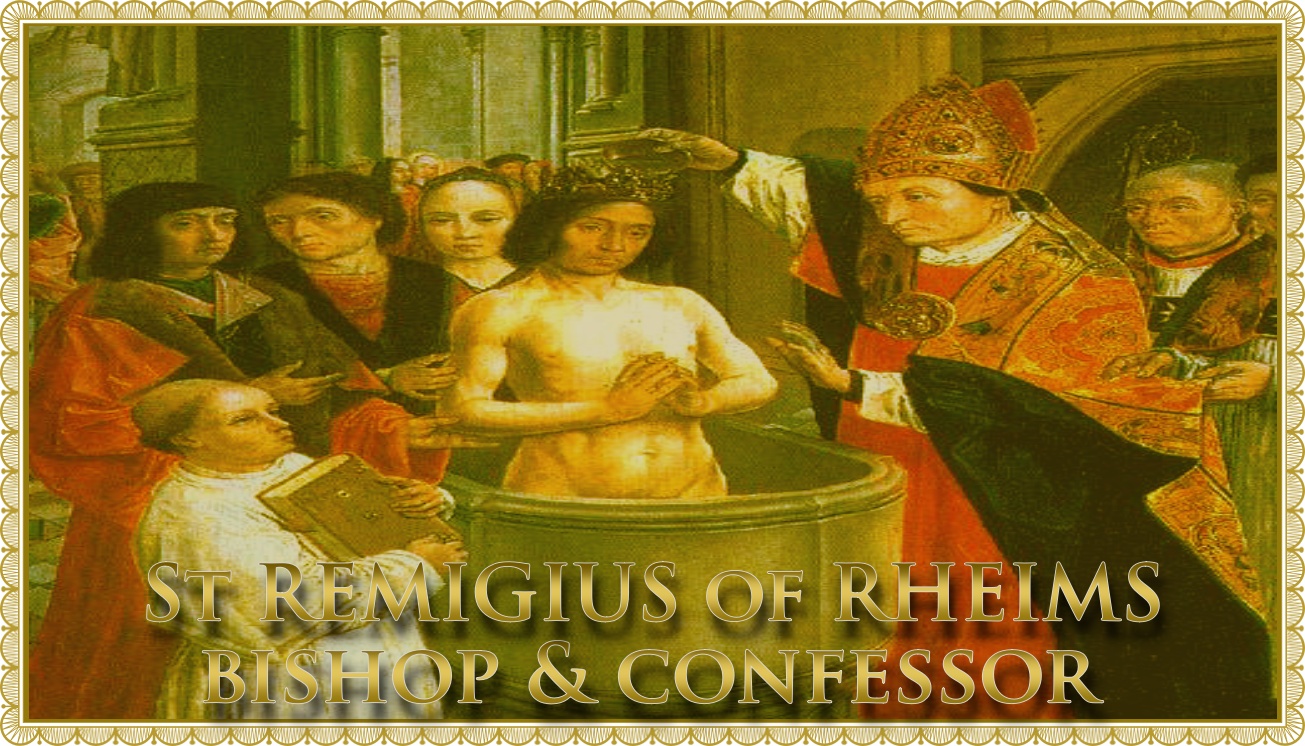
- Today’s Mass: October 01 St Remigius of RheimsSt Remigius of Rheims, a significant bishop and apostle of the Franks, was renowned for his learning, holiness, and miraculous deeds during his seventy-plus years of episcopacy. He was instrumental in spreading Christianity under King Clovis and left a lasting legacy before his death around 530.
- October Beneath Our Lady’s StandardThe Feast of the Most Holy Rosary commemorates the 1571 victory at Lepanto and evolved through papal endorsements, especially under Pope Leo XIII in the late 19th century. October, dedicated to the Rosary, serves as a reminder of prayer’s significance during trials, fostering both personal and communal spiritual resilience in Catholic life.
- Marriage Endures as Britain’s Common Christian Framework RecedesRecent ONS data indicates that 83.7 per cent of couples married in 2015 remained together by their tenth anniversary. However, Britain faces declining fertility rates, increasing abortion statistics, an ageing Christian demographic, and a reliance on migration for population growth. The critical challenge lies in transmitting family, faith, and culture across generations.
- Vatican III by Stealth? When “Reception” Becomes RevisionArchbishop Anthony Randazzo warns against the misuse of synodality as a means to eliminate perceived “dead wood” from the Church, stressing the importance of faithfully interpreting Vatican II. He argues that authentic renewal relies on the continuity of the Church’s doctrine, warning that unchecked synodality may lead to revisions of established teachings rather than genuine reception.
- Today’s homily: St Jerome of BethlehemThe homily reflects on St Jerome’s profound transformation from a scholar enamoured with classical literature to a devoted servant of Christ. It highlights the necessity of allowing faith to permeate one’s life, emphasising that merely possessing knowledge of doctrine is insufficient without a corresponding internal change. Jerome’s legacy urges believers to let Scripture guide their lives authentically.
CURRENT EDITION


Today’s Mass Propers
- Today’s Mass: October 01 St Remigius of Rheims
 St Remigius of Rheims, a significant bishop and apostle of the Franks, was renowned for his learning, holiness, and miraculous deeds during his seventy-plus years of episcopacy. He was instrumental in spreading Christianity under King Clovis and left a lasting legacy before his death around 530.

Leave a Reply