
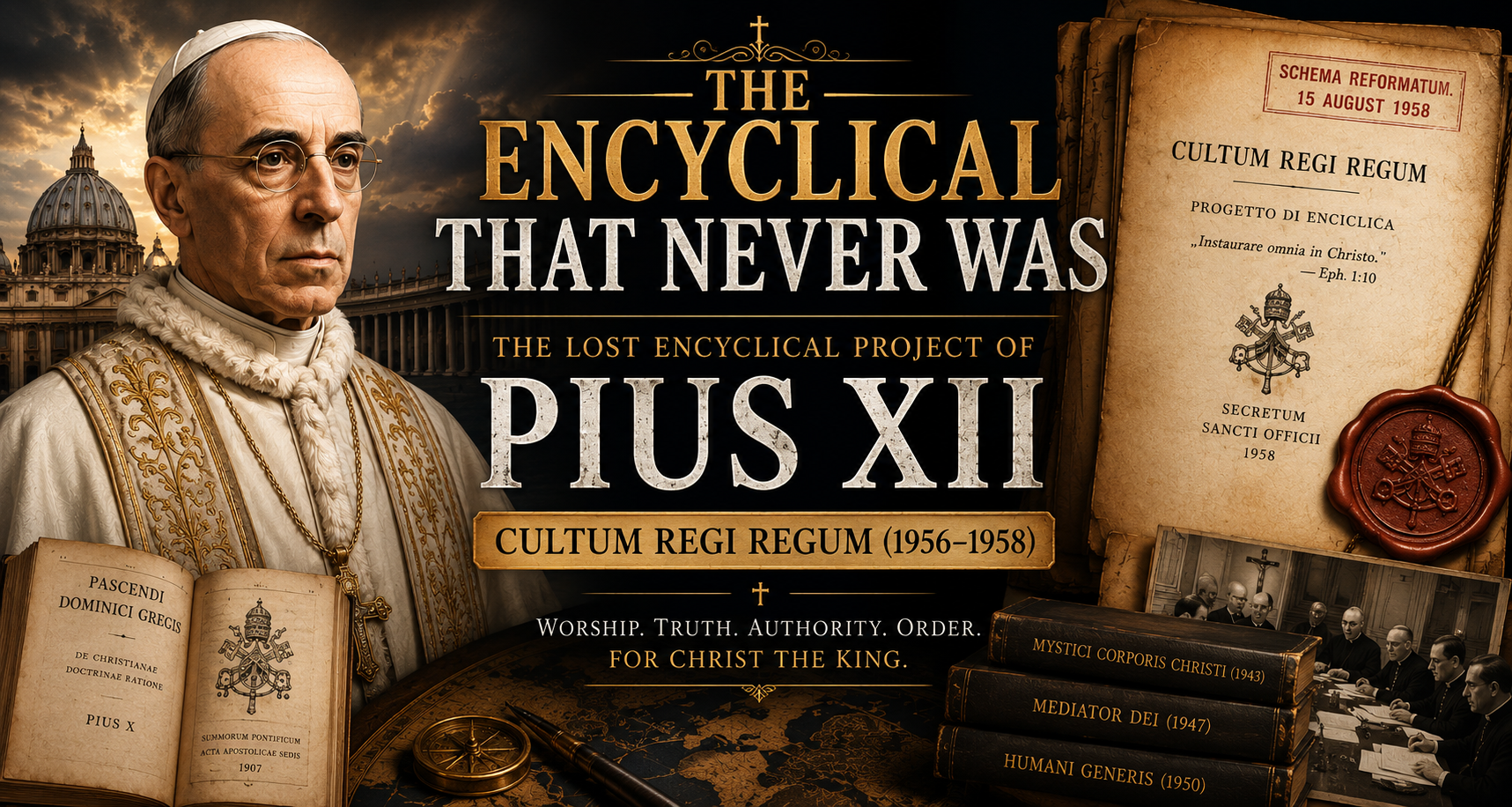
THE ENCYCLICAL THAT NEVER WAS: Cultum Regi Regum, Pius XII and the Road Not Taken in 1958
Instaurare omnia in Christo. — Eph. 1:10
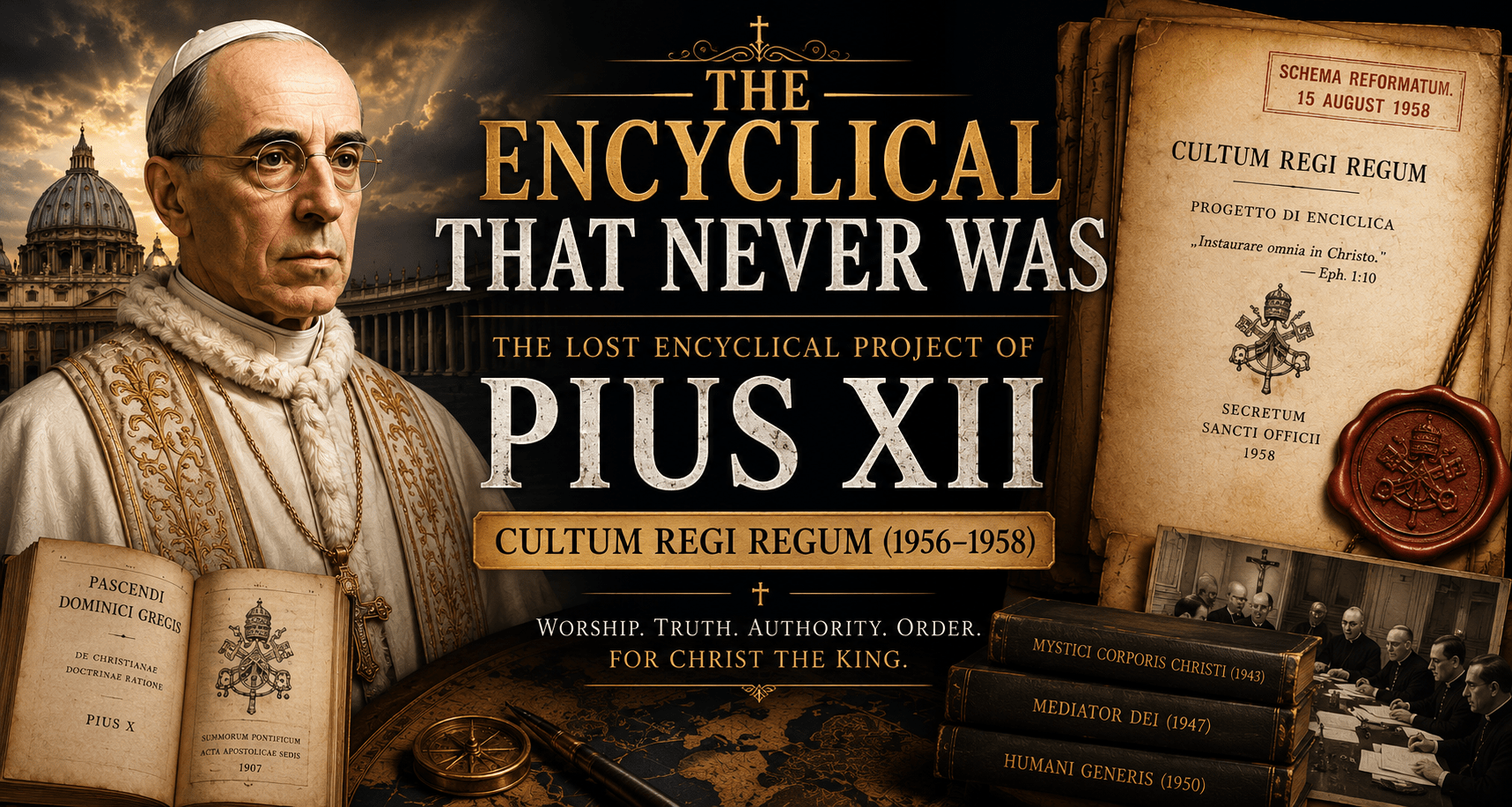
There are archival discoveries which add a detail to familiar history, and others which disturb the proportions of the history itself. The recovery of the project known as Cultum Regi Regum, intended as a major final encyclical of Pius XII, belongs to the latter category. Since the archives of the Pacellian pontificate were opened to researchers, Sabine Schratz and Daniele Premoli have reconstructed from the papers of the Holy Office an undertaking pursued between 1956 and 1958 which had reached an advanced stage by the last weeks of Pius XII’s life. Its scope was extraordinary. Religion and worship, the Mass and private devotion, natural law and marriage, the profession of faith, relations with non-Catholic Christians, the authority of the Magisterium, the proper place of theologians, and the relation of Church and State were all brought within a single synthesis. The researchers themselves describe the final draft, entitled Cultum Regi Regum, as intended to be a “Pascendi … of modern times” and a synthesis of the Pacellian pontificate.¹
That comparison with St Pius X’s Pascendi Dominici Gregis is the first clue to the document’s significance. Pascendi had not treated Modernism merely as a pile of erroneous propositions which might be corrected one at a time. It exposed a method, an intellectual habit capable of passing through philosophy, exegesis, theology, history and ecclesiastical life while retaining Christian vocabulary and progressively altering what the vocabulary meant. Nearly half a century later, Rome’s concern was not simply that the old Modernism had returned unchanged. The newer currents were more subtle. The Dominican Paul Philippe, whose analysis fed into the developing project, believed precisely that subtlety made the danger more serious. The theologians under scrutiny were not generally announcing a revolt against Christianity. They believed themselves to be renewing it, freeing Catholic thought from categories judged inadequate to modern man, recovering neglected biblical and patristic insights, and making Christian revelation intelligible in a changed intellectual world. Yet from the perspective of the Holy Office there remained a fundamental question: at what point does legitimate theological development cease to deepen the received Faith and begin, however benevolently, to reconstruct it?¹
The project was not an idle scheme lodged in some forgotten curial folder. On 29 December 1956 the Holy Office formally constituted a commission whose membership included some of its most influential consultors: among them the Dominicans Paul Philippe and Réginald Garrigou-Lagrange, and the Jesuits Sebastian Tromp and Augustin Bea.² The work eventually became sufficiently important that other doctrinal business was affected by the expectation of a comprehensive papal intervention. Schratz and Premoli describe an almost “magnetic” effect upon cases already before the Holy Office. The project thus belonged to the actual doctrinal machinery of Rome in the closing years of Pius XII’s reign, and it fitted naturally beside Mystici Corporis Christi, Mediator Dei and Humani Generis. The first had expounded the Church as the Mystical Body of Christ; the second encouraged genuine liturgical renewal while warning against archaeological restorationism and defective understandings of sacrifice and priesthood; the third addressed theological tendencies which threatened to loosen Catholic doctrine from the philosophical and dogmatic language by which the Church had traditionally expressed it.³
What Cultum Regi Regum proposed was broader still. Its several controversies were united by a single theological instinct, and the title gives that instinct away: the worship of the King of Kings. The modern crisis was understood at root as a disorder in man’s relation to God. Once man ceased to regard himself first as a creature, owing truth, worship and obedience to his Creator, the disturbance could not remain within the confines of private spirituality. It would appear in worship, in moral theology, in the understanding of marriage, in the relation between theologian and Magisterium, and finally in the ordering of society itself. The encyclical therefore did not begin from autonomous man and ask what place might still be found for God. It began from God and asked what follows for man.
Its definition of religion could hardly make this clearer. Religion, the draft says, “consistit in cultu latria”: it consists in the worship of latria, the adoration owed to God alone.⁴ The surrounding argument treats religion objectively, as the virtue by which man recognises the divine excellence and renders to God His due. This is far removed from the modern habit of speaking about religion principally as identity, inward experience or personal meaning. The difference is not semantic. Liberal society can comfortably tolerate the assertion that Christianity is meaningful to Christians; it becomes less comfortable when Christianity asserts that God possesses rights which neither believer nor State created, that revealed truth obliges whether or not it is socially convenient, and that human communities cannot finally organise themselves as though their Creator were irrelevant. The older Catholic claim is not that religion deserves a protected corner of human autonomy, but that man himself stands within an order he did not make.
This immediately becomes a social claim. In its discussion of Sunday observance, the draft argues that the health of the family, the commonwealth and even the society of nations depends upon the religious sanctification of the Lord’s Day, and it goes so far as to say that forms of technical or physical progress which destroy the sanctity of days consecrated to God cannot properly be called fully human.⁵ That judgment sounds almost alien after generations accustomed to treating Sunday principally as leisure, commerce and private choice, but its logic is straightforward. If man is made for God, public arrangements which systematically exclude worship from common life do not merely make society less Christian; they damage something properly human. This is the Social Kingship of Christ expressed not as nostalgia for an ancien régime but as a conclusion about human nature.
The liturgical passages deserve particular attention, not because they constitute a hidden condemnation of reforms which had not yet occurred, but because they reveal what Rome considered dangerous within the Liturgical Movement before the Council. Pius XII had already shown in Mediator Dei that liturgical renewal and liturgical conservatism were not the real alternatives. He favoured genuine renewal but rejected antiquarianism, defended legitimate private and popular devotions, maintained the specific nature of the ministerial priesthood, and insisted upon the objective sacrificial character of the Mass.⁶ The new draft returned to these concerns. It rejected the idea that the value of a single Eucharistic celebration at which a hundred priests assist can simply be equated with a hundred Masses separately offered by those priests.⁷ The concern is obvious: the priest is not merely a member of an assembly whose sacramental significance rises or falls according to collective participation. His offering of the Holy Sacrifice possesses an objective sacramental character of its own.
It would be easy, and historically careless, to make this passage do more work than it can bear. The draft did not foresee the Missal of Paul VI in its eventual form, and an unpromulgated document from 1958 cannot be cited as though Pius XII had condemned a reform promulgated eleven years later. Yet the opposite evasion is no better. The theological territory is plainly relevant. Within a decade and a half, concelebration had become common, Latin had largely disappeared from ordinary parish worship, sanctuary arrangements had been transformed, and much liturgical discourse had moved towards the categories of assembly and communal action. The historian need not pronounce upon the doctrinal legitimacy of all these developments to observe that the balance of emphases had changed. Cultum Regi Regum gives us a valuable datum from before that change: the late Pacellian Holy Office remained anxious that an exaggerated communal conception of the Eucharist might obscure the objective sacrifice and distinctive sacramental action of the priest.
The same confidence in an objective created order governs its moral teaching. The draft reaffirmed natural law and defended the traditional hierarchy of the ends of marriage, explicitly identifying procreation rather than the further perfection of the spouses as its primary end.⁸ It also reaffirmed the objective excellence of consecrated virginity over marriage, grounding that teaching in the more immediate orientation of the consecrated state towards union with God. These positions were perfectly recognisable within pre-conciliar Catholic theology; what makes their presence significant is the moment at which the Holy Office chose to gather them into a comprehensive treatment of contemporary error. The great sexual revolution had scarcely begun. Widespread legal abortion remained ahead; the normalisation of contraception had not yet remade Western assumptions about marriage; same-sex marriage and the legal reconstruction of biological sex lay far beyond ordinary political imagination. Yet Rome was already defending the principle upon which these later controversies would turn: human nature and its ends are received rather than invented. Once finality is treated as something bestowed by the Creator, moral theology begins with what things are. Once it is detached from nature, human preference will sooner or later claim jurisdiction over what things mean.
It is in the discussion of relations with non-Catholic Christians that the distance between 1958 and the subsequent ecclesial atmosphere becomes most visible. The draft did not deny that Catholics and non-Catholics might cooperate for genuine common purposes. Its concern was that such cooperation could induce Catholics to treat doctrinal division as something to be set aside for the sake of practical fraternity. The analogy chosen is severe: a healthy doctor may work alongside a physician suffering from a contagious disease, but greater intimacy in their common work requires greater vigilance against infection.⁹ The image concerns exposure to religious error, not the personal dignity of the separated Christian; nevertheless, it is scarcely imaginable in an official ecumenical document of the post-conciliar period. That alone makes it an unusually clear measure of the change in ecclesiastical instinct.
Six years later Unitatis Redintegratio would make the restoration of Christian unity one of the principal concerns of Vatican II and encourage Catholics to take an active part in ecumenical work; John Paul II would subsequently insist upon the Church’s commitment to that task with particular force.¹⁰ To say this is not yet to demonstrate a contradiction of doctrine. Indeed, carelessness about categories has often weakened traditional criticism of the Council: not every altered emphasis is a formal reversal, not every change of prudential policy is heresy, and not every new expression abolishes everything said before it. But there is equally little merit in pretending that no meaningful alteration occurred. The Holy Office of Pius XII chiefly approached organised interconfessional cooperation through the dangers of indifferentism and contamination by error. Vatican II positively fostered ecumenical engagement as an activity of the Church. A serious account of continuity must explain that change of posture; it cannot make it disappear by vocabulary alone.
The draft’s treatment of ecclesiastical authority is perhaps still more pertinent. Religion is called “via auctoritatis et oboedientiae” — a way of authority and obedience — and the munus docendi, the Church’s authoritative teaching office, is located in the hierarchy, in the Roman Pontiff and the episcopate.¹¹ Yet this is not a dismissal of theologians. The draft gives them a serious vocation within the Mystical Body: they form future clergy, assist in the preparation of doctrinal documents, elucidate authoritative decisions, examine the relation between revealed truth and the human sciences, and help determine the theological qualification of propositions. The important qualification is that they perform this work under the vigilance of the Pastors and thereby contribute to preserving the purity of faith. Theologians serve the Magisterium; they do not constitute a second Magisterium.
This question acquired a new urgency almost immediately after Pius XII. Several theologians whose work had previously encountered Roman suspicion became influential periti at Vatican II. That fact by itself proves very little: theological suspicion is not infallible, and an expert can make valuable contributions even after earlier controversy. What changed more deeply was the practical relationship between academic theology and hierarchical authority. By the later 1960s organised theological dissent could claim an ecclesial authority of its own, most conspicuously in the reaction to Humanae Vitae. The issue raised in Cultum Regi Regum therefore reaches beyond disputes over particular names. Catholic theology cannot function if the Deposit of Faith is merely raw historical material waiting to be reconstituted by whatever philosophical, psychological or sociological categories currently command the academy. Development of doctrine presupposes something that develops; renewal presupposes something received.
The final section of the project is perhaps the most important for understanding how different the pre-conciliar Roman horizon could be from later assumptions. Under the heading Ordo religiosus et ordo profanus, the draft dealt with Church and State, drawing upon work which had occupied the Holy Office since 1950 and which continued into the period of Vatican II.¹² Its point of departure was the classical Catholic conviction that Church and civil society possess proper competencies, but that the temporal and supernatural ends of man cannot be treated as two unrelated sovereignties. The argument culminates in the concise proposition “bonum profanum bono religioso esse subordinandum” — the temporal good is to be subordinated to the religious good when man’s ultimate end is at stake.¹³ The authors of the study accordingly summarise the underlying thrust as a defence of the rights of God and the Church, the objectivity of revealed truth as interpreted by the Magisterium, the authority of the Magisterium over theology, the authority of the hierarchy within the Mystical Body, and a competence of the Church towards the State not reducible to the purely private sphere.
Seven years later Dignitatis Humanae would articulate a civil right to religious freedom chiefly as immunity from coercion in religious matters within due limits, while expressly declaring that the Council intended to leave intact traditional Catholic teaching concerning the duties of men and societies towards the true religion.¹⁴ That final clause is indispensable, and serious criticism of the declaration must reckon with it. Yet it is equally indispensable to recognise what the archive now shows us. The Holy Office in 1958 was not preparing the conceptual architecture which came to dominate the Council’s treatment of religious liberty. It was restating the older political theology in language of hierarchy, objective truth, divine rights and the subordination of temporal goods to the supernatural end. Whether Dignitatis Humanae can be reconciled with that inheritance as an authentic development, whether it changes the juridical application while preserving principle, or whether unresolved tensions remain is a theological dispute which cannot responsibly be settled by slogan. What cannot now be argued plausibly is that the pre-conciliar position already looked substantially like the conciliar one.
At precisely this point we must guard against overstating the discovery. Cultum Regi Regum is not a lost encyclical in the same sense that Humani Generis or Mediator Dei are encyclicals. It was never promulgated. It therefore never became an act of the papal Magisterium, and its propositions cannot honestly be introduced with the words “Pius XII taught” as though Pacelli had signed and published them to the universal Church. Nor does the evidence presently justify the more sensational claim that a completed, personally approved encyclical was deliberately suppressed because it would have prevented Vatican II. The archival record is remarkable without mythology. A major encyclical project was undertaken within the Holy Office; a commission was formally established; successive drafts were produced; the work was conceived as a comprehensive response to contemporary errors and a synthesis of Pius XII’s pontificate; and other doctrinal proceedings were affected by the expectation that the resulting document would provide a wider framework.¹⁵
The chronology at the end is nevertheless extraordinary. The revised draft was dated 15 August 1958 and was transmitted to members of the commission on 27 September. Pius XII died on 9 October, twelve days later.¹⁶ The project then disappeared from the papal programme. Nineteen days after Pacelli’s death, Cardinal Angelo Roncalli was elected John XXIII; on 25 January 1959 he announced an ecumenical council. In remarkably little historical time, Rome passed from preparing an anti-modernist synthesis under the Holy Office to a pontificate whose governing rhetoric centred upon aggiornamento, pastoral presentation and the convocation of Vatican II. None of this proves that Pius XII would have promulgated the surviving draft unchanged had he lived another month, nor that John XXIII consciously rejected it proposition by proposition. It does establish that the change of pontificate coincided with the abandonment of a doctrinal project whose instincts differed sharply from much that would characterise the ensuing conciliar period.
This is where Cultum Regi Regum makes facile appeals to a hermeneutic of continuity more difficult, but also more useful. Benedict XVI’s insistence that Vatican II must not be treated as though it created a new Church was necessary. Yet continuity cannot be demonstrated by emptying the earlier position of everything which makes the comparison difficult. If the pre-conciliar Church is retrospectively redescribed until it already sounds like Vatican II awaiting improved terminology, continuity has become a tautology. The more serious task is to permit both sides of the comparison to speak at full strength. In September 1958 the projected papal synthesis emphasised objective worship owed to God, the sacrificial action of the priest, natural-law finality in marriage, vigilance against indifferentism, hierarchical authority over theology and the subordination of temporal to supernatural goods. Within a few years the characteristic vocabulary of major ecclesiastical documents included dialogue, ecumenism, collegiality, religious liberty, legitimate autonomy and engagement with the modern world. The question for a hermeneutic of continuity is not whether this change can be denied. It is how it is to be explained.
The distinction matters because there are at least three different questions which are too often collapsed into one. Did Vatican II formally contradict previous Catholic doctrine? Did it alter the language, emphasis and conceptual framework in which Catholic doctrine was habitually presented? Did it inaugurate or legitimise a substantially different pastoral orientation? The first requires proposition-by-proposition theological demonstration and cannot be resolved by impression. The latter two admit of much stronger historical evidence. Cultum Regi Regum is important precisely because it supplies a new control point immediately before the Council. It shows what influential Roman theologians and the Holy Office, working upon a major papal project under Pius XII, still regarded as the appropriate answer to the modern crisis.
There is therefore little profit in turning the document into a counterfactual fantasy about the Council Pius XII “would have held”. Plans for a council had existed before John XXIII, but no archive can tell us what Pacelli would finally have done had he lived. It is reasonable, however, to observe that a council operating within the theological horizon represented by Cultum Regi Regum would have approached the problems of the age differently. Its instinct would have been to consolidate the anti-modernist analysis of Pascendi and Humani Generis, to protect the sacrificial and hierarchical principles defended by Mediator Dei and Mystici Corporis, to restate natural law as Western sexual morality began to unravel, and to reaffirm the Social Kingship of Christ against the continuing secularisation of states. It would have been more likely to define, delimit and defend than to begin from dialogue and accommodation. That road was not historically taken; the recovered manuscript matters because it shows how close to the junction Rome still stood in 1958.
Nor should anyone imagine that promulgation of Cultum Regi Regum would necessarily have prevented the later crisis. Papal documents do not exercise a magical power over history. Pascendi was promulgated and Modernism survived. Humani Generis was promulgated and theological tendencies criticised by Pius XII continued to develop. Mediator Dei was promulgated and the liturgical transformation nevertheless followed. Quas Primas proclaimed the Social Kingship of Christ with magnificent clarity while the political order of Europe continued to secularise. The Church is defended not by documents alone but by bishops willing to govern, theologians willing to receive before they innovate, priests willing to teach what they have received, and faithful willing to live what they profess.
Yet documents tell us what men believe themselves to be defending, and on that score Cultum Regi Regum is remarkably coherent. Its individual controversies are branches of one argument. Religion is objective because God is objectively worthy of worship. Liturgy is not constructed by the congregation because the Sacrifice precedes the congregation’s experience of it. Marriage has intrinsic ends because human nature comes from a Creator. Theologians do not manufacture the Faith because revelation has already been given. The State cannot be metaphysically sovereign because political society is composed of creatures whose final end exceeds political life. These propositions are intelligible together because they share an anterior conviction: reality is received before it is interpreted.
That is why the title is more than a title. Cultum Regi Regum: the worship of the King of Kings. It names the point from which the whole lost project takes its bearings. Modernity has characteristically begun with man — his consciousness, his autonomy, his dignity, his desires, his historical situation — and then negotiated the place which God may occupy within that human construction. The Catholic order begins elsewhere. God is first. Man’s dignity is real because it is received from Him; freedom is intelligible because it is ordered to truth; worship is obligatory because the creature owes adoration to the Creator; society is not absolute because Christ is King over societies as surely as over individuals.
Twelve days after the revised draft was circulated, Pius XII was dead. Within four months his successor had announced a Council. Within seven years the Catholic Church had entered an ecclesiastical landscape which even sympathetic advocates of continuity must recognise as markedly different in language, atmosphere and pastoral method. The rediscovery of Cultum Regi Regum cannot settle every dispute about Vatican II, nor should anyone ask it to. Its importance is subtler and more durable. It allows us to see, with exceptional proximity to the Council, what the Roman doctrinal establishment of the late Pacellian period believed the decisive questions to be.
Those questions have not vanished. What is religion: an objective obligation towards God or principally an expression of personal consciousness? What is the Mass: first the Sacrifice offered through the ministerial priesthood or first the action of an assembled community? Does marriage possess ends which precede the preferences of spouses? Does theology receive and explicate revelation or continually reconstruct its meaning? Is religious error merely one option within an autonomous pluralism, or can society distinguish between truth and falsehood while respecting persons? Does political authority answer only to the temporal community, or ultimately to God? Beneath all of them lies the question which modernity has never succeeded in escaping: does man receive reality and its order, or finally make that order for himself?
The document never became Magisterium. Pius XII died before the project reached promulgation, and historical honesty requires us to say so without qualification. But perhaps that makes the manuscript more, rather than less, revealing as an historical witness. It catches Roman Catholic doctrinal instinct immediately before one of the most consequential turns in modern Church history, before later explanations, reconciliations and hermeneutics had become necessary. Here is the road Rome was still contemplating in the summer and autumn of 1958.
Its destination was already written at the head of the page:
Cultum Regi Regum.
The Worship of the King of Kings.
¹ Sabine Schratz and Daniele Premoli, “‘The Encyclical Pascendi of Modern Times’: The Design for Pius XII’s Last Encyclical (1956–58),” Journal of Modern and Contemporary Christianity, vol. 3, no. 1 (2024), pp. 153–174.
² Schratz and Premoli, “‘The Encyclical Pascendi of Modern Times’,” pp. 158–160.
³ Pius XII, Mystici Corporis Christi, 29 June 1943; Mediator Dei, 20 November 1947; Humani Generis, 12 August 1950.
⁴ Schratz and Premoli, “‘The Encyclical Pascendi of Modern Times’,” p. 166, citing Progetto di Enciclica (Schema reformatum), no. 13.
⁵ Ibid., p. 167, citing Schema reformatum, no. 20.
⁶ Pius XII, Mediator Dei, 20 November 1947.
⁷ Schratz and Premoli, “‘The Encyclical Pascendi of Modern Times’,” p. 167, citing Schema reformatum, no. 16.
⁸ Ibid., p. 168, citing Schema reformatum, no. 26.
⁹ Ibid., p. 169, citing Schema reformatum, no. 47.
¹⁰ Second Vatican Council, Unitatis Redintegratio, 21 November 1964; John Paul II, Ut Unum Sint, 25 May 1995.
¹¹ Schratz and Premoli, “‘The Encyclical Pascendi of Modern Times’,” p. 169, citing Schema reformatum, nos. 50, 54.
¹² Ibid., pp. 170–171.
¹³ Ibid., pp. 170–171, citing Schema reformatum, no. 73.
¹⁴ Second Vatican Council, Dignitatis Humanae, 7 December 1965, no. 1–2.
¹⁵ Schratz and Premoli, “‘The Encyclical Pascendi of Modern Times’,” pp. 153–174.
¹⁶ Ibid.; Pius XII’s pontificate ended with his death on 9 October 1958.
RELATED ARTiCLES


LATEST ARTICLES
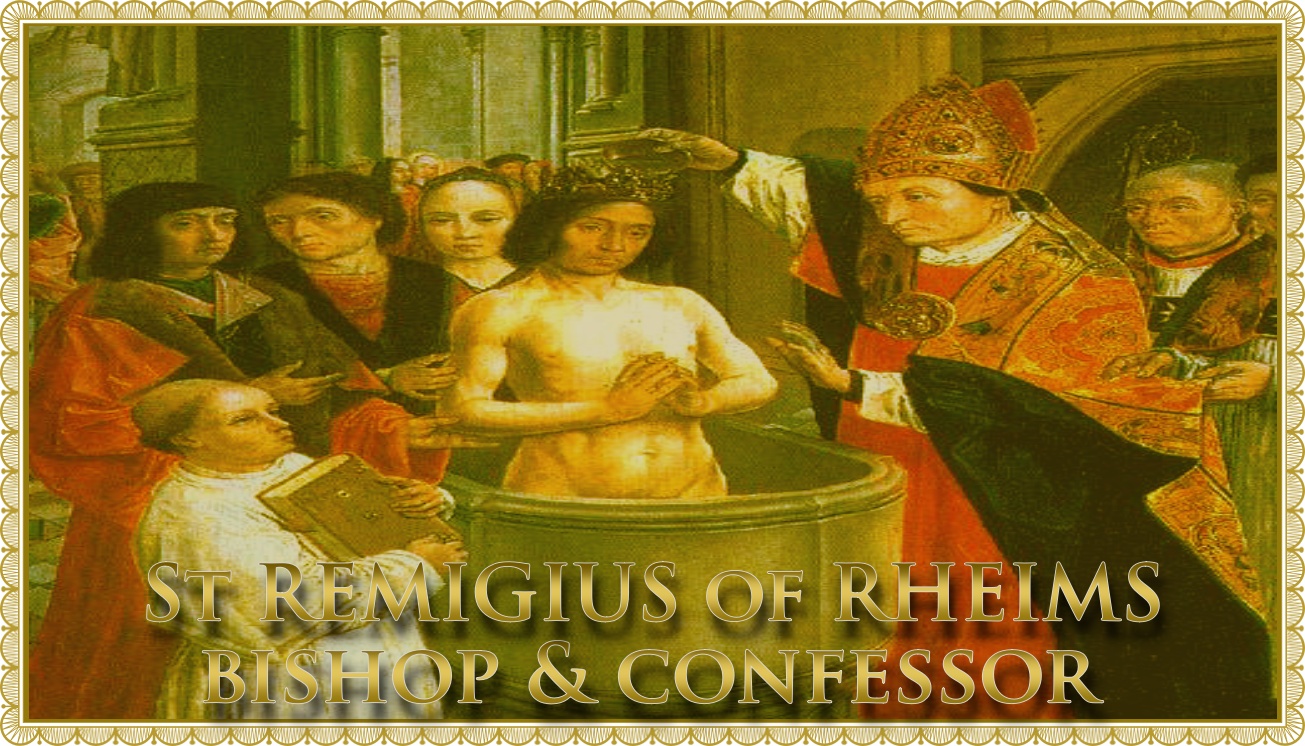
- Today’s Mass: October 01 St Remigius of RheimsSt Remigius of Rheims, a significant bishop and apostle of the Franks, was renowned for his learning, holiness, and miraculous deeds during his seventy-plus years of episcopacy. He was instrumental in spreading Christianity under King Clovis and left a lasting legacy before his death around 530.
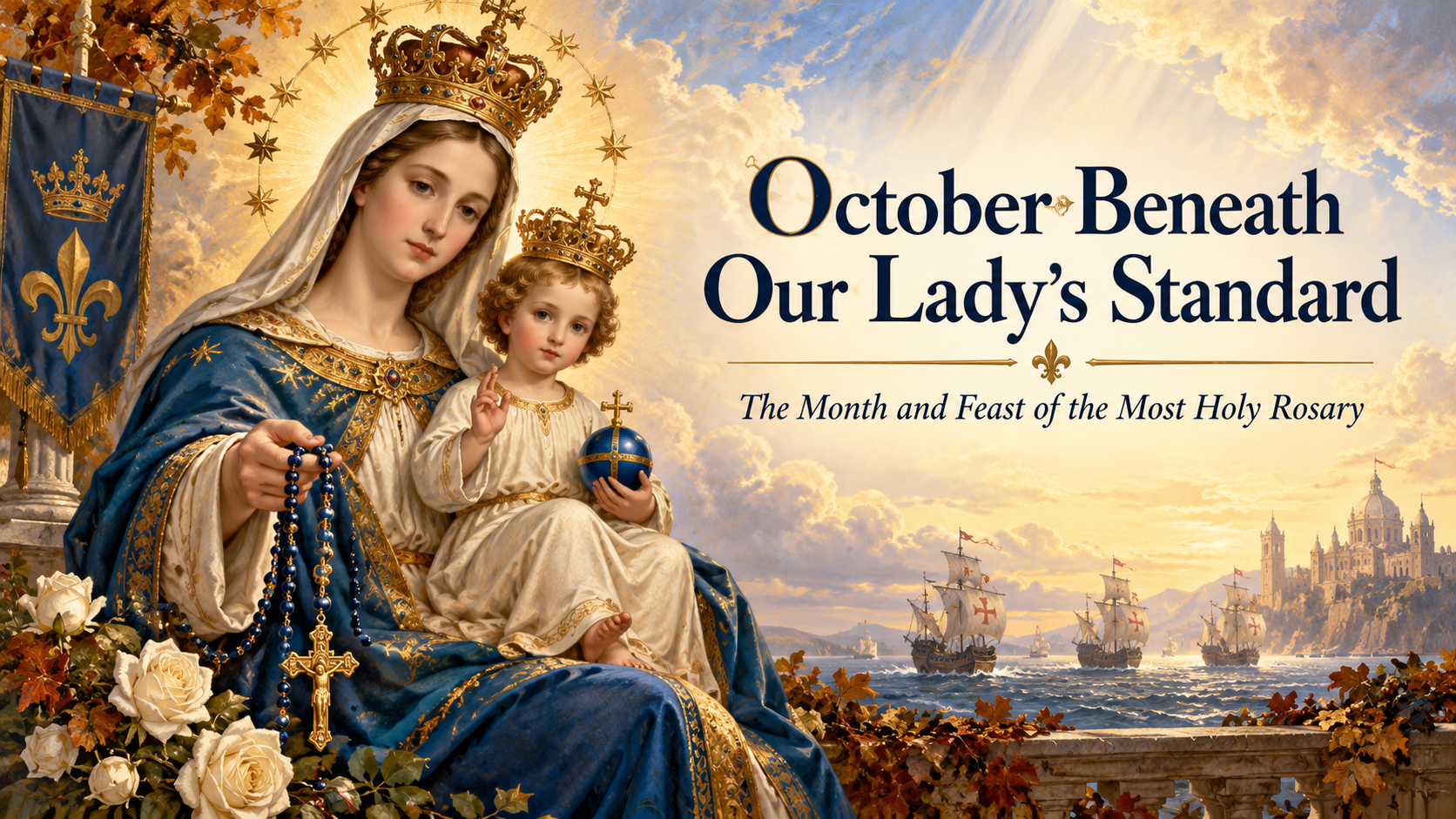
- October Beneath Our Lady’s StandardThe Feast of the Most Holy Rosary commemorates the 1571 victory at Lepanto and evolved through papal endorsements, especially under Pope Leo XIII in the late 19th century. October, dedicated to the Rosary, serves as a reminder of prayer’s significance during trials, fostering both personal and communal spiritual resilience in Catholic life.
- Marriage Endures as Britain’s Common Christian Framework RecedesRecent ONS data indicates that 83.7 per cent of couples married in 2015 remained together by their tenth anniversary. However, Britain faces declining fertility rates, increasing abortion statistics, an ageing Christian demographic, and a reliance on migration for population growth. The critical challenge lies in transmitting family, faith, and culture across generations.
- Vatican III by Stealth? When “Reception” Becomes RevisionArchbishop Anthony Randazzo warns against the misuse of synodality as a means to eliminate perceived “dead wood” from the Church, stressing the importance of faithfully interpreting Vatican II. He argues that authentic renewal relies on the continuity of the Church’s doctrine, warning that unchecked synodality may lead to revisions of established teachings rather than genuine reception.
- Today’s homily: St Jerome of BethlehemThe homily reflects on St Jerome’s profound transformation from a scholar enamoured with classical literature to a devoted servant of Christ. It highlights the necessity of allowing faith to permeate one’s life, emphasising that merely possessing knowledge of doctrine is insufficient without a corresponding internal change. Jerome’s legacy urges believers to let Scripture guide their lives authentically.
CURRENT EDITION


Today’s Mass Propers
- Today’s Mass: October 01 St Remigius of Rheims
 St Remigius of Rheims, a significant bishop and apostle of the Franks, was renowned for his learning, holiness, and miraculous deeds during his seventy-plus years of episcopacy. He was instrumental in spreading Christianity under King Clovis and left a lasting legacy before his death around 530.

Leave a Reply