

The Children Must Go Elsewhere: Seattle and the Price of Canonical Obedience

A report emerging from the Archdiocese of Seattle deserves attention not because every detail has yet been established, but because, if substantially correct, it exposes with unusual clarity the predicament into which Rome’s policy towards traditional Catholics has developed. According to a parent belonging to North American Martyrs Parish in Edmonds, Washington — the personal parish entrusted to the Priestly Fraternity of Saint Peter — families have been informed that Confirmations will no longer take place through their FSSP parish. Candidates, it is alleged, must instead register at a Novus Ordo parish and undertake a two-year catechetical programme there before receiving the sacrament. LifeSiteNews traced the report to Seattle and sought clarification from the parish and the Fraternity; the pastor referred the enquiry to his FSSP superiors, whose North American Province offered no comment. InfoVaticana subsequently reported the same allegation while correctly observing that its precise terms have not yet been confirmed in a published archdiocesan or FSSP document.¹
That qualification is essential. There is, at the time of writing, no publicly available decree from Paul D. Etienne, Archbishop of Seattle, setting out the alleged policy, nor a statement from the FSSP confirming exactly what its parishioners have been told. The responsible course is therefore neither to dismiss the report nor to transform an anonymous parental account into a document we have not seen. Accipere, non fingere: receive what is actually given; do not manufacture what is missing. What can be said is that a specific FSSP parish has been identified, the report has been put directly to those responsible for it, and the Fraternity has declined publicly to contradict it. That is enough to justify scrutiny — and the circumstances already established make the allegation particularly serious.
For the central issue is not simply whether Archbishop Etienne is willing to confer Confirmation according to the older Roman Pontifical. If the report is accurate, something more consequential is being required: children belonging to a canonically erected traditional parish are apparently being told that they must leave their own parish for sacramental preparation, enrol in another parish, and undergo its programme before they may be confirmed. That is the point around which the whole affair turns. North American Martyrs is not a private Mass centre functioning on sufferance. It is a canonical parish of the Archdiocese of Seattle entrusted to the FSSP. Its priests are not irregular clergy ministering without diocesan recognition. They have been entrusted by the Archbishop himself with the pastoral care of the faithful who worship there.²
Indeed, when Archbishop Etienne implemented Traditionis Custodes in September 2021, he specifically preserved North American Martyrs. His decree acknowledged that the parish had been canonically erected for Catholics attached to the older Roman liturgy, recognised that its FSSP clergy did not deny the validity and legitimacy of the reformed rites, and retained the parish for the spiritual good of its faithful.³ The significance is difficult to miss. These Catholics did precisely what traditional Catholics have repeatedly been told they must do. They worship in a canonically recognised parish. They receive the sacraments from priests in good standing. Their clergy acknowledge the diocesan bishop. Their priestly society recognises the reigning Pope and the validity of the post-conciliar rites. There is no question here of clandestine chapels, supplied jurisdiction or episcopal acts undertaken without permission. North American Martyrs represents almost perfectly the model of traditional Catholic life which Rome said could exist within canonical obedience.
Which makes the alleged instruction all the more revealing.
There is, admittedly, a genuine canonical distinction which should not be obscured for polemical convenience. The ordinary minister of Confirmation in the Latin Church is a bishop; priests administer the sacrament only where universal law or competent authority gives them the faculty to do so.⁴ Consequently, the fact that the FSSP possesses the right to use the traditional liturgical books does not automatically mean that an FSSP priest may arrange ordinary parish Confirmations independently of the diocesan bishop. Archbishop Etienne can decline personally to confer Confirmation according to the traditional rite, and absent some other applicable faculty he can decline to delegate an FSSP priest to do so. That much should be stated plainly.
But even that explanation is not as simple as some accounts of the controversy have implied. In December 2021 the Congregation for Divine Worship’s Responsa ad dubia concerning Traditionis Custodes restricted use of the former Pontificale Romanum.⁵ Yet less than two months later, on 11 February 2022, Pope Francis personally issued a decree concerning the FSSP which expressly granted its members the faculty to celebrate Mass, administer the sacraments and perform sacred rites according to the liturgical books in force in 1962. Those books were individually named: the Missal, the Ritual, the Pontifical and the Roman Breviary. The concession applied in the Fraternity’s own churches and oratories, while use elsewhere required the consent of the local Ordinary.⁶ Whatever ambiguities remain concerning the canonical minister of Confirmation, it is therefore impossible to maintain that the FSSP’s use of the old Pontifical was simply extinguished by Traditionis Custodes. Pope Francis himself subsequently and specifically named it.
Yet even this canonical argument risks distracting from the more extraordinary question raised by Seattle. If Archbishop Etienne chooses not to confirm these children according to the traditional rite, one may dispute the pastoral wisdom of his decision while recognising the authority by which he makes it. But why, if the parental account is correct, must the children also be removed from the catechetical care of their own parish?
These are children whose families have entrusted their Catholic formation to North American Martyrs. They have been taught their Faith there. They attend Mass there. They confess there. They are formed by priests whom the Archbishop recognises as suitable pastors for precisely this community. Canon law itself places upon pastors an obligation to provide suitable catechesis for the sacraments and explicitly recognises the role of parents in the religious formation of their children.⁷ If the FSSP priests of North American Martyrs are competent to preach the Gospel, hear confessions, prepare converts, instruct children, counsel families and exercise the cure of souls, by what coherent pastoral reasoning would those same priests be considered inadequate to prepare their own young parishioners for Confirmation?
There may be an answer. Perhaps the actual directive is narrower than reported. Perhaps candidates may still be prepared at North American Martyrs but confirmed elsewhere. Perhaps some administrative requirement has been misunderstood in transmission. If so, the Archdiocese should say so and the FSSP should be free to explain the situation to its faithful. The absence of a published directive is precisely why caution is necessary.
But if the parental account proves substantially correct, the consequences extend well beyond one parish in Washington State.
The FSSP was born from the crisis of 1988. Its founders separated themselves from Archbishop Marcel Lefebvre following the episcopal consecrations at Écône and accepted the canonical settlement offered by Rome. Their choice represented a proposition which traditional Catholics have heard ever since: the ancient Roman liturgical life could be preserved, but it must be preserved within obedience. Do not act independently. Do not supply for yourselves what legitimate authority refuses. Accept the bishops appointed over you. Seek faculties. Maintain canonical regularity. Trust the Roman authorities.
The FSSP did.
And herein lies the uncomfortable lesson.
Catholics attached to the SSPX are warned of the consequences of irregularity; Catholics attached to the FSSP are increasingly confronted with the consequences of regularity.
The former are criticised because their priests act without ordinary canonical mission. The latter possess canonical mission — and therefore remain dependent upon those who can restrict its exercise. The SSPX is condemned for refusing to place the preservation of Tradition entirely at the discretion of diocesan authorities. The FSSP accepted precisely that dependence and can therefore find itself unable to provide what its own faithful reasonably believed canonical regularisation existed to preserve.
This is not an argument that every judgement made by Archbishop Lefebvre was correct, still less that canonical irregularity should be treated lightly. It is something more difficult for Rome to answer. What was canonical regularisation supposed to secure?
Not an absolute immunity from episcopal government; no such promise was ever made. Not a private ecclesiastical enclave beyond the ordinary discipline of the Church. But surely the entire rationale of the Ecclesia Dei settlement was that Catholics attached to the traditional Roman liturgical and sacramental inheritance could live that attachment honestly, peacefully and fruitfully within recognised structures of the Church. If what survives is merely the right to celebrate the old Mass until a bishop decides otherwise, while the wider sacramental ecology surrounding that Mass is progressively severed, then the supposed settlement becomes something very different from what generations of traditional Catholics were encouraged to believe.
For Catholic Tradition is not simply a Sunday Mass at a convenient hour.
It is a whole sacramental, doctrinal and devotional culture. Baptism, catechesis, confession, Confirmation, marriage, Extreme Unction, the liturgical year, fasting, devotions, sacred music, the language of prayer, the theology expressed by gestures and ceremonies: these things belong together. The FSSP did not come into existence merely to provide a Latin-language Eucharistic option inside an otherwise entirely post-conciliar religious culture. Its raison d’être was the preservation and transmission of a received Roman liturgical life.
Confirmation illustrates the point especially clearly. In the traditional rite the bishop invokes the sevenfold gifts of the Holy Ghost, anoints the candidate with sacred chrism and marks him publicly as one strengthened to confess Christ. The customary alapa, the light blow upon the cheek which follows, has long been understood as a sign that the confirmed Christian must be prepared to endure opposition and suffering for the Faith. This is not an assertion that the reformed rite is invalid. It is an acknowledgement that rites form those who receive them. Families who have deliberately raised their children within the older Roman liturgical tradition naturally desire that one of the principal sacraments of Christian initiation should be received within that same inherited language of faith.
Rome itself recognised that desire when it established structures for traditional Catholics. Pope Francis himself recognised it when, notwithstanding Traditionis Custodes, he expressly confirmed the FSSP’s use of the traditional Pontifical. Yet if the Seattle report is correct, the faithful of a parish existing precisely to transmit that tradition are now being told that when their children reach Confirmation they must step outside it.
One therefore arrives at an ecclesiological absurdity. North American Martyrs is apparently Catholic enough to baptise the children, catechise them, hear their confessions and form their consciences. Its priests are Catholic enough to preach to them and guide their families. Its parishioners are Catholic enough to support an archdiocesan parish and submit to an archdiocesan bishop. But at Confirmation, if the report is accurate, the Church suddenly requires them to go elsewhere — not merely for the bishop who alone may be available to administer the sacrament, but for the catechetical preparation preceding it.
If the purpose is communion, this is a strange way to foster it.
Communion is not strengthened by making faithful Catholics experience their liturgical inheritance as an embarrassment periodically tolerated by authority. Unity is not created by maintaining a traditional parish while preventing it from transmitting its sacramental life intact to the next generation. Confidence in episcopal authority is not encouraged by telling Catholics that obedience is the answer to every traditionalist difficulty and then using precisely that obedience as the mechanism through which their traditions can be withheld.
And the pastoral consequences should not be underestimated. Families will notice the contradiction. Young people will notice it. Priests will notice it. Traditional Catholics watching from outside the FSSP will notice it. Above all, those attached to the Society of Saint Pius X will notice it.
For decades they have been told: Look at the FSSP. This is how Tradition can flourish in obedience.
If Seattle is as reported, they are entitled to reply: Flourish until when?
Until a bishop declines the traditional Confirmation? Until children must attend another parish’s catechetical programme? Until some future restriction touches Baptism, marriage or the Ritual? Until a concession is reinterpreted, narrowed or withdrawn?
The point is not that every such fear will necessarily materialise. The point is that canonical obedience cannot plausibly be presented as the secure solution to the traditional crisis when the communities which embraced it remain structurally unable to guarantee the transmission of the very inheritance for whose protection they accepted regularisation.
That problem belongs to Rome, not to the children of North American Martyrs.
If the Seattle report is inaccurate, let it be corrected immediately. If it is incomplete, let the missing facts be supplied. If Archbishop Etienne’s direction concerns only the minister or location of Confirmation, rather than the preparation of candidates, that distinction should be made public and welcomed.
But if the report is true in substance, then the matter deserves to be called what it is: not an administrative adjustment, but another erosion of the practical settlement offered to traditional Catholics who chose obedience rather than resistance.
Accipere, non fingere. Tradition is something received before it is something regulated. Bishops receive an office; they do not invent the Faith which that office exists to transmit. Priests receive a sacred inheritance; they do not manufacture it according to contemporary preference. Parents receive the grave duty to hand the Catholic Faith to their children. And children approaching Confirmation have a right to be treated as souls to be strengthened in Christ, not as instruments in an ecclesiastical campaign against the older Roman tradition.
A Church confident in her inheritance does not fear handing it on.
If the ancient Roman sacramental life was Catholic when North American Martyrs was erected, Catholic when Archbishop Etienne preserved the parish in 2021, Catholic when Francis expressly confirmed the FSSP’s use of the Pontificale Romanum in 2022, and Catholic throughout the years in which these children have been formed within it, then it has not ceased to be Catholic when those same children come forward to receive the Holy Ghost in Confirmation.
Rome cannot indefinitely tell traditional Catholics that obedience is the answer while permitting obedience to become the means by which their inheritance is made impossible to transmit.
¹ Emily Mangiaracina, “Latin Mass parish restricted from confirmations by archbishop of Seattle: report,” LifeSiteNews, 13 August 2026, updated 14 August 2026; InfoVaticana, “Young people from an FSSP parish in Seattle will have to go to other parishes to receive confirmation,” 15 August 2026.
² Archdiocese of Seattle, parish listing, North American Martyrs, Edmonds; Priestly Fraternity of Saint Peter, North American Martyrs apostolate information.
³ Paul D. Etienne, Archbishop of Seattle, Decree Implementing the Motu Proprio Traditionis Custodes, 8 September 2021.
⁴ Code of Canon Law, cann. 882–888.
⁵ Congregation for Divine Worship and the Discipline of the Sacraments, Responsa ad dubia on certain provisions of Traditionis Custodes, 4 December 2021, published 18 December 2021.
⁶ Francis, Decree concerning the Priestly Fraternity of Saint Peter, 11 February 2022; Priestly Fraternity of Saint Peter, official publication and commentary on the decree.
⁷ Code of Canon Law, cann. 776–777, 890; cf. Archdiocese of Seattle, published material concerning Confirmation preparation and the revision of the age of Confirmation.
RELATED ARTiCLES


LATEST ARTICLES
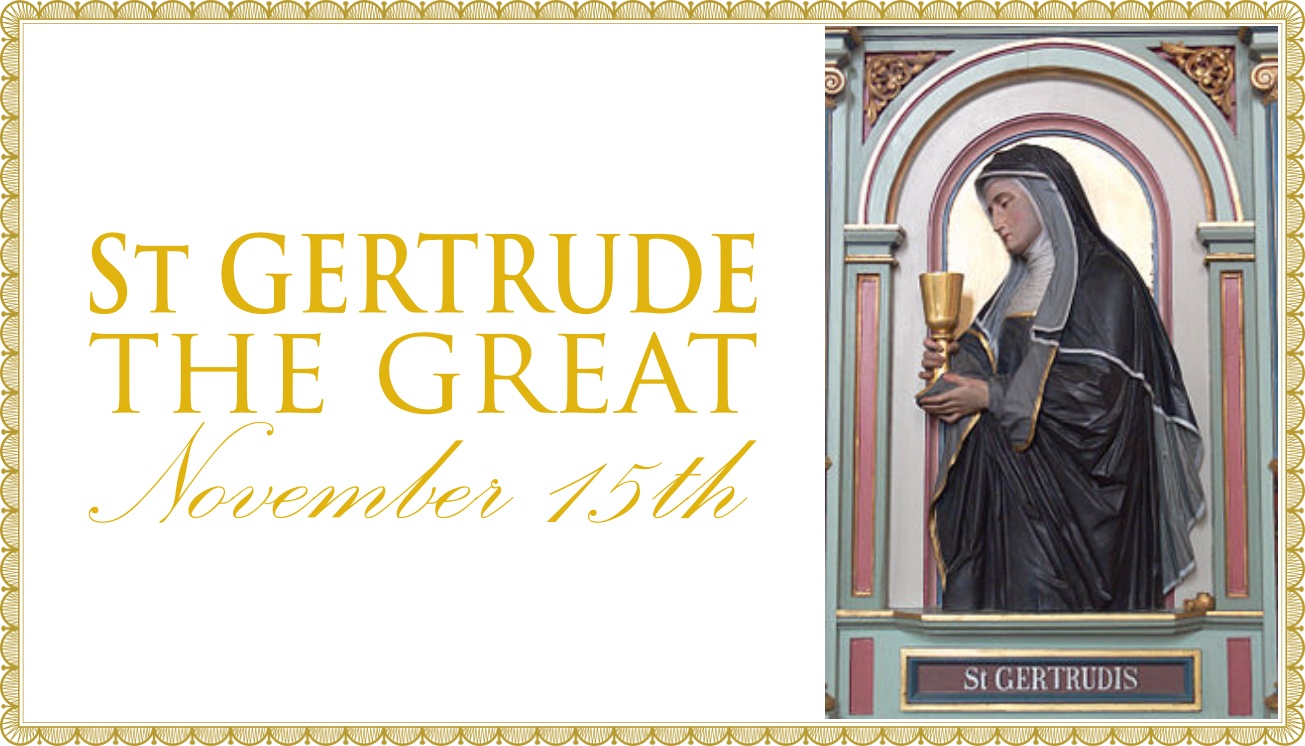
- Today’s Mass: November 15 St Gertrude the GreatSaint Gertrude the Great was a devout virgin and abbess, noted for her extraordinary spirituality and dedication to God. Born in Eisleben, she joined a Benedictine convent at a young age, led a life of virtue, and was known for her humility, visions, and miracles. Her compassionate leadership earned her lasting veneration after her death in 1292.
- Sermon for St. GertrudeSt Gertrude’s mystical life was rooted in Scripture, liturgy and devotion to Christ, not secret knowledge. Christianity’s public revelation is for all, while private visions are judged by their fruits: humility, holiness and service to God and neighbour. Gertrude’s example shows that detachment from worldly values can deepen, rather than diminish, compassionate engagement with the world.
- Saint Gertrude the Great: The Heart Made Ready for GodThe article explores St Gertrude the Great’s 15 November feast in the Traditional Roman Rite, explaining its liturgy, history and theological significance. It presents Gertrude’s Helfta spirituality as centred on Scripture, the Divine Office, Eucharistic devotion and the Sacred Heart. Her sanctity illustrates divine indwelling, persevering charity, intercession and readiness for eternal union with Christ.
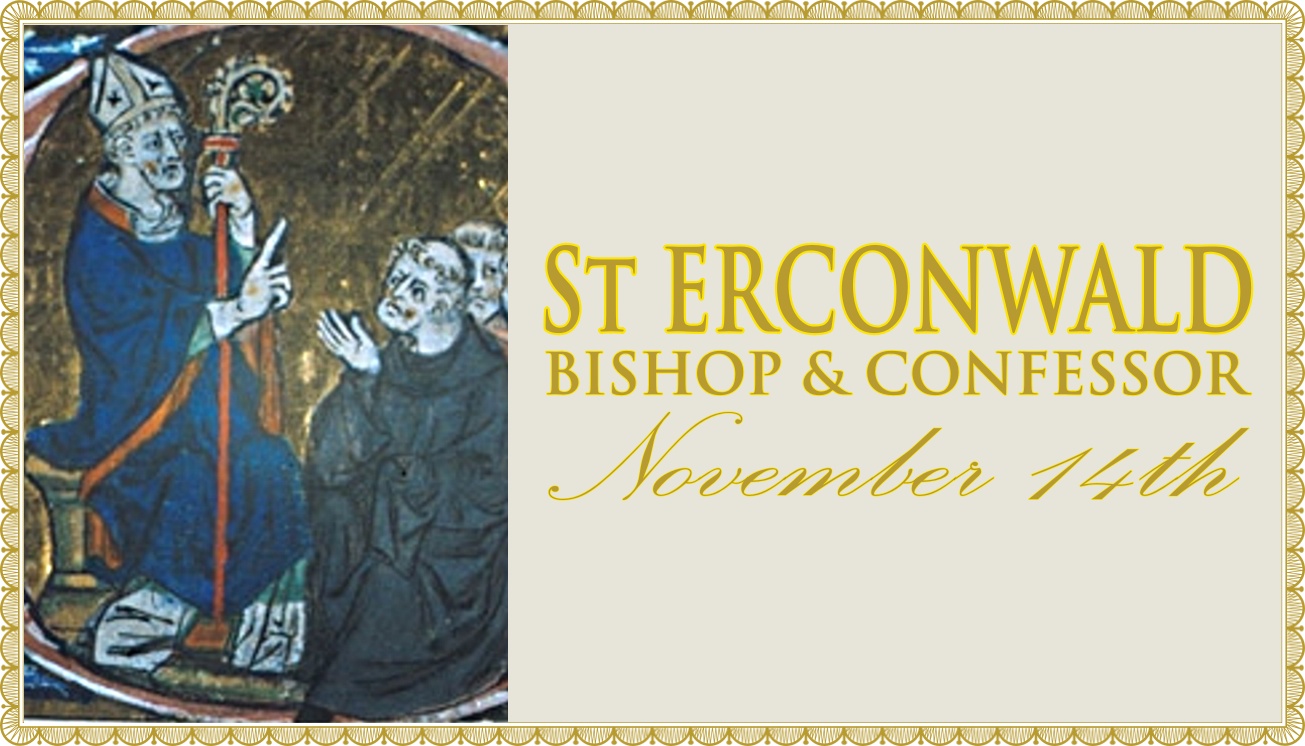
- Today’s Mass: November 14 St Erconwald of LondonSt Erconwald, gentle monastic bishop of London, built the early English Church through holiness, prayer, and stability, strengthening St Paul’s and founding monasteries that shaped the land. St Josaphat, fiery Archbishop of Polotsk, defended unity with Rome and sealed it with his martyrdom. One built, the other bled—both faithful stewards of Christ’s flock.
- Sermon for St. ErconwaldSt Erconwald, seventh-century Bishop of London, founded monasteries and promoted peace during England’s divided, pagan age. His missionary work helped establish Christian and cultural unity before political unification. Remembered as London’s patron saint, his example of holiness, reconciliation and civilising influence offers hope and guidance amid modern tribalism and violence.
CURRENT EDITION


Today’s Mass Propers
- Today’s Mass: November 15 St Gertrude the Great
 Saint Gertrude the Great was a devout virgin and abbess, noted for her extraordinary spirituality and dedication to God. Born in Eisleben, she joined a Benedictine convent at a young age, led a life of virtue, and was known for her humility, visions, and miracles. Her compassionate leadership earned her lasting veneration after her death in 1292.


Leave a Reply